WHY GOWhy Morocco rewards curious travelers
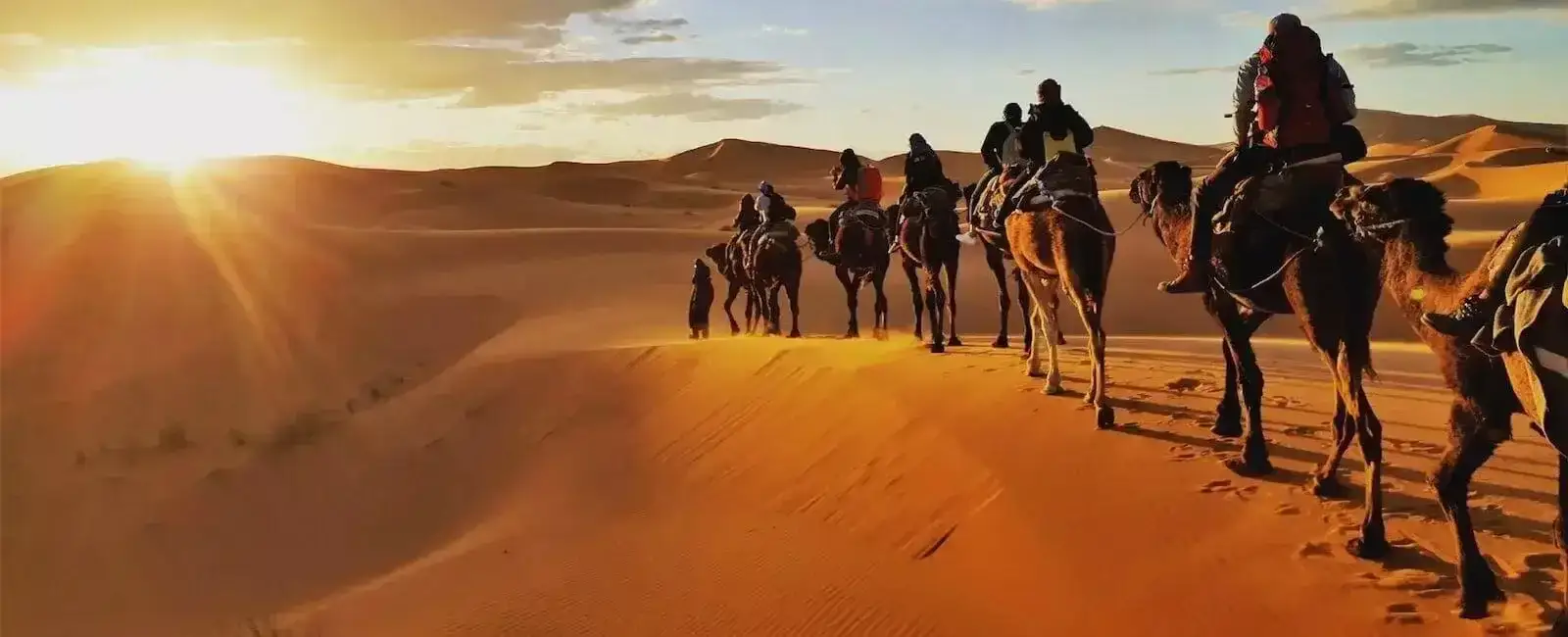
From UNESCO-listed medinas and Atlas passes to Atlantic beaches and Sahara dunes, Morocco fits a remarkable variety into manageable driving distances. The mix of Arab, Amazigh, Andalusian, and French influences shapes architecture, food, and daily life in ways that reward anyone willing to go beyond just Marrakech. On a private itinerary you can link imperial cities, desert camps, and coastal towns into one seamless journey, and our Discover Morocco tour is a good example of how those regions connect without a rushed day.
What makes Morocco unusual is how quickly the scenery changes. In a single well-planned week you can move from the medieval alleys of Fes to a night under the stars in the Sahara, then out to the wind and light of the Atlantic coast, with mountain passes and palm-lined valleys in between. That range is the whole appeal, and it is also why the order of stops matters — the best itineraries build a rhythm of intensity and rest rather than a flat list of famous names, and that is exactly the balance we plan for.
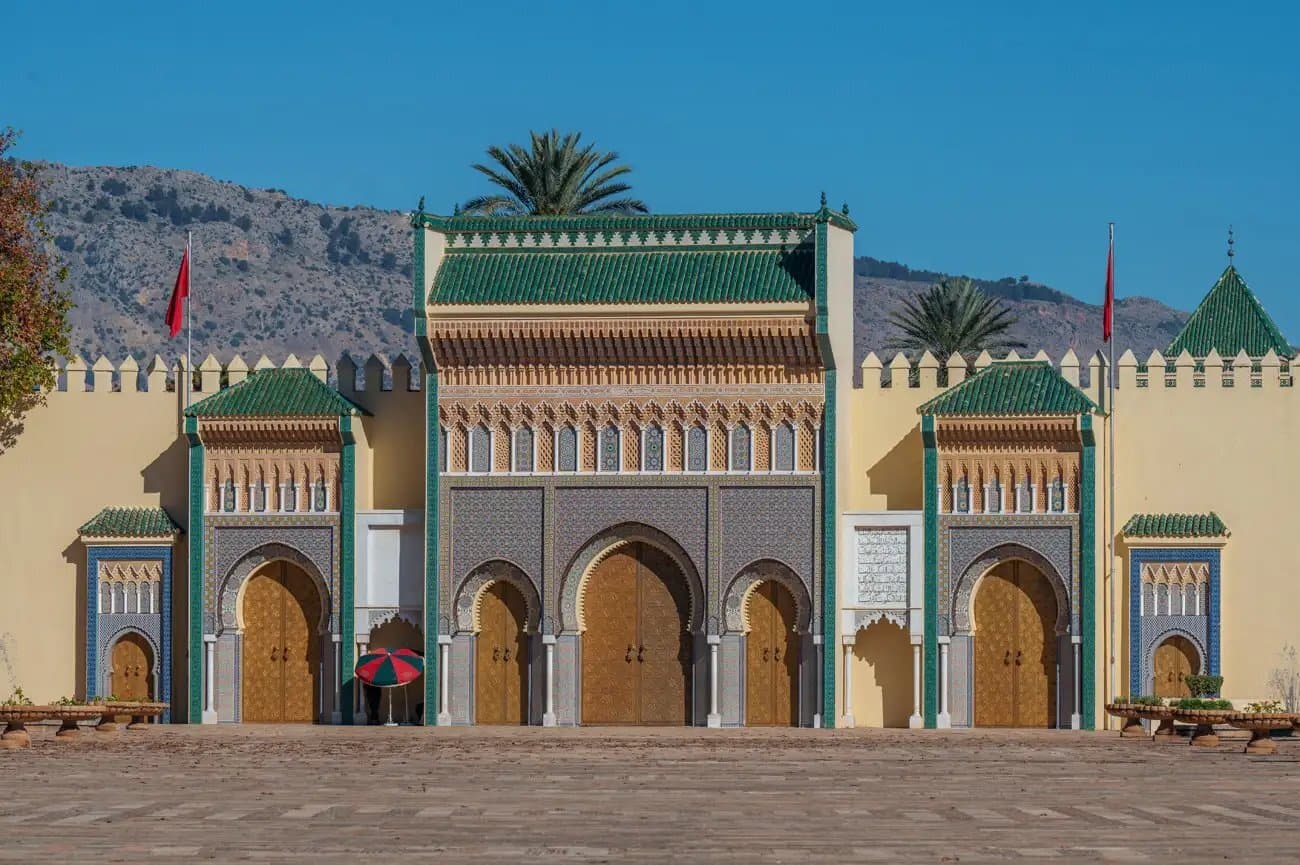
IMPERIAL MOROCCOThe grand imperial cities: Fes and Meknes
Fes is one of Morocco's great imperial capitals, home to a medina often described as one of the world's largest living medieval Islamic cities, with thousands of narrow, winding streets dating back to around the 9th century. Walking Fes el-Bali can feel like stepping through time, from the tiled Blue Gate to tanneries that still use centuries-old methods. The city divides into the old medina, a later quarter from the 14th to 15th centuries, and the French-era Ville Nouvelle, and you can easily fill several days with madrasas, workshops, and rooftop viewpoints.
Within Fes el-Bali, the highlights come in layers: the iconic Blue Gate with its blue and green tiles, the tanneries where hides are still worked in stone vats using centuries-old methods, spiritual sites and madrasas with carved cedar and stucco, and panoramic viewpoints over an endless sea of rooftops. It is a city that rewards a guide, since the medina's thousands of lanes are genuinely disorienting, and the reward for slowing down is a sense of a place that has changed remarkably little in a thousand years.
A short drive away, Meknes is another imperial city whose grandeur is gradually re-emerging as restoration continues. It is known for monumental gates such as Bab el-Khemis and the vast royal complex of Dar el-Makhzen, expanded by Sultan Moulay Ismail in the 17th and 18th centuries. Parts of the main square, Place el-Hedim, have been under renovation, but Meknes stays a quieter, more relaxed alternative to Fes and pairs naturally with nearby Roman Volubilis and the holy town of Moulay Idriss, making it an easy and rewarding day from Fes for travelers who want history without the crowds.
THE ATLANTIC EDGEMorocco's coastal cities
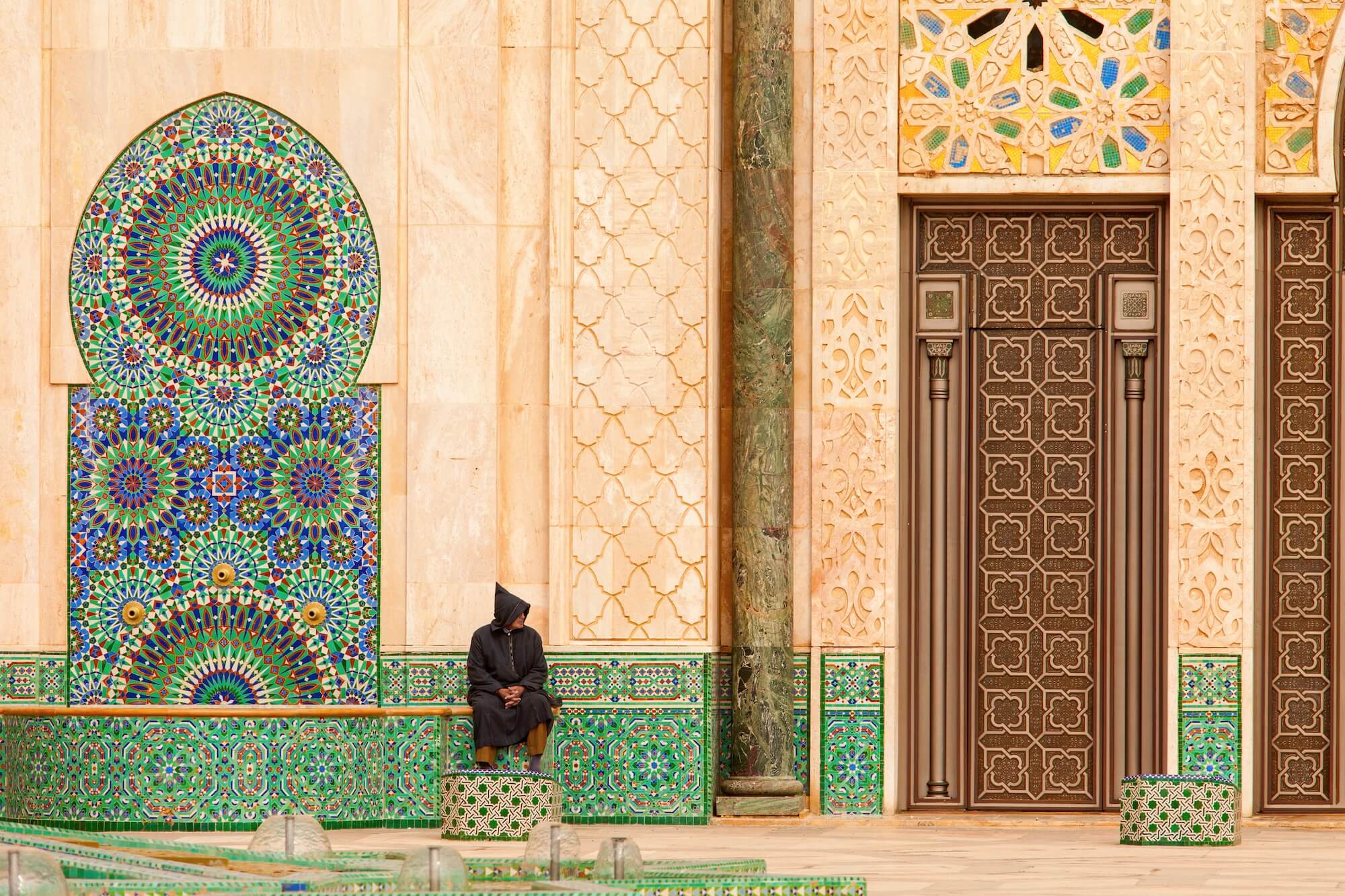
Casablanca feels more modern and European than most Moroccan cities, with wide boulevards around Mohammed V Square set against an older medina. Its landmark is the Hassan II Mosque, one of the world's largest, built partly over the Atlantic and open to non-Muslim visitors on guided tours. For most travelers Casablanca works best as an arrival or departure gateway, with a night or two for the mosque and the city's food scene.
Casablanca also carries an important modern history as a strategic Atlantic port and a WWII staging point, but its everyday character sits in the contrast between the French-influenced boulevards of the Ville Nouvelle and the older medina nearer the water. A short, well-planned stop here sets the tone before you turn inland or south, and it is an easy place to ease into the country's food scene before the medinas get more intense.
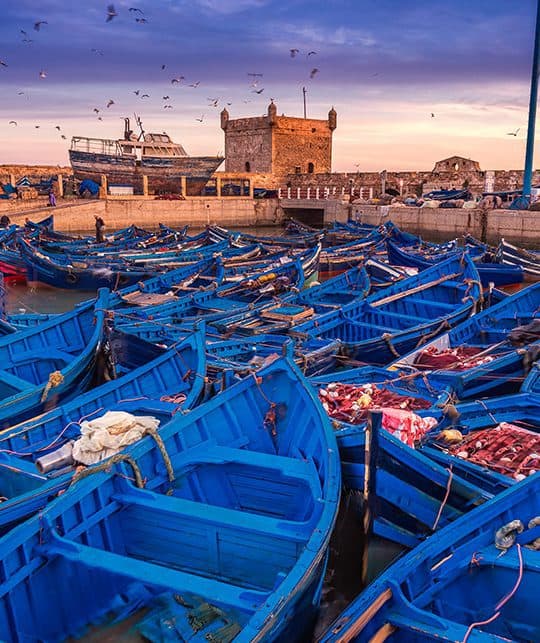
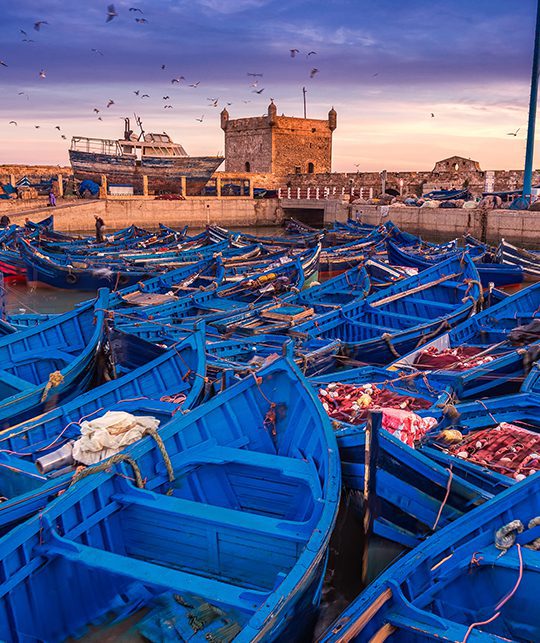
Further south, Essaouira offers a calm, small-scale coastal escape, sometimes called the windy city of Africa for the Atlantic breeze that draws kite- and wind-surfers. Its compact blue-and-white medina is largely traffic-free and far more laid-back than Marrakech, with galleries, craft shops, and rooftop terraces, while the fishing port and seafood grills are a highlight — you can choose freshly caught fish or oysters and have them cooked to order at the harbor. For a deeper look, see our private tour of the coastal gem of Essaouira.
Agadir, rebuilt after the devastating 1960 earthquake, adds a long sandy beach, a palm-lined promenade, and a concentration of hotels and cafes. It is also a key center of Amazigh culture, where Tachelhit and Tamazight are widely spoken and local traditions show up in music, crafts, and cuisine. Above the city, the restored 16th-century Kasbah hill gives sweeping views over the bay, while the huge inland Souk El Had offers a far more local shopping experience — a good base for travelers who want beach days paired with day trips into the Anti-Atlas.
OFF THE HEADLINE ROUTEDistinctive towns worth the detour
Chefchaouen, set in the Rif Mountains, is famous for its dreamlike blue-painted lanes, blending Moroccan and Andalusian influences in a compact medina of steps, arches, and doorways that many travelers describe as almost like walking through a film set. Once a quiet mountain town, it is now known for photography, handicrafts, and relaxed rooftop cafes — an ideal stop for slower days and mountain air. Tetouan, capital of the former Spanish protectorate until 1956, shows strong Iberian influence in its avenues and buildings near the Royal Palace, and its UNESCO medina uses a clever tile code: three tiles down the center mark main streets, two indicate secondary lanes, and one often leads into quieter residential dead ends.
Tetouan's medina rewards a slow wander, with smaller, less commercial tanneries and minimal tourist hassle giving a more everyday sense of Moroccan life; it pairs particularly well with Chefchaouen and Tangier in a northern loop. Chefchaouen, once a quiet mountain town, later gained a certain backpacker reputation, but today it is far better known for photography, handicrafts, and long, atmospheric evenings on its rooftop cafes — a genuine change of pace after the intensity of the big cities.
Rabat, the political capital, is a surprisingly calm and orderly city with modern trams, fast high-speed trains, the unfinished Hassan Tower — planned as the world's largest mosque in the 12th century — the Mausoleum of Mohammed V, and the Kasbah of the Udayas overlooking the ocean with its blue-and-white lanes. Asilah, a small walled town south of Tangier fortified by the Portuguese in the 15th century, is known for whitewashed medina walls painted with murals from its annual art festival and reached easily by train for a relaxed overnight or two.
Tangier itself sits where the Atlantic meets the Mediterranean, just across the Strait of Gibraltar from Europe, long a magnet for writers, artists, and exiles. Its medina offers lively souks around the Grand Socco and Petit Socco, while the northern sections stay quieter and more residential, with sea-view terraces and historic cafes such as Cafe Hafa and Cafe Baba that still evoke its bohemian past. Today it is also a modern port with high-speed rail, making it a practical and atmospheric gateway. These lesser-known stops feature heavily in our roundup of the eleven must-visit cities in Morocco.
ON THE GROUNDEssential travel advice
Cash is still king in Morocco, especially in medinas, markets, small shops, and for tipping, so carry plenty of small denominations — coins and 20-dirham notes are useful — because many vendors and taxi drivers cannot break large bills. Tipping is widely expected for guides, drivers, and hotel staff, often rounding up or adding roughly 10% in more formal places. ATMs are common in the cities, but it is wise to withdraw before long rural or desert stretches where machines are scarce. Most mosques are closed to non-Muslims, the Hassan II Mosque in Casablanca being the main exception with guided visits at set times, so dress modestly and ask before photographing people, particularly at work in tanneries or markets.
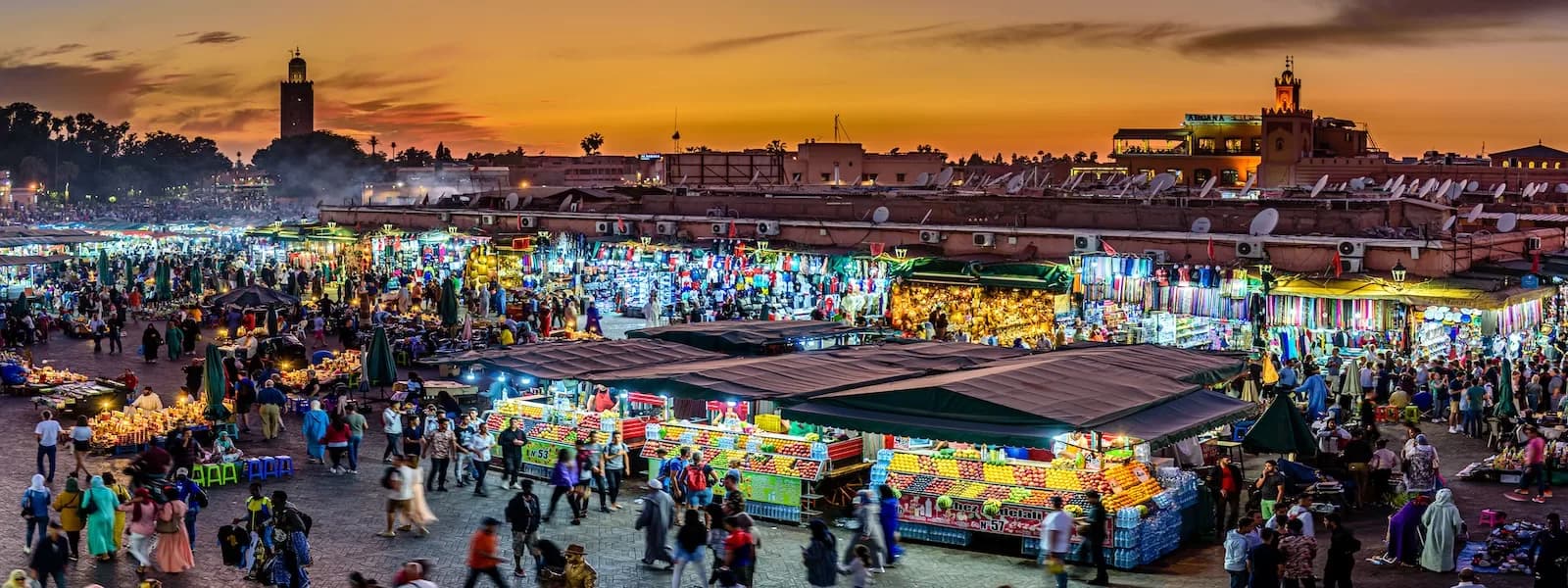
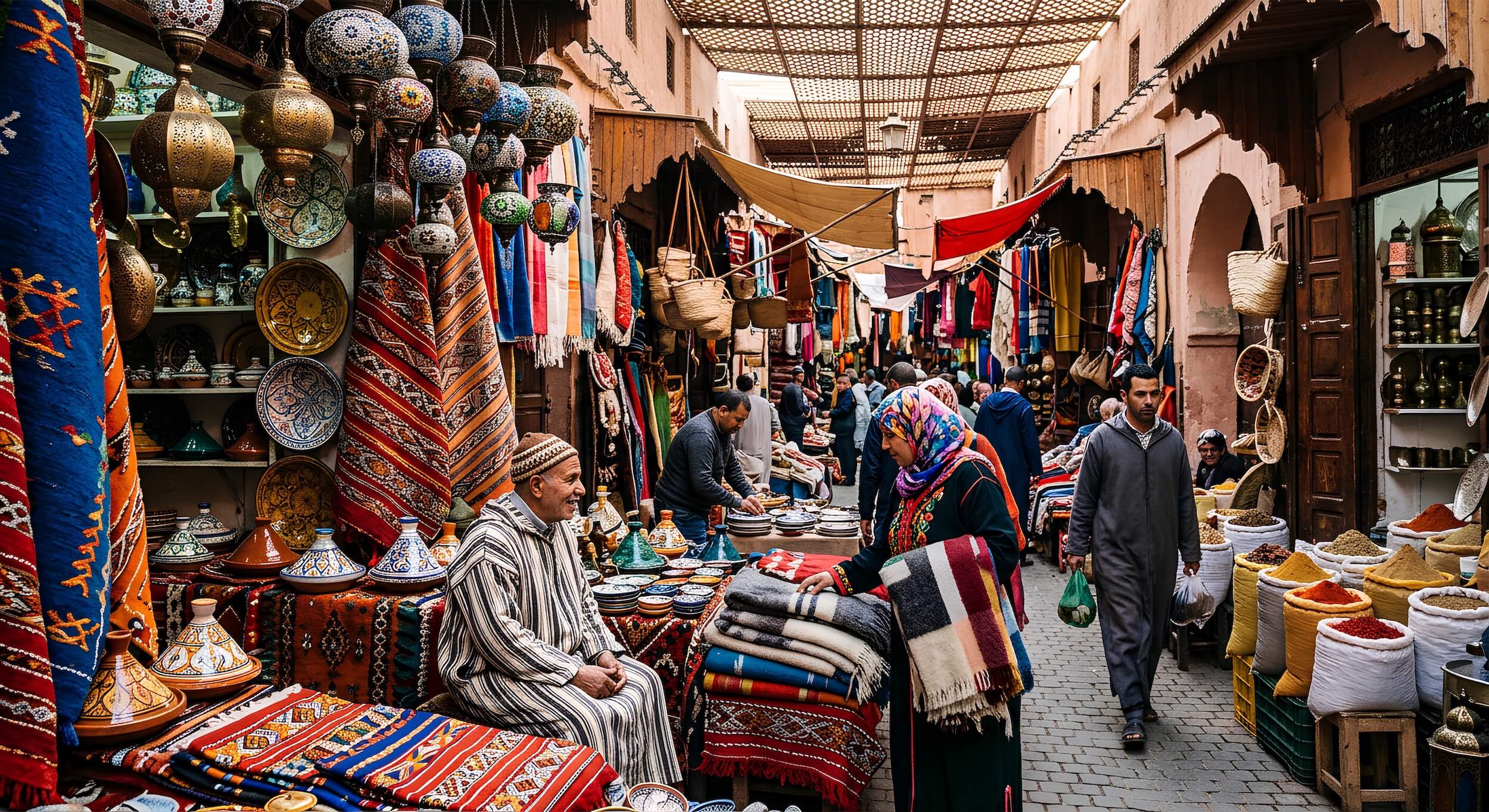
Souks are atmospheric and full of color, but stay aware of pickpockets in crowded alleys and keep valuables secure. Helpful strangers who insist on guiding you to a shop or hotel may expect payment, so decline politely if you do not want the service. Haggling is part of the culture for most non-fixed-price items — do not accept the first price, and treat bargaining as a friendly game rather than a conflict — and knowing rough fair prices for carpets, leather, and lamps helps you feel confident. When it comes to food, tajine refers to both the conical clay pot and the slow-cooking method, which is why menus list many versions, from lamb with prunes to chicken with preserved lemon or a vegetable tajine, alongside couscous, pastilla, and harira soup. Vegetarian travelers can usually find good options, especially in larger cities.
For a flexible route, the easiest way to connect several cities is a private vehicle with a dedicated driver, so you can stop when you like and follow your own pace. That is how we plan every trip: your English-speaking driver handles all transfers between imperial cities, the Sahara, and the coast, turning long travel days into relaxed, scenic road trips. If you want to see how these regions weave together on a single loop, our guide from ancient grandeur to golden dunes and the sweeping Moroccan odyssey across deserts, valleys, and coast both trace routes worth adapting. Marrakech usually anchors the southern half of the country, and our Marrakech travel guide is the best place to plan that leg in detail.
Culture and religion shape the daily calendar in small but useful ways. Friday is the main weekly holy day, so some shops and souks, especially in traditional medinas, may open later, close earlier, or feel quieter during Friday prayers, and during the call to prayer, music in cafes may be turned down out of respect. Dress modestly at religious sites, avoid photographing people at prayer without permission, and remember that many locals dislike being filmed at work or in conservative areas — ask first, accept a no graciously, and be aware that photography can be restricted near checkpoints, military posts, or some religious buildings.
SEASONSWhen to go
Morocco works across a long stretch of the year, but the shoulder seasons are the sweet spot. Spring, roughly March to May, brings green landscapes, wildflowers, and mild city days; autumn, September to November, offers warm, settled weather ideal for combining the imperial cities with the desert. Summer is hot inland and in the Sahara, though the Atlantic coast around Essaouira and Agadir stays comfortable, while winter is quiet and pleasant in the south by day yet genuinely cold at night in the dunes and the mountains. Packing layers, a scarf for mosques and sun, and sturdy shoes for medina cobbles covers most of what the country asks of you, whatever the month.
GOOD TO KNOWCommon questions
A written proposal within 48 hours — no deposit, unlimited revisions.
Begin your journey