BEFORE YOU BEGINHow to read this list
No single trip visits all eleven of these cities, and it should not try to. Think of the list as a menu rather than a checklist. Most of our guests pick four or five that speak to them — an imperial city or two, one coastal town, one mountain stop — and let a private driver stitch them together at an unhurried pace. Distances in Morocco are generous, so the joy is often in the road between the cities as much as the cities themselves.
If you want the classic thread that links most of these places in one continuous route, our Imperial Cities of Morocco tour is the natural spine to build from. From there it is easy to add a beach, a gorge, or a desert night. Below, we have arranged the cities roughly north to south, the way a good itinerary tends to flow.
ATLANTIC NORTHThe northern gateways: Casablanca and Rabat
Casablanca is the largest and most cosmopolitan city in Morocco, the country's economic and industrial hub, and its most modern face — skyscrapers, wide boulevards, and a lively nightlife, all layered over French colonial and Moroccan Islamic influences that give the city a distinctive dual character. For many of our guests it is the point of arrival, and it makes an easy, energetic first day before the road turns toward the medinas and the mountains.
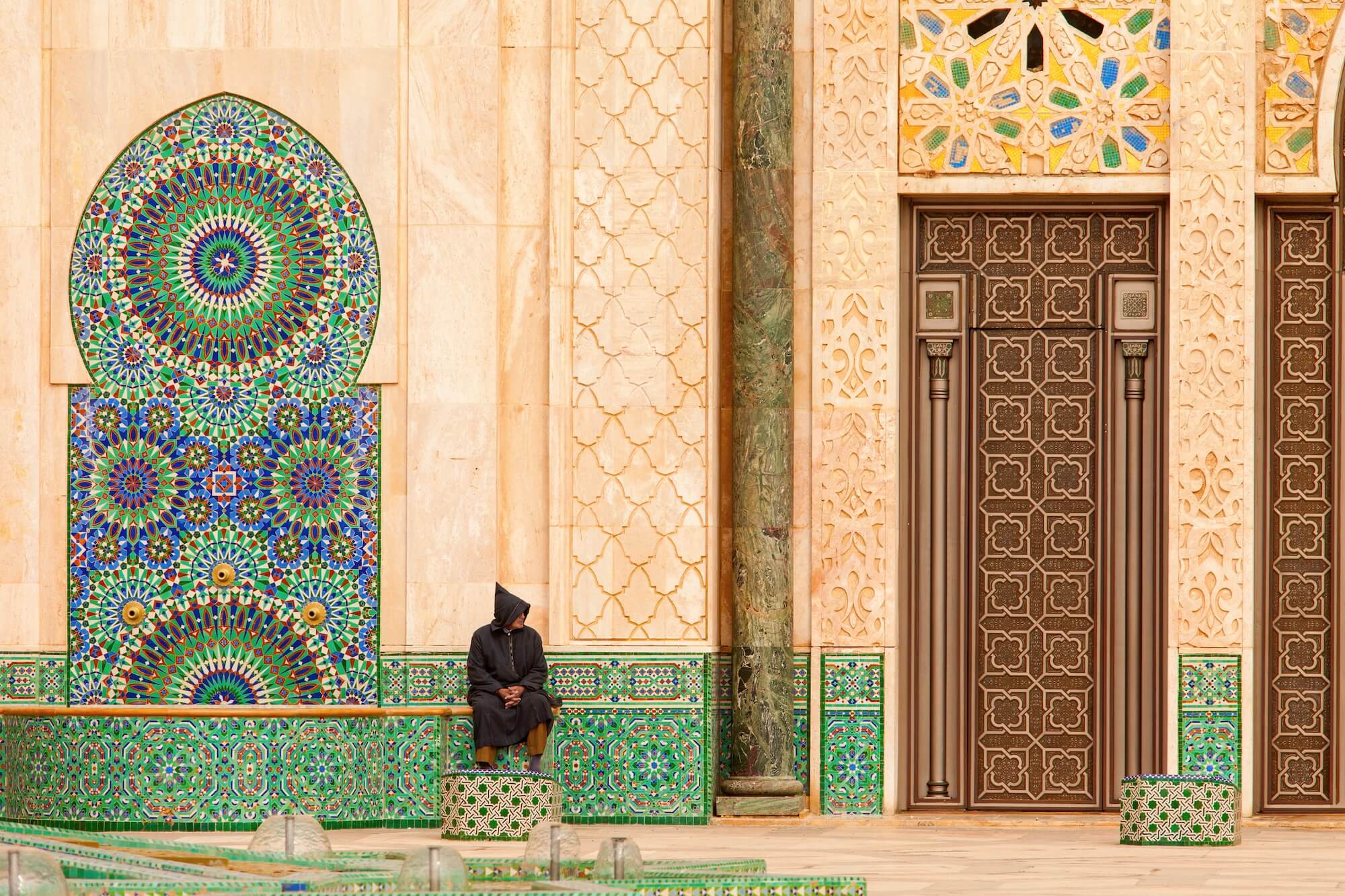
Its crown is the Hassan II Mosque, the second-largest in the world and the only one in Morocco that non-Muslims may enter. It is a masterpiece of architecture and engineering: a 210-meter minaret whose laser points toward Mecca, a retractable roof that opens the prayer hall to the sky, a glass floor set over the Atlantic, and a level of decoration and craftsmanship that rewards a guided visit. Beyond the mosque, Morocco Mall — the largest in Africa and among the largest anywhere — packs in an aquarium, an ice rink, a cinema, the French department store Galeries Lafayette, and the biggest IMAX theatre on the continent.
Casablanca also carries a romance all its own, thanks to the 1942 film set here during the Second World War. Rick's Cafe recreates the movie's famous bar, where you can linger over a drink and a meal in a nostalgic atmosphere, while the historic Cinema Rialto still screens Moroccan and international films in its beautiful art-deco hall.
Rabat, the national capital, is quieter and greener than its coastal neighbor, an easy, elegant place to arrive and acclimatize. Its walled medina, the Kasbah of the Udayas above the river, and the andalusian blue-and-white lanes reward a slow morning on foot — a side we explore in our guide to Rabat, Morocco's royal capital.
THE RIF AND THE COASTThe north's coastal and mountain jewels: Asilah, Tetouan, Chefchaouen
Asilah is a whitewashed Atlantic town of music and literature, its ramparts washed by the sea and its walls repainted each year for the Arts Festival, an annual celebration of the city's and the region's creative talent. The Asilah Cultural Season fills the rest of the calendar with concerts, lectures, exhibitions, and workshops by local and international artists and intellectuals, so there is nearly always something happening behind the quiet facades.
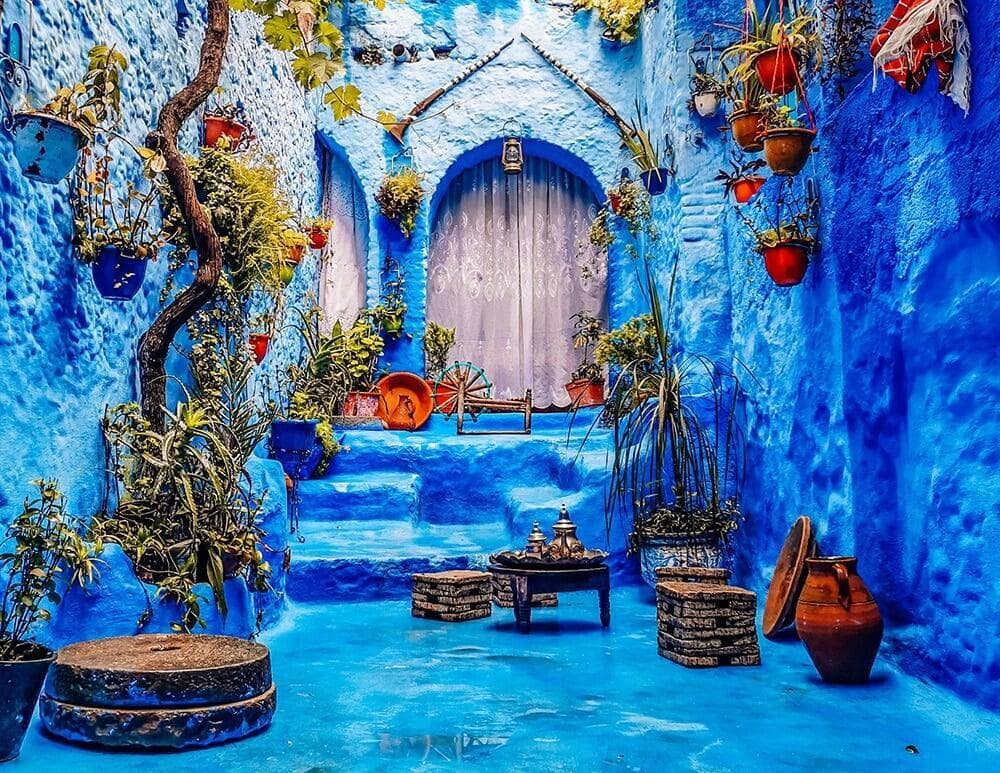
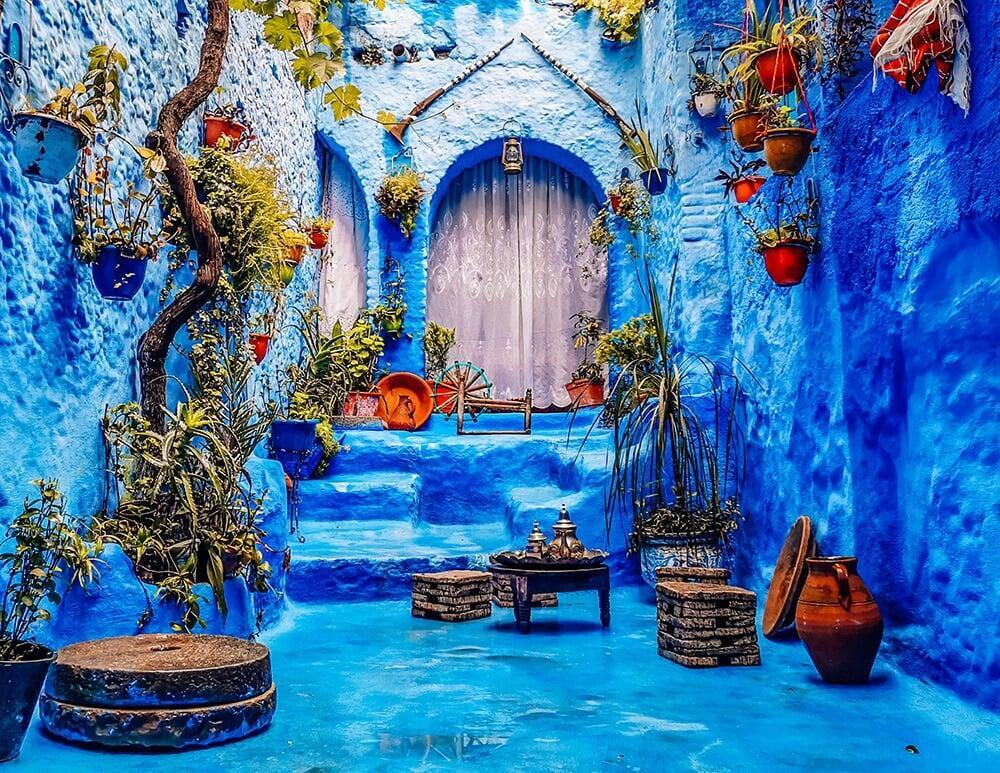
Tetouan, known as the White Dove, carries a strong andalusian imprint in its UNESCO-listed medina, a graceful counterpoint to the coast and one of the least-visited gems in the north. And Chefchaouen, tucked into the Rif Mountains, is the famous blue-washed town whose buildings were painted by Jewish and Muslim refugees from Spain in the fifteenth century to symbolize the sky and heaven.
The town is peaceful and creative, with friendly locals and stunning mountain views. One of its main draws is the Ras El Maa waterfall, which tumbles from the mountains into the town and gathers locals and travelers alike by its cool water; the nearby Spanish Mosque offers a panoramic view over the whole blue sprawl. The medina itself is a maze of blue alleys and squares dotted with shops, cafes, and restaurants selling everything from handicrafts to local delicacies and spices, and the fortified Kasbah at its heart holds a small museum, a garden, and a tower. Chefchaouen is a town of art, too, its walls brightened with murals and its calendar anchored by the Chefchaouen International Festival of Art and Culture. We go deeper into it in our guide to Chefchaouen, the blue city beyond Instagram.
INLAND AND SOUTHThe spiritual and southern heart: Fes, Tinghir, Ouarzazate
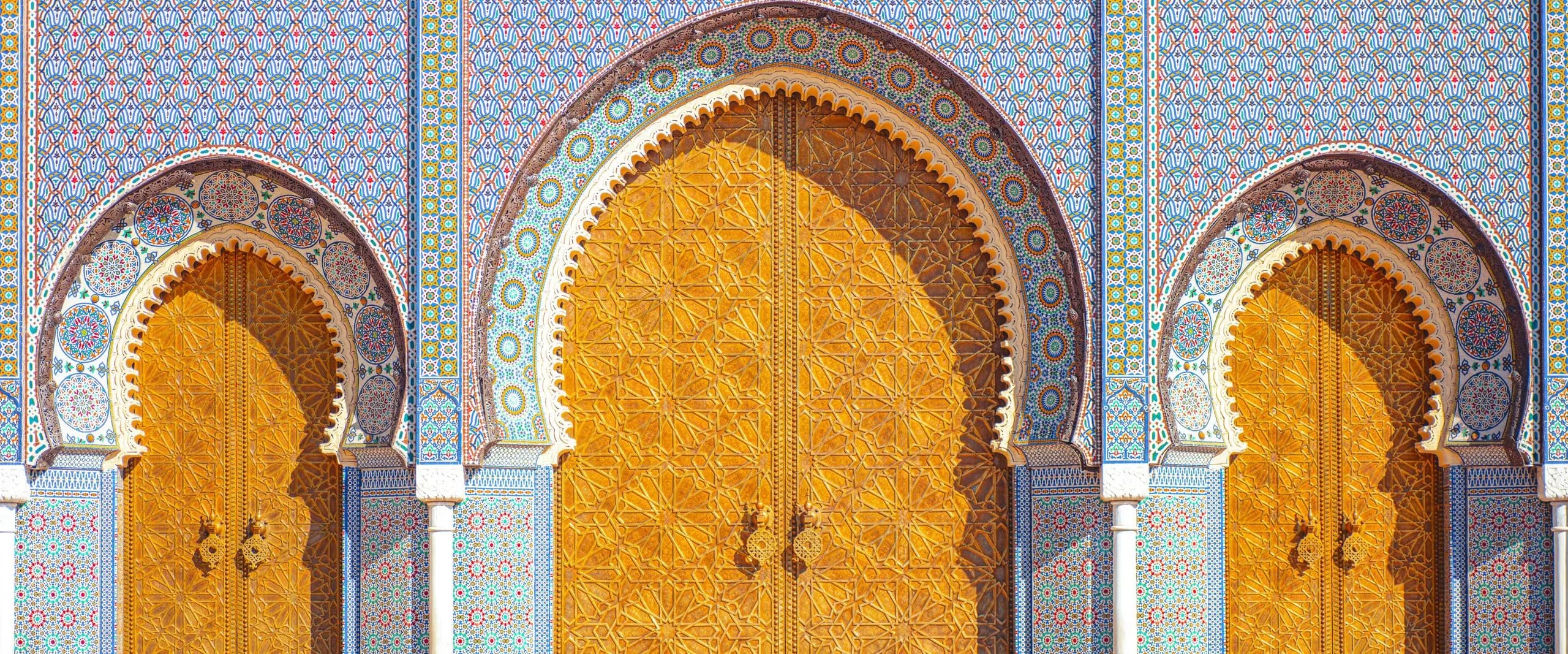
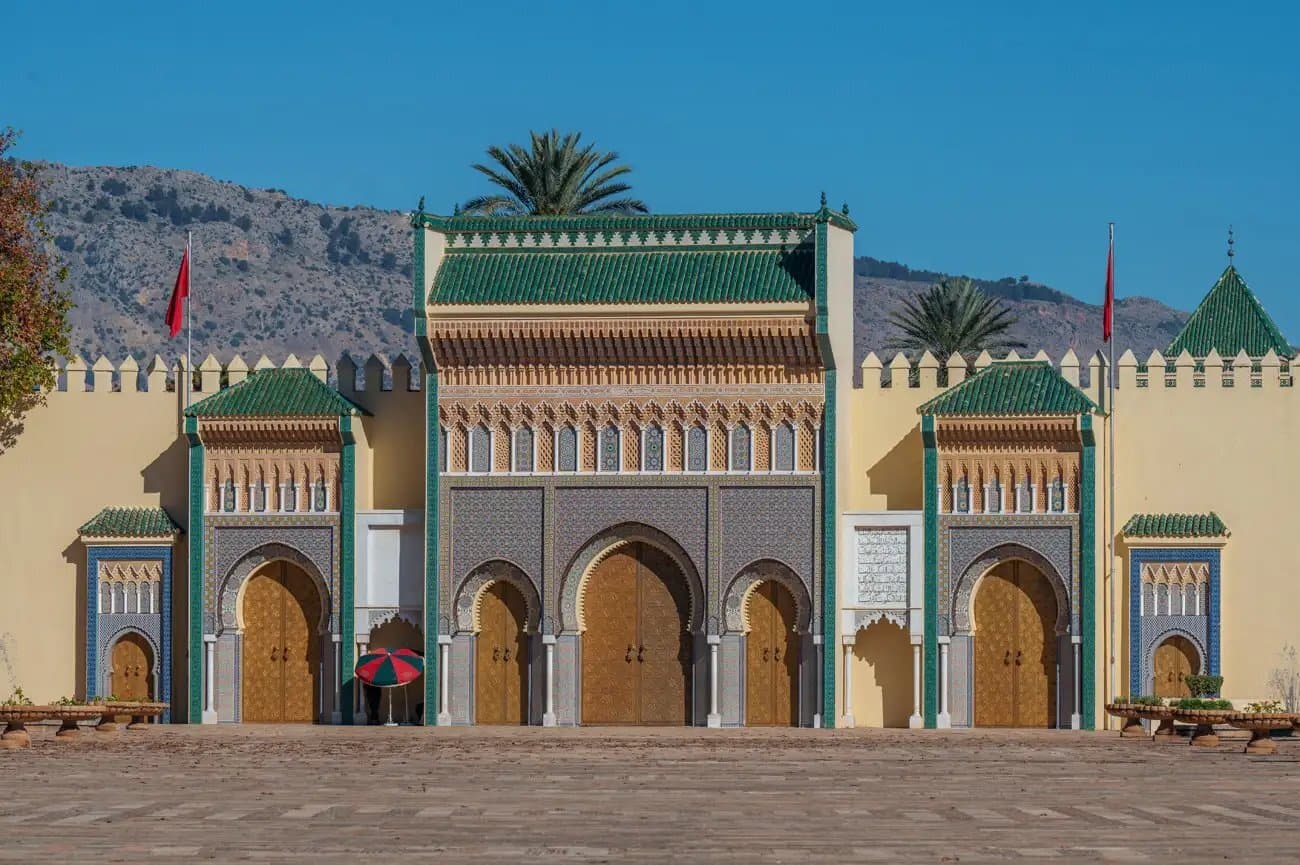
Fes is Morocco's spiritual and intellectual capital, home to Al-Qarawiyyin, often called the world's oldest continuously operating university, and to a labyrinthine medieval medina best explored with a local guide who knows its ten thousand alleys. The tanneries, the madrasas, and the artisan quarters are its enduring draw, and there is no substitute for a knowledgeable companion to lead you through the maze and into the workshops where its crafts are still made by hand — our companion piece on the Fes medina with a private guide is written for exactly this.
Tinghir is the most beautiful oasis in southern Morocco, a charming city set between the High Atlas and the Sahara at the center of the Todra Valley, a fertile ribbon of palm trees, flower gardens, and kasbahs. It is a place of rustic streets, exotic views, and warm, welcoming people. Above the city stands the eighteenth-century Glaoui Palace, built by the powerful Glaoui family and perched on a hill overlooking the valley; today it doubles as a museum of the dynasty's weapons, costumes, and paintings.
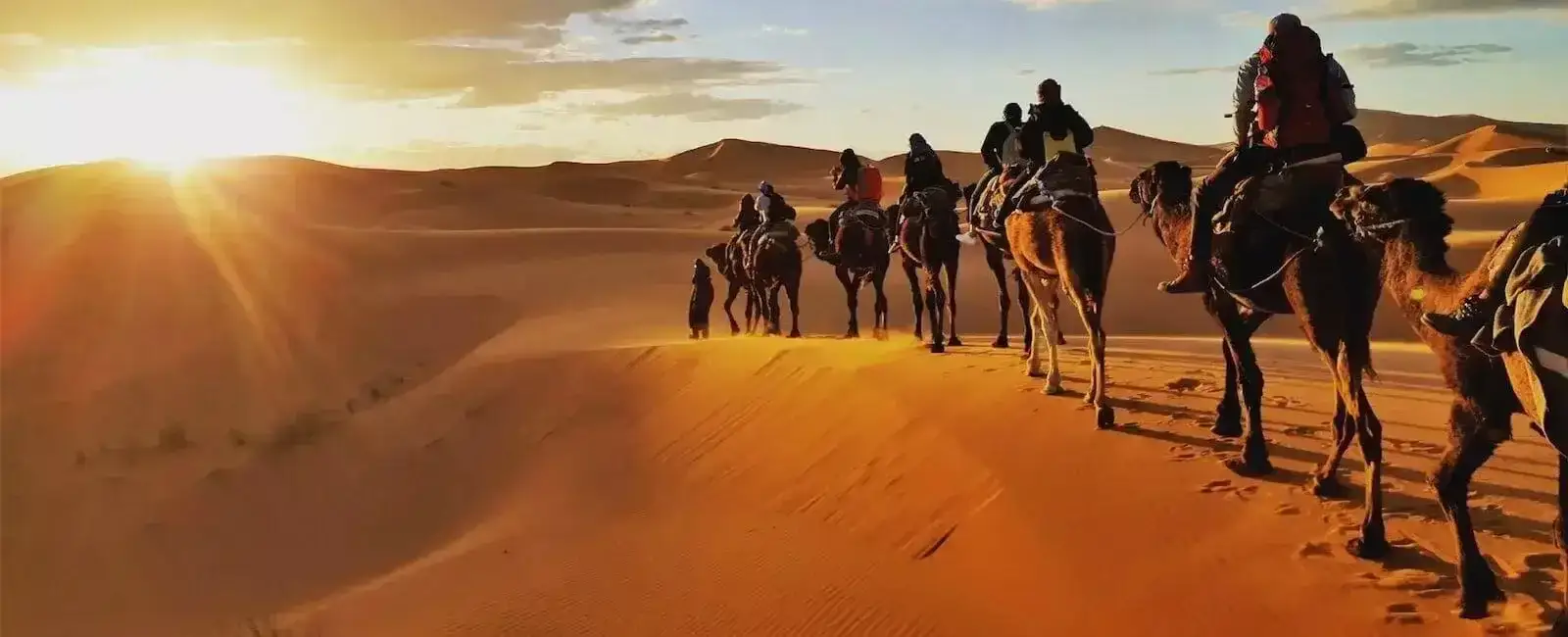
The city's natural showpiece is the Todgha Gorge, a spectacular canyon carved by the Todgha River, with walls that reach up to 300 meters and a passage that narrows to just ten meters in places. It draws hikers, climbers, and photographers, and the valley around it holds a natural spring, a waterfall, and a footbridge. Tinghir is also a place of gentle adventure and shopping — camel rides through the palm groves at sunrise or sunset, and a crafts market of carpets, pottery, jewelry, and spices. Nearby, Ouarzazate is the gateway to the desert and Morocco's film capital, guarded by the earthen Kasbah Taourirt.
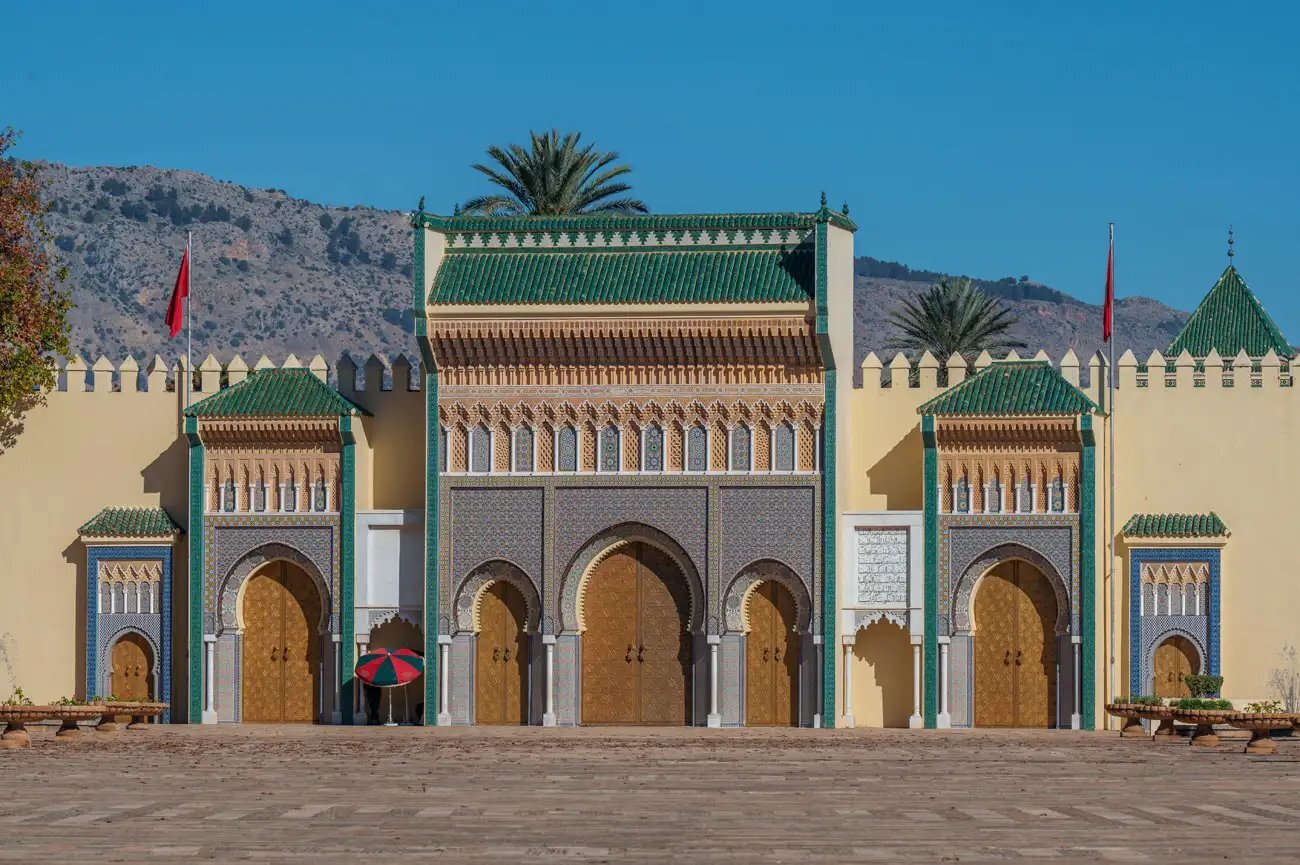
THE SOUTHWESTThe red city and the Atlantic south: Marrakech, Essaouira, Agadir
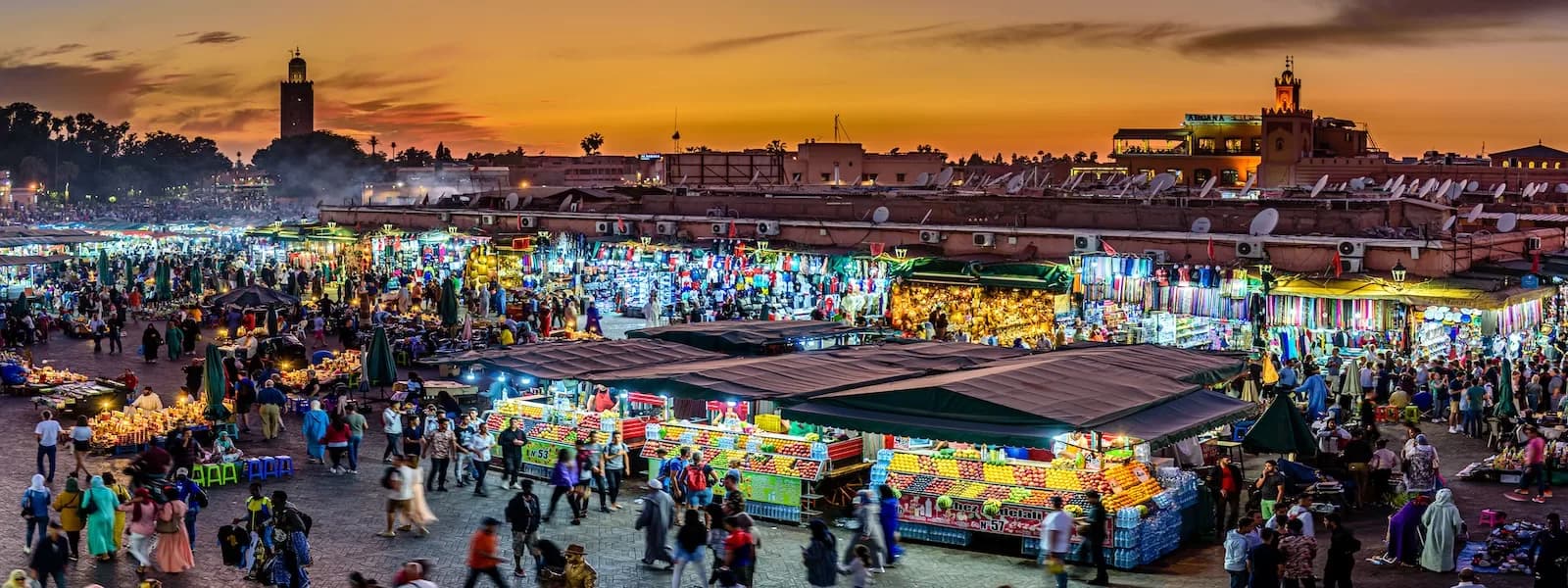
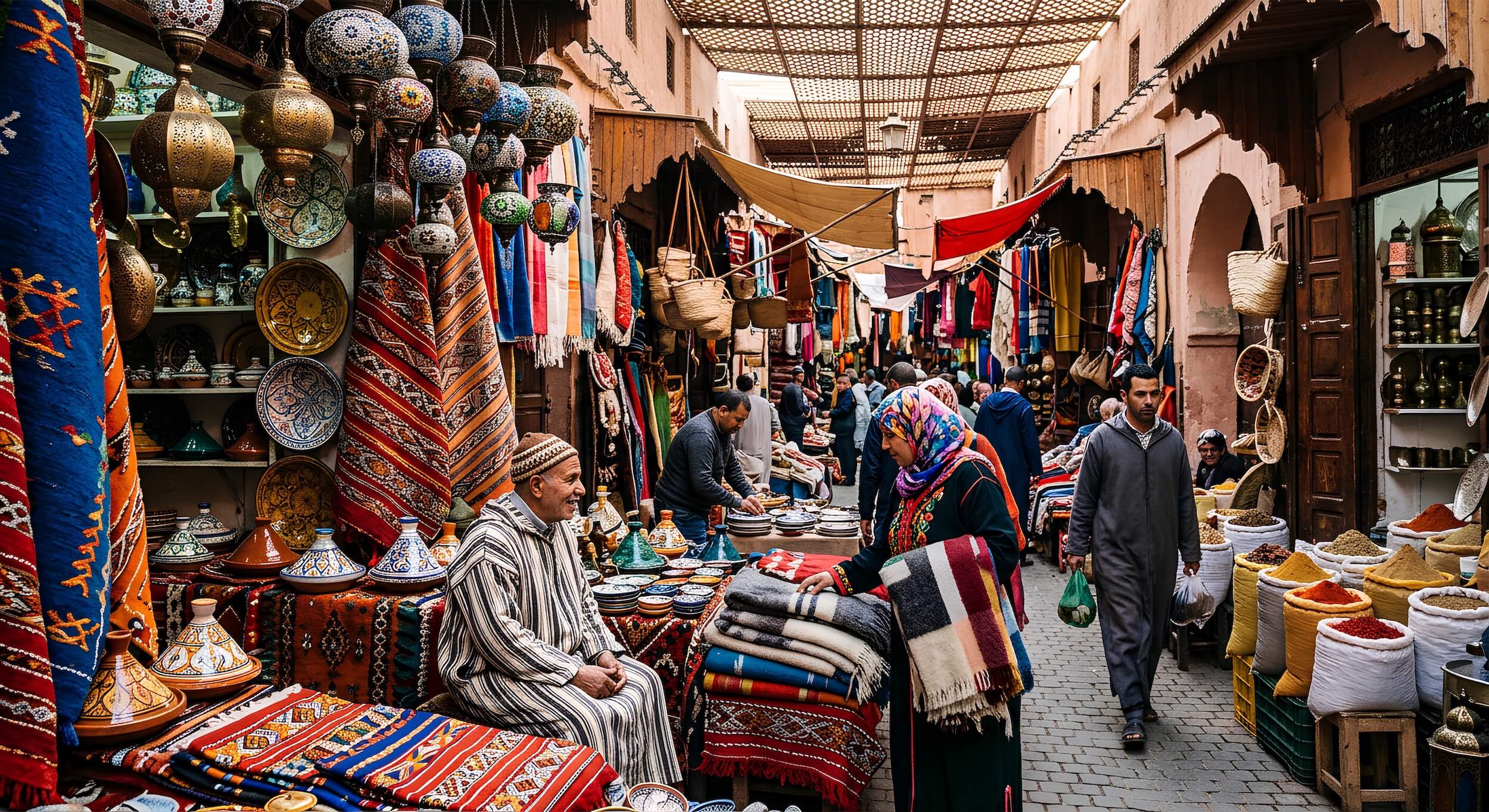
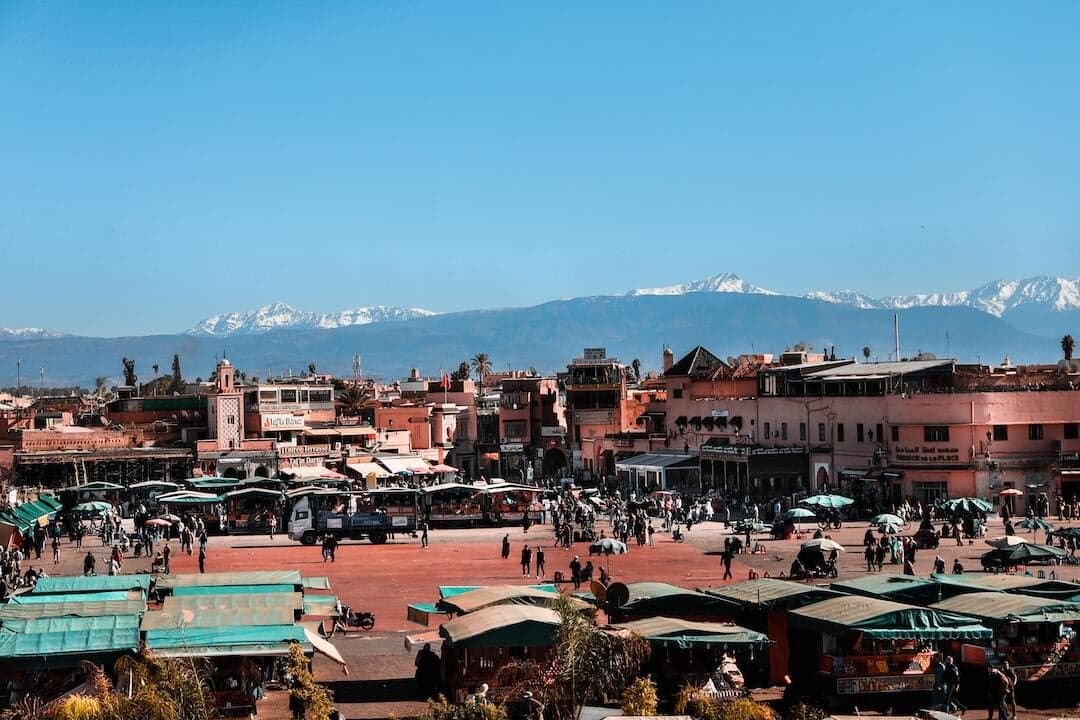
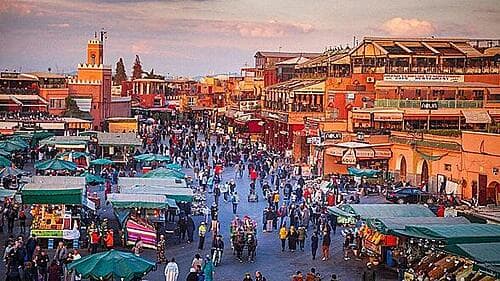
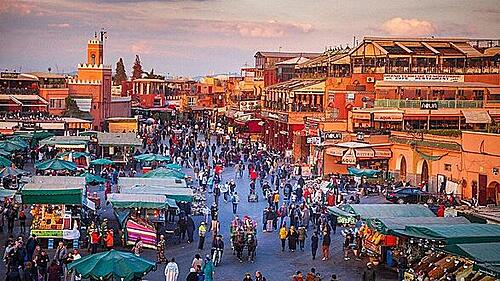
Marrakech is the most famous and most visited city in Morocco, and for good reason — it charms every sense at once. Its heart is Jemaa el-Fnaa, a UNESCO World Heritage square alive with storytellers, snake charmers, acrobats, and food stalls, ringed by souks trading in spices, carpets, leather, and pottery. The 77-meter Koutoubia minaret, symbol of the twelfth-century Almohad dynasty, presides over it all, while the Majorelle Garden and the Bahia Palace show Moroccan design at its most elegant. Our full Marrakech travel guide covers how to plan a stay here.
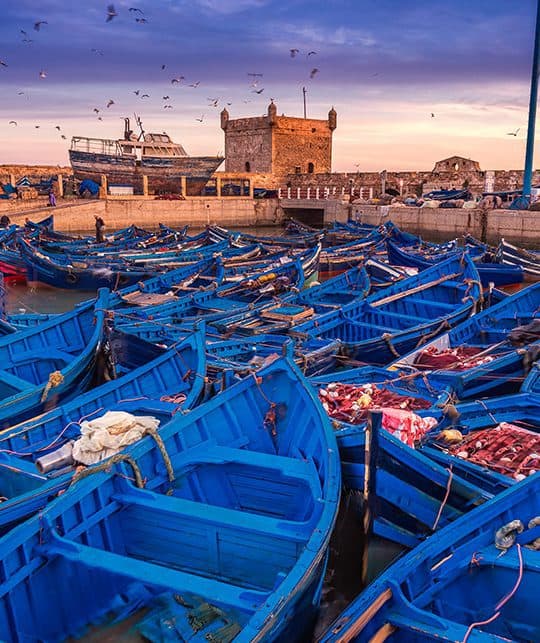
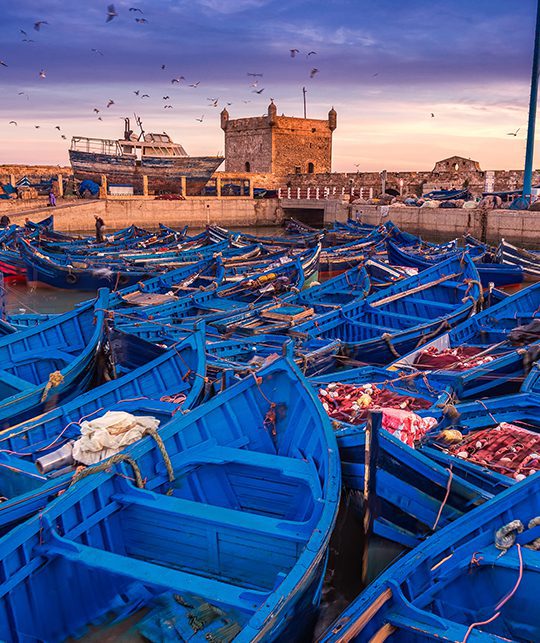
Essaouira is the breezy Atlantic counterpoint — a fortified medina of ramparts, blue fishing boats, and gnaoua music that we love as a coastal exhale, and which we explore in our guide to Essaouira, Morocco's coastal gem. Further south, Agadir is the modern, cosmopolitan beach city rebuilt in an elegant style after the 1960 earthquake, famous for its sunny climate and a ten-kilometer crescent of golden sand lined with beachfront boulevards, cafes, and camel rides. Its Berber Museum tells the story of Morocco's indigenous people through jewelry, pottery, textiles, and instruments, while the nearby Souss-Massa National Park protects 33,800 hectares of river, dunes, and cliffs and shelters endangered species such as the bald ibis, the Dorcas gazelle, and the Barbary macaque. The Atlantic swell makes Agadir a hub for kite surfing, jet skiing, and sailing, and the Birds Valley park in the city center houses more than 500 birds across some 60 species. Agadir-Al Massira Airport, 20 kilometers southeast, connects it directly to Europe, and trains and buses link it to Casablanca, Marrakech, and Tangier.
PLANNING THE ROUTETurning eleven cities into one journey
The pleasure of Morocco is that these cities are close enough to combine yet distinct enough that each feels like a different country. A two-week route can thread Casablanca, Rabat, Chefchaouen, Fes, the southern oases, and Marrakech without ever feeling rushed, so long as a private driver carries the logistics and you carry only your curiosity. Shorter trips simply choose fewer stops and linger longer.
The two itineraries below are the ones our guests reach for most when they want several of these cities in a single, well-paced loop — one built around the imperial cities, one tracing the classic Fes-to-Marrakech line through the middle of the country.
Tell us which cities call to you and we will build a private, tailor-made route — a written proposal within 48 hours, no deposit.
Begin your journey