This itinerary assumes you are flying in and out of Marrakech (RAK), the most common entry point for ten-day trips, since most North American connections route there efficiently and the airport sits closer to the medina than Casablanca's. It is the day-by-day route we run for most first-time visitors, with morning-noon-evening pacing, the riads we book, and the photo stops that never make the guidebooks. If you are still weighing depth against pace, it is worth reading our note on how many days Morocco really needs before you lock in the length.
OVERVIEWWhat you will see in ten days
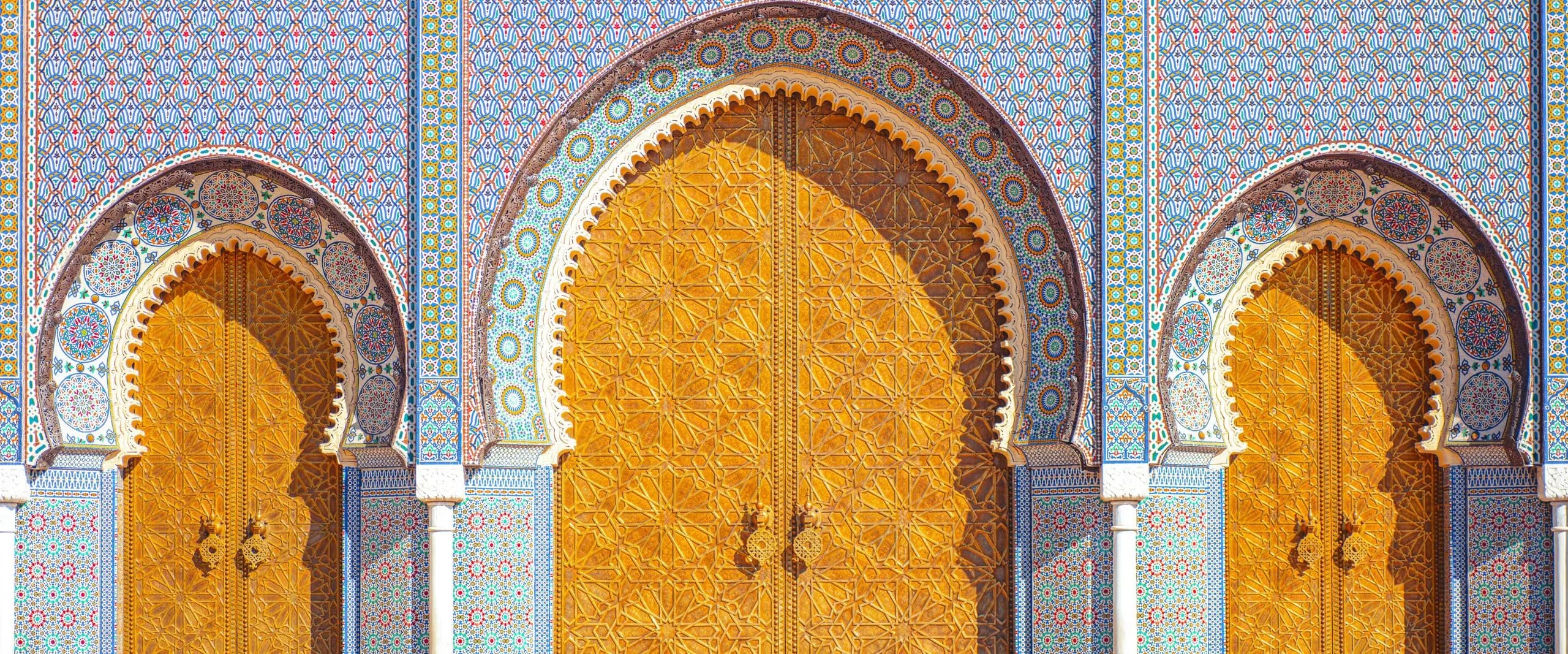
- Marrakech medina - Djemaa el-Fna square, the souks, Bahia Palace, and a hammam afternoon.
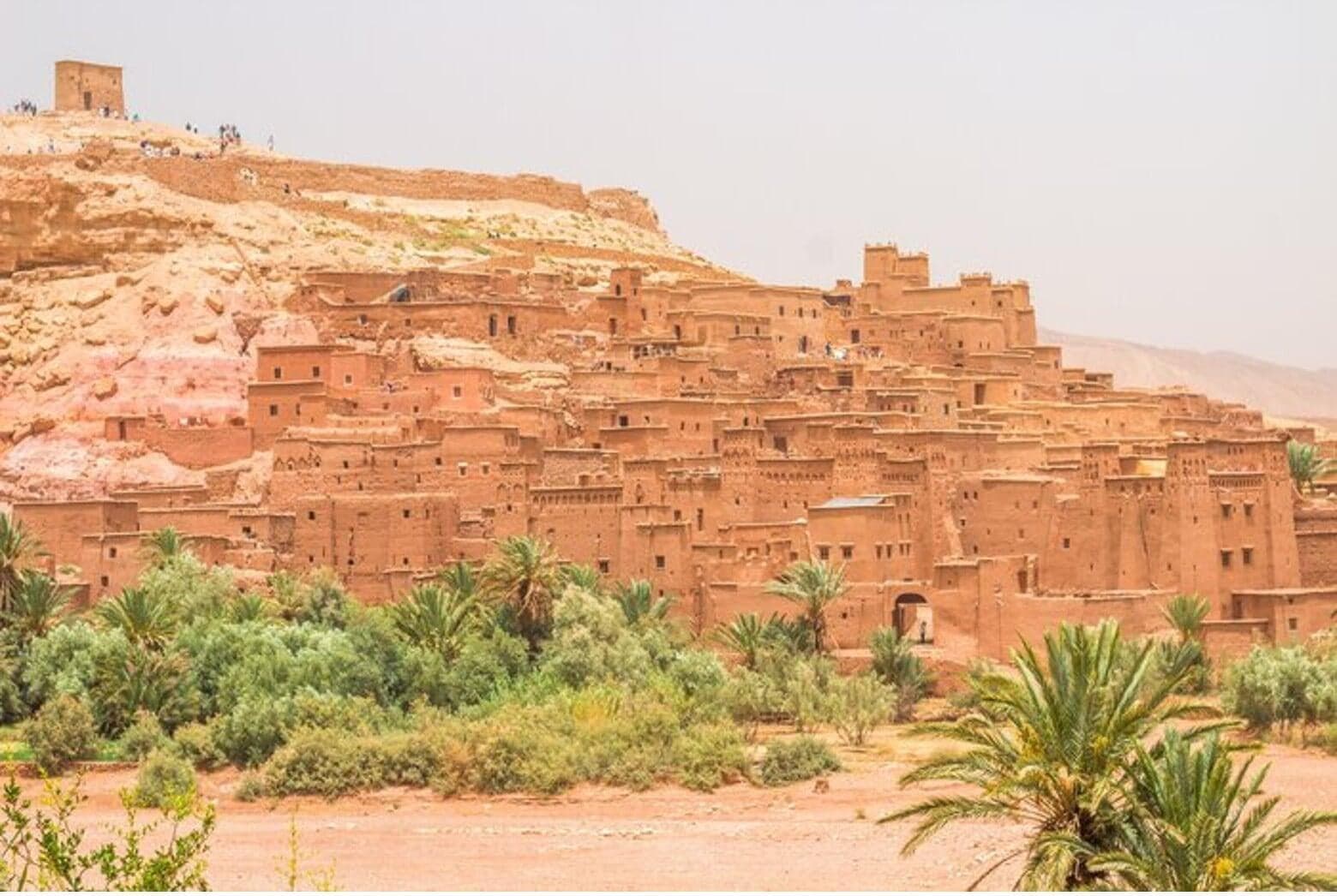
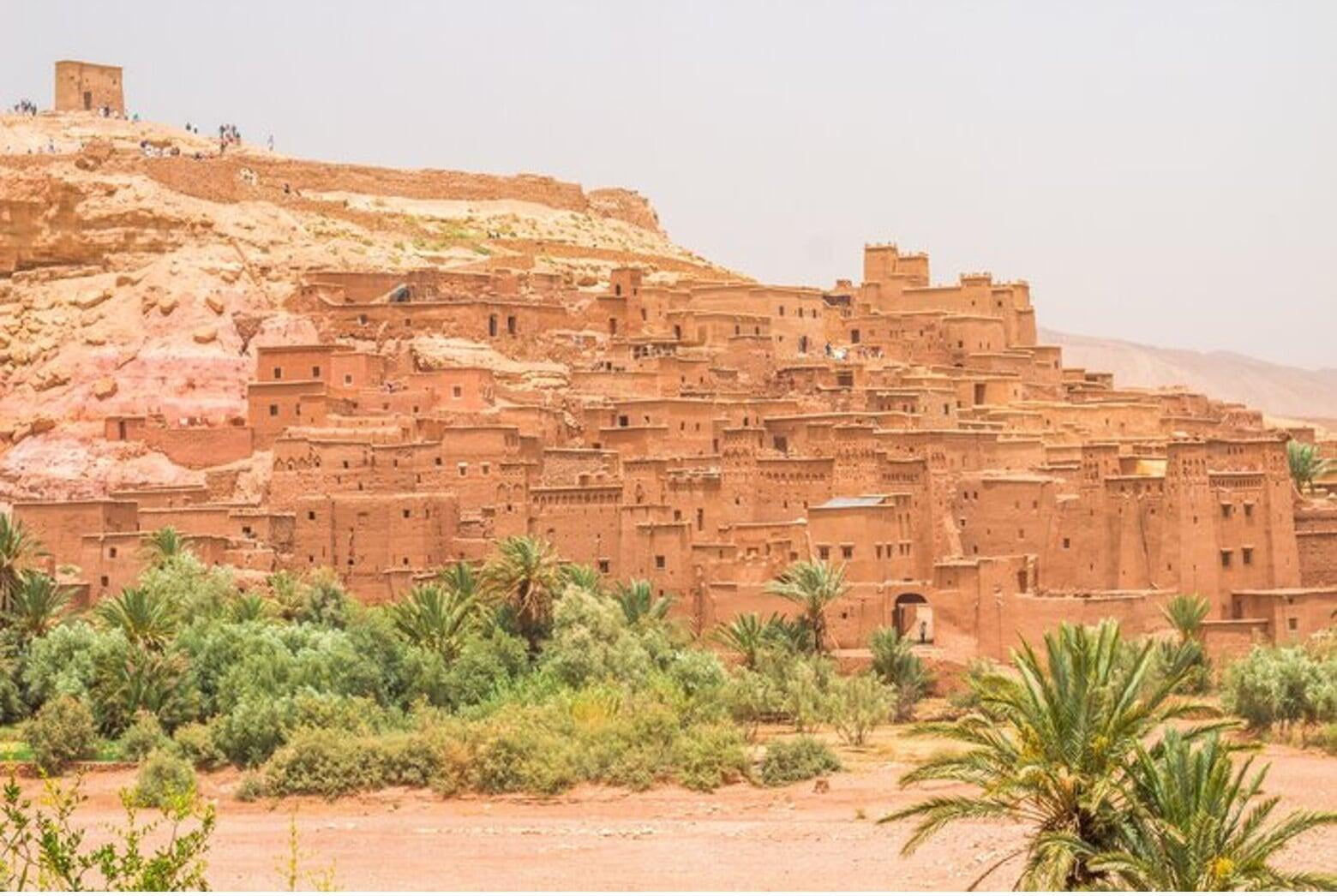
- Ait Ben Haddou - the UNESCO kasbah seen in Game of Thrones, Gladiator, and Lawrence of Arabia.
- Dades and Todra Gorges - dramatic cliff drives, Berber villages, and the Roses Valley.
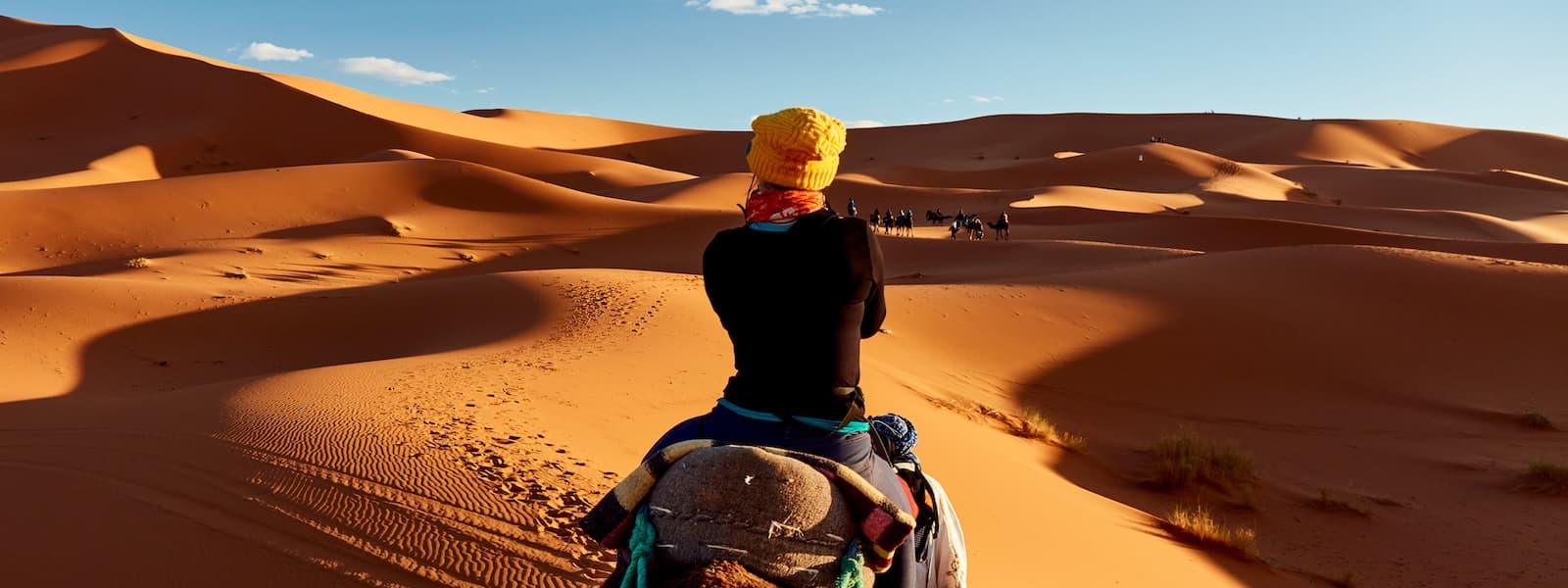
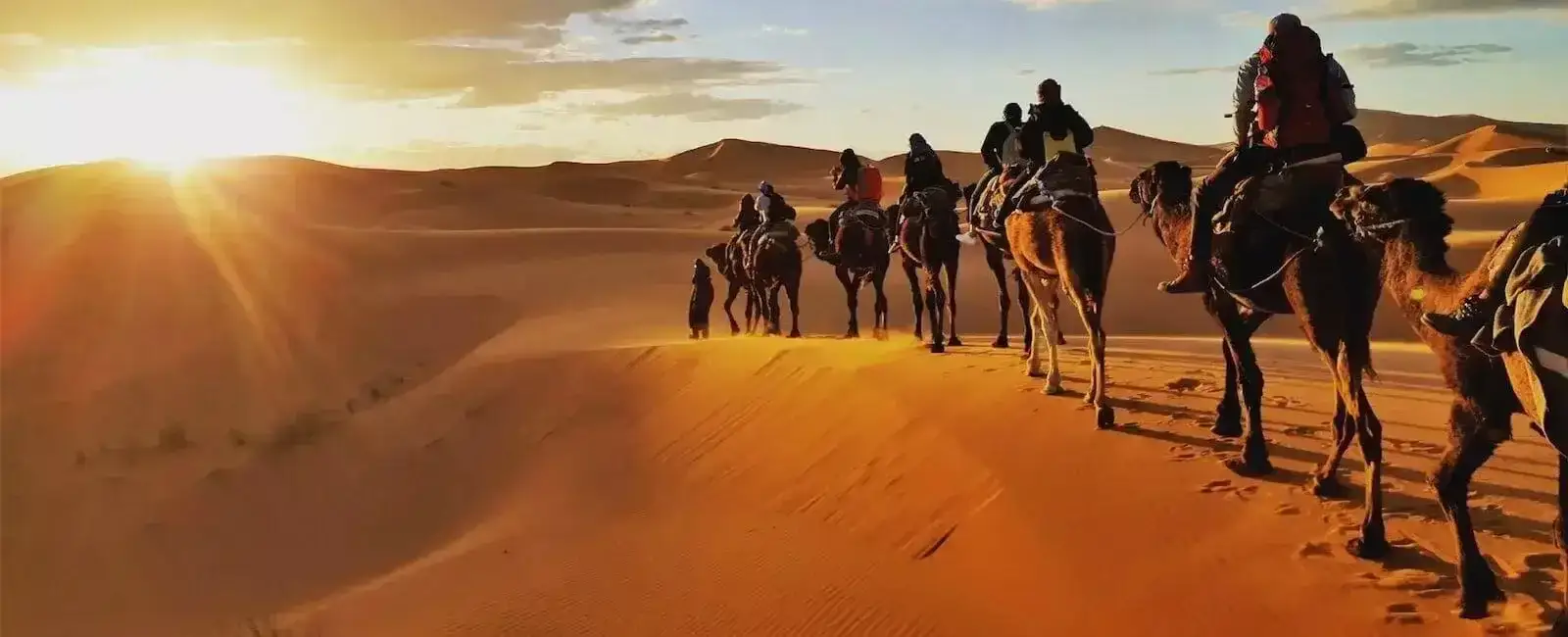
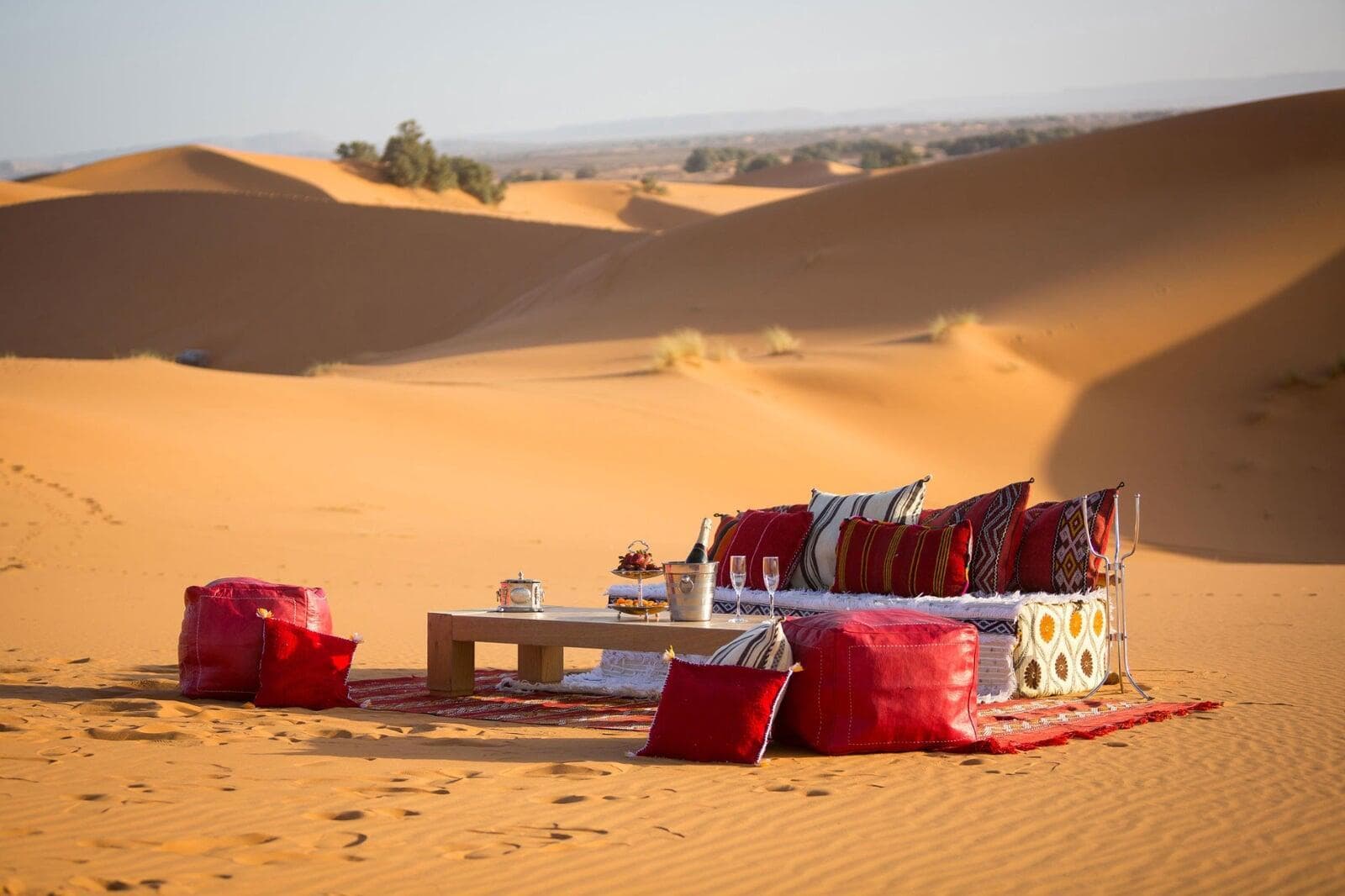
- Erg Chebbi Sahara - a camel trek into the dunes, sunrise over an ocean of sand, and a luxury Berber camp.
- Atlas Mountains - a day trip from Marrakech to Imlil, Asni, and a Berber village lunch.
THE ROUTEDay-by-day 10-day Morocco itinerary
Day 1 - Arrive Marrakech, settle in
A driver meets you at Marrakech airport for the transfer to your riad in the medina, where you settle in over a welcome mint tea. In the evening, a gentle walk through the medina brings you to Djemaa el-Fna square at sunset, when the food stalls light up and the snake charmers, gnawa drummers, and storytellers come out. Dinner at the riad is the sensible choice on arrival day, since most travelers are tired from the flight.
Day 2 - Marrakech medina and souks
A licensed guide meets you at the riad for a walking tour of the Bahia Palace (19th-century Moorish design), the Saadian Tombs (16th-century mausoleums rediscovered in 1917), and the Koutoubia Mosque (exterior only, as non-Muslims cannot enter). In the afternoon, the guide leads you through the souks - leather, spices, lanterns, carpets, and ceramics - handling the pricing so you avoid the high-pressure sales. Late afternoon is reserved for a hammam at the riad, a traditional steam bath with a black-soap exfoliation, before dinner at a rooftop restaurant with medina views.
Day 3 - Marrakech to Ait Ben Haddou to Ouarzazate
Departing in the morning, the drive south crosses the Tizi n'Tichka pass (2,260 m), three hours of switchbacks through the High Atlas with photo stops, including an argan-oil cooperative on the way down. After a Berber village lunch (tagine cooked over a wood fire), the afternoon is spent at Ait Ben Haddou, the UNESCO kasbah, with a walking tour led by a local guide - crossing the river, climbing the kasbah, and watching the light change on the mud-brick walls. The day ends with a short drive to Ouarzazate for check-in and dinner.
Day 4 - Ouarzazate to Dades and Todra to Erfoud
The morning covers the Skoura palmeraie (palm oasis), the Roses Valley, and the Dades Valley, with a switchback drive up to the famous 'monkey fingers' rock formations, followed by lunch with valley views. In the afternoon, Todra Gorge offers a 30-minute walk between 300-meter cliff walls before the drive continues to Erfoud, the gateway town to the Sahara, for an early dinner ahead of the next day's desert departure.
Day 5 - Erfoud to Erg Chebbi, camel trek into the Sahara
A one-hour drive brings you to Merzouga, the launching point for the Erg Chebbi dunes, where the morning is left light - pool, shade, and recovery from the previous day's drive. After lunch at the riad, you pack an overnight bag for the camel trek, since the rest of your luggage stays behind. Late afternoon brings a 60-to-90-minute camel trek into the dunes and sunset from the back of a camel, arriving at a luxury desert camp for a three-course dinner under the stars and Berber music around the campfire.
Day 6 - Sahara sunrise, drive back to Ouarzazate
Waking before sunrise, guests climb the dune behind camp to watch the sun come up over an ocean of sand - almost universally the trip's most memorable moment. After a camel trek back to the riad, breakfast, and repacking, the afternoon is a long drive back via Skoura - five to six hours of road time, but the most scenic stretch of the country - arriving in Ouarzazate or Marrakech depending on the group's preference.
Day 7 - Return to Marrakech, hammam and free afternoon
If the group stayed in Ouarzazate, the morning is a four-hour drive back to Marrakech via the Atlas. The afternoon brings a second round at the hammam, with the option to visit Jardin Majorelle (the Yves Saint Laurent garden) or the Yves Saint Laurent Museum, followed by a rooftop dinner in the medina in the evening.
Day 8 - Atlas Mountains day trip
A 1.5-hour drive into the High Atlas brings you to Imlil, the trailhead village for Mt. Toubkal, for a light walk along the river to a Berber village. Lunch is either with a Berber family in their home (pre-arranged) or on a kasbah terrace, and the drive back to Marrakech passes through Asni and the Ourika Valley, leaving the evening free.
Day 9 - Marrakech free day
This day is yours to shape. Common choices include the Yves Saint Laurent Museum, the Berber Museum, and Jardin Majorelle (all close together for a half day), a cooking class where you prepare your own lunch, quad biking through the palmeraie, or a sunrise hot-air balloon. A farewell dinner in the evening closes out the Marrakech stay.
Day 10 - Departure
Depending on flight time, the morning may be free before the driver collects you from the riad for the transfer to the airport and the flight home. Many travelers use this loop as the backbone of our Discover Morocco private tour, then stretch or trim it to fit their own dates and pace.
PACINGFive mistakes to avoid on a 10-day trip
- Trying to add Fes. Fes is incredible, but it is a seven-hour drive each way from Marrakech, so adding it to a ten-day trip costs two full days for a city that deserves two days on its own.
- Sleeping only one night in the Sahara. The drive in takes two days and the drive out takes one, so a single night feels rushed - two nights doubles the experience for one extra day.
- Booking generic hotels outside the medina. Chain hotels sit 20 minutes from the souks, while a traditional riad puts you 90 seconds from Djemaa el-Fna.
- Skipping the licensed medina guide. The Marrakech medina is 700 acres of alleys - without a guide you will get lost and the touts will find you.
- Booking through a non-licensed operator. If something goes wrong, you want a regulator to escalate to, which is why working with a licensed agency on your tailor-made trip matters.
GOOD TO KNOWFrequently asked questions
This route is a template, not a fixed package. If you would rather shape it around your own interests, our guide to planning a tailor-made Morocco itinerary that fits your style shows how the pieces move. Traveling with children changes the pacing, and our family version of the ten-day route adapts it for younger travelers. For the wider context of timing and routing, start with planning a trip to Morocco, and if the imperial cities call to you, read how the imperial cities and the Sahara fit together.
A written proposal within 48 hours - no deposit, unlimited revisions.
Begin your journey