
 Days 1–2
Rabat
Private journey
Embark on a 15-day private Majestic Morocco Tour from Rabat and Tangier to the blue lanes of Chefchaouen, the medieval medina of Fes, the golden Erg Chebbi dunes, Marrakech and Essaouira. Enjoy premium riads, a luxury Sahara camp, private driver-guides and curated experiences throughout your tailor-made journey
The route
An overview of the journey
Days 1–2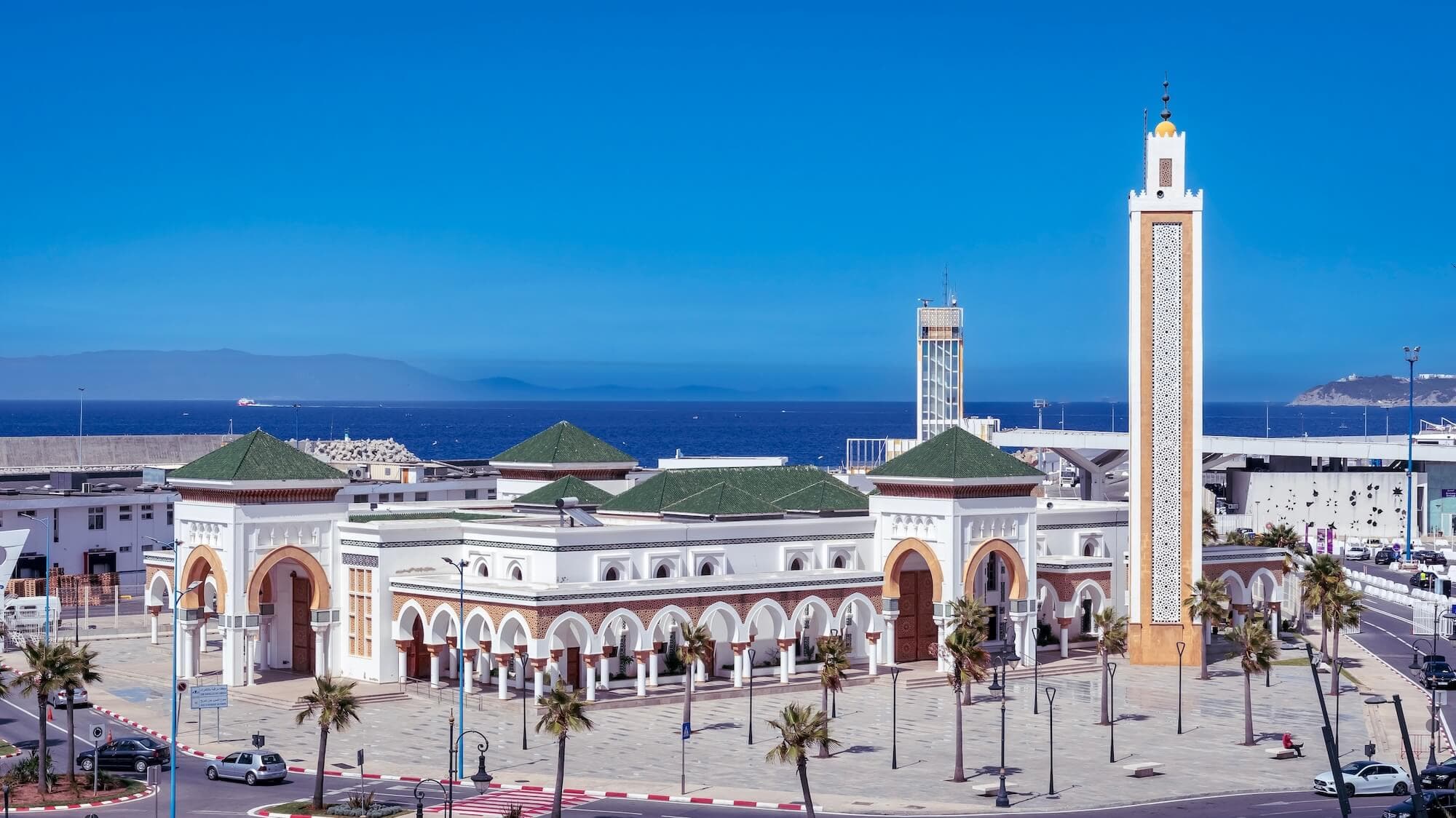 Day 3
Day 3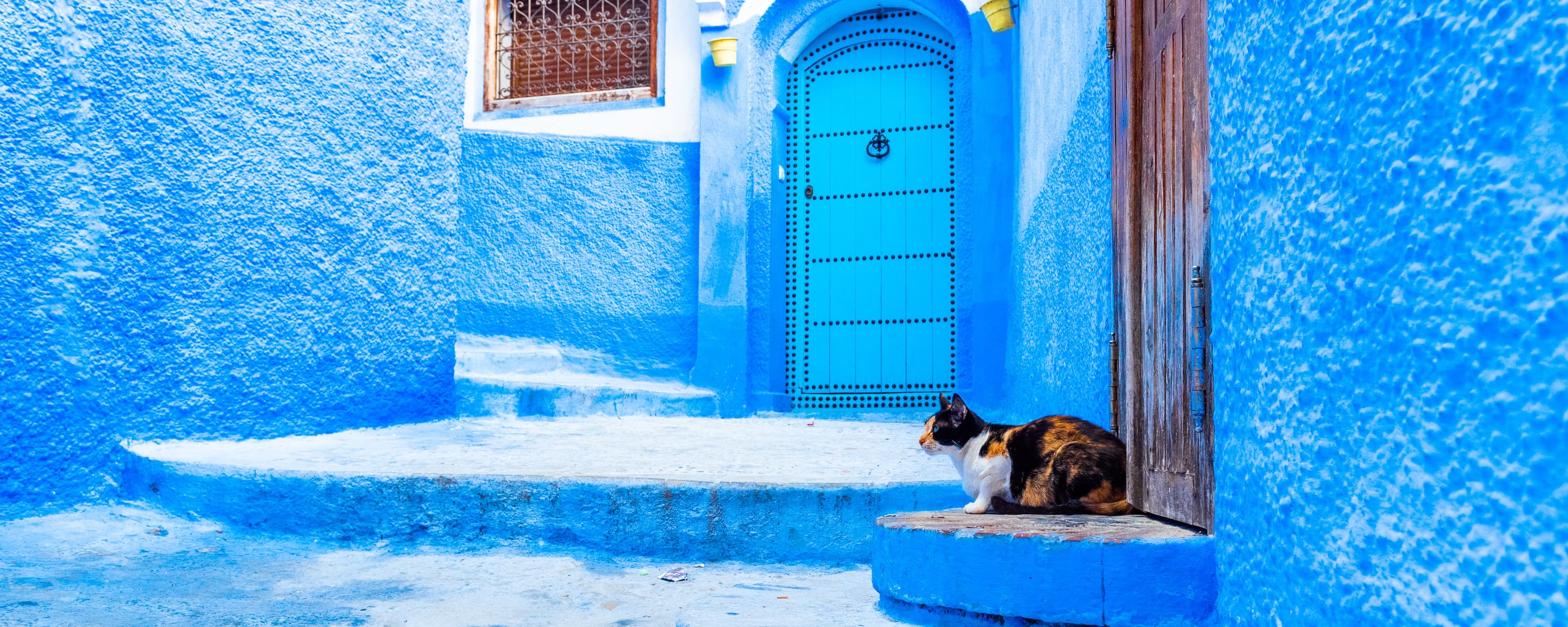 Day 4
Day 4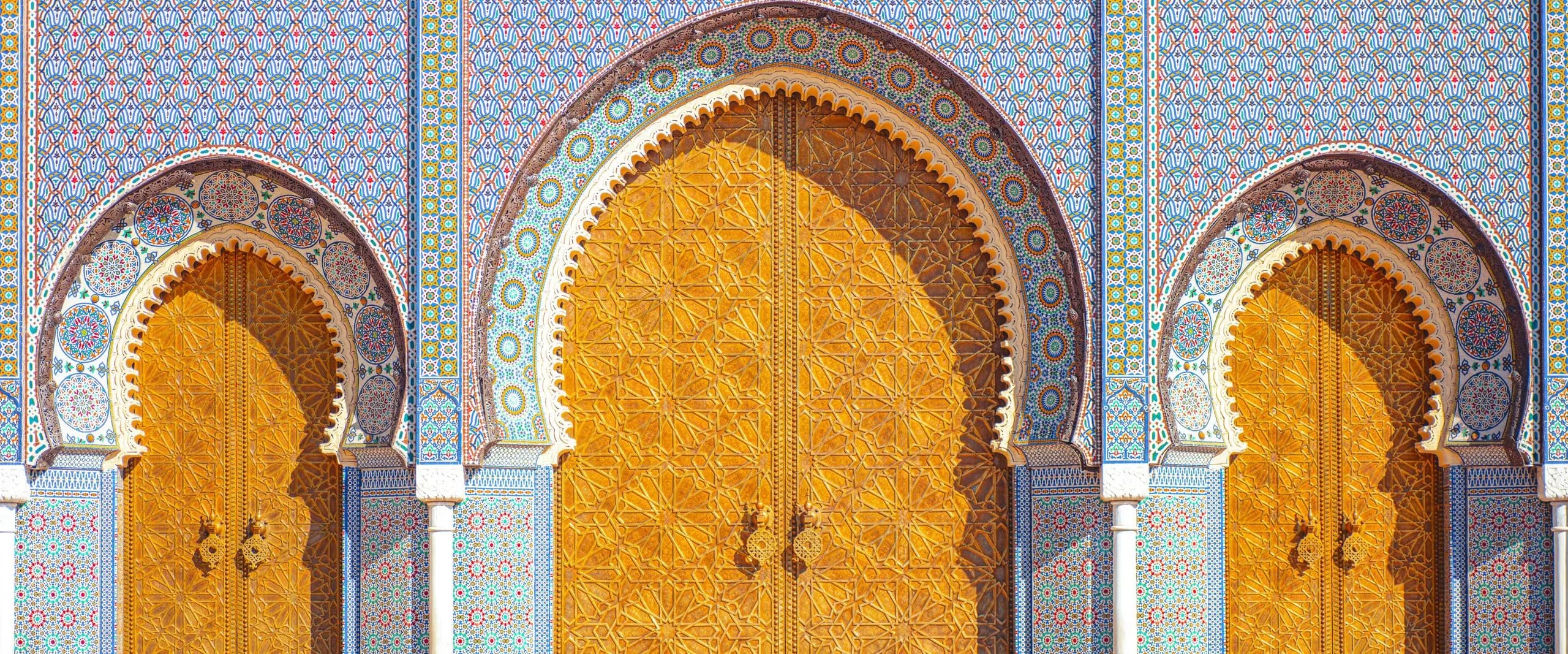 Days 5–6
 Day 7
Day 7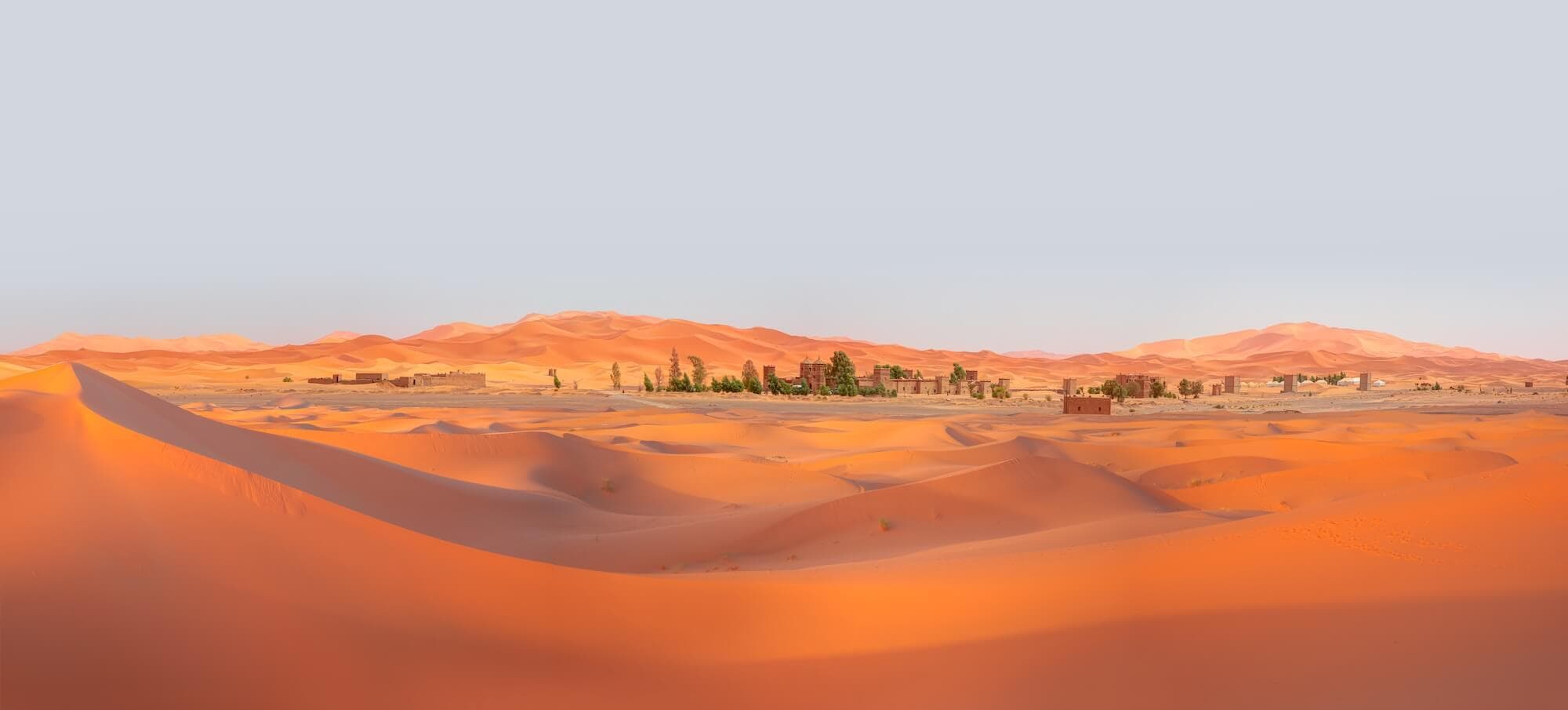 Day 8
Day 8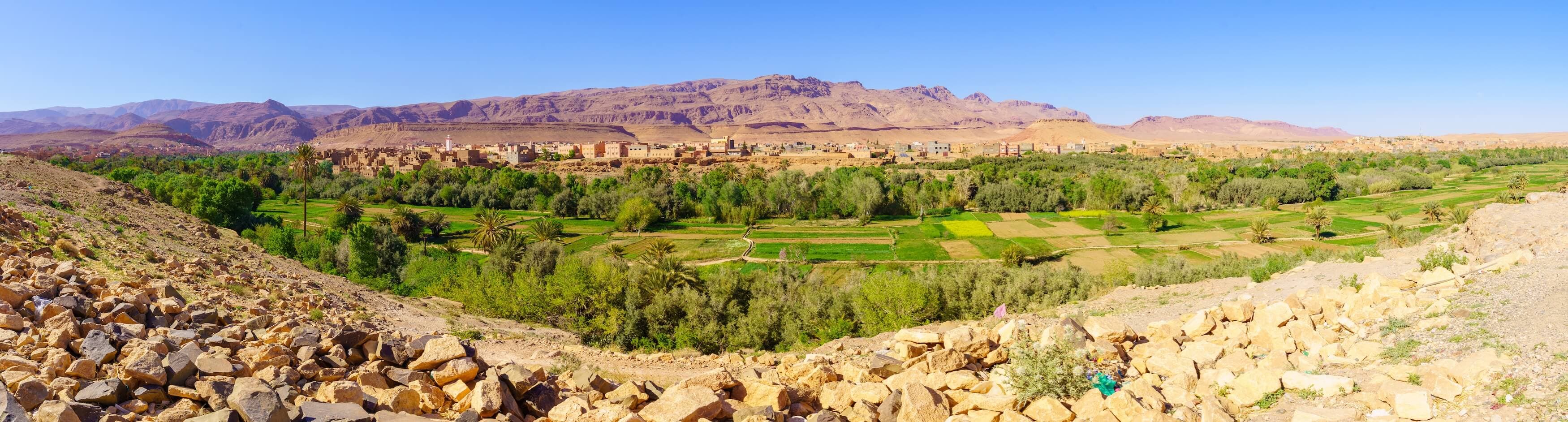 Day 9
Day 9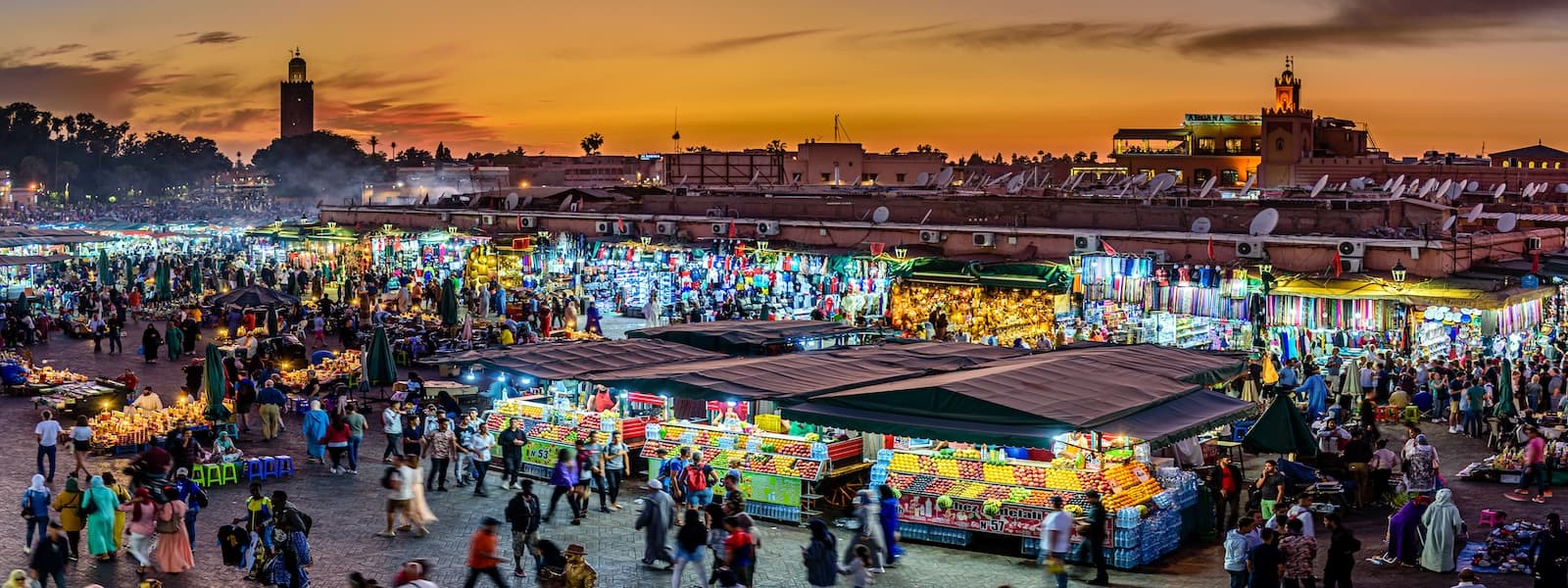 Days 10–12
 Day 13
 Day 14
Day by day
Where you go, where you sleep, and what you'll see — day by day.
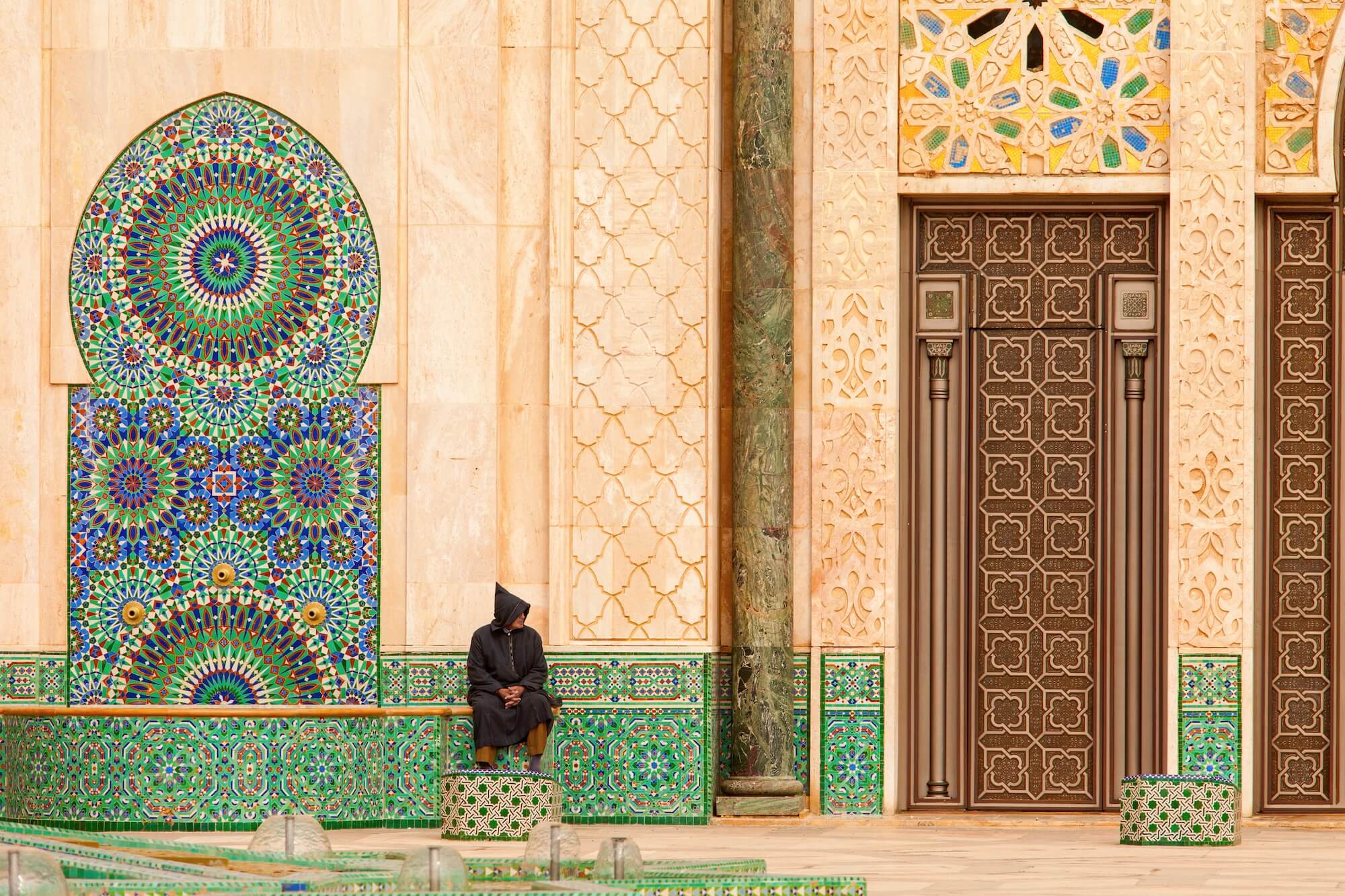
Your private driver meets you at Casablanca Mohammed V International Airport and transfers you the short distance into the city. Before continuing north, you visit the magnificent Hassan II Mosque — one of the largest mosques in the world, dramatically perched at the edge of the Atlantic, with the world's second-tallest minaret rising 210 metres above the water. After a guided tour inside (one of the few mosques in Morocco open to non-Muslims) and a suggested lunch nearby, your driver takes you ninety minutes north to Rabat. Check in to your hotel and enjoy a quiet evening in Morocco's elegant capital.
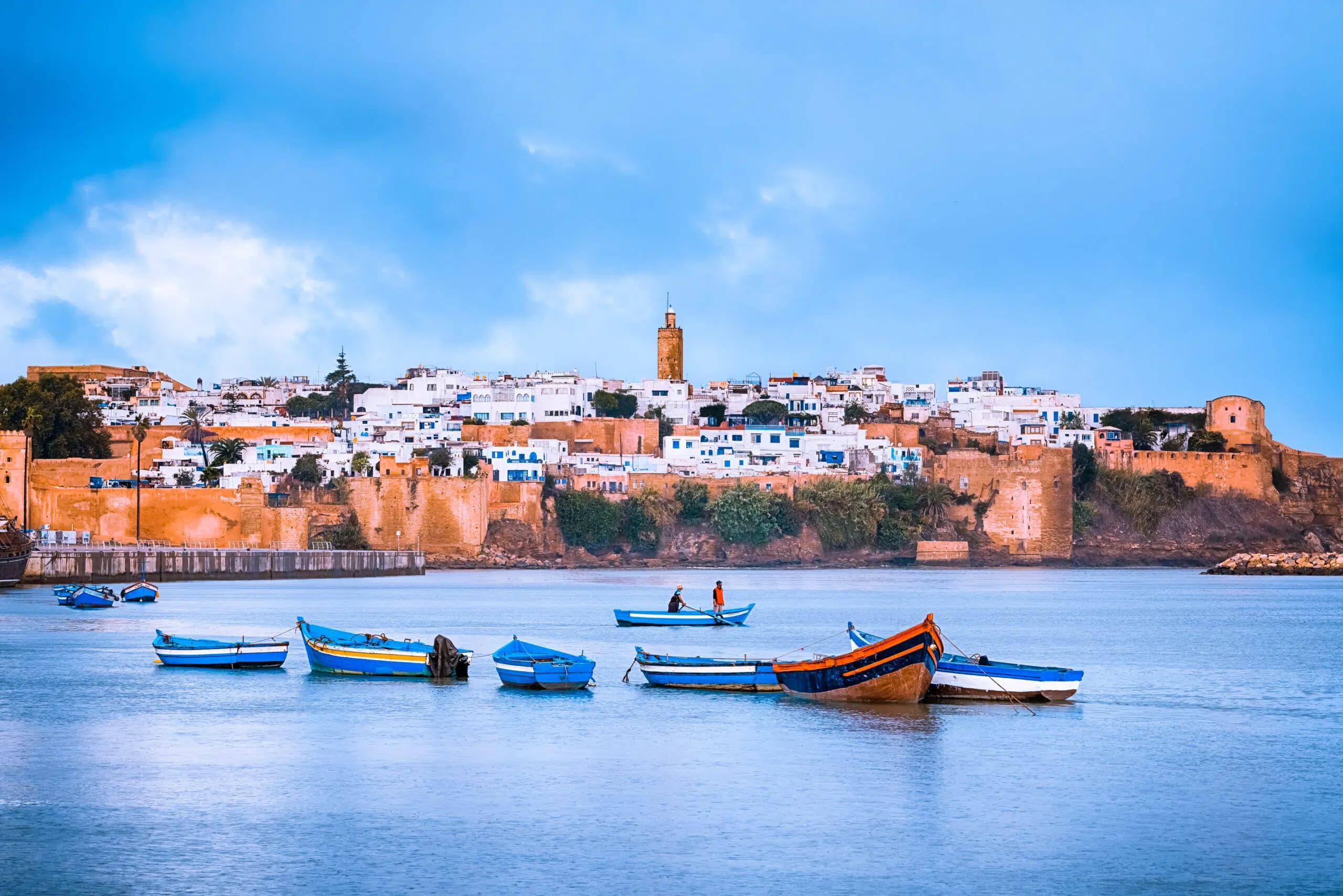
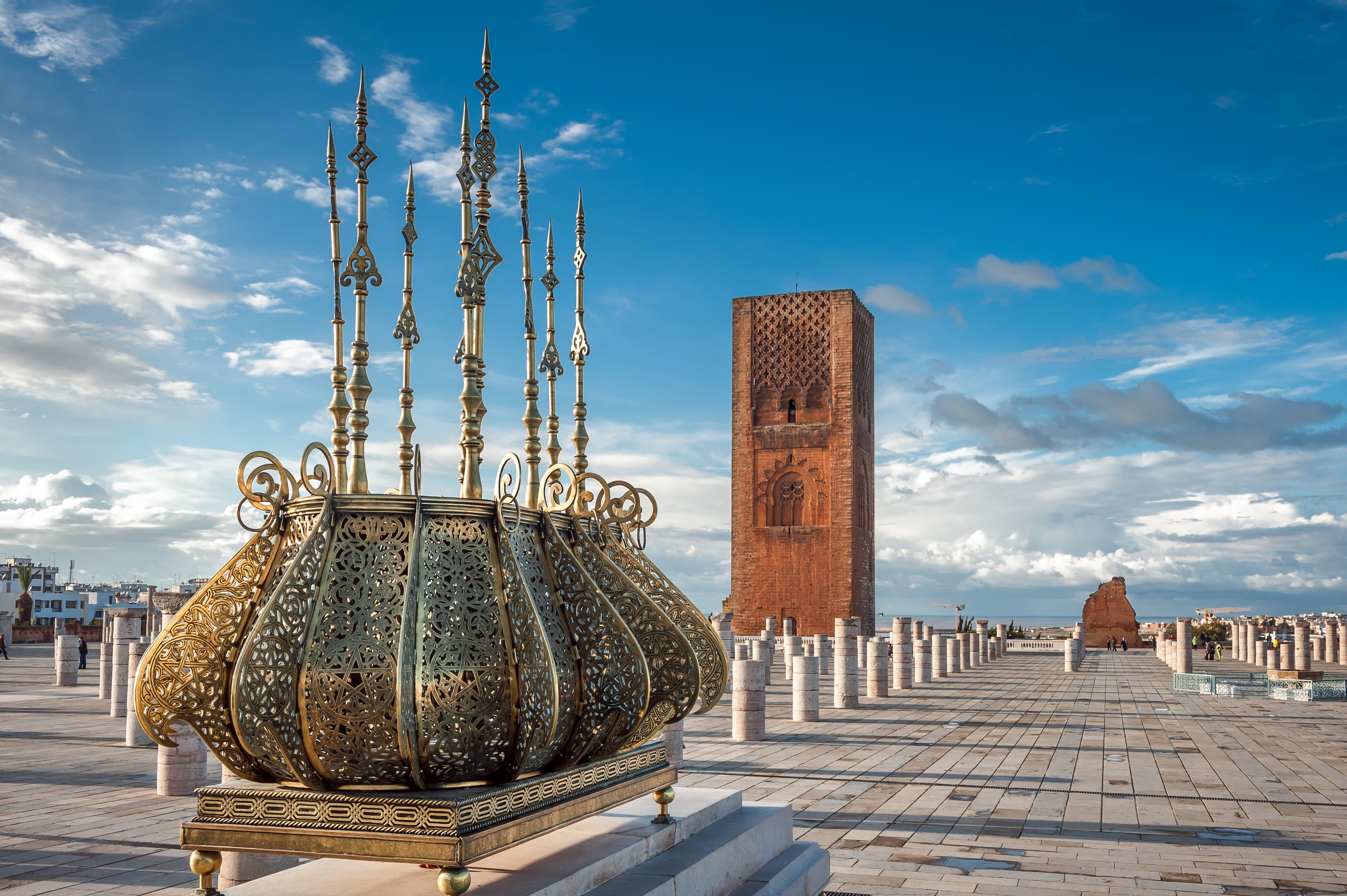
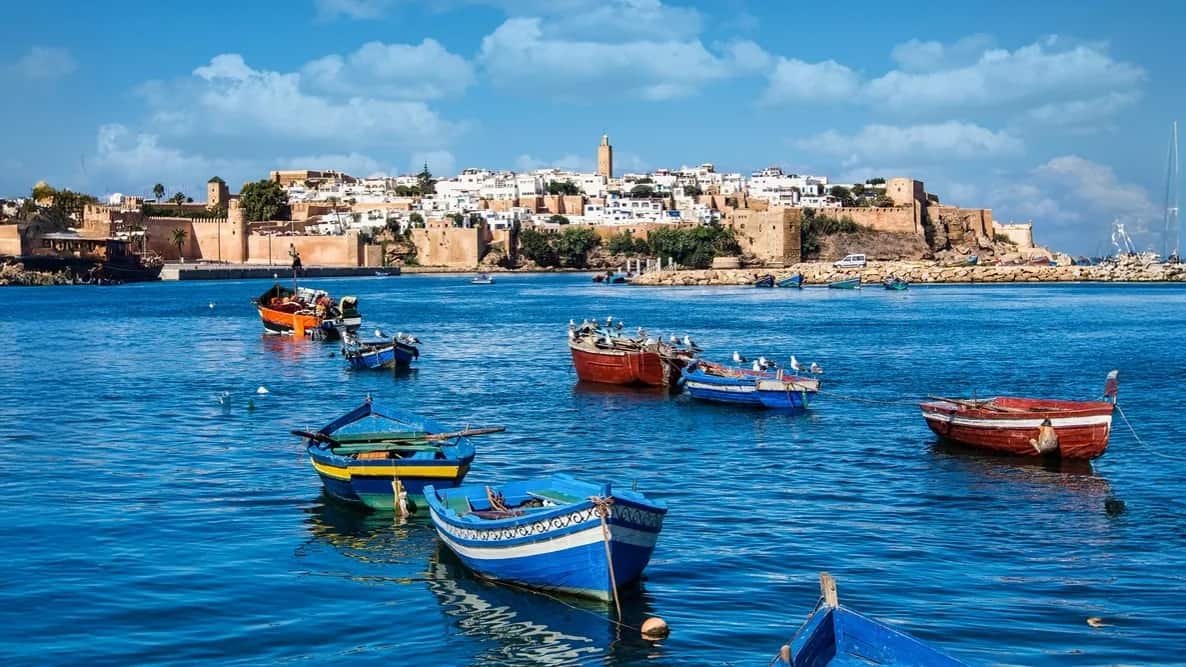
A full guided day through Rabat's imperial monuments and medina — one of Morocco's most underrated cities, calm and walkable without the crowds of Fes or Marrakech. Visit the Hassan Tower, the unfinished 12th-century minaret intended to be the world's largest, and across from it the elegant white Mausoleum of Mohammed V, where the current King's father and grandfather rest beneath a cedar ceiling carved by 800 craftsmen. Walk the blue-and-white lanes of the Kasbah des Oudayas with its Andalusian gardens overlooking the river, then close the day at the Chellah Necropolis — a hauntingly beautiful site where Roman ruins, Merenid tombs, and storks nesting on ancient columns share the same gardens.
Drive north along the Atlantic coast to Tangier — arguably Morocco's most internationally storied city. Hemingway drank here. Matisse painted here. Paul Bowles lived here for 52 years. Visit the Kasbah and medina, walk the Grand Socco market square, and drive to Cap Spartel lighthouse at the precise point where the Atlantic becomes the Mediterranean. The view across the Strait of Gibraltar — with Spain clearly visible 14 km away — is one of North Africa's most exhilarating moments.
Drive through the Rif Mountains to Chefchaouen — a mountain city founded by Moorish refugees from Spain in 1471, its blue-washed medina a visual wonder unlike anything else in the Mediterranean world. Arrive by early afternoon to explore at leisure: through Plaza Uta el-Hammam (with its 15th-century kasbah and great mosque), along the washing fountain alley, up to the Spanish mosque hill for panoramic views over blue rooftops and Rif ridges. Stay for the golden hour — when the blue walls glow amber and the mountains go purple behind.
Drive south to Meknes — the imperial city Sultan Moulay Ismail built to rival Versailles. Stand before Bab el-Mansour, the most ornate gateway in North Africa. Continue to Volubilis, a UNESCO Roman city covering 40 hectares, where 2,000-year-old mosaic floors depicting Orpheus and Bacchus still lie exactly where Roman families once walked. Arrive in Fes — Morocco's most rewarding city — at sunset.
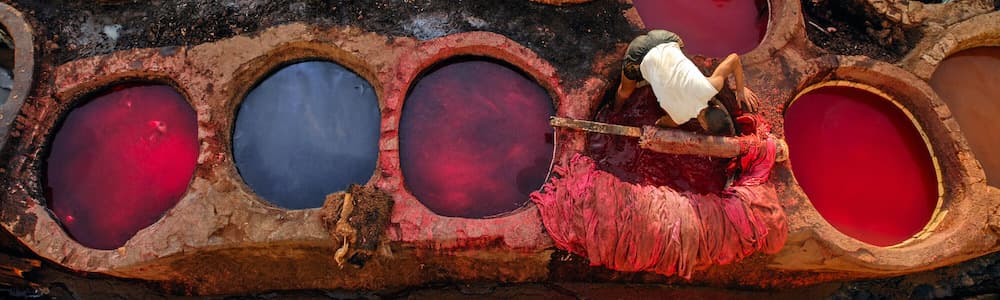
Fes el-Bali was founded in 789 AD and has barely changed. Your licensed local guide — born in the medina — takes you through the Attarine Medersa (a 14th-century theological school whose courtyard is one of the most beautiful enclosed spaces in the Islamic world), the Chouara Tanneries (leather processed in the same stone vats since the 11th century), the Mellah, and the Royal Palace gates. Lunch on a rooftop with panoramic medina views.
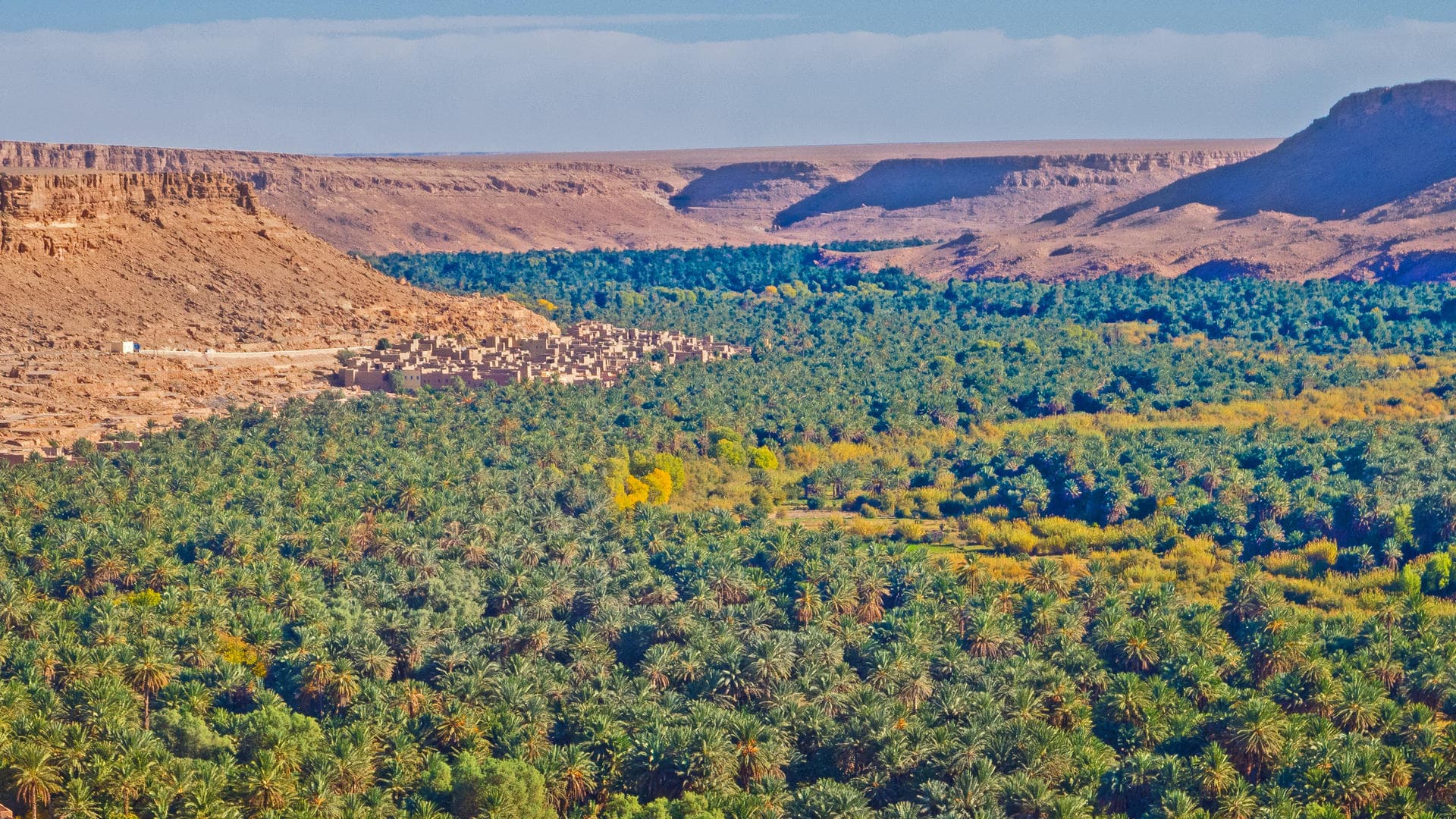
Drive south through Ifrane — the alpine Swiss-style town built by the French Protectorate, with stone chalets and a famous snow-covered lion sculpture. Continue through cedar forests where Barbary macaques roam free, then descend through the Ziz Valley — a river gorge with thousands of date palms creating a green canopy above the arid landscape. Arrive in Erfoud, gateway to the Sahara, at sunset.
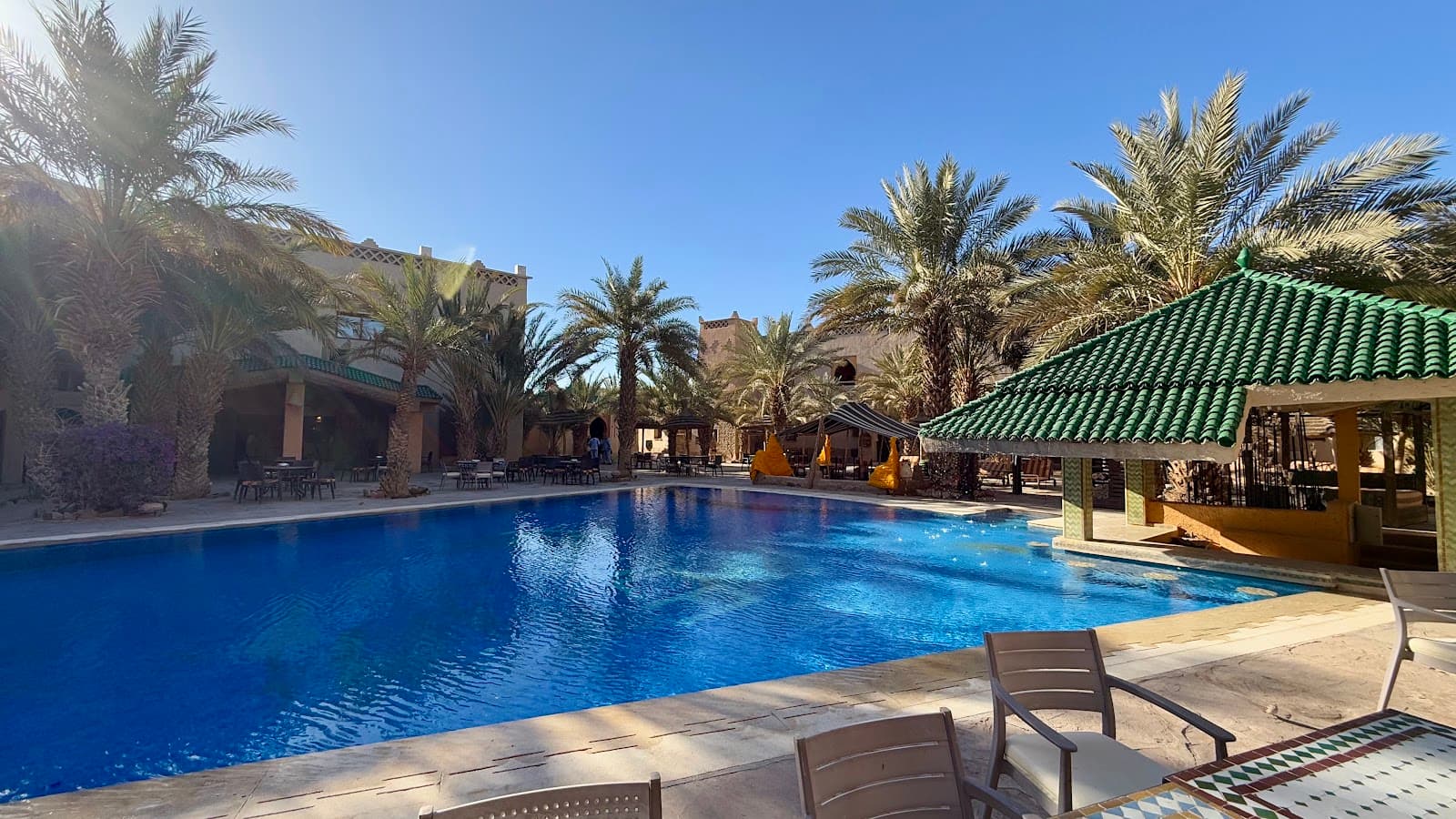
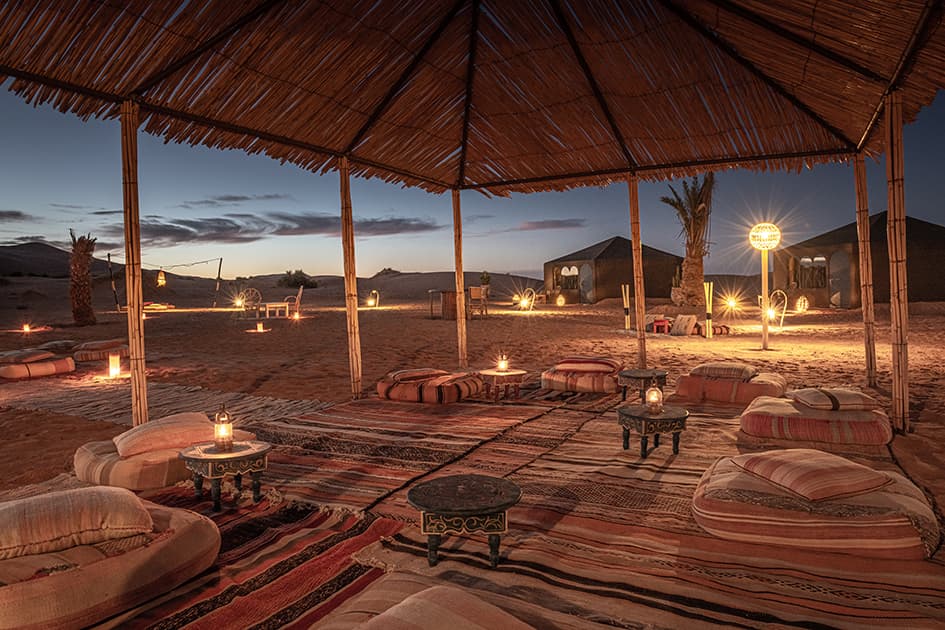
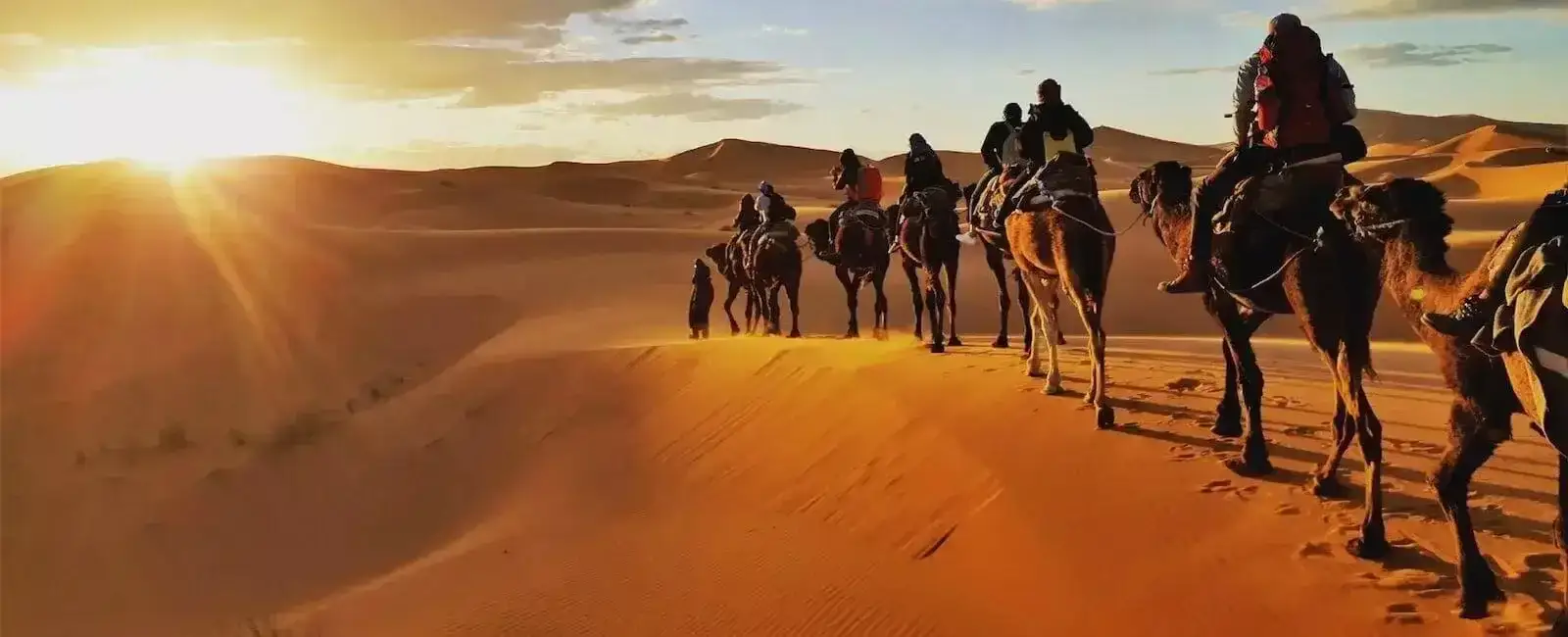
Explore Rissani — birthplace of the Alaouite dynasty and once the great terminus of the trans-Saharan trade route. Detour to Khamlia village for a deeply moving Gnawa music performance under a goatskin tent. Then arrive at the edge of Erg Chebbi: 50 kilometres of the most spectacular sand dunes in the world. Mount your camel as the sun begins its descent — the slow rhythm, the dunes turning gold and amber and red. Luxury desert camp awaits: dinner, drumming, ten million stars.
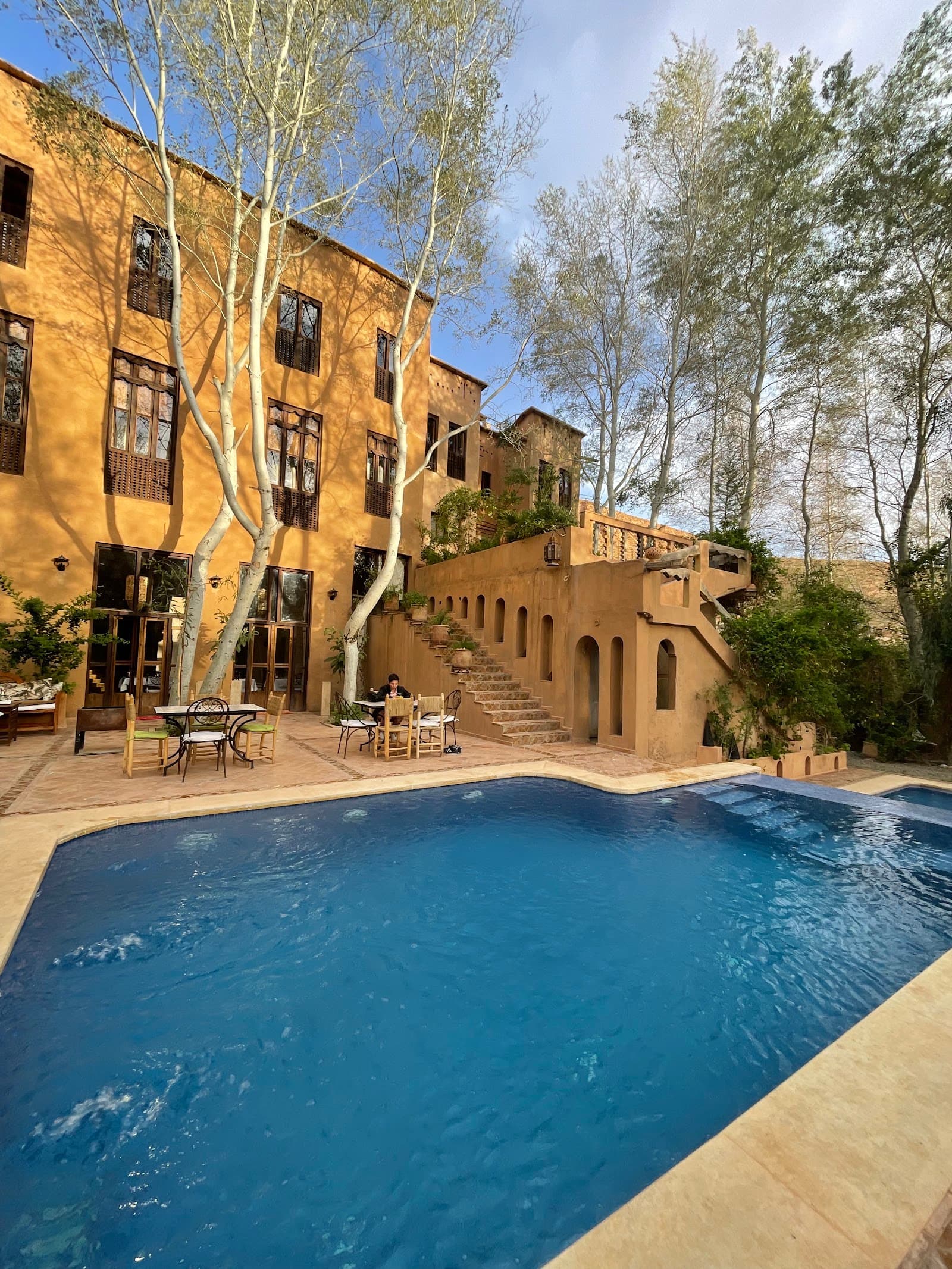
Rise at 5:30am. Climb the dune. Watch the world turn gold. Then travel west through the Berber heartland — past Tinghir's vast date palm oasis to Todra Gorge, where sheer 300-metre limestone cliffs create a slot canyon dramatic enough to stop your breath. Continue to the Dades Gorge, a wider valley of sculpted red rock formations. Spend the night in a lodge perched above the valley floor.
Travel the legendary caravan route through Skoura's palm oasis and Ouarzazate's film studios to Aït Ben Haddou — the UNESCO mud-brick fortress filmed by Ridley Scott, Iñárritu, and dozens of others. Walk its thousand-year-old alleys with your guide, past grain stores still in use and craftspeople still making pottery and jewellery. Cross the Tizi n'Tichka Pass (2,260 m) and descend to Marrakech as the evening lights begin to sparkle below.
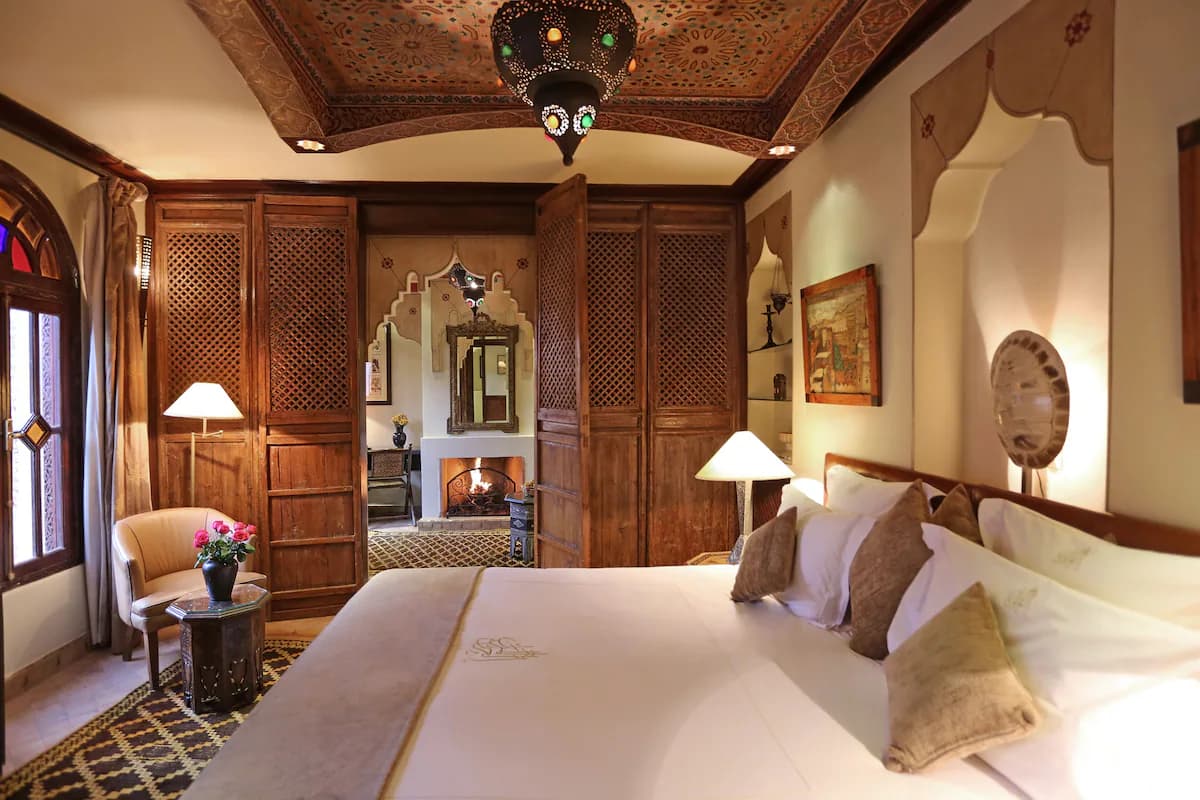
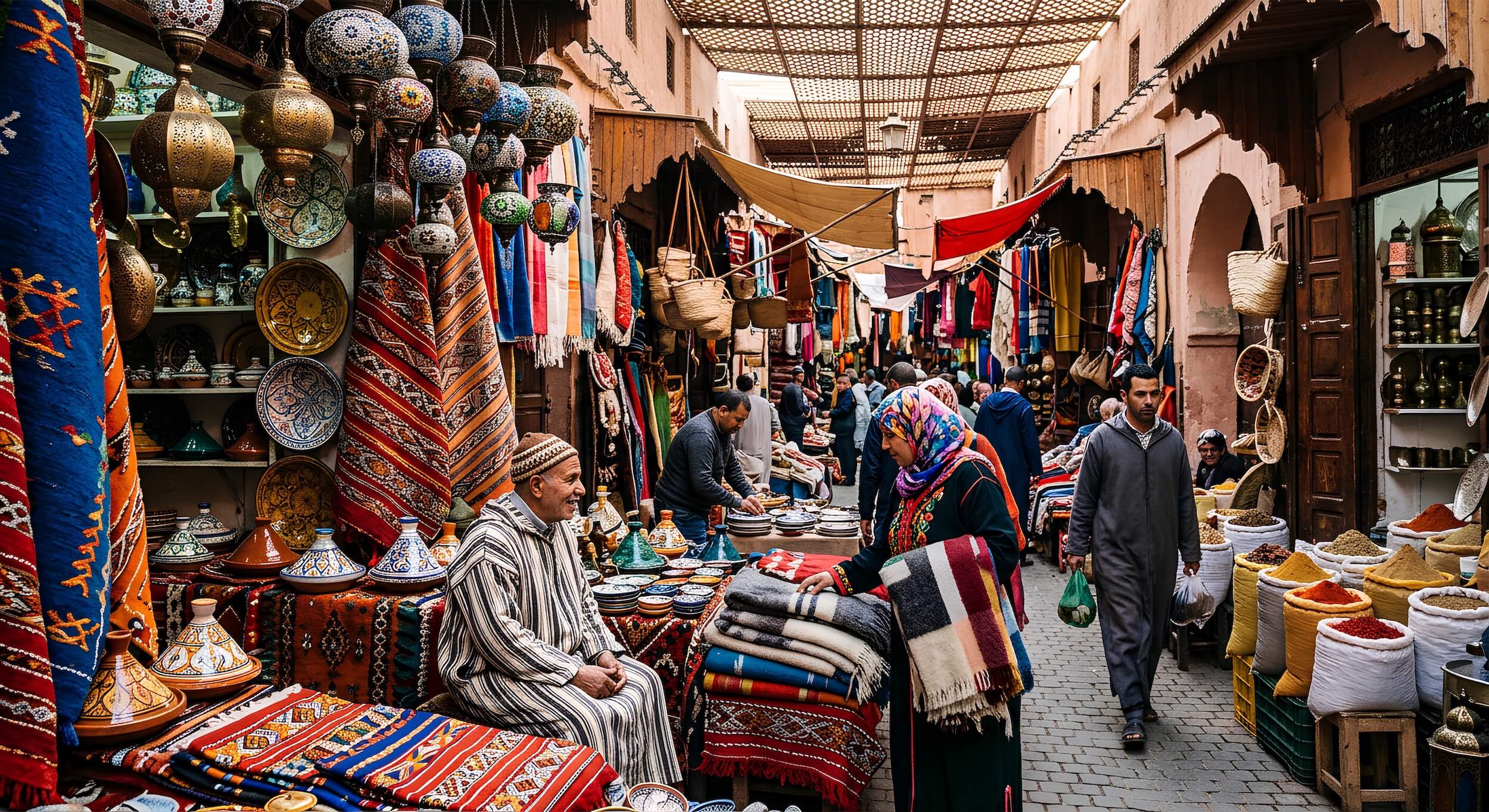
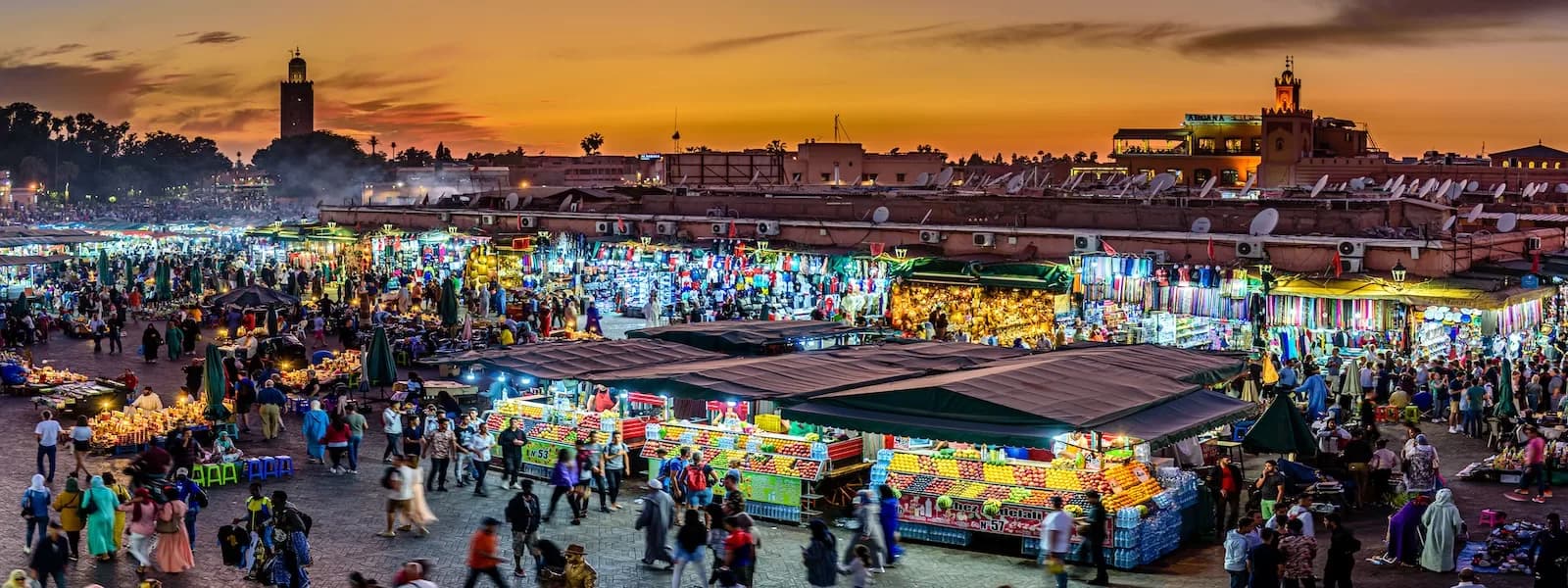
Full-day guided discovery of Marrakech with your licensed local expert. The Saadian Tombs — discovered behind a sealed doorway in 1917. El Badi Palace — stripped of its 360 carved marble columns by a later sultan, its empty ruins now haunted by storks. The opulent Bahia Palace. The dyer's souk. The lantern market. As dusk falls: Djemaa el-Fna — storytellers, Gnawa musicians, acrobats, and the rising smoke of a hundred food stalls.
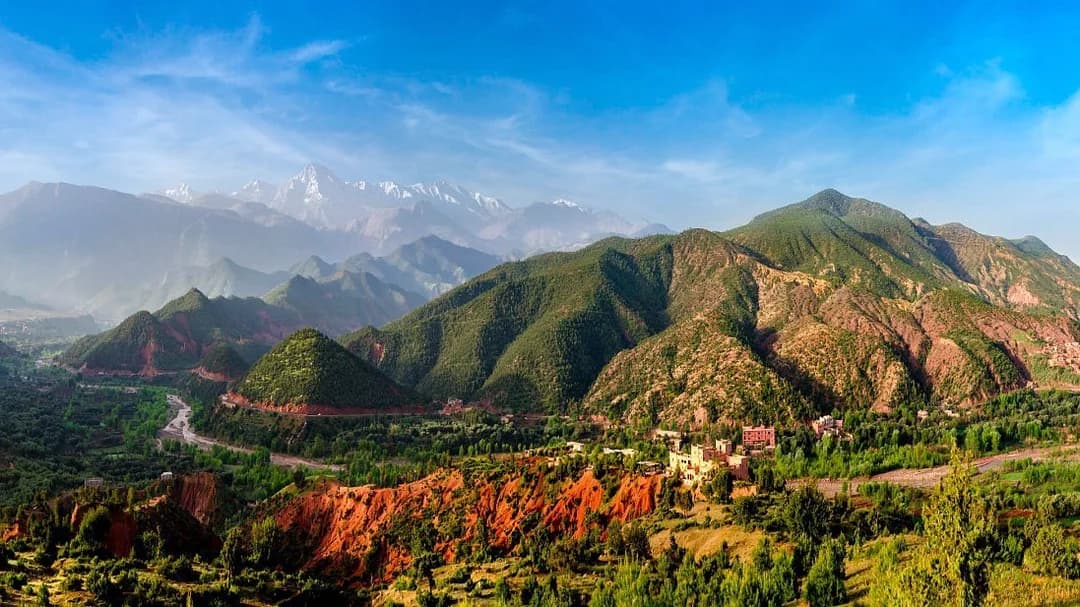
A wholly free day. Sleep in, revisit a souk you loved yesterday, find a new rooftop terrace, or choose one of the optional experiences. Your driver and guide remain on call. Many travellers choose this day for their cooking class or hot-air balloon at sunrise — but there's no wrong answer. This is your Marrakech.
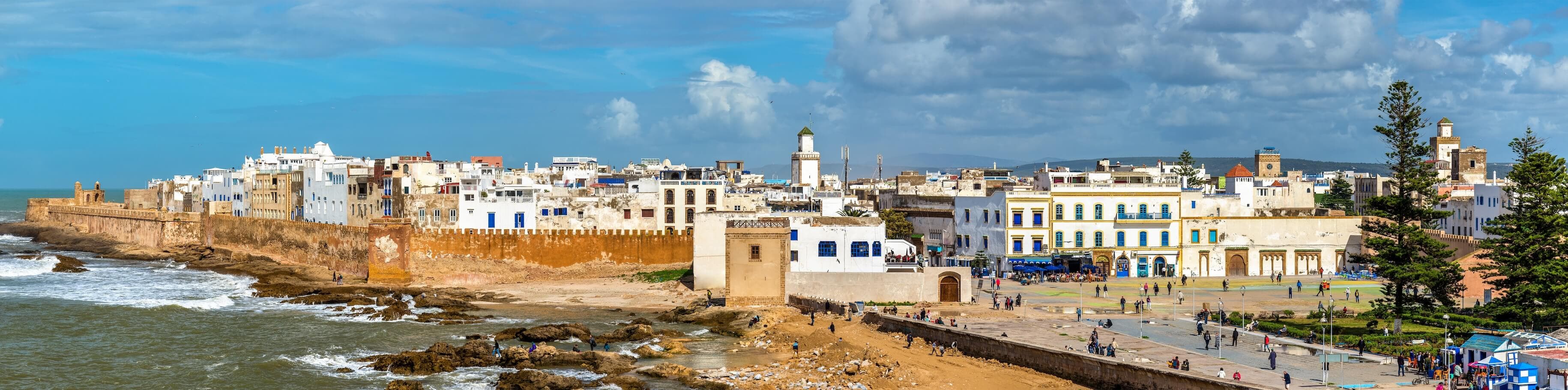
Drive west through argan tree forests (keep an eye out for goats climbing in the branches — not a legend, entirely real) to Essaouira on the Atlantic coast. This UNESCO-listed fortified port is a complete change of atmosphere — cooler, windswept, bohemian, deeply beautiful. Blue fishing boats in the ancient harbour. Sea ramparts battered by Atlantic swells. Artisan workshops, a Berber women's argan oil cooperative, fresh seafood grilling at the port as the sun dips below the Atlantic.
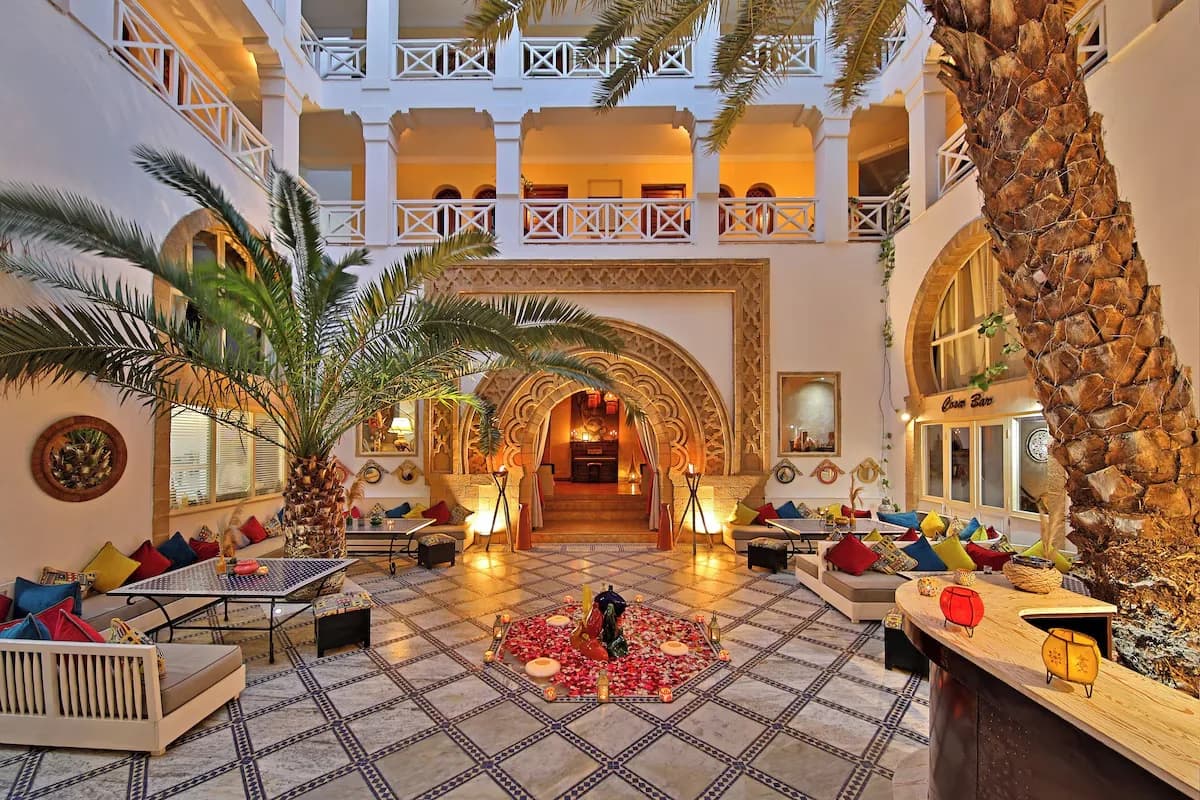
Drive the Atlantic coast road north past Safi — a working pottery town whose hillside workshops produce the distinctive blue-and-white ceramics found all over Morocco — to El Jadida, a UNESCO-listed Portuguese coastal fort whose 16th-century underground cistern is one of Morocco's most hauntingly beautiful spaces (a vaulted Gothic chamber with a shallow reflecting pool that makes the stone arches seem to float). Lunch at El Oualidia, a sheltered Atlantic lagoon where the freshest oysters in Africa are harvested and served simply on ice. Back to Casablanca for a final evening.
A final Moroccan breakfast, then your private driver takes you to Mohammed V International Airport. In 14 days you have seen Morocco from its northern tip at the Strait of Gibraltar to the Sahara, and from the Atlas Mountains to the Atlantic coast. You've walked cities that were old when Europe was still building its first cathedrals, slept in the silence of the desert, and eaten oysters at a lagoon nobody talks about at home. You've seen Morocco — all of it. This is what majestic travel looks like.
The shape of the journey
From past travelers
“The trip, eleven days, was absolutely wonderful and an exceptional value. Having our own dedicated driver and guide with great knowledge of Morocco and his flexibility made the trip meaningful, delightful, and fun for family members from…”
“We had a lovely experience on our family trip in Morocco. We took our adult kids and it was a perfect way to reconnect. Morocco is such a beautiful and varied country. It was going to be a challenge for me to put together an itinerary so…”
“Three couples, ie 6 of us took a 7 day bespoke trip to Morocco with Brahim and his troupe. It was an awesome experience! We saw Casablanca, Fes, Merzouga, Ourzazate, and Marrakech along with stops on the way at Erfoud, Ait Ben Haddou. Th…”
Make it yours
Tell us what you'd change, and the draft changes. That's the point of a private trip.
Any stop stretches — nights re-balance around what you love most, and the drives re-plan themselves.
Walks shorten, drives break earlier, and the right experiences appear at the right ages.
Begin elsewhere, or end on the coast — the route bends; only the flight home moves.
Itemized, always
Pricing by accommodation tier
The private driver, licensed guides and day-by-day itinerary are identical across every tier — only where you sleep changes.
| Accommodation tier | Per person (2 sharing) | For two (total) | Per person (group of 4) |
|---|---|---|---|
| Classic · 3.5★ Handpicked traditional 3★ riads and hotels in prime medina locations, plus comfortable tented Sahara camps — authentic and excellent value. | $5,100from · per person | $10,200both travelers | $4,335per person · save |
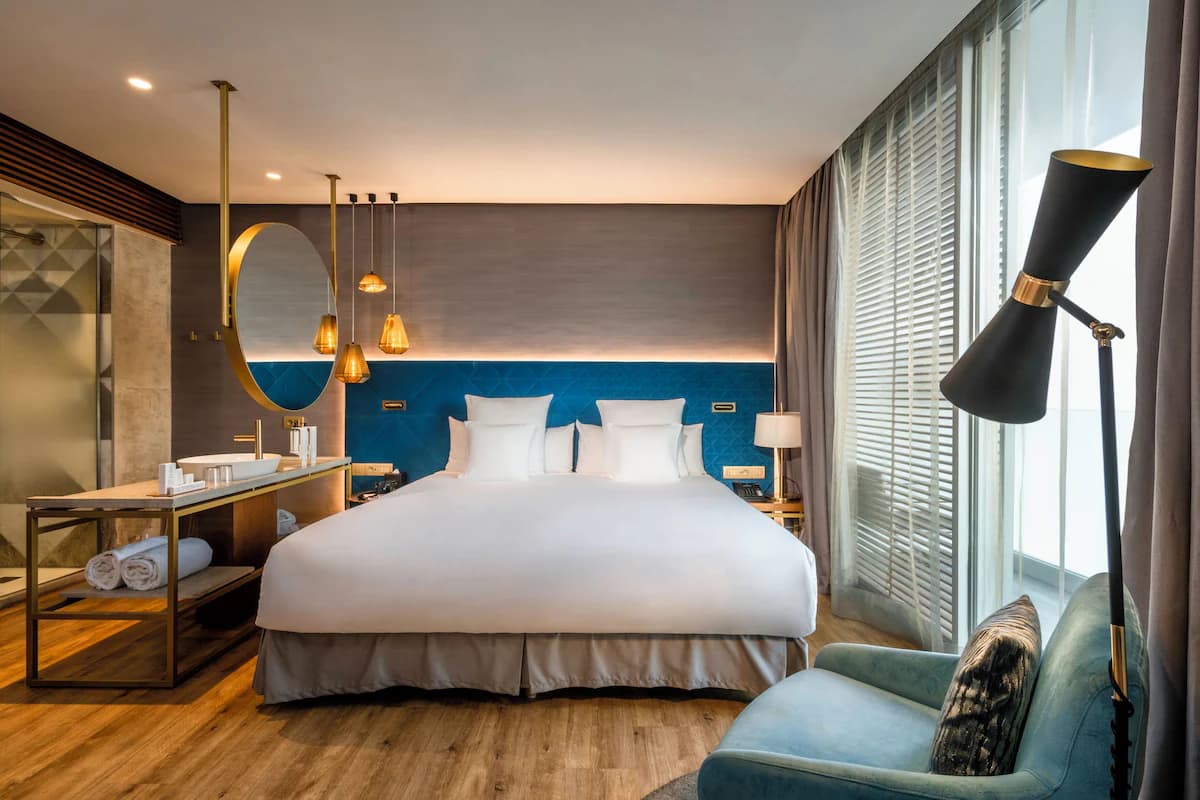
| Platinum (Boutique) · 4★ Signature 4★ boutique riads and hotels with elevated service, and luxury glamping camps with private en-suite tents in the Sahara. | $5,850avg · per person | $11,700both travelers | $5,090per person · save |
| Luxury · 4–5★ Palace-class riads and premium 4 & 5★ hotels in key cities, paired with exclusive desert camps — Sofitel, Mövenpick and award-winning riads. | $7,350avg · per person | $14,700both travelers | $6,540per person · save |
| Ultra-Luxury (Palace & Villa) · 5★ · palaces & villas Morocco's most legendary addresses — La Mamounia, Royal Mansour, Kasbah Tamadot — and private villas. | $11,250from · per person | $22,500both travelers | $10,125per person · save |
Figures are a per-person guide for 15 days in USD (a single supplement applies for solo rooms). Your free written proposal names the exact properties and confirms the final price — in USD, CAD or EUR.
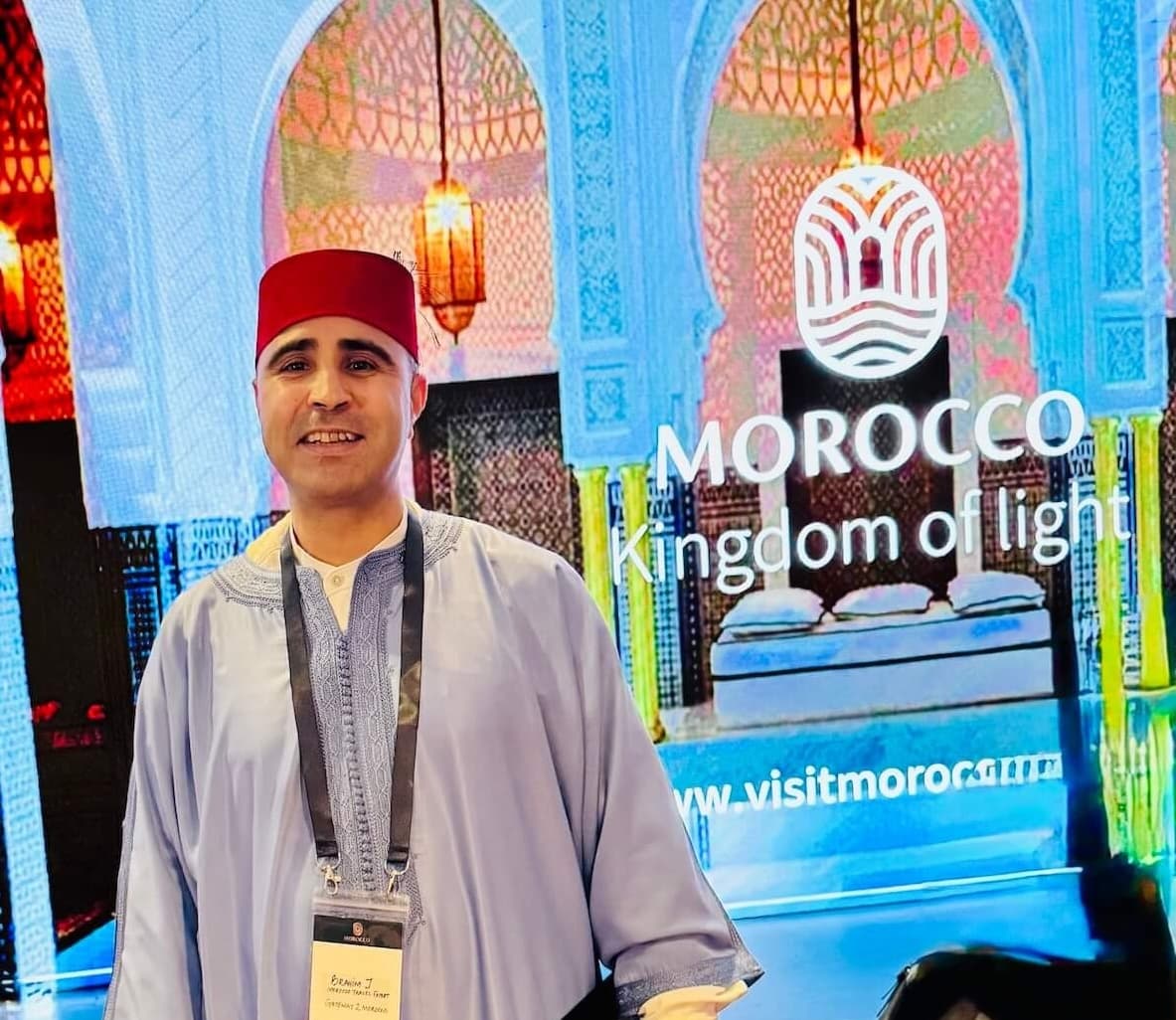
Born in Morocco's High Atlas, based in Canada. Brahim designs and answers every itinerary himself — by phone, WhatsApp or email, whichever suits you.
Your draft begins
Tell us who's traveling and what you'd change. Brahim replies personally within 24 hours; your written proposal follows within 48.
Prefer to talk it through? Brahim's direct line, toll-free and WhatsApp are just above — a real person, 7 days a week, 8 am–8 pm PT.
Good to know
If this one is close
Most popular11 days · 10 nights
Rabat → Fes → Erfoud → Merzouga → Dades Gorge → Marrakech → Casablanca
Experience Morocco’s four imperial cities, Volubilis and Erg Chebbi Sahara on an 11-day private tour with luxury camp, local guides and flexible start in Casablanca or Marrakech.
From USD 3,740/ person · 2 travellers sharing
 Most popular
13 days · 12 nights
Casablanca → Rabat → Chefchaouen → Fes → Erfoud → Merzouga → Dades Gorge → Marrakech → Essaouira → Casablanca
Discover Morocco on a 13-day private tour: imperial cities, the Sahara, the Atlas and Chefchaouen.
From USD 4,420/ person · 2 travellers sharing
 Heritage
10 days · 9 nights
Casablanca → Fes → Erfoud → Merzouga → Dades Gorge → Marrakech
Experience two thousand years of Jewish heritage in Morocco on a 10-day private tour, with Casablanca’s Museum of Moroccan Judaism, the mellahs of Fes and Marrakech, Volubilis, Erg Chebbi Sahara, and hand-picked riads
From USD 3,400/ person · 2 travellers sharing
From the atlas — read before you travel
Begin your route
Tell us who's traveling and what you'd change. Brahim designs every itinerary himself — and there's no deposit until it's exactly right.