BackgroundJewish heritage in Morocco: a short history
Jewish communities have lived in Morocco for many centuries, in the Atlantic ports, the imperial cities and the oasis towns of the south. In many cities they lived in a walled quarter called the mellah. Fes built the first one in the mid-15th century, and it became the model for the rest. For the wider story of dynasties and cities, our guide to Moroccan history sets the scene.
Moroccan Jewish history reached its demographic peak around 1948, at about 250,000 people, roughly one in ten Moroccans (Times of Israel). In the decades that followed, most emigrated. Estimates of the community today vary, but the World Jewish Congress puts it at roughly 2,000 to 3,000, most of them in Casablanca.
That history is still present in public life. Morocco's 2011 constitution says in its preamble that national unity is “nourished and enriched by its African, Andalusian, Hebraic and Mediterranean influences” (full text of the constitution). A royal programme begun in 2010 had renovated more than 160 Jewish heritage sites by 2022. The WJC also counts 13 famous pilgrimage tombs of revered rabbis, cared for by local Muslims.
For a traveller, that changes the visit. These are not ruins with a plaque but places that are maintained, often guarded, and in several cases still used for prayer and pilgrimage.
Where to goJewish sites in Morocco, city by city
Four cities carry most of the story, listed in the order our route usually follows. Four smaller places follow for those with more time.
Casablanca: the living community
Start in Casablanca, where most of Morocco's Jews live today. The Museum of Moroccan Judaism is at 81 Rue Chasseur Jules Gros in the Oasis district, in a 1948 villa that was once a Jewish orphanage. It became a museum in 1997 and is often described as the only Jewish museum in the Arab world. King Mohammed VI reopened it after renovation on 20 December 2016. Inside you will find Torah scrolls and ritual objects, traditional costumes and jewellery, a reconstructed silversmith's workshop, and a reconstructed 1930s synagogue brought from Larache. Hours vary, so we call ahead before every visit rather than trust what is posted online.
Temple Beth-El, at 67 Rue Jaber ben Hayane, was completed in 1949. It is an active Orthodox synagogue with around 500 seats and fine stained glass, and it is a working house of prayer first, a sight second. Our Casablanca travel guide covers the rest of the city.
For observant travellers, Chabad of Casablanca offers prayers, Shabbat meals by prior registration and a current list of kosher restaurants. We point clients there rather than name restaurants ourselves, because openings change.
Fes: the first mellah
If you only see one mellah, make it Fes. Founded in the mid-15th century next to the royal palace, it was Morocco's first mellah and the model for the ones that followed. Look up as you walk: the houses open onto the street with balconies, unlike the inward-facing homes of the old medina.
The Ibn Danan synagogue is the one to see. It dates from the 17th century (the building is dated 1701), was restored with support from the World Monuments Fund and American Express, and reopened in 1999. Slat al-Fassiyin, also in the mellah, is possibly the oldest synagogue in Fes.
Then the Jewish cemetery: thousands of whitewashed tombs at the edge of the mellah, dating in their present form from the late 19th century. Two graves draw most visitors. Solica (Sol Hachuel), executed in 1834, is venerated by many who come here, and Rabbi Yehuda Ben Attar was one of the city's revered rabbis. A small museum occupies the old school building on the site.
Give the Jewish sites of Fes a full morning with a licensed guide (our Jewish heritage tour of Morocco gives Fes two nights), and the medina around them another half day. Our Fes medina private tour guide explains how we split the city.
Marrakech: the Saadian mellah
Marrakech's mellah was established in 1558 by the Saadian sultan Abdallah al-Ghalib, next to the El Badi Palace. For years its official name was Hay Essalam; in January 2017 a royal order restored the name El Mellah.
The Lazama synagogue (Slat al-Azama) is still active. Tradition holds that it is linked to Jews exiled from Spain in 1492. It was damaged in the September 2023 earthquake, so we confirm access close to your travel date rather than promise it months ahead.
The Miaara cemetery is described as the largest Jewish cemetery in Morocco, with more than 20,000 graves. It is a quiet, sobering counterweight to the noise of Jemaa el-Fna across the medina. Our Marrakech travel guide covers the rest of the city.
Essaouira: the House of Memory
Essaouira may be the most moving stop of all. Jews were once about 40% of the city's population. On 15 January 2020 King Mohammed VI opened Bayt Dakira, the “House of Memory”, in the restored Simon Attias synagogue (Slat Attia), together with the Haim and Célia Zafrani research centre (JTA's report on the opening). A restored synagogue, a place of memory and a research centre under one roof: take your time here.
Essaouira is also home to the tomb of Rabbi Haim Pinto (1743–1845), the focus of one of the country's best-known pilgrimages (see the calendar below). It is the easiest place in this guide to add to a longer trip; our private Essaouira tour guide shows how we spend two days there.
Rabat, Meknes, Tinghir and Ouezzane
- Rabat: the mellah in the old medina was built in the 19th century under Sultan Slimane. It fits naturally into the drive from Casablanca to Fes.
- Meknes: the Jewish cemetery, founded in 1682, was restored in 2022. Meknes sits about an hour from Fes and pairs with the Roman site of Volubilis.
- Tinghir: in the Todra valley the mellah still stands, though no Jews live there now. Kamal Hachkar's 2013 documentary “Tinghir-Jerusalem: Echoes from the Mellah” is worth watching before you go. Our 10-day route passes through Tinghir.
- Ouezzane: the tomb of Rabbi Amram Ben Diwan (died 1782) is at Asjen, near Ouezzane. His hiloula on Lag BaOmer, in May, draws thousands of pilgrims.
When to goPilgrimages and the Jewish calendar in Morocco
A hiloula (plural hiloulot) marks the anniversary of a revered rabbi's death, with pilgrimage to his tomb, prayer, candles, shared meals and music. They draw pilgrims from abroad as well as from Morocco.
The two best known: Rabbi Haim Pinto in Essaouira, around 26 Elul in September, over about four days with more than 2,000 pilgrims; and Rabbi Amram Ben Diwan near Ouezzane on Lag BaOmer in May. These are religious events, not tourist ones. If you want to attend, tell us early: we plan the route and hotels around the date, and you should expect crowds, security and very full hotels.
Mimouna is the Moroccan celebration on the night Passover ends, when families return to leavened food, with thin mofletta at the centre of the table. Traditionally, Muslim neighbours bring the leavened food for the evening. It is a home celebration, not a public event.
Key dates for 2027, from Hebcal's 2027 holiday calendar:
- Passover: from sunset on 21 April to 29 April 2027, with Mimouna on the evening it ends
- Lag BaOmer: 24–25 May 2027, the date of the Ouezzane hiloula
- Rosh Hashanah: 1–3 October 2027
- Yom Kippur: 10–11 October 2027
- Sukkot: 15–22 October 2027
- Rabbi Haim Pinto hiloula: around 26 Elul, which falls in late September 2027; confirm exact days with the organisers
Two planning notes. October 2027 is full of holy days, when active synagogues are for prayer and heritage sites may close, so a trip that month needs careful sequencing. And spring and autumn are also the most comfortable seasons for the whole country; our month-by-month guide to the best time to visit Morocco explains the trade-offs.
Before you goPracticalities: kosher food, Shabbat and synagogue visits
- Kosher food. According to the WJC, synagogues and kosher restaurants exist in Casablanca, Fes, Marrakech, Essaouira, Rabat, Tetouan and Tangier. Outside Casablanca the choice is limited and changes, so arrange meals in advance. On desert and gorge days there is nothing to walk into. Kosher meal arrangements are an optional extra, priced in your proposal. Tell us your level of observance and we plan to it.
- Shabbat. We plan the route so Shabbat falls in a city with a synagogue, never on a driving day or in a desert camp. If you avoid electronics, tell us early and we ask hotels in advance about keys, lifts and meals.
- Synagogue visits. Active synagogues are places of prayer. Visit outside services, men should cover their heads, and a small donation to the caretaker is appreciated.
- Modest dress. Shoulders and knees covered for synagogues and cemeteries, which also suits the medinas generally.
- Security checks. Expect a bag check at the Casablanca museum and at some synagogues, and guards at several Jewish sites. It is routine.
- Photography. Ask before photographing people, never photograph during services or on Shabbat, and ask the caretaker before taking pictures inside a synagogue or cemetery.
Our approachHow we plan a Jewish heritage trip
We have been guiding since 1999, Gateway2Morocco Travel since 2006, and every trip is 100% private: your own driver, and licensed local guides in each city. For a Jewish heritage trip we brief each guide on what you want to see, so the day is built around the mellah, synagogue and cemetery rather than squeezed between souks. Our private Morocco tours page explains how the driver and guide model works.
Three pacing rules we follow:
- 1
Shabbat in a city: arrive by Friday afternoon, spend Saturday on foot, and drive again on Sunday. On our 10-day route that usually means Shabbat in Casablanca, Fes or Marrakech.
- 2
One heavy day, then a lighter one. Cemeteries and memorial sites stay with people; we do not stack them back to back.
- 3
Call ahead on everything: museum hours, synagogue access, cemetery keys.
We match hotels to your travel style: Classic from USD $340 per person per day, Platinum about $390, Luxury about $490 and Ultra-Luxury from $750, all based on two sharing. The hotels we use most on this route:
- Casablanca: Barceló Anfa (Classic and Platinum) or Four Seasons Casablanca (Ultra-Luxury)
- Fes: Ryad Salama or Riad Mazar Fes (Classic and Platinum), Palais Faraj Suites & Spa (Platinum and Luxury)
- Marrakech: Hotel la Maison Arabe (Platinum and Luxury) or La Mamounia (Ultra-Luxury)
- Essaouira: Dar L'Oussia (Classic and Platinum) or Le Médina Essaouira Thalassa MGallery (Platinum and Luxury)
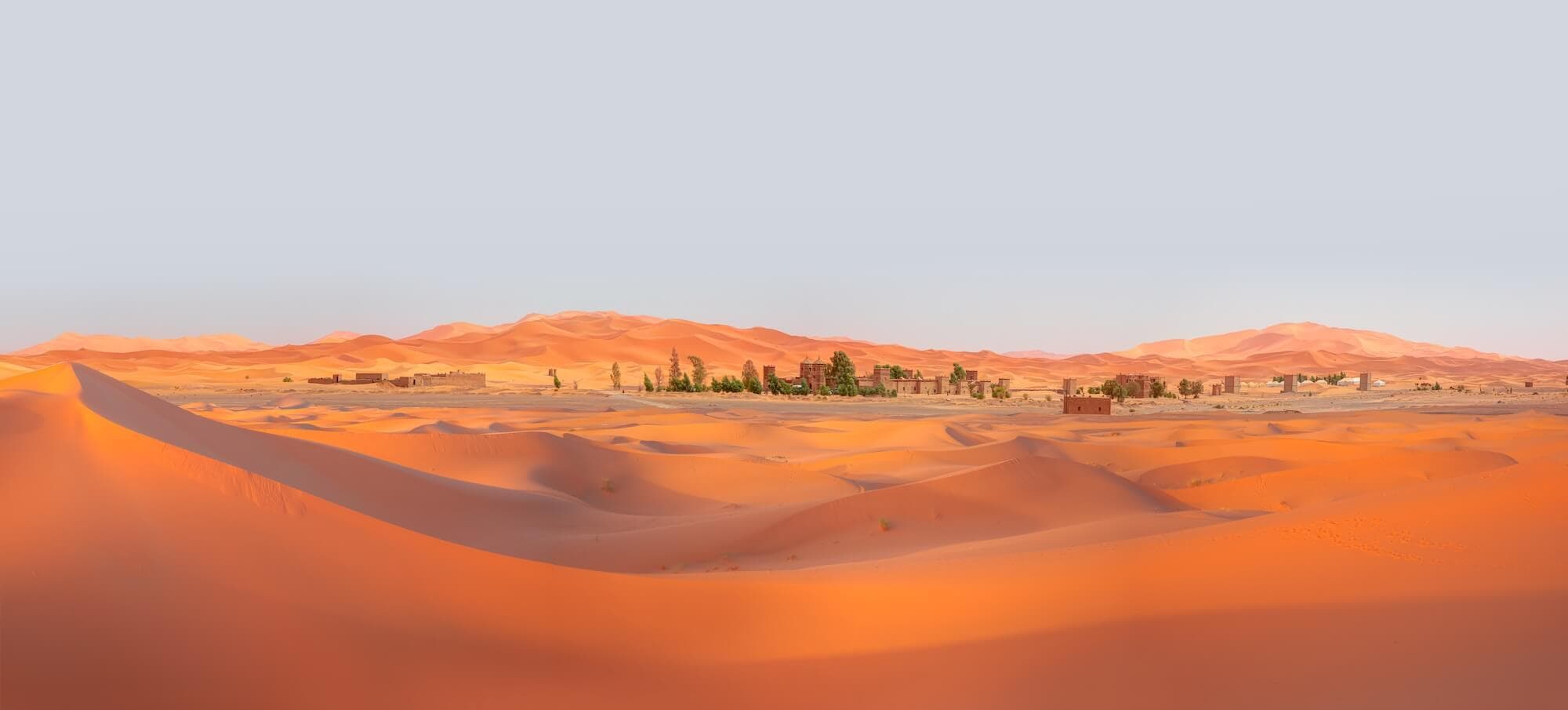
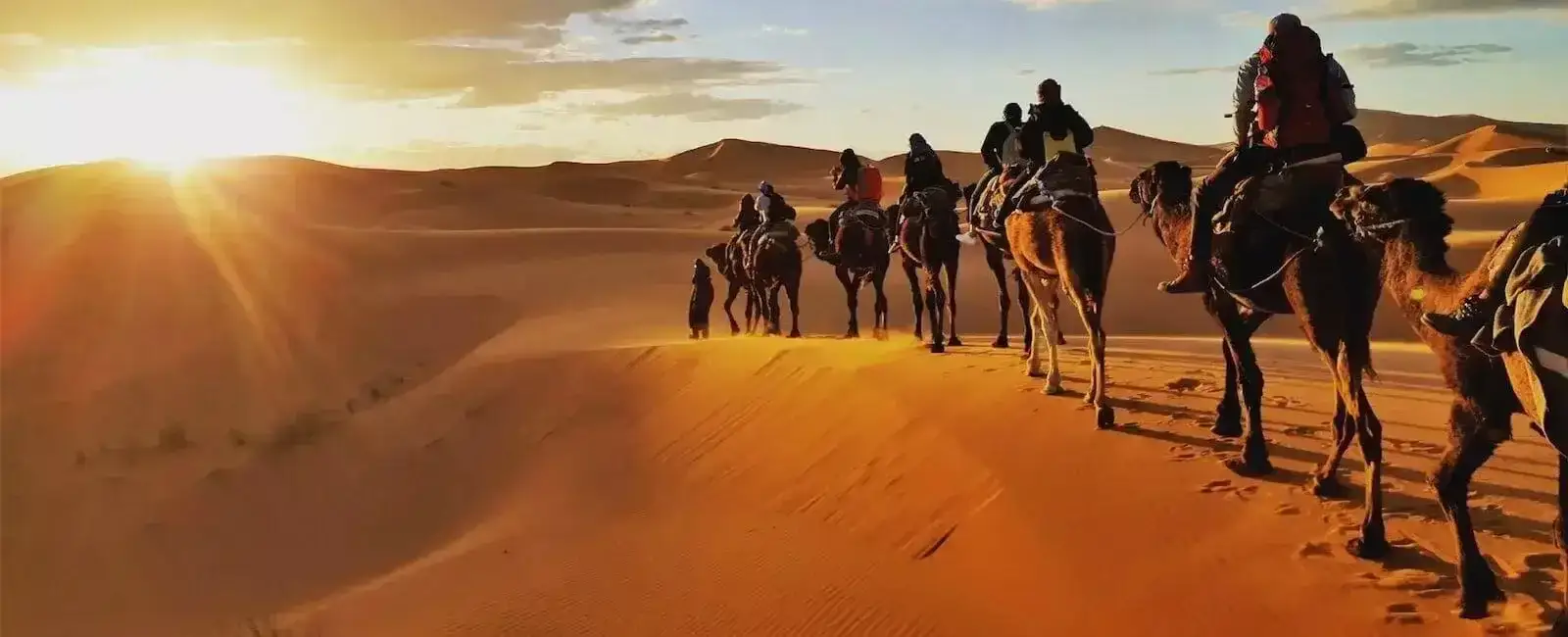
- Erg Chebbi: Madu Premium Camp (Classic to Luxury)
Our 10-day Jewish heritage tour of Morocco starts from USD $3,400 per person (Classic, two travellers; groups of four pay less per person). It runs Casablanca, Rabat and Volubilis to Fes, then over the Middle Atlas to the Erg Chebbi dunes, through Tinghir and the Dades Gorge, and over the Atlas to Marrakech. If you want a different pace, more synagogues or a hiloula date, we redesign it as one of our tailor-made Morocco tours. Travelling from Toronto, Montreal or Vancouver? Our Morocco tours from Canada page covers the practical side of getting here.
Our opinionWhat we'd prioritise if you only have 5, 7 or 10 days
5 days: Casablanca and Fes. Arrive in Casablanca; spend the next day at the museum and Temple Beth-El; drive to Fes by way of Rabat's mellah; give Fes a full day for the mellah, Ibn Danan and the cemetery; then return to Casablanca for your flight. Skip Marrakech on a trip this short. You would only rush it.
7 days: add Marrakech. Two nights each in Casablanca, Fes and Marrakech, flying home from Marrakech. The drive from Fes to Marrakech is long, but it is the price of seeing Morocco's two great mellahs. Leave the Sahara for another trip.
10 days: two good versions. The first is our Jewish heritage tour of Morocco as it stands, with the desert night and Tinghir on the road south, which shows you the rural side of Jewish Morocco as well as the cities. The second is heritage-first: drop the Sahara and add Meknes and Essaouira. For a first visit we recommend the desert version. For a return visit, or strictly kosher travellers for whom desert meals are hard, go heritage-first.
What we tell clients to skip: trying to reach every pilgrimage tomb. Unless you are on pilgrimage, one or two graves that mean something to your family beat a checklist of thirteen. When you know your dates, tell us about your trip and we will draft the route.
Start with Fes, not Marrakech. The first mellah, the Ibn Danan synagogue and the cemetery at its edge tell the story more completely than anywhere else in the country. Add Casablanca for the living community and the museum, Marrakech for the Saadian mellah, and plan every day around Shabbat and a phone call to confirm access. That is the spine of our 10-day tour. Essaouira and Bayt Dakira are the first things we would add if you have two more days.
ToursPrivate journeys through Jewish Morocco
Our 10-day Jewish heritage tour is the dedicated itinerary. The Imperial Cities and Discover Morocco routes (the latter with Essaouira) adapt well to a heritage focus.
What people ask usFAQs
Tell us your dates, your level of observance and any family towns you want to find. We will send a private Jewish heritage itinerary built around Shabbat, the holy days and confirmed site access.
Design my journey