Family friendly
High Atlas · Moussem · September
The Imilchil Marriage Festival
I was born an hour from here.
Private Morocco travel
The moussem at Imilchil is described in the foreign press as a marriage market where brides choose their husbands. I was born an hour from it, and that is not quite what happens. Here is what the festival actually is, when it takes place, how to reach it, and whether it belongs in your trip.
First-handWhy I can tell you about this one properly
I was born in Agoudal, a village at around 2,600 metres in the High Atlas and one of the highest permanently inhabited places in Morocco. Imilchil is up the road. The Aït Haddidou are the people of that plateau, and the moussem you have read about is their gathering, not a show that was invented for visitors.
I am telling you this because almost everything written about the Imilchil festival in English descends from the same few paragraphs, and those paragraphs are romantic and largely wrong. If you are considering the long detour to get there — and it is long — you deserve an accurate picture first.
The storyThe legend of Isli and Tislit
Two young people from rival clans fell in love and were forbidden to marry. They wept separately until their tears became two lakes on the plateau: Isli, the groom, and Tislit, the bride. Grieving what their refusal had caused, the families set aside one day each year on which people of the plateau could choose their own match.
Both lakes are real and you can stand at either of them, ten to twenty minutes apart by road near Imilchil, at about 2,200 metres. Tislit is the smaller and more striking, ringed by bare rock. Whether you believe the story matters less than knowing it is genuinely the local one, told locally, and not a tourist-board invention.
The honest versionWhat the moussem actually is
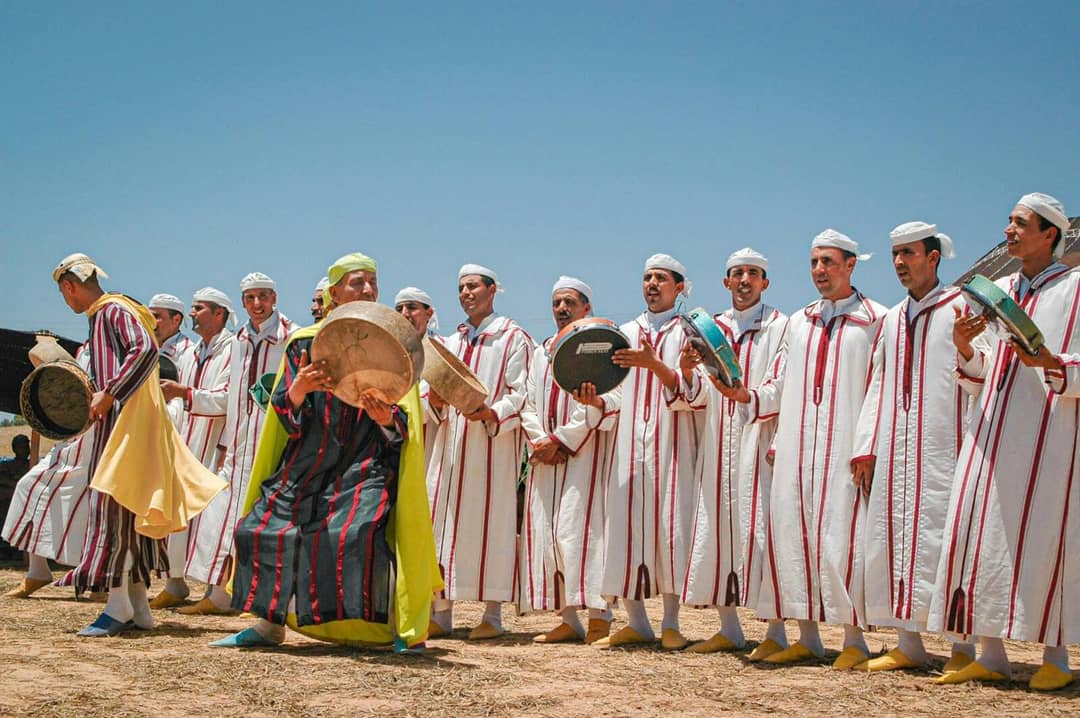
A moussem is an annual gathering — part religious observance around a local saint's tomb, part enormous rural market, part social reunion for families scattered across a plateau where winter cuts the roads. Imilchil's is one of the largest in the Atlas. What you will actually see is livestock trading on a serious scale, tents selling everything from blankets to plough parts, wool and carpets, argan and dates coming up from the south, and ahidous — the collective Amazigh dance of the Middle and High Atlas, lines of men and women shoulder to shoulder, hand drums, a call and response that goes on for hours.
Engagements are part of it. What does not happen is a marketplace of women selecting husbands from a lineup, which is how it is usually described abroad. Matches on the plateau are negotiated between families as they are across rural Morocco; the moussem is where families who live two days apart are in the same place at the same time, where an engagement can be formalised and celebrated publicly, and where — genuinely, and unusually for the era the custom comes from — a young woman's own preference carried real weight. That is the interesting truth, and it is more interesting than the myth.
Two more honest notes. Some of the couples in traditional dress that visitors photograph are participating knowingly in a display, because the festival has drawn cameras for decades and there is now a performed layer on top of the real one. And the moussem is smaller and less central to plateau life than it was two generations ago, as roads and phones did what roads and phones do. None of that makes it fake. It makes it a living thing that has changed, which is different.

TimingWhen it happens — and why nobody can give you a date in January
The moussem is held once a year, usually in the second half of September, after the harvest and before the plateau turns cold. The exact days are set locally and announced relatively close to the time, which is genuinely inconvenient if you are booking flights from North America eight months out. Anyone quoting you firm dates a year ahead is guessing.
How we handle it: we build a route through the region for a window in late September, and treat the festival as a very likely bonus rather than the fixed centre of the trip. That way the trip is excellent whether or not the dates land where you need them. If the moussem is genuinely the only reason you are coming, the honest advice is to plan late and accept a shorter booking lead time.
The road inGetting there
Imilchil sits on a high plateau with no easy approach. This is a real driving day whichever direction you come from, on roads that are narrow, sometimes unsurfaced, and occasionally shared with flocks. A 4x4 and a driver who has done it before are not luxuries here.
- From Fes or Meknes — south via Midelt, then west onto the plateau. The most common approach and the one we usually build
- From the Dades Gorge or Boumalne — north through the gorges and over the pass, spectacular and slow. Best combined with Agoudal and the Todra side
- From Marrakech — the longest option, over the High Atlas and round. Better done as part of a wider loop than as a there-and-back
- Altitude — Imilchil is around 2,200 m and Agoudal about 2,600 m. Nights are cold from September onward and snow closes routes in winter. Mention any cardiac or respiratory condition and we will discuss the routing
Accommodation on the plateau is simple: small auberges and guesthouses, wood heat, hot water that depends on the day. During the moussem itself, the town is full and beds are scarce, which is another argument for having someone book it for you months earlier than feels necessary.
Please read thisGoing respectfully
- Ask before photographing anyone, every time, and accept no as an answer. This is a family occasion, not a set. A guide who speaks Tamazight makes asking possible rather than awkward
- Do not photograph the betrothal parties as though they were an exhibit. If you are invited to, that is different, and it happens more than you would expect
- Dress as you would in any Moroccan village — shoulders and knees covered. It is also genuinely cold, so this is not a hardship
- Buy something. This is a market before it is a spectacle, and the wool, blankets and carpets from this plateau are excellent. Paying a fair price directly is the most useful thing a visitor does all day
- Accept the tea. Refusing all three glasses is the one small rudeness worth avoiding
Straight answerShould you actually go?
Go if you have two weeks or more, you have been to Morocco before or you are unusually unbothered by rough roads and basic beds, and what you want from travel is to be somewhere that is not arranged for you. On those terms it is one of the most remarkable things in the country.
Don't go if this is a ten-day first trip. The detour costs you two or three days you would otherwise spend on Fes, the Sahara and Marrakech, and the plateau is not a polished experience — there is no interpretive centre, no seating, no schedule pinned to a wall. I would rather tell you that now than have you arrive expecting a festival in the European sense.
There is also a middle path most clients end up taking: come to the plateau in June or September for the landscape, the lakes, Agoudal and the Ait Bougmaz valley, without the moussem. Fewer people, the same country, and the roads at their best.

If not SeptemberThe plateau for the rest of the year
- Lakes Isli and Tislit — bare, high, and completely quiet outside the moussem
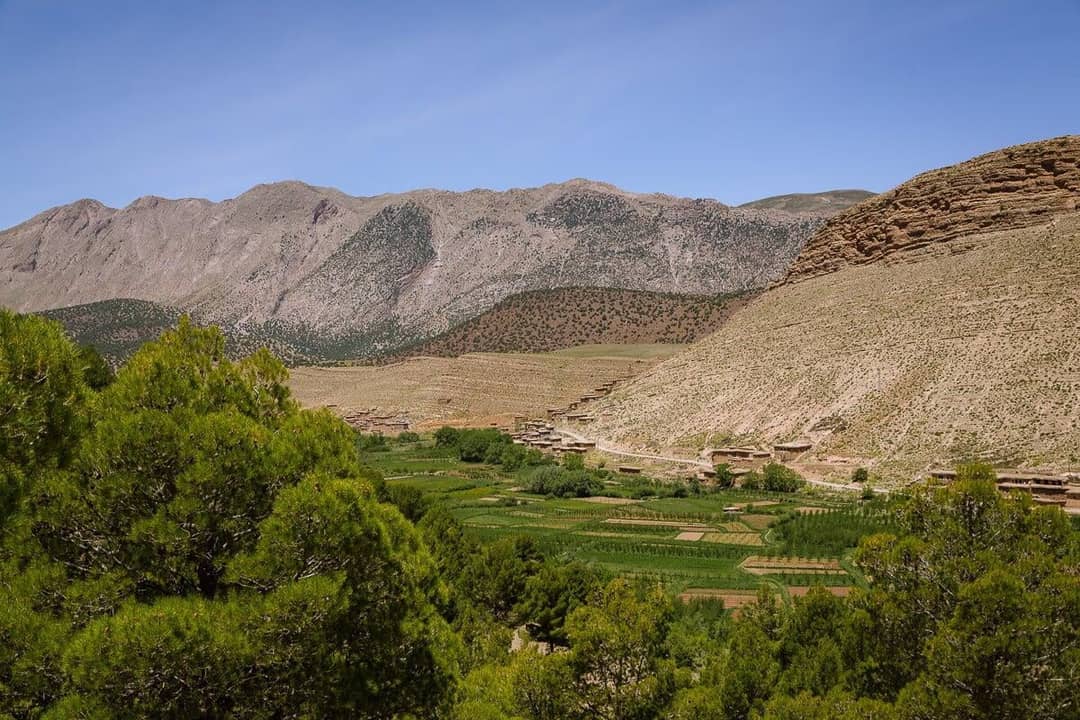
- Agoudal — apple and walnut country at 2,600 m, and the route on toward the Todra Gorge
- Ait Bougmaz — the 'happy valley', terraced fields and mud-brick villages, some of the best walking in Morocco
- The Cirque de Jaffar and the cedar forest near Midelt, with Barbary macaques and the old mining town
- The Todra and Dades gorges to the south, which is how most itineraries connect this region to the desert
See the Atlas Mountains guide for how this region fits a wider route, Moroccan culture for background on Amazigh tradition, and things to do in Morocco for what else to protect in your days.
Family friendly
The grand loopQuestions we getFAQs
When is the Imilchil marriage festival held?+
Once a year, usually in the second half of September, after the harvest. The exact days are set and announced locally, fairly close to the time, so firm dates are rarely available many months in advance. We plan a route for a late-September window and treat the moussem as a likely bonus rather than a fixed anchor.
Do women really choose their husbands at Imilchil?+
Not in the way it is usually described. There is no marketplace where brides select from a lineup. Matches are negotiated between families as they are across rural Morocco. What is true, and more interesting, is that the moussem is where scattered families gather, engagements are formalised and celebrated publicly, and a young woman's own preference carried real weight in a custom that predates that being common.
Where is Imilchil?+
On a high plateau in the eastern High Atlas at roughly 2,200 metres, in Midelt Province. The usual approaches are south from Fes or Meknes via Midelt, or north from the Dades Gorge over the pass. It is a full driving day on narrow and partly unsurfaced roads, and a 4x4 with an experienced driver is the sensible choice.
What is ahidous?+
The collective dance of the Middle and High Atlas Amazigh communities — lines of men and women shoulder to shoulder, bendir hand drums, and sung call and response that can continue for hours. It is the sound of the moussem and of every celebration on the plateau, and it is the one thing everybody who goes remembers.
Can I attend the festival as a foreign visitor?+
Yes. It is a public gathering and visitors are not unwelcome — the plateau has seen cameras for decades. What matters is behaving like a guest: ask before photographing anyone, dress as you would in any Moroccan village, buy from the market, and accept the tea. A guide who speaks Tamazight changes the day completely.
Is it worth building a trip around?+
Only if you have two weeks or more and you actively want somewhere unpolished. On a ten-day first trip the detour costs two or three days you would otherwise give to Fes, the Sahara and Marrakech, and we would talk you out of it. Many clients take the middle path and visit the plateau in June or September for the landscape and the lakes without the moussem.
What should I pack for the plateau?+
Warm layers regardless of month — it is 2,200 metres and nights are cold from September. A proper jacket, a hat, walking shoes with grip, and more cash than you expect, because there are few reliable card facilities up there. See our Morocco packing list.
Can you take us there on a private tour?+
Yes, and it is a route I know personally rather than from a brochure. We build it most often as part of a twelve-to-fourteen-day itinerary linking Fes, Midelt, the plateau, Agoudal, the Todra Gorge and the desert. Tell us your dates and we will draw it.
Tell us your dates and whether the plateau matters to you — you will have a complete custom itinerary within 48 hours, from someone who grew up on that road.
Design my journeyProposal in 24–48h · No deposit to start · Unlimited revisions
Begin your journey
Reading is lovely. Going is better.
Everything on this page comes from more than twenty-five years of taking travellers there. Tell us what moves you and it becomes an itinerary.
Proposal in 24–48h◆No deposit to start◆Unlimited revisions
Start with the journeys or how it works.