Gateway2Morocco Travel
Jemaa el-Fna square in Marrakech filling up at dusk, food stalls and crowds below the Koutoubia minaret

An honest guide · Not a listicle

Things to Do in Morocco

What deserves your days — and what doesn't.

Private Morocco travel

The experiences worth building a trip around, the ones worth an hour rather than a day, and the handful we tell clients to skip. Written by a Morocco specialist born in the High Atlas, not assembled from other people's lists.

Read this firstMost lists of things to do in Morocco are copies of each other

They are ranked by what photographs well and what other lists already contained. None of them tell you that the Fes tanneries are a stepped climb with no handrail, that Chefchaouen is close to unwalkable at midday in August, or that a three-day camel trek is something almost nobody actually wants after the first afternoon.

This page is organised the way we plan real itineraries: what is genuinely unmissable, what is worth an hour rather than a day, what to skip, and how many days each thing honestly needs. I am Brahim Jounh — born in Agoudal in the High Atlas, based in Canada, and I have walked all of this. Where I think something is overrated I will say so, because you are paying me to save you days, not to sell you every attraction in the country.

UnmissableThe five things genuinely worth building a trip around

If you only have ten days, these are the experiences I would protect first and cut around.

1. A night in the Sahara at Erg Chebbi or Erg Chigaga

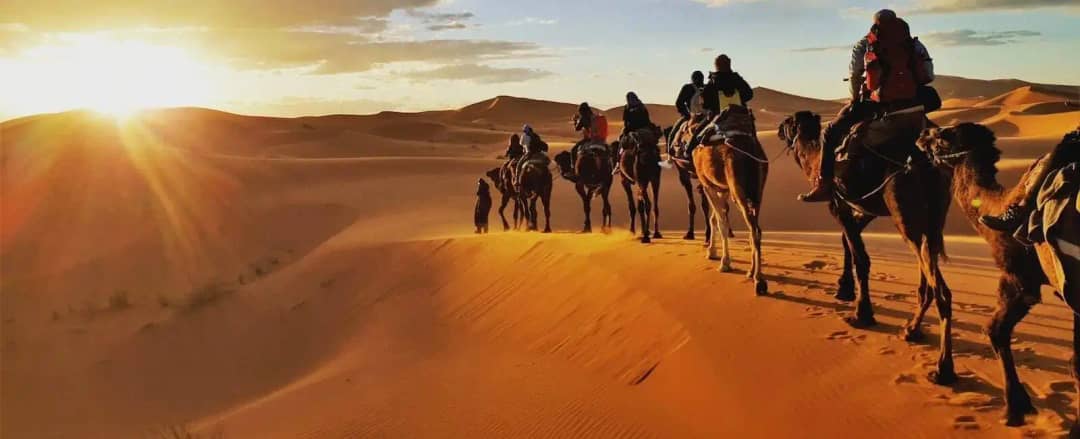
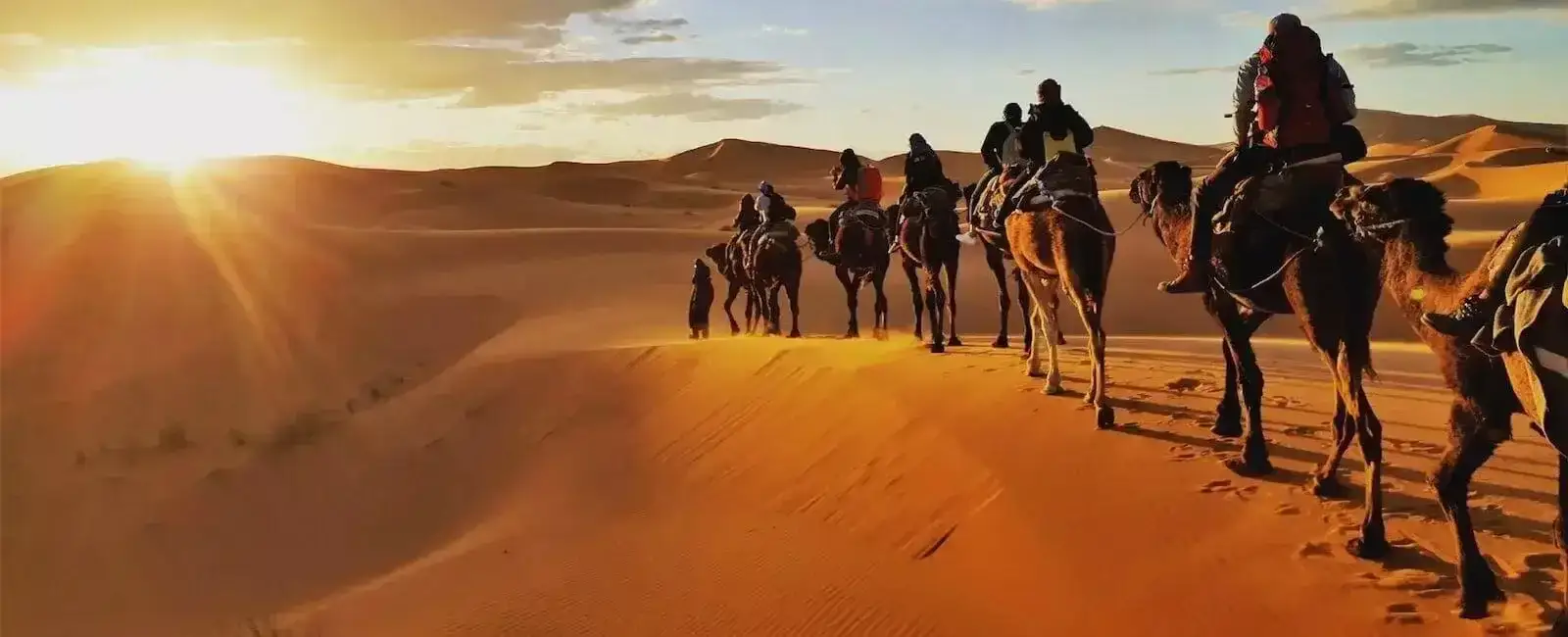
Not the camel ride — the silence. The dunes at Erg Chebbi near Merzouga rise around 150 metres and turn from apricot to deep rust in the last twenty minutes of light, and after dark the quiet is genuinely disorienting if you have always lived near traffic. Erg Chebbi is the easier of the two to reach and has proper camps with plumbed bathrooms. Erg Chigaga is bigger, emptier and more remote — a rough 4x4 crossing from M'hamid, which is exactly why fewer people are there. Both are optional-camel: we will drive you to the dunes and nobody thinks anything of it. Needs: two nights minimum from Marrakech or Fes. One night makes the driving pointless.

1

2. Getting properly lost in the Fes medina — with a guide

Fes el-Bali is the largest car-free urban area in the world and the closest thing to a working medieval city still functioning as one. Not a preserved one — a working one, with donkeys carrying gas cylinders and a thousand-year-old university. Go with a licensed guide, not because you would get robbed but because you would spend four hours seeing the same three alleys. Be honest with us about stairs: it is the hardest walking in Morocco, and we can show you a great deal of it while avoiding the worst. Needs: two nights, one full guided day.

2

3. Jemaa el-Fna at dusk — and only at dusk

At two in the afternoon Marrakech's main square is hot, empty and slightly grim. Between six and eight it becomes one of the great public spaces on earth: food stalls assembling, Gnaoua musicians, storytellers, the smell of grilled lamb and orange blossom. Go up to a café terrace for the first half hour to see the shape of it, then come down into it. A note we would rather make than not: the chained monkeys and the snake charmers are animal-welfare problems, and the kindest thing you can do is not pay for a photograph. Needs: one evening. It is not a day.

3

4. The road over the High Atlas

The Tizi n'Tichka pass climbs to about 2,260 metres between Marrakech and the south, and the drive itself is one of the best things in the country — switchbacks, mud-brick villages, snow on the peaks well into spring. Most itineraries treat it as transit. We build a stop at Ait Ben Haddou, the fortified kasbah you have seen in Gladiator and Game of Thrones, where the climb to the granary at the top is optional and the view from the riverbed is nearly as good. Needs: a full driving day, done well rather than fast.

4

5. The Hassan II Mosque in Casablanca

Most people write Casablanca off, and mostly they are right — it is a working port city, not a sightseeing one. But the Hassan II Mosque is one of the very few mosques in Morocco that non-Muslims can enter, on a guided tour, and it is extraordinary: a prayer hall for 25,000 people, a retractable roof, and a floor built out over the Atlantic. If you fly into Casablanca, this is what to do with the afternoon before your first night. Needs: two hours plus the tour timing. Check the schedule — tours pause at prayer times.

Camels crossing the Erg Chebbi dunes at sunset near Merzouga

Which of these belongs in your trip?

Tell us your dates, how long you have, and how fast you like to move. You will get a complete day-by-day itinerary within 48 hours — and an honest note on anything we think you should cut.

Design my journey

Right-sizedWorth an hour, not a day

All of these are genuinely good. All of them get given far more time than they need in standard itineraries, usually because they fill a gap.

  • Jardin Majorelle, Marrakech — beautiful, and full. Forty-five minutes, booked ahead, early slot. Le Jardin Secret in the medina is quieter for the same money
  • The Fes tanneries — fifteen minutes on a terrace with a sprig of mint under your nose, then leave. The leather hard-sell afterwards is the actual attraction as far as the shop is concerned
  • Volubilis — an hour and a half among the best Roman mosaics in North Africa, on open grass and gravel with no shade. Go early or late, never midday
  • Chefchaouen — a half day, in the morning. The blue lanes near the main square are the gentle, photogenic part; it is built on a hillside and the crowds peak at noon
  • Ouzoud Waterfalls — a half day from Marrakech. Genuinely lovely, 110 m of falls and wild macaques, but it is a long round trip for what it is
  • A hammam — ninety minutes, and best on your second-to-last day rather than your first. A public hammam is an experience; a spa hammam is a nicer version of a massage. They are not the same thing and we will book whichever you actually want

Honest opinionsWhat we tell clients to skip

You will find all of these on other lists. We would rather you spent the day elsewhere.

  • Multi-day camel trekking. A sunset ride into the dunes is wonderful. Three days on a camel is uncomfortable, slow, and something almost nobody enjoys past the first afternoon — the romance wears off around hour two
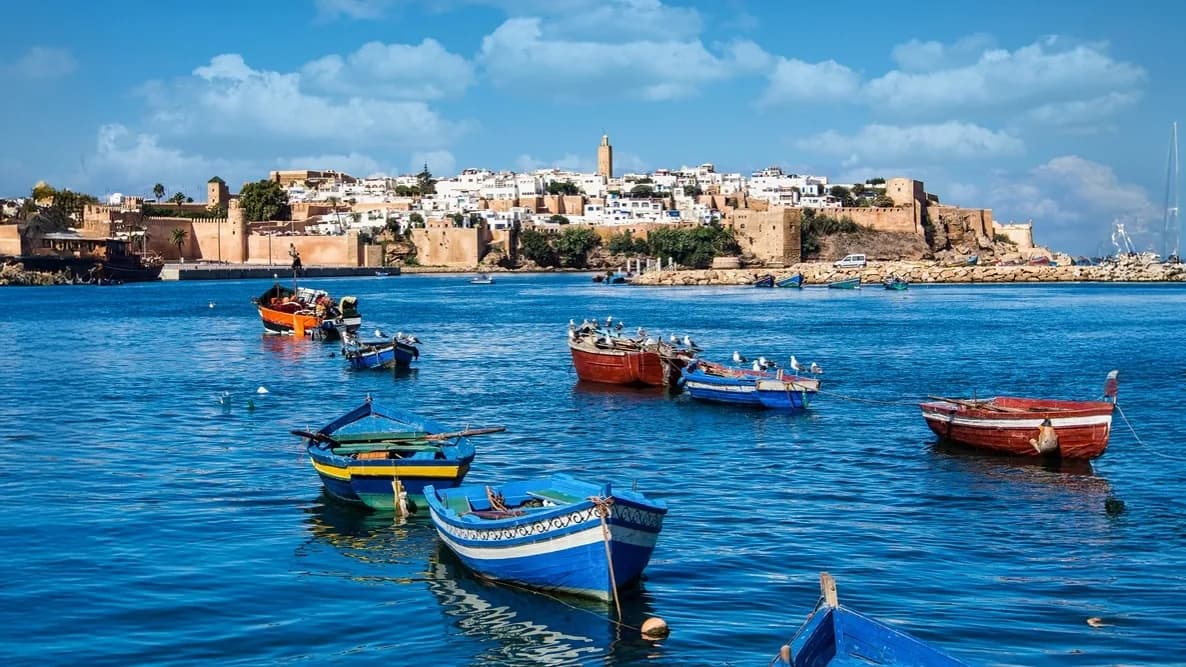
  • Casablanca as a sightseeing city, beyond the mosque and a good dinner. Rabat is the coastal city worth a proper day
  • The 'Berber pharmacy' demonstrations. Charming presentation, argan oil at four times the price of a co-operative in the Souss where the money reaches the women who made it
  • Any tour that promises Marrakech, Fes, Chefchaouen and the Sahara in seven days. It is nine hundred kilometres of driving and you will see the inside of a vehicle
  • 'Free' guides who attach themselves in medinas. There is no such thing, and the fee arrives later as a shopping detour. Our licensed guides are paid by us

Be realisticHow many days you actually need

  • 7 days — one region done properly. Either the imperial cities, or Marrakech plus the Sahara. Not both
  • 10 days — the classic loop: Casablanca, Rabat, Fes, the Sahara, the gorges, Ait Ben Haddou, Marrakech. This is the sweet spot for a first trip
  • 14 days — the same loop with Chefchaouen in the north, Essaouira on the coast, and rest days that come out of the driving rather than the sightseeing
  • 3 weeks or more — add the Anti-Atlas, Erg Chigaga, the Souss valley, Taroudant, and time to stop moving

The single most common mistake is booking ten days and asking for a fourteen-day route. See 10 days vs 14 days for the honest comparison, and the month-by-month guide for when to come.

Signature journeysStart from a route

Every itinerary below is fully private and tailor-made — a starting point, not a fixed departure. Browse the full collection for day-by-day detail.

Good to knowFAQs

What is the number one thing to do in Morocco?

A night in the Sahara — but for the silence and the light rather than the camel ride. If you can only protect one experience in the itinerary, protect that one. The runner-up is a full guided day in the Fes medina, which is the closest thing left to a working medieval city.

Can non-Muslims go inside mosques in Morocco?

Generally no, with a few notable exceptions. The Hassan II Mosque in Casablanca admits non-Muslims on guided tours and is worth the visit. The Koutoubia in Marrakech and the Karaouiyine in Fes cannot be entered, though you can see the courtyard of the latter from the doorway. Former religious schools such as the Bou Inania and Ben Youssef medersas are open and beautiful.

Is Marrakech or Fes better?

Different things. Marrakech is easier, livelier and better set up for visitors, with the square, the gardens and the Atlas an hour away. Fes is older, denser, more intact and more demanding — the better city if you want to understand Morocco rather than enjoy it. Most good ten-day itineraries include both, with two nights each.

How many days do I need in Morocco?

Ten is the sweet spot for a first trip and covers the classic loop without a punishing amount of driving. Seven works if you commit to one region. Fourteen lets you add Chefchaouen or Essaouira and build in rest days. Under seven days we would suggest flying into Marrakech and staying south.

What should I not do in Morocco?

Practically: don't accept an unsolicited guide in a medina, don't photograph people without asking, don't drink tap water, and don't try to fit Marrakech, Fes, Chefchaouen and the Sahara into a week. Culturally: dress modestly in medinas and villages — shoulders and knees covered is plenty — and be aware that alcohol, while available in licensed venues, is not part of public life.

Is Morocco safe for tourists?

Yes. Morocco is one of the most politically stable countries in North Africa, and Global Affairs Canada and the US State Department both maintain standard precautionary advisories comparable to much of Europe. The realistic risk is petty pickpocketing and persistent selling in crowded medinas. On a private tour with a vetted driver and licensed guides you are rarely in the situations where that happens. See our full safety guide.

What is there to do in Morocco besides the desert and the medinas?

A great deal. Atlantic surf and windsurfing at Taghazout and Essaouira, trekking in the High Atlas up to Toubkal at 4,167 m, the Roman city of Volubilis, waterfalls at Ouzoud and Akchour, birdwatching in the Souss-Massa lagoons, Jewish heritage sites across the country, and some of the best rug and ceramic buying anywhere. Tell us what you like doing at home and we will find the Moroccan version.

When is the best time to visit?

Spring (March to May) and autumn (September to November) are the sweet spots at roughly 18–30°C. December to February is excellent for the desert and imperial cities and mild in Marrakech, but cold at night in the Sahara and the mountains. July and August are genuinely hot inland — 38–42°C in Marrakech and Fes — so those months are for the Atlantic coast and the Atlas.

Tell us what you want out of Morocco and how long you have — you will have a complete custom itinerary within 48 hours, with our honest view on what to cut.

Design my journey

Proposal in 24–48h · No deposit to start · Unlimited revisions

Begin your journey

Reading is lovely. Going is better.

Everything on this page comes from more than twenty-five years of taking travellers there. Tell us what moves you and it becomes an itinerary.

Proposal in 24–48hNo deposit to startUnlimited revisions

Start with the journeys or how it works.

Plan your journey