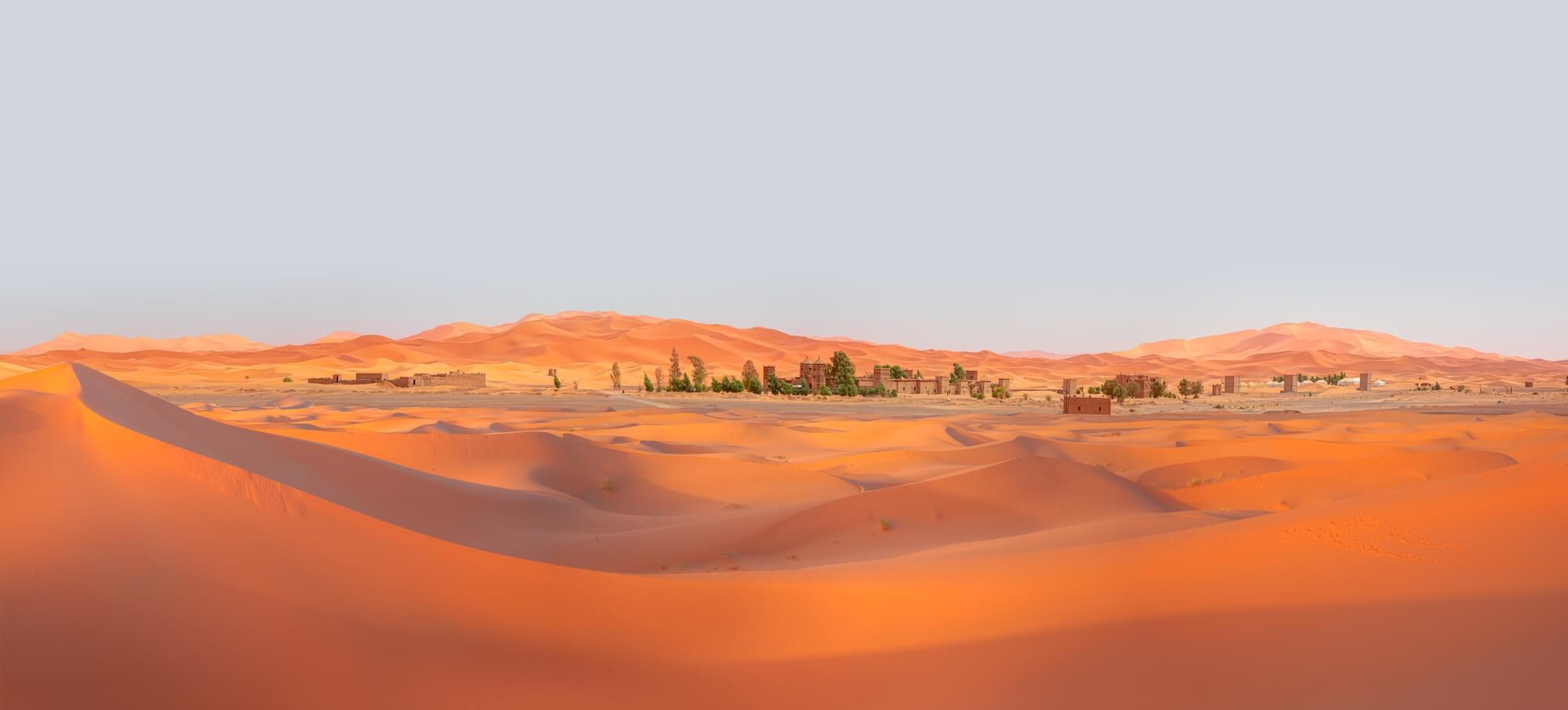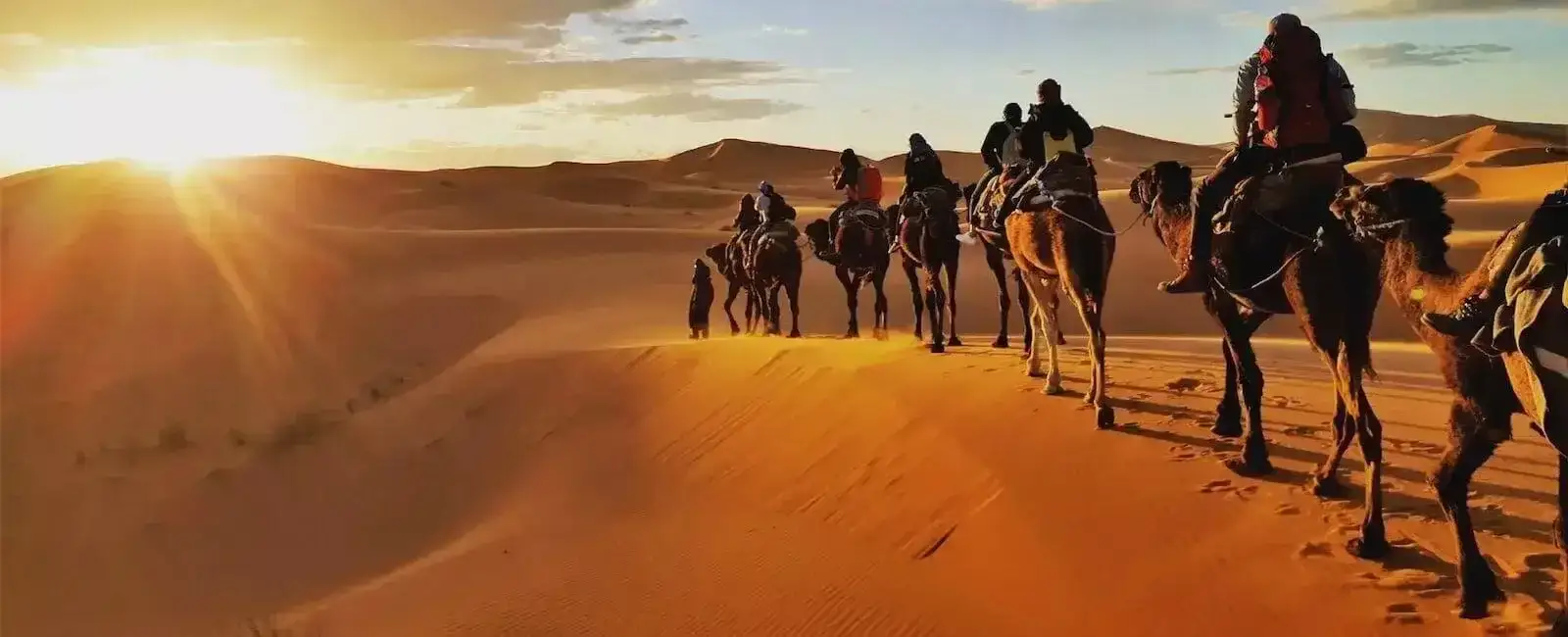
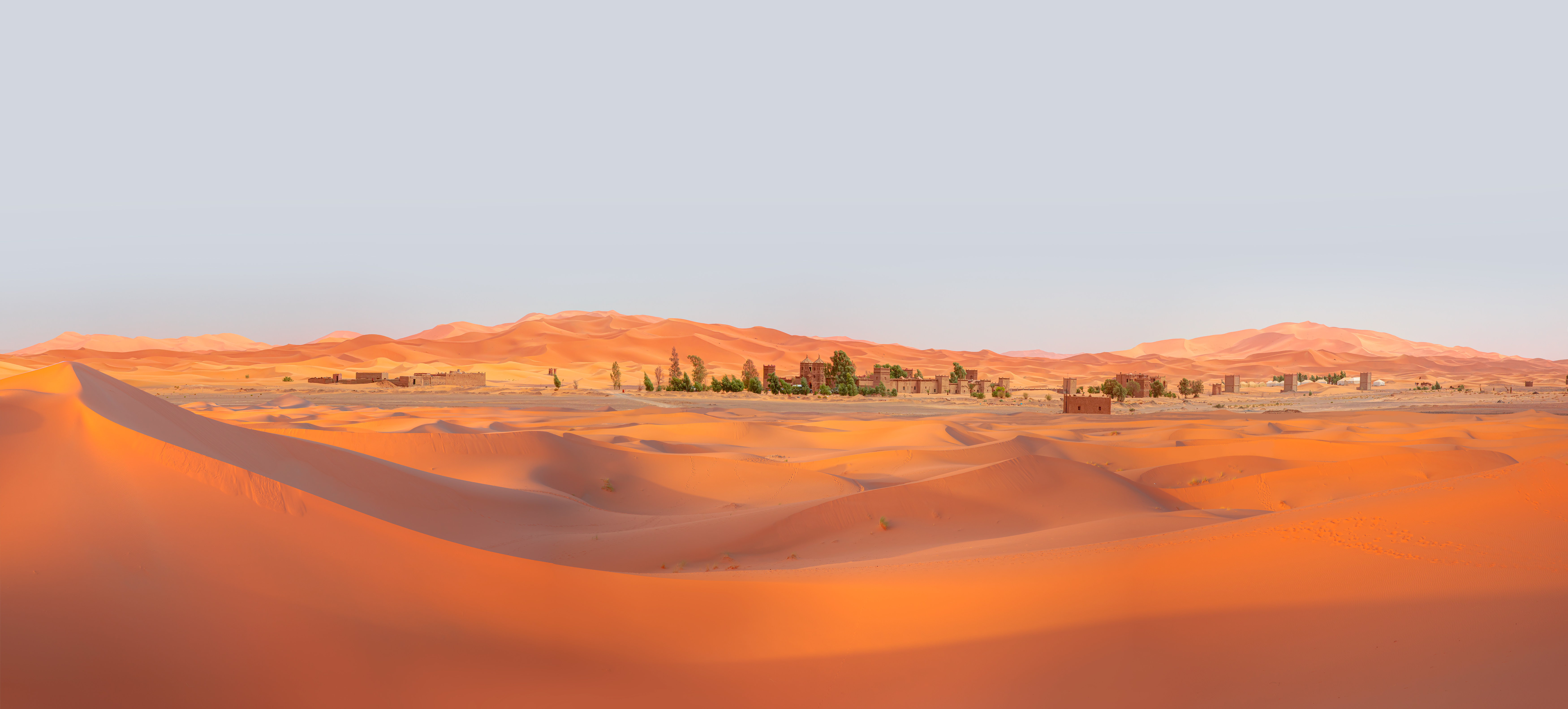
Morocco’s Sahara is two dune seas on the Algerian border: Erg Chebbi at Merzouga, easy to reach and the one most travellers mean, and Erg Chigaga beyond M’Hamid, wilder and reached only by 4x4. A night in a desert camp is the moment most of our travellers remember longest.
Erg Chebbi or Erg Chigaga?
Erg Chebbi rises right behind the village of Merzouga, with dunes up to about 150 metres high. The road is paved to the edge of the sand, camps range from simple to genuinely luxurious, and it fits naturally into a loop between Fes and Marrakech. It is the right choice for most first trips.
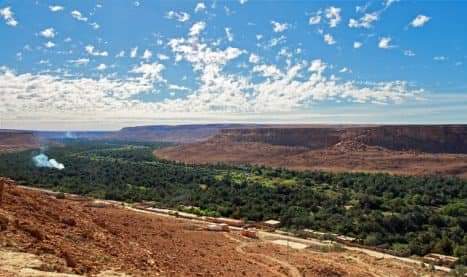
Erg Chigaga is bigger, emptier and further away: the paved road ends at M’Hamid, south of Zagora, and the last stretch is roughly 65 km of 4x4 track. You trade comfort and time for silence and scale. Our Marrakech, Draa Valley & Erg Chigaga route is built around it. We compare the two in detail in Merzouga or Erg Chigaga? Choosing a desert camp.
Getting there, and the day before
From Fes, the drive to Merzouga runs through the cedar forests around Ifrane, the apple town of Midelt and the Tizi n’Talghemt pass — about 7 to 8 hours on the road, the longest day of most routes. From Marrakech we never do it in one go: we cross the Tizi n’Tichka pass and spend a night in the Dades or Todgha gorges on the way, which turns a 9–10 hour slog into two good days. See the full table of driving times across Morocco.
At Merzouga the last few kilometres to camp are by camel or by 4x4, depending on the camp and on what you prefer.
Nights in the dunes
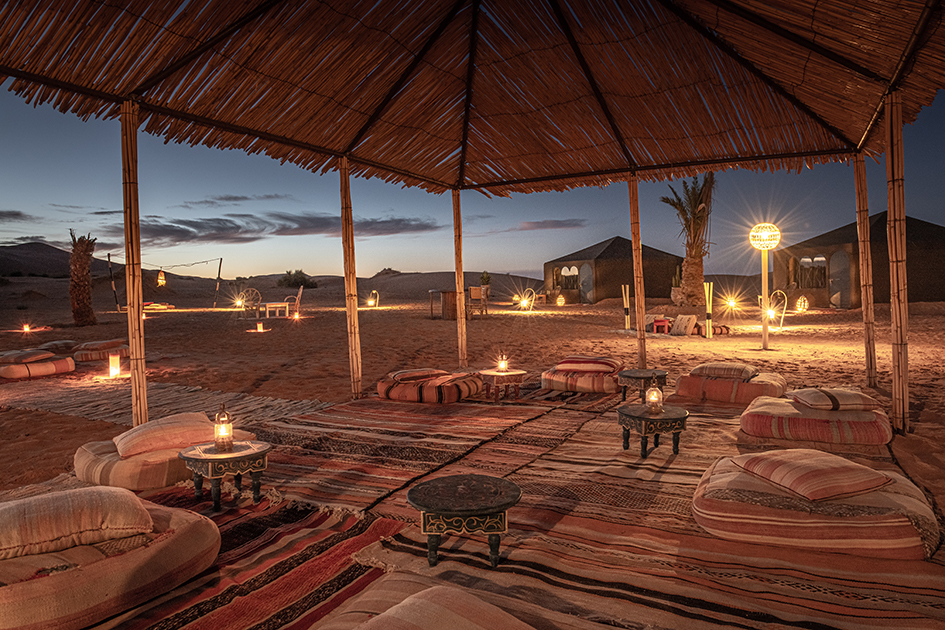
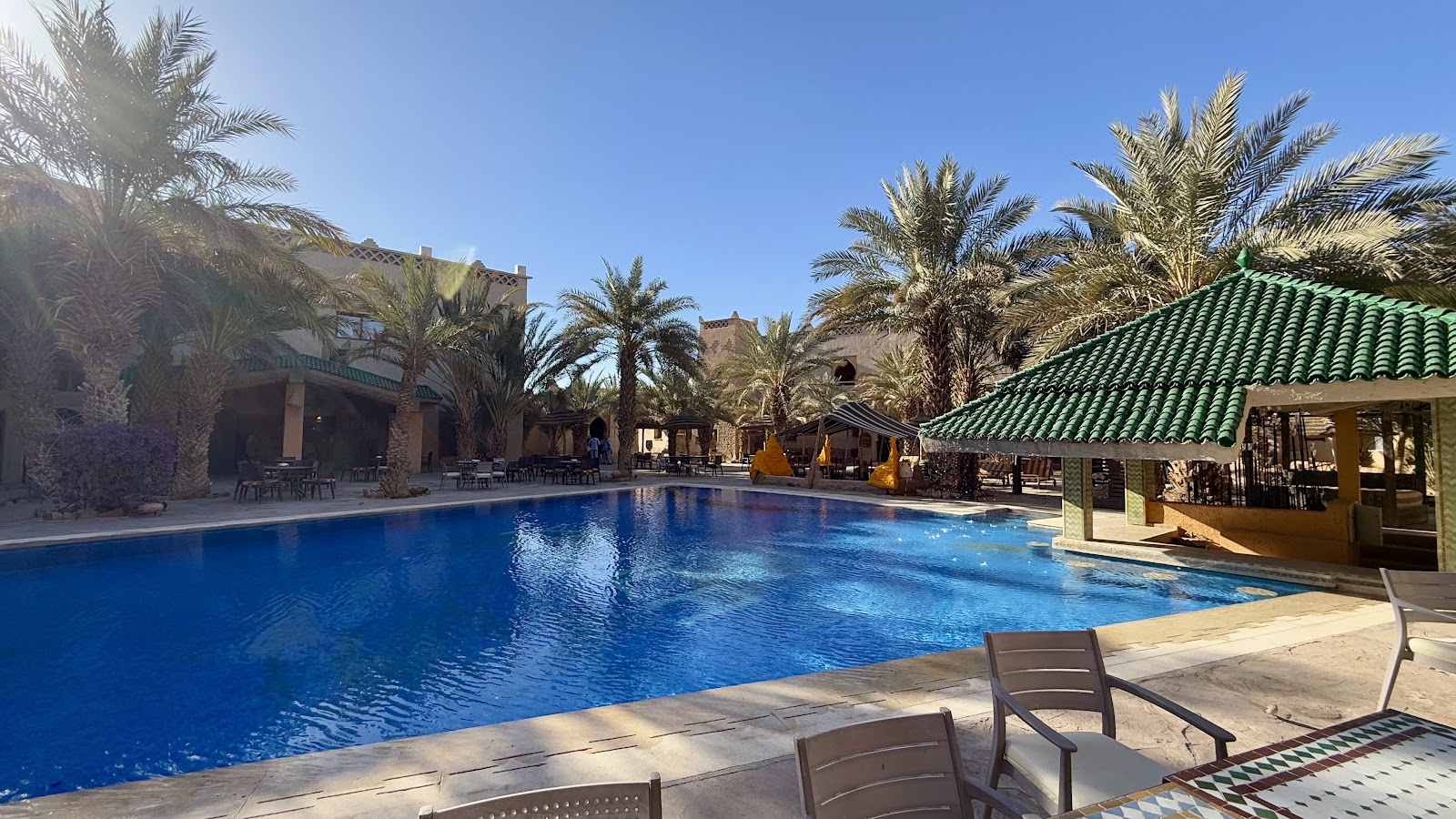
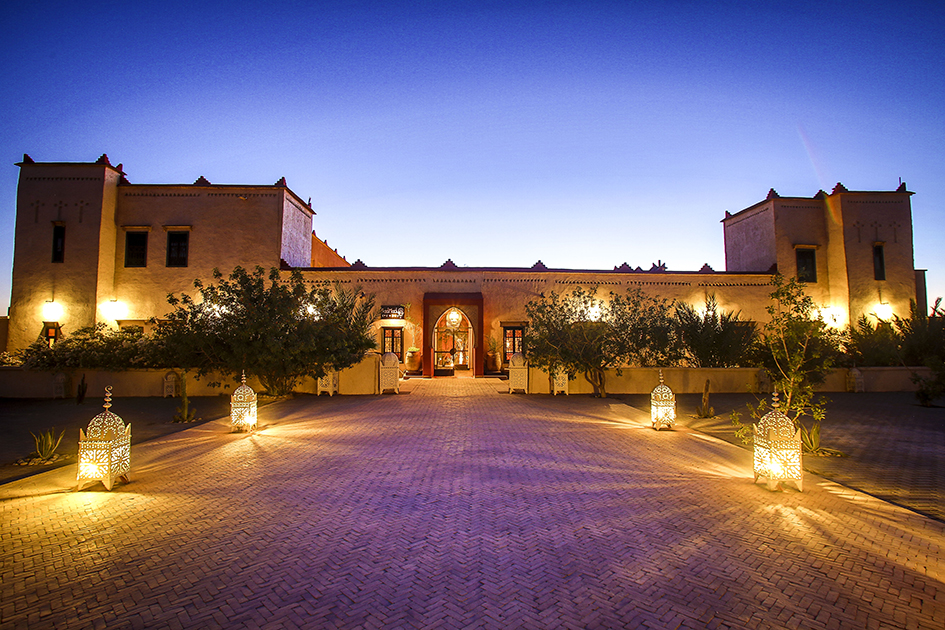
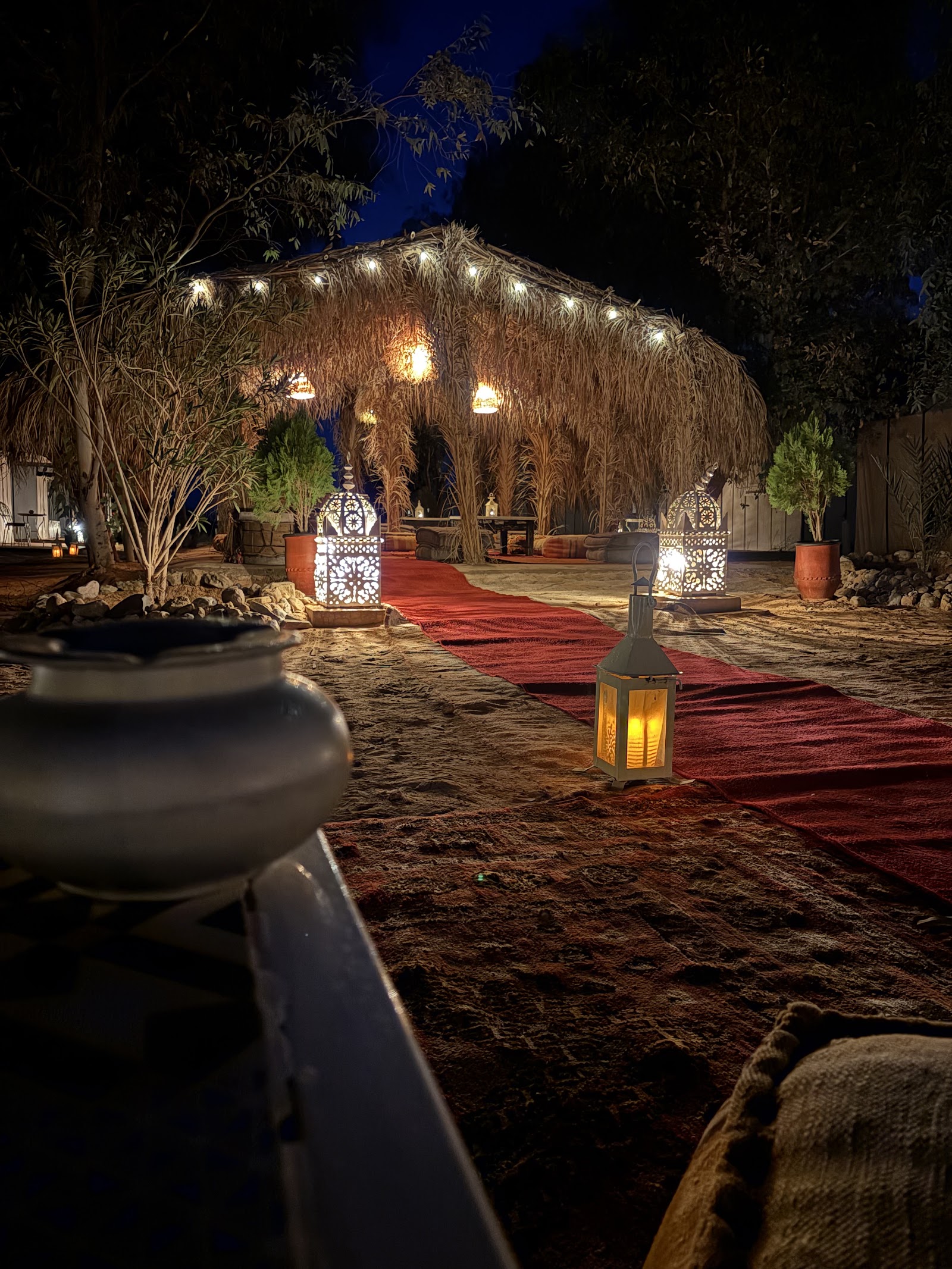
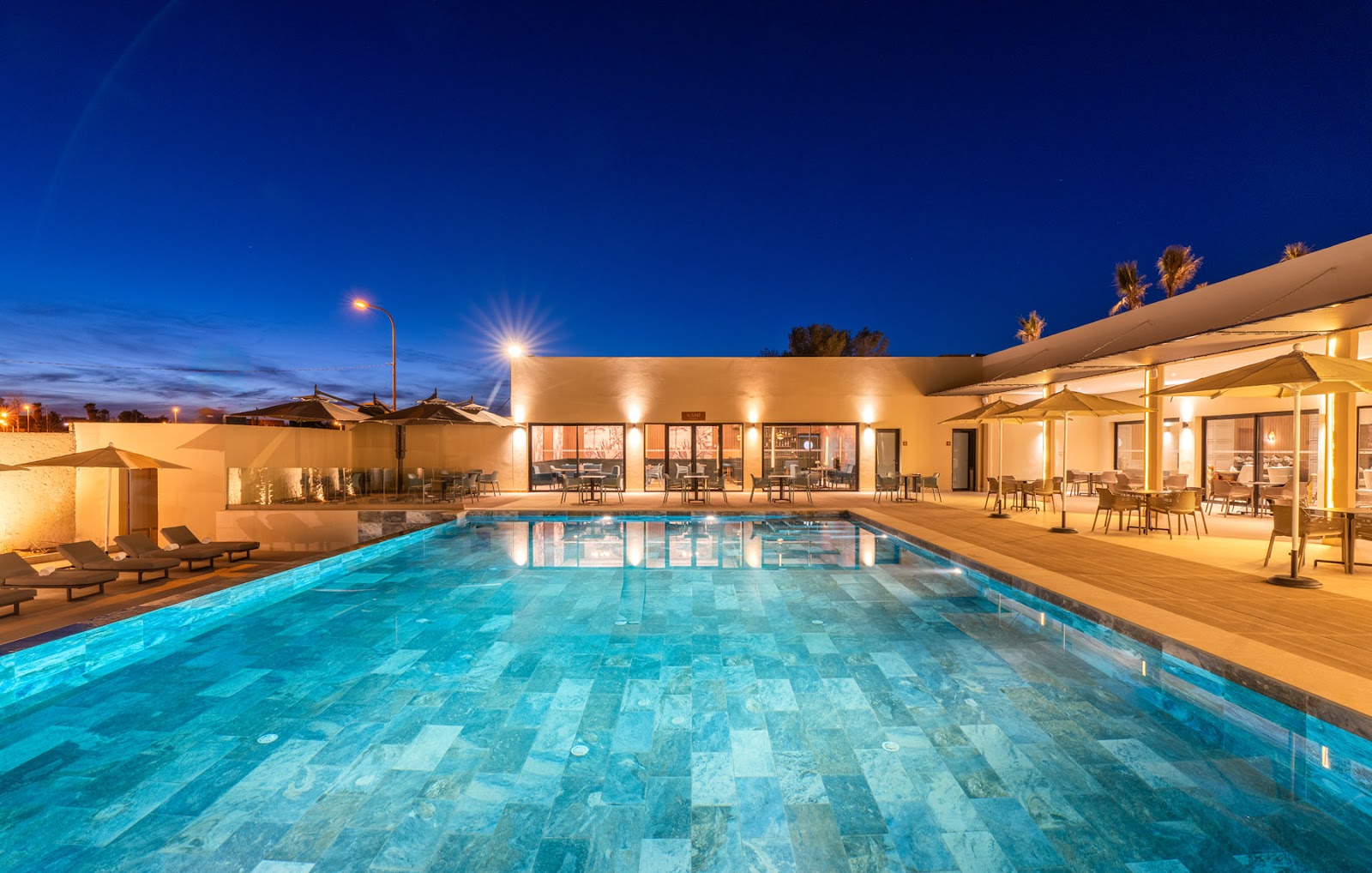
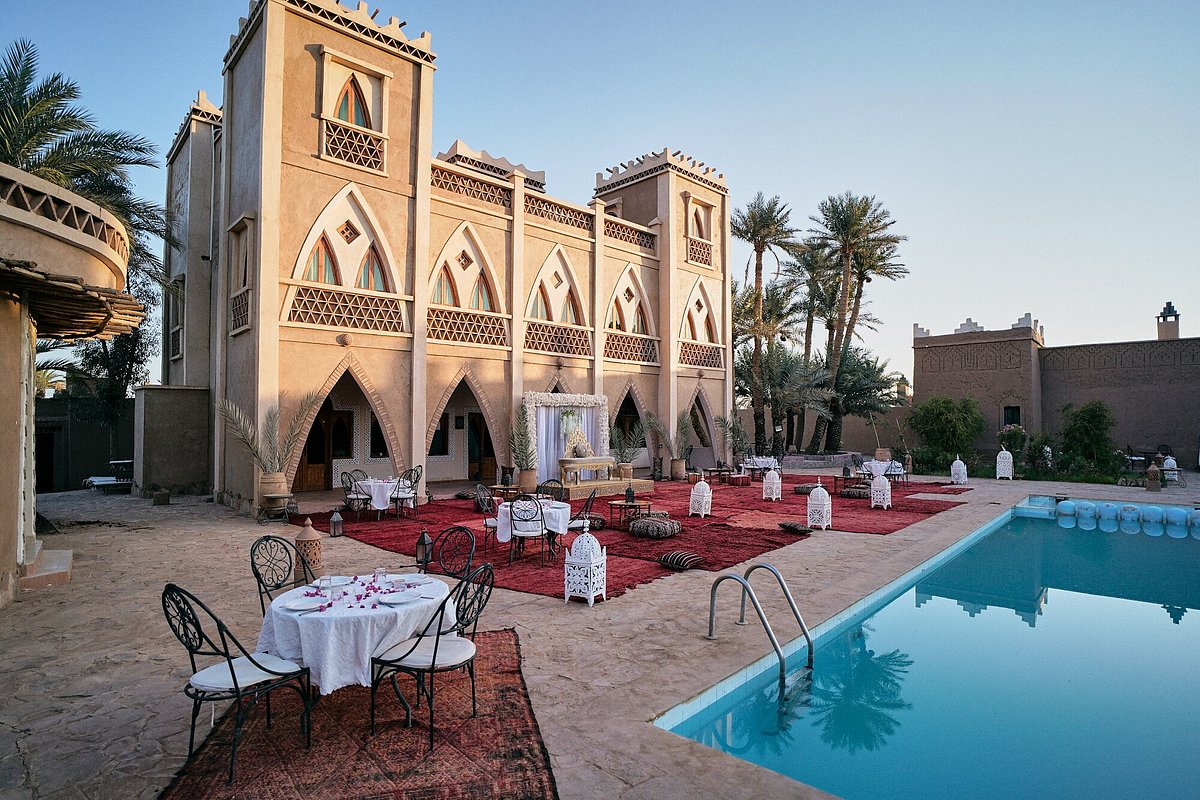
Desert camps in Merzouga run from traditional Berber tents with shared facilities to tented suites with en-suite bathrooms, proper beds and heating for winter nights. The ones we book most often are Madu Premium Camp and Sahara Stars Camp, with Riad Madu at Merzouga and Kasbah Xaluca at Erfoud for travellers who prefer walls around them. Read what to expect on your first desert night.
Nights are cold from December to February — expect 2–8 °C after dark — so pack a warm layer and a hat whatever the daytime temperature.
When to go
October and November are the best months for camp nights, followed by March and April. Summer is the season to avoid: in July and August the dunes reach 40–45 °C by day. Short sandstorms are most likely in spring; your driver simply adjusts the timing. Month by month for every region: best time to visit Morocco.
Weather planner
The Sahara, month by month
| Month | High | Low | Rain | Our rating |
|---|---|---|---|---|
| Jan | 62°F | 38°F | 0.2″ | Good |
| Feb | 67°F | 43°F | 0.2″ | Good |
| Mar | 75°F | 50°F | 0.2″ | Best |
| Apr | 83°F | 57°F | 0.1″ | Best |
| May | 90°F | 65°F | 0.1″ | Good |
| Jun | 99°F | 73°F | 0.0″ | Hot |
| Jul | 106°F | 80°F | 0.0″ | Hot |
| Aug | 104°F | 79°F | 0.0″ | Hot |
| Sep | 95°F | 71°F | 0.2″ | Hot |
| Oct | 83°F | 61°F | 0.3″ | Best |
| Nov | 71°F | 49°F | 0.3″ | Best |
| Dec | 64°F | 41°F | 0.2″ | Good |
Sahara (Merzouga): Modelled: ERA5 reanalysis (Copernicus/ECMWF) via Open-Meteo, 1991–2020 averages — no public weather station here.