
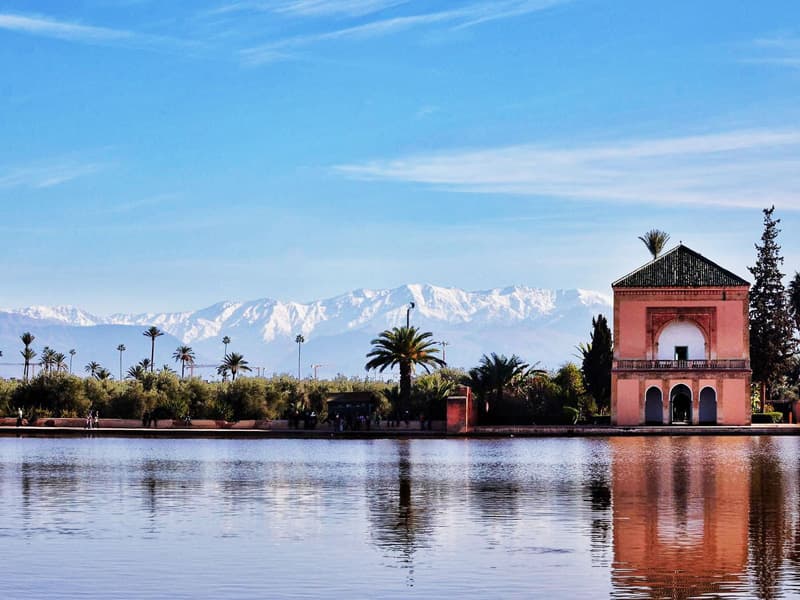
 Family
Imperial Cities — 9 Days
9 days · 8 nights
Casablanca → Rabat → Fes → Bin el Ouidane → Marrakech
Morocco imperial cities on a 9-day private tour: Casablanca, Rabat, Meknes, Fes and Marrakech.
From USD 3,060/ person · 2 travellers sharing
Private · Unhurried · Fully supported
The country is not the problem. The pace most tours set is.
Private Morocco travel
Morocco tours for seniors work well when the trip is private and paced for you: short driving days, hotels with lifts or ground-floor rooms, and travel in spring or autumn rather than summer. Morocco is not too hard for most travellers over 70, but it is uneven: Rabat, Casablanca and Essaouira are easy walking, Marrakech is manageable, and the Fes medina is genuinely difficult. We design private itineraries for travellers in their sixties, seventies and eighties every season. Below: how we pace them, where the walking is hard, medication and insurance, and the routes that need the least adjusting.
Very little about Morocco itself is a problem for older travellers, which is why Morocco for older travellers is easier than its reputation suggests. The food is gentle, people are unusually warm and respectful toward age, the roads between the major cities are good, and the distances are manageable by car. What defeats people is not the country. It is a group coach that leaves at 7 a.m., an eight-hour driving day billed as "scenic", and a riad reached by forty-two stairs that nobody mentioned at the booking stage.
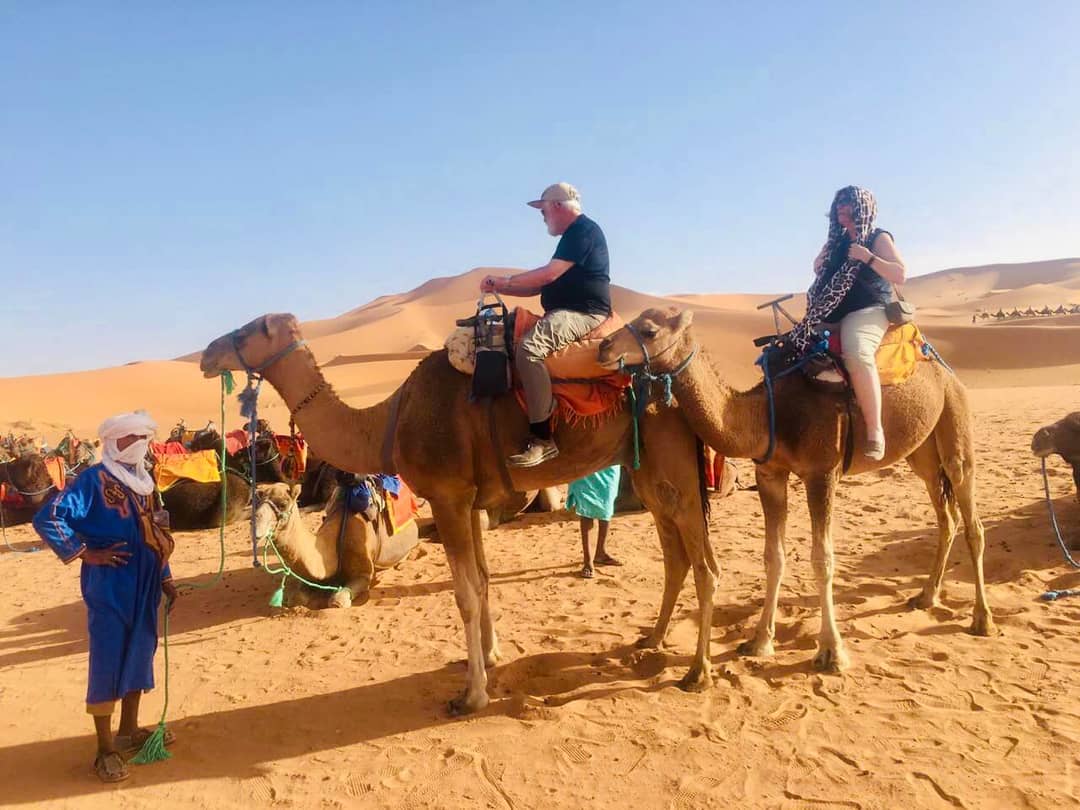
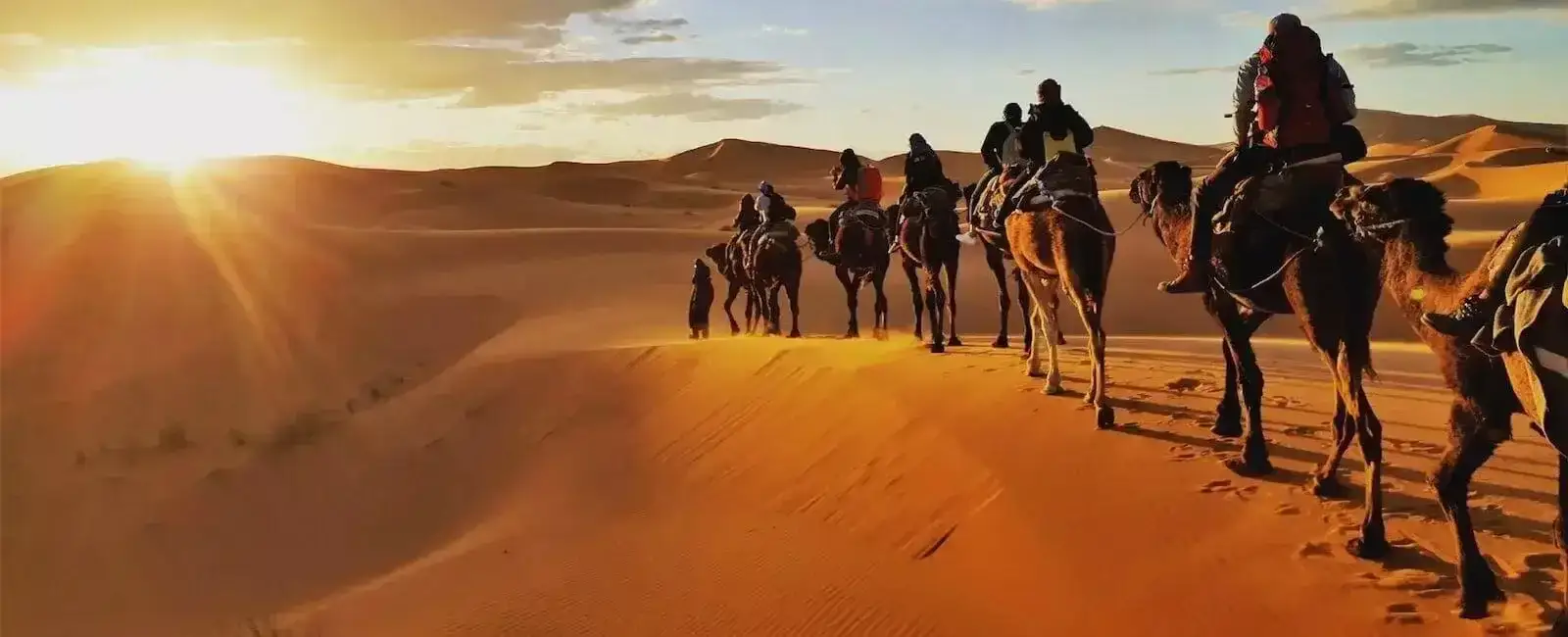
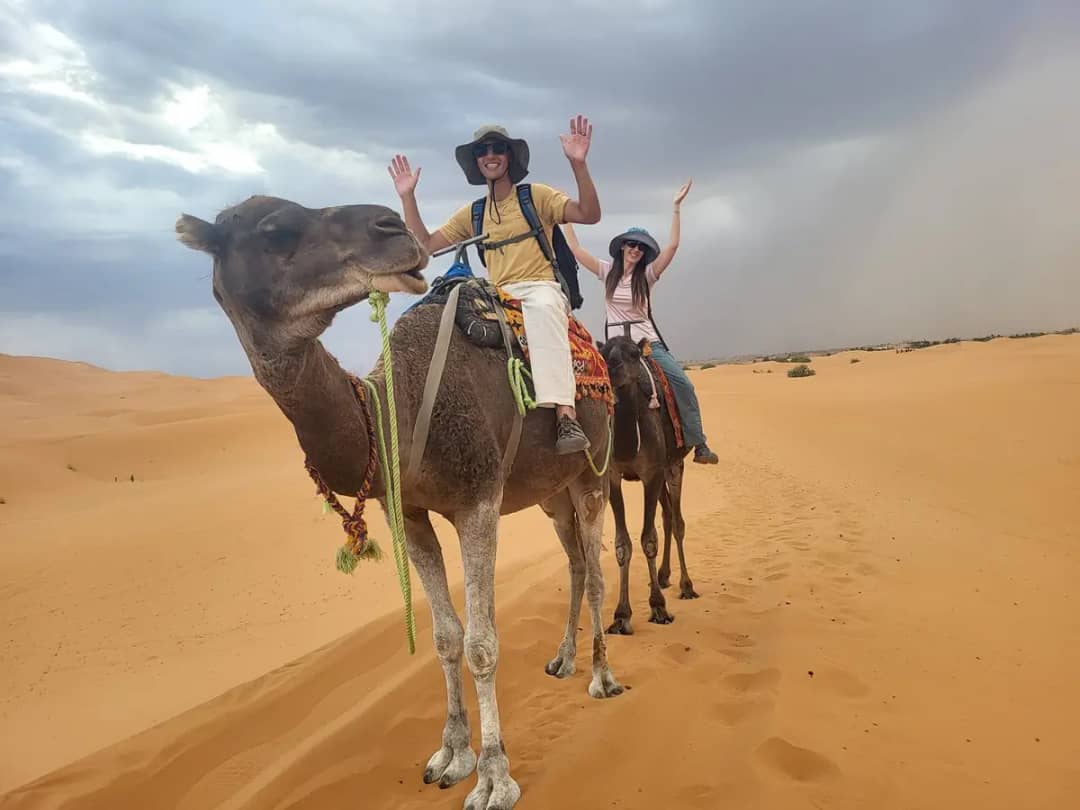
The travellers in the photograph above are clients in their seventies, on the dunes at Erg Chebbi. They chose to ride. Plenty of our clients do not, and we simply drive those who would rather not to the same spot. Both are normal.
Every tour we run is 100% private. There is no group to keep up with, no fixed departure time, and no itinerary that cannot be changed on the morning of day four because you slept badly. That single fact solves most of what makes travel harder later in life.
Brahim Jounh, who designs every itinerary personally, was born in Agoudal in the Imilchil region of the High Atlas and is based in Burnaby, BC. He has been guiding since 1999, and Gateway2Morocco Travel has operated since 2006. When he tells you the Fes tanneries involve a stepped climb and no handrail, that is not a disclaimer written by a lawyer. It is someone who has helped a seventy-eight-year-old client up it.
For a traveller in reasonable health who can walk for 20 to 30 minutes at a time and manage a flight of stairs with a handrail, Morocco is not too hard. It becomes hard when three things stack up: long driving days, medina walking on steep or uneven ground, and summer heat. Remove any two of those and almost anyone can travel comfortably. Remove all three and Morocco is one of the gentler long-haul trips you can take.
Where we say no, or at least "let's change the plan": full wheelchair users hoping to explore the medinas, because most medina lanes are stepped or cobbled and step-free access is limited; travellers who cannot manage any stairs at all but want the Fes medina; and anyone set on July or August in the desert.
| Place | Walking level | What the ground is like | How we make it easier |
|---|---|---|---|
| Casablanca, Rabat | Easy | Hassan II Mosque: flat courtyards, guided visit about 45–60 min. Kasbah of the Udayas: steps and steep cobbled lanes | See the Udayas from the flat lanes near the gate; the car reaches almost everything else |
| Essaouira | Easy | Compact, car-free medina; cobbles, a few steps up to the ramparts | Short strolls between the port, ramparts and medina |
| Marrakech | Moderate | Flat but crowded, uneven lanes shared with motorbikes; Jemaa el-Fnaa is wide and paved. Majorelle Garden has wide paved paths; Bahia Palace has thresholds and steps | Short sections early in the day; the car meets you instead of a loop back on foot |
| Fes el-Bali | Hard | No vehicles, steep and stepped lanes, few places to sit; a full guided walk is about 4 km over 3–4 h. Tannery terraces up narrow stairs | Enter at the top, walk downhill, car waiting at the bottom; we choose the sights instead of the full tour |
| Chefchaouen | Moderate to hard | Hillside town: steps and steep inclines above the main square; riads often a short uphill walk from the car | Stay in the lower medina, near the square |
| Volubilis | Moderate | Uneven Roman paving on 40 ha, little shade; about 1 h guided, 2 h to explore | Go early on a cool morning; the guided loop is enough |
| Ait Ben Haddou | Easy to hard, your choice | River crossing, then a 20–30 min climb to the granary on uneven earth and stone | The classic view is from the riverside: no climb needed |
| Todra and Dades gorges | Easy | Todra: a road reaches the narrowest point, with a flat walk on the riverbed | Mostly seen from the vehicle |
| Merzouga (Sahara) | Easy, with a choice | Camel ride to camp is 45–60 min each way; soft sand is tiring to walk on | We drive you by 4x4 to the tent door (under 15 min); the camel and the sunrise dune are optional |
| Ouzoud Falls | Moderate to hard | About 20 min down a paved path to the base; the climb back takes longer; unfenced edges near the top | View from the top path, or take it slowly with rests |
Sources for walking times: Lonely Planet (Volubilis), MerzougaWay (camel and 4x4 times), Journal of Nomads (Ouzoud), and our own routes.
This is the single most important choice for an older traveller, and the one most itineraries gloss over. A riad is a traditional house built around a courtyard, usually two or three floors high, often with steep, narrow staircases and no lift. Breakfast is frequently on the roof terrace, which means more stairs. Medina riads cannot be reached by car, so you walk the last few minutes while a porter brings the luggage on a handcart. Many are simply not suitable for anyone unsteady on steps.
Larger hotels solve most of this. The Sofitel Marrakech Palais Imperial, Movenpick Mansour Eddahbi, Fes Marriott Jnan Palace and Barceló Anfa in Casablanca have lifts and drive-up entrances, and palace-style hotels such as La Mamounia combine atmosphere with space. Some riads do have ground-floor rooms or a small lift, and when a client wants riad character we confirm the specific room, not just the property, before we quote. Where a riad cannot offer a suitable room, we choose a hotel with a lift instead, and you know which is which before you pay anything. Our guide to Moroccan riads versus hotels goes into the trade-offs.
These are the adjustments we make by default when we know we are planning for travellers in their late sixties and beyond. None of them cost extra: they are choices, not upgrades.
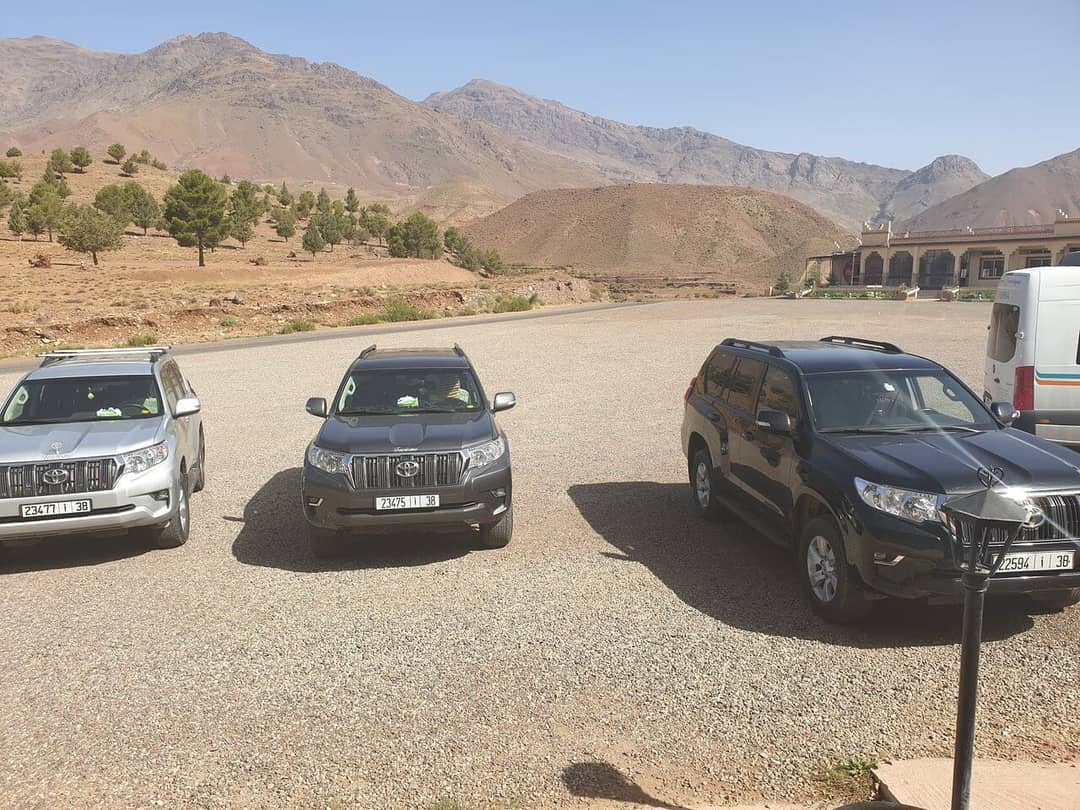
For an older traveller the driver-guide is far more than a chauffeur. The same driver stays with you for the whole journey. He carries your luggage every time and deals with hotel porters and handcarts in the medinas. He drives door to door, stops whenever you ask, and adjusts the day as it goes: if you are tired, the afternoon visit moves to tomorrow or disappears, because nobody else is waiting. He knows the nearest pharmacy and clinic on every road and handles tipping and small payments. By day three he knows how you take your tea.
For an older traveller, heat is a bigger risk than anything else on this page. Marrakech averages daily highs of around 37 to 38°C in July and August, inland temperatures in Fes are similar, and the desert is hotter still.
April, May, October and November are ideal, with days of roughly 18 to 28°C and clear skies; March and late September are also good. December to February is very good for the imperial cities, mild by day, but desert nights are genuinely cold and the High Atlas pass can see snow. Whatever the season, we schedule walking for the morning and keep the afternoon for rest. Our month-by-month guide to the best time to visit Morocco has the detail.
None of this is medical advice. See your own doctor and a travel clinic six to eight weeks before departure. What we can do is handle the logistics.
Insurance is essential, and not something to buy at the airport. Premiums rise with age and most policies ask about pre-existing conditions. Two rules matter more than the brand you choose. First, buy it within days of paying your tour deposit, not weeks later: with many policies, how pre-existing conditions are treated depends on when you bought. Read the wording. Second, insist on emergency medical evacuation cover, not just treatment; getting home is the expensive part.
Canadian travellers should know that provincial plans such as OHIP, MSP, RAMQ and AHCIP cover very little outside the country. US travellers should know that original Medicare generally does not cover care abroad. We remind every client at deposit stage.
I would rather lose a booking than send someone to a riad with forty stairs they cannot climb. Tell us honestly what you can and cannot manage, and we will build the trip around it. The travellers who have the best time are not the fittest ones. They are the ones who gave themselves two weeks instead of ten days.
Any journey can be re-paced, but routes with fewer long transfers and more nights in each place need the least adjusting. These are the three we most often recommend for older travellers, and every one is rebuilt around you rather than sold as-is.
Prices are the Classic style for two travellers sharing. What we would not start from, for most older travellers, is a short Marrakech-and-Sahara loop: it squeezes four one-night stops into nine days, which is the pattern we tell people to skip.
Family9 days · 8 nights
Casablanca → Rabat → Fes → Bin el Ouidane → Marrakech
Morocco imperial cities on a 9-day private tour: Casablanca, Rabat, Meknes, Fes and Marrakech.
From USD 3,060/ person · 2 travellers sharing
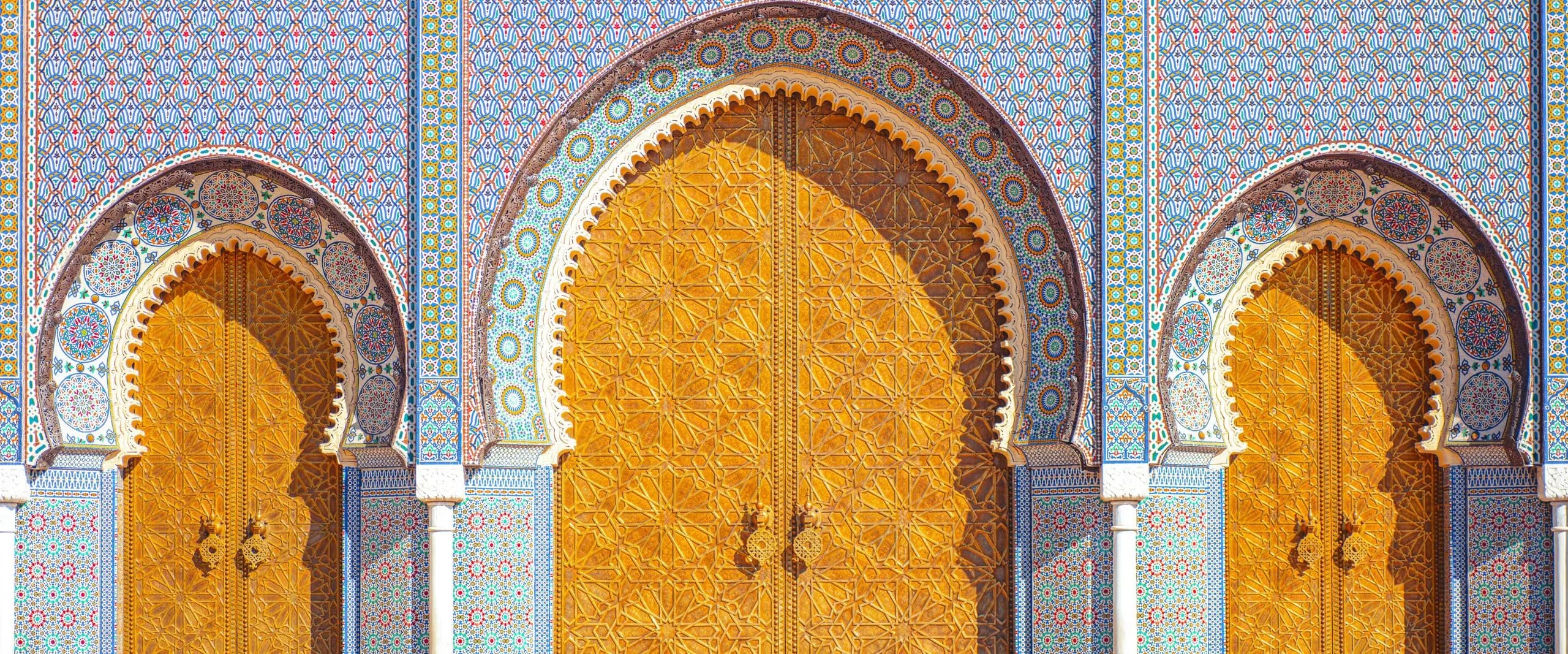 Most popular
11 days · 10 nights
Rabat → Fes → Erfoud → Merzouga → Dades Gorge → Marrakech → Casablanca
Experience Morocco’s four imperial cities, Volubilis and Erg Chebbi Sahara on an 11-day private tour with luxury camp, local guides and flexible start in Casablanca or Marrakech.
From USD 3,740/ person · 2 travellers sharing
 Most popular
13 days · 12 nights
Casablanca → Rabat → Chefchaouen → Fes → Erfoud → Merzouga → Dades Gorge → Marrakech → Essaouira → Casablanca
Discover Morocco on a 13-day private tour: imperial cities, the Sahara, the Atlas and Chefchaouen.
From USD 4,420/ person · 2 travellers sharing
Re-pacing does not carry a surcharge; a rest day costs a hotel night, not a premium. Our travel styles are priced per person per day, two sharing: Classic (3.5★) from US$340, Platinum (boutique) around $390, Luxury (4–5★) around $490, and Ultra-Luxury (palaces and villas) from $750. Many older clients choose Luxury because the larger properties have lifts and more space; our luxury Morocco tours page shows what that looks like. Four friends travelling together pay roughly 10 to 15% less per person than a couple, since the vehicle and guide are shared. Everything else is priced in your proposal, and our sample pricing for Morocco tours shows how it adds up.
Travelling with adult children or grandchildren as well? Our multi-generational family tours are built to work for a grandparent and a toddler in the same vehicle.
Flight length matters more at 75 than at 45, so it is worth choosing the routing deliberately. As of September 2026, Royal Air Maroc flies nonstop to Casablanca from New York JFK, Washington Dulles, Miami, Montréal and Toronto, and since June 2026 from Los Angeles; Air Canada also flies Montréal–Casablanca and Air Transat Montréal–Marrakech. Schedules change, so check royalairmaroc.com when you book. From the east coast the nonstop is roughly seven to eight hours. From Vancouver, Calgary or elsewhere in the west you will usually connect once, and should expect 15 to 20 hours door to door. From the UK, London to Marrakech or Casablanca is a short three to four hours.
If your budget allows, a premium economy or business seat on the transatlantic leg is the upgrade that pays off most. We treat the first day as recovery: a driver at the airport, a short transfer, and nothing scheduled until the next morning. Routing by city: Morocco tours from Canada (with pages for Toronto, Montréal, Vancouver, Calgary and Ottawa) and Morocco tours from the USA.
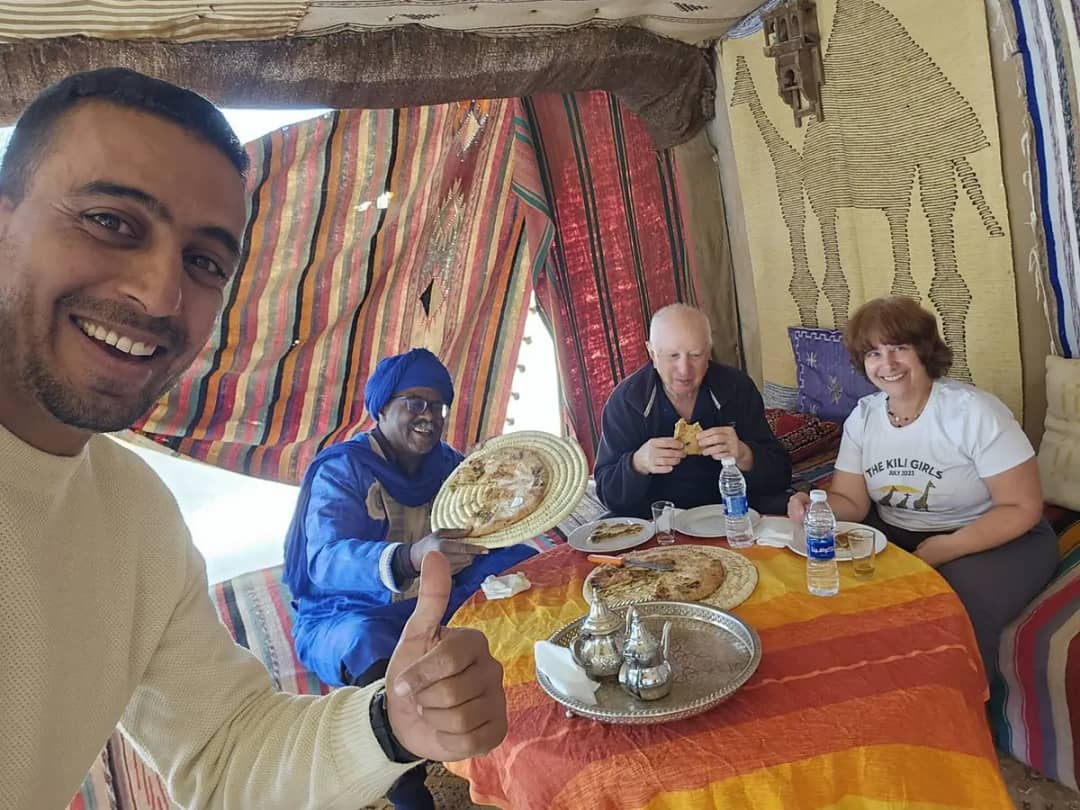
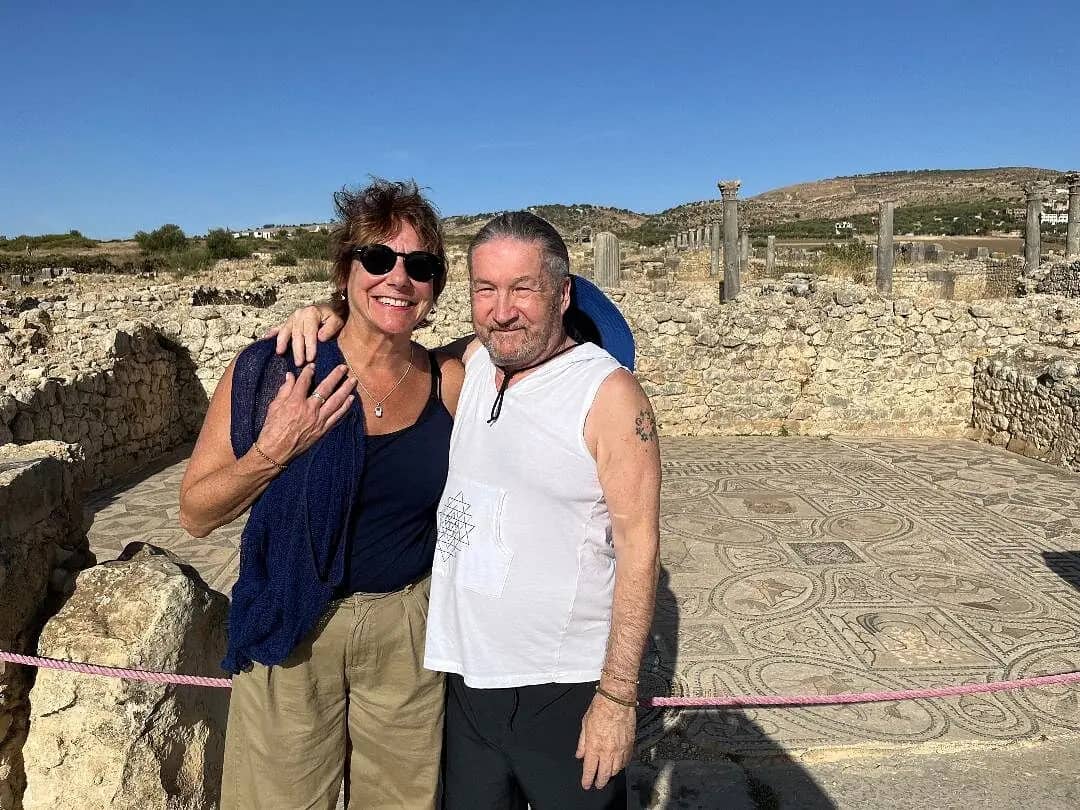
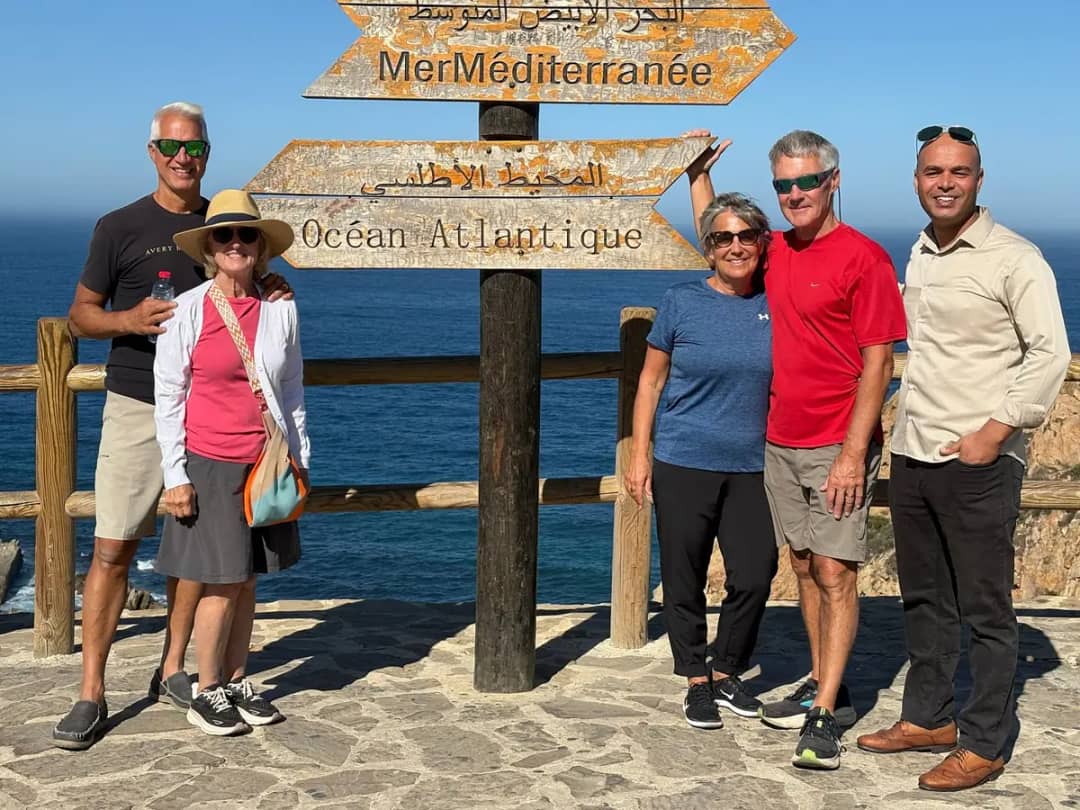
Yes, provided the trip is paced for you rather than for a coach schedule. The food is gentle, the private-driver model means door-to-door transport everywhere, medical care in the major cities is good, and older visitors are treated with real deference in Moroccan culture. Get two things right: the season (avoid inland July and August) and the walking, particularly in Fes.
No. We have no upper age limit and we do not ask you to sign anything unusual. What we do ask is that you are candid about mobility, stamina and any medical conditions at the enquiry stage, so the itinerary is built around the truth rather than around optimism.
That is yours to set. Typically we plan one to two hours of guided walking in a morning, broken into shorter segments, with the vehicle repositioned to meet you rather than looping back. Some clients want more; some prefer the medina from a café table. Neither costs more.
Completely. The camel ride is always optional; mounting and dismounting are the moments that need balance, and a 4x4 takes you to the same dunes and the same sunset instead. If a tent does not appeal, there are hotels in Merzouga and Erfoud with proper beds and bathrooms, and you can still watch sunrise over Erg Chebbi.
A cane or walking pole is no problem anywhere we go. A walker is workable in the coastal cities, Rabat, Casablanca and most hotels, but not through the Fes medina. Morocco is only partly wheelchair accessible: modern hotels and airports are manageable, historic medinas mostly are not. Tell us your exact situation in your first email and we will say honestly what is realistic before you commit.
April, May, October and November are ideal, with days of roughly 18 to 28°C. March and late September are also good. December to February is mild in the cities but cold at night in the desert and mountains. July and August are best avoided inland, with Marrakech averaging highs around 37 to 38°C.
On a private tour with a vetted driver and licensed guides, the realistic risk is petty pickpocketing in crowded medinas. As of September 2026, Global Affairs Canada advises a high degree of caution in Morocco, the same headline level it gives France, and the US State Department rates it Level 2. Our guide on whether Morocco is safe for North American travellers covers the advisories.
Royal Air Maroc flies nonstop to Casablanca from several North American cities, including New York, Washington, Miami, Montréal and Toronto, roughly seven to eight hours from the east coast. From western Canada you usually connect once and should plan on 15 to 20 hours door to door. We build a quiet recovery day into every arrival.
Yes, and it is common. Four to eight friends travelling together works particularly well: the vehicle and guide are yours alone, and a group of four typically pays around 10 to 15% less per person than a couple. See our sample pricing for how group size affects the per-person rate.
For April, May, October and November departures, the months we most recommend for older travellers, book four to six months ahead. Hotels with lifts and ground-floor riad rooms are limited, and they are the first to go in spring and autumn. Winter is more flexible at three to four months.
Tell us your dates, who is travelling and what your pace really is. You will have a complete custom itinerary within 48 hours, and no deposit is due until it is exactly right. 100% private, BC licence #80460.
Design my journeyProposal in 24–48h · No deposit to start · Unlimited revisions
“We took our adult kids and it was a perfect way to reconnect.”
From past travellers
4.9★ on TripAdvisor · 300+ reviews
“If you're planning a trip to Morocco and looking for the best travel agency — stop your search right now.Seriously, for anyone who doesn't want to read the whole review: just know that GateWay2Morocco is the right choice. You won't regret booking with them.…”
“Our trip to Morocco was fairly short and Gateway2Morocco was the only agency who would organize a short trip for us; other agencies required at least a 5 day stay in Morocco. The itinerary was very well organized, and the drivers and tour guides were all ve…”
“We went on a 12-day trip with Gateway2Morocco and really, we couldn't be happier about our choice of both the travel agency and the destination. Brahim was extremely easy to work with and Morocco was better than we expected (and we had exceptionally high ex…”
Begin your journey
Everything on this page comes from taking travellers there since 1999. Tell us what moves you and it becomes an itinerary.
Proposal in 24–48h◆No deposit to start◆Unlimited revisions
Start with the journeys or how it works.