Museum · Tangier medina
Tangier American Legation Museum: The Jewish Connection
The American Legation in Tangier’s lower medina was the first public property the United States acquired abroad, and it is now a museum and cultural centre. It belongs on a Jewish heritage route for a documented reason: near the end of the Second World War its chief, J. Rives Childs, helped secure Tangier entry visas that protected Hungarian Jewish families in Budapest. The museum has also shown Sephardic bridal costume, and it looks over the Old Jewish Cemetery.
The building
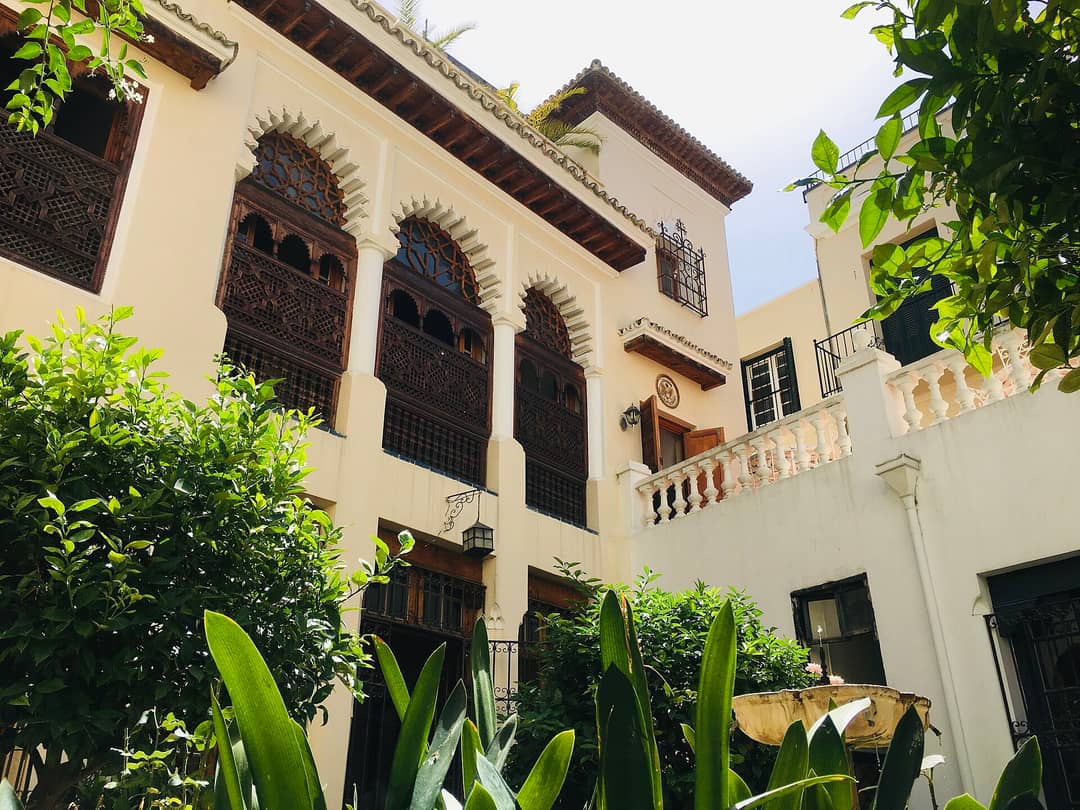
The Legation was established on 17 May 1821, when the sultan presented the building to the United States as a diplomatic post. The original two-storey core of mud and stone grew as neighbouring houses were bought, into the Moorish-style complex you see today. It was designated a US National Historic Landmark in 1982.
Today a non-profit society founded in 1976 runs it as a museum and cultural centre, known as TALIM, focused on Morocco and on Moroccan–American relations. Inside are paintings, a wing devoted to the writer and composer Paul Bowles, and a research library.
The Jewish connection
Through the 19th and early 20th centuries, many Moroccan Jews held American protégé status, which placed them under consular protection and outside the sultan’s courts. Visiting Jewish Morocco places the end of this period in 1923, the year Tangier became an international zone.
The best-known story belongs to the war years. Childs was the American chargé d’affaires in Tangier from February 1941 to June 1945. On 13 June 1945, Renée Reichmann, who represented the American Jewish Joint Distribution Committee in Tangier, wrote to thank him for Tangier entry visas for 500 children and adults, mostly large Hungarian Jewish families. The visas allowed the International Red Cross in Budapest to remove the group from internment and house them in a building under the protection of the Spanish consulate. Reichmann wrote that 1,200 people owed their survival to him.
In his memoirs Childs gave the credit to Reichmann and to General Luis Orgaz, Spanish High Commissioner in Morocco, who ordered the visas issued. Some travel articles say Childs issued 1,200 visas; the letter speaks of visas for 500 people and credits them with saving 1,200 lives. An article on the Legation’s own website, by Gerald Loftus, asks whether Childs should be recognised at Yad Vashem; he has not been.
Sephardic costume and the cemetery view
In 2020–21 the museum showed a temporary exhibit, “Customs and Costumes of Sephardic Morocco”, a private collection of Amazigh (Berber) and Jewish artefacts including bridal gowns worn by Sophia Cohen Azagury. We have not confirmed whether it is still on display.
From the museum you can see Tangier’s Old Jewish Cemetery, where the revered Rabbi Mordechai Bengio is buried. The Legation fits easily into a morning in the medina with the synagogues of Rue des Synagogues; see our Tangier and Tetouan guide.
Visiting today
The Legation is an operating museum. Opening hours and admission were not confirmed in our research, so we check them when we plan your day in Tangier. Allow about an hour, longer if the library or temporary exhibits interest you.
Tangier American Legation Museum: questions travellers ask
Did the American Legation save Jews during the Holocaust?
Its chief, J. Rives Childs, helped obtain Tangier entry visas, ordered by Spain’s High Commissioner, for about 500 Hungarian Jews. Renée Reichmann of the JDC wrote that 1,200 people survived because of them.
Is there a Jewish exhibit at the museum?
A Sephardic costume exhibit with Jewish bridal gowns was on show in 2020–21. We confirm what is on display before your visit.
How long do I need?
About an hour. It sits in the medina near the Old Jewish Cemetery and the synagogues, so it fits easily into a Jewish heritage morning.
Sources. Tangier American Legation (TALIM); Wikipedia; New York Jewish Travel Guide (2021); Hadassah Magazine (2020); Visiting Jewish Morocco. Researched and fact-checked by Gateway2Morocco, October 2026. Access to religious sites changes; we confirm every visit when we plan your trip.