The community’s story in Marrakech
Marrakech was founded by the Almoravids in the second half of the 11th century, and according to the Jewish Virtual Library a Jewish community formed soon afterwards, drawn largely from southern Morocco. Under the Almohads in the 12th century Jews were persecuted and for a time barred from living in the city. They resettled under the Merinids, and Sephardic refugees from the Iberian Peninsula joined them at the end of the 15th century.
In 1557 the Saadian sultan Abdallah al-Ghalib moved the city’s Jews into a walled quarter beside the royal palace district (some sources give 1558 or the 1560s). The historian Michel Abitbol notes that it took the name Mellah in 1639, after the one in Fes, and was completed and fortified in 1662; it is often described as Morocco’s second mellah after Fes.
Later centuries brought yeshivot (Torah academies), scholars from the Corcos and Pinto families and a major Jewish role in the city’s economy. In the early 20th century community leader Joshua Corcos worked closely with the Glaoui governors, and the Alliance Israélite Universelle opened schools in the city. The Jewish Virtual Library gives the city’s Jewish population as 15,700 in 1912, 25,646 in 1936 and 18,500 in 1951. From the 1950s families left for Casablanca, Israel, France and the Americas.
The mountains tell a parallel story. The Ourika valley had about 300 Jewish families and two synagogues in the 1950s, according to Diarna; Ait Ourir’s community left in 1963; and Demnate, east of the city, had around 1,800 Jews in the early 1950s and a community the Jewish Virtual Library traces to the early 12th century.
Today community leaders put the Jewish population of Marrakech at roughly 200 (2023), with only a handful still living in the mellah. A royal order restored the quarter’s official name, El Mellah, in early 2017, along with its Jewish street names, and more than US$20 million was announced for houses, streets and synagogues. The earthquake of 8 September 2023 damaged buildings in the quarter, including its synagogues; repairs followed and the mellah remains open.
The essential sites in the city
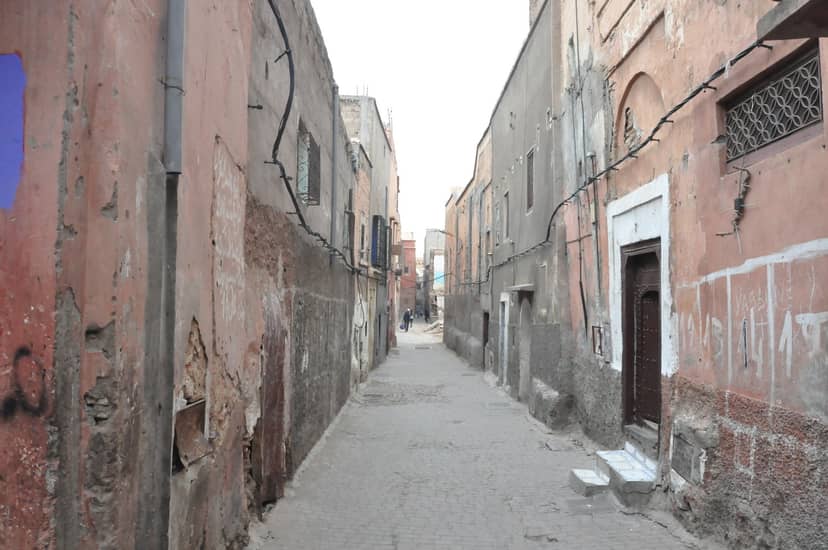
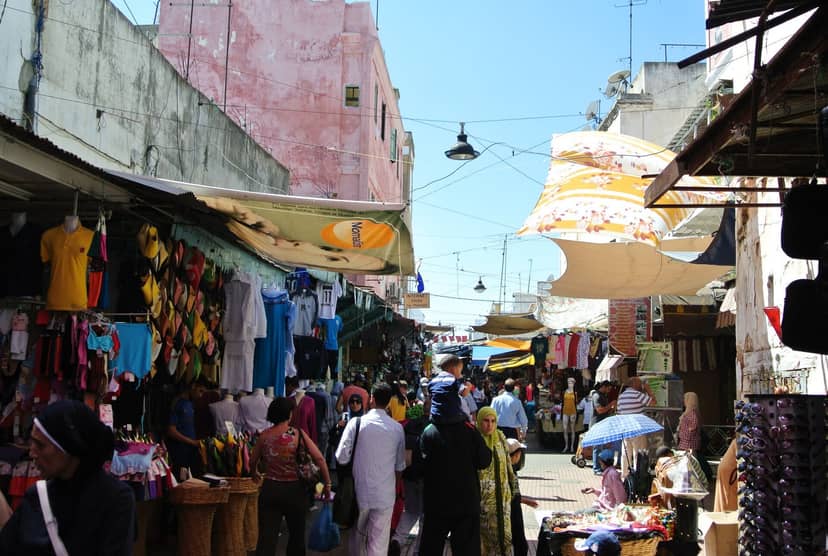
The mellah. The quarter sits in the southern medina next to the Bahia and El Badi palaces. Its old heart is the Place des Ferblantiers, once ringed by jewellers, goldsmiths and weavers and now fully restored. A jewellery market still trades at the mellah’s entrance. Walk the lanes slowly and look out for the restored Jewish street names.
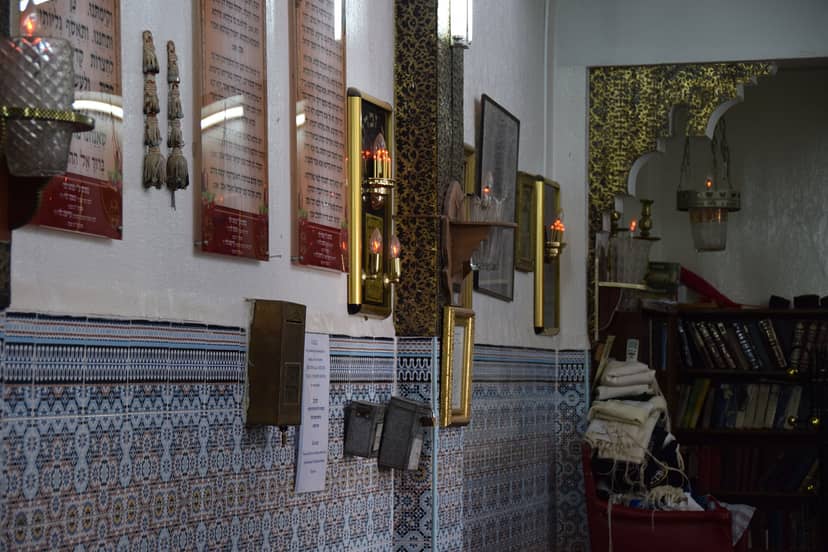
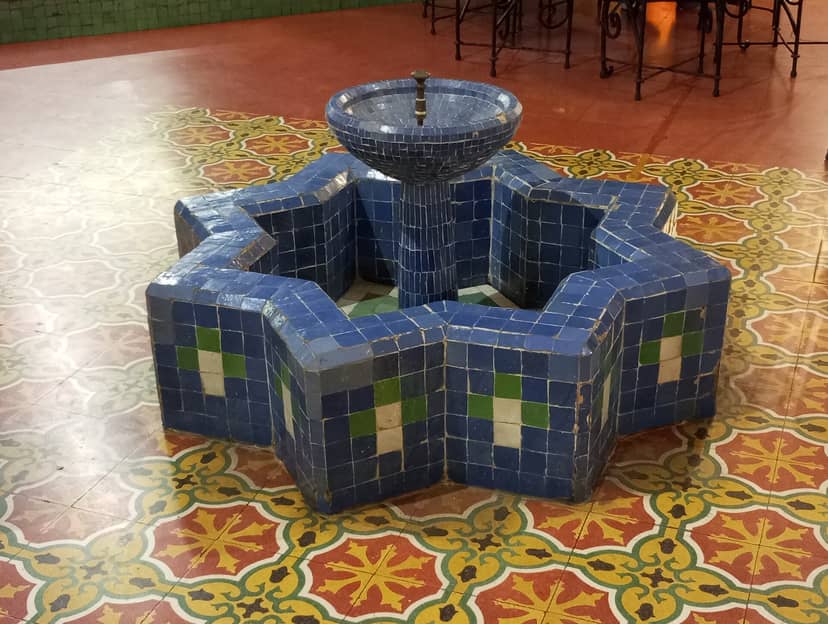
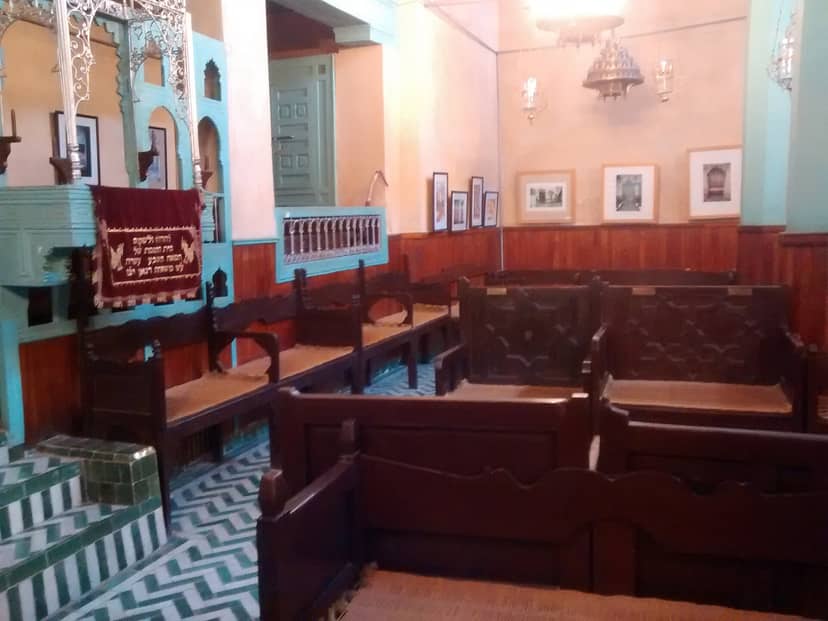
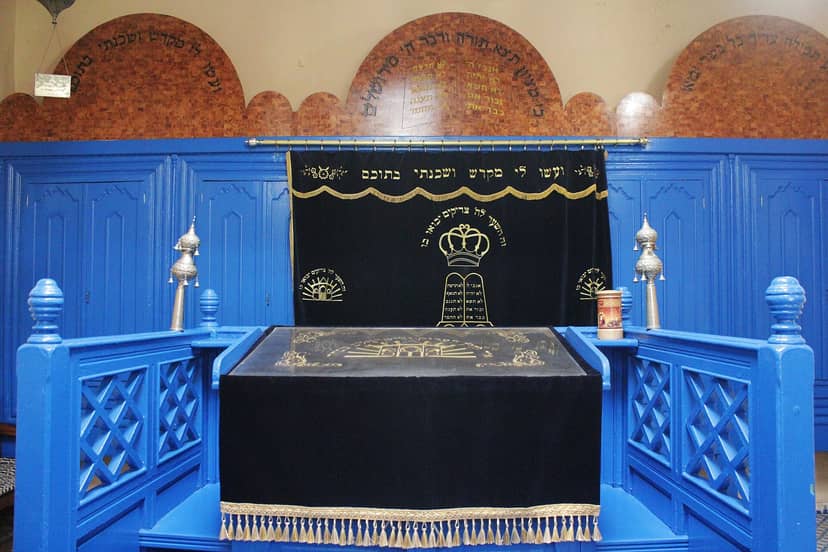
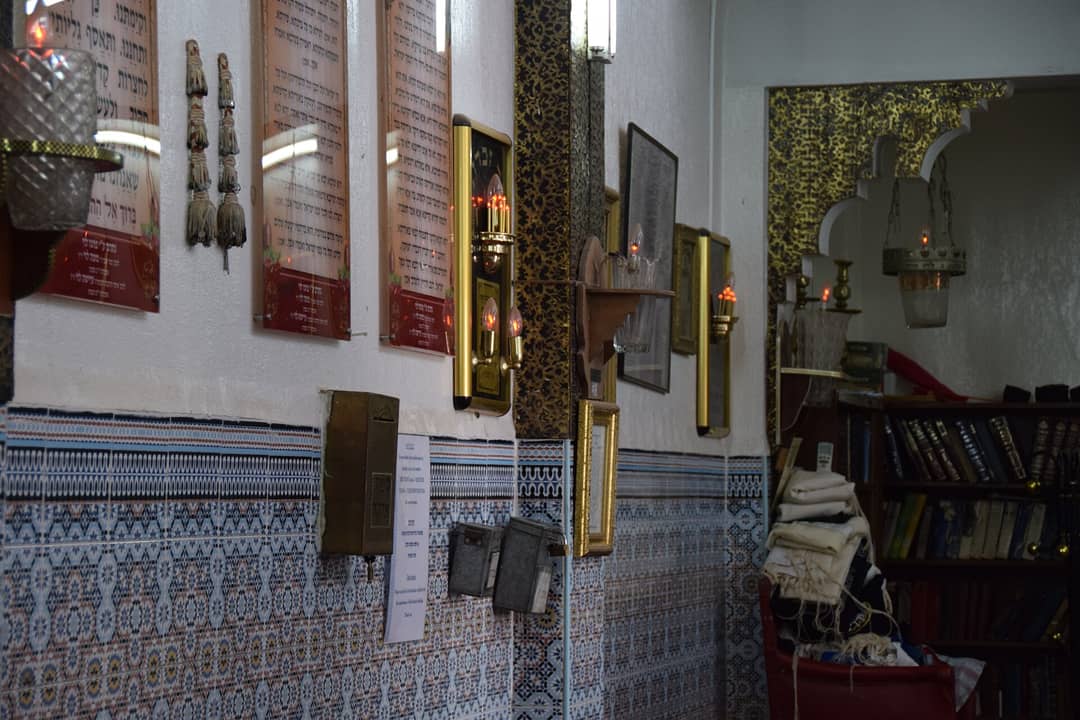
Lazama Synagogue (Slat al-Azama) faces the jewellers’ market on Derb Talmud Torah. Like most mellah synagogues it was built into a courtyard house, here with a fountain and citrus trees. Community tradition links its founding and its name to the megorashim, the Jews expelled from Spain in 1492, but the year has not been verified and the mellah itself dates from 1557. The present building reflects later work: a women’s section was added after the 1950s and the wooden ark (heikhal) was replaced in marble. Rooms around the courtyard hold an exhibition of photographs, documents and Judaica. In June 2025 entry was 50 dirhams and the upper floor was closed; it still serves as a synagogue.
Slat Al Fassiyine, the mellah’s other surviving historic synagogue, was reported severely damaged in the 2023 earthquake, and its Torah scrolls were removed. No reopening has been reported, so treat it as a site to ask about. Do not confuse it with the restored synagogue of the same name in Fes.
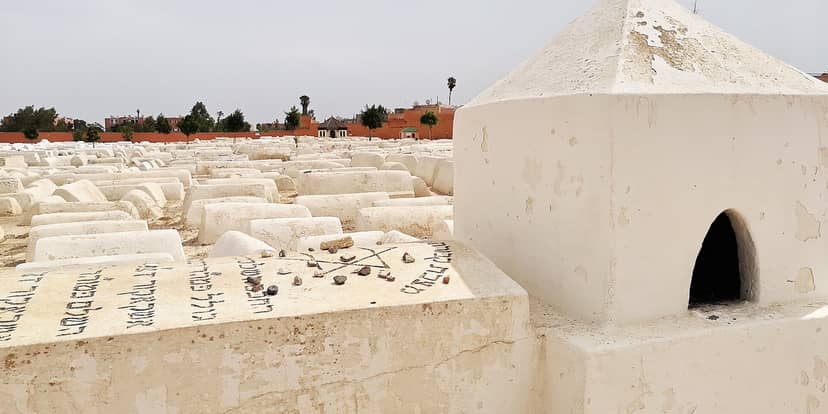
Miâara Jewish Cemetery lies on the edge of the mellah and is one of the largest Jewish cemeteries in Morocco, with more than 20,000 graves. Its whitewashed tombs are laid out in sections for men, women and children. Visitors are told that one corner holds about 6,000 children who died in a 19th-century typhus epidemic and that the blue-painted graves near the entrance are those of Kohanim (priestly families); both are reported traditions rather than documented fact. The cemetery holds the mausolea of revered rabbis, among them Rabbi Hanania HaCohen and Rabbi Pinhas HaCohen, a Souss-born rabbi who died in Marrakech on 12 January 1952; tradition credits him with saving the life of the pasha Thami El Glaoui. The cemetery is maintained by the community and the Kanami family of caretakers, and a small exhibition on its history was on site in 2023.
Beth El Synagogue in Gueliz, next to the Chabad house, is the working synagogue of today’s community. It is used for services and community events rather than as a tourist site, and visits are arranged through the community or Chabad.
The House of Photography in the medina has a section of century-old photographs of Marrakech and Amazigh Jews.