Gateway2Morocco Travel

City guide · Casablanca & the Atlantic coast

Jewish Casablanca and the Atlantic Coast: A Traveller’s Guide

Casablanca is where Moroccan Jewish life carries on today, with working synagogues, a Chabad house, kosher restaurants and the Museum of Moroccan Judaism. Most of the country’s Jews live here. The city is also the natural base for day trips to the old coastal communities of Azemmour, El Jadida and Safi, and to the pilgrimage shrines of the Chaouia plains.

  • Morocco’s largest living Jewish community
  • Museum of Moroccan Judaism and the El Mellah museum
  • Shabbat meals and minyan through Chabad
  • Day trips to Azemmour, El Jadida and the Chaouia shrines
Ettedgui Synagogue & El Mellah Museum

The community’s story here

Casablanca’s Jewish story is mostly a modern one. In 1866 the town counted about 1,800 Jews. As the port grew, families arrived from across Morocco, and by 1952 the city had 74,783 Jews, more than any other Moroccan city. Community tradition holds that the first modern Jewish settlers came from Ben Ahmed in the Chaouia plain; the Ettedgui family, who built two synagogues in the medina, came from the Todgha region in the south-east.

The original Jewish quarter, the mellah, grew in the southern part of the old medina between Bab es-Souq and Bab Marrakech. Unusually for Morocco, it had no wall or gate separating it from its Muslim neighbours. It was pillaged after the French landing of 1907, and by 1968 most of it had disappeared under the widening of Place de France and a car park. Long before that, families who could afford it had moved into the new European-style town, where a generation of synagogues, schools and clubs went up during the French protectorate.

Emigration came in waves from the 1950s to the 1980s. Casablanca still kept the country’s largest community: the US State Department put it at about 2,500 in 2018, and the World Jewish Congress estimated about 2,100 Jews in all of Morocco in 2020. The Council of Jewish Communities of Morocco, founded in 1947, looks after synagogues, cemeteries and holy places, and since 2021 the Commission de la Cacheroute in Casablanca has issued the national kosher label.

Restoration has gathered pace since 2010, when King Mohammed VI launched a programme to restore at least 167 Jewish burial sites around the country. In Casablanca the most visible restoration is the Ettedgui Synagogue, rebuilt under the old-medina rehabilitation programme with about US$844,000 of public money and rededicated in the King’s presence on 16 December 2016.

In the medina: Ettedgui, Dar Rabbi Haim Pinto and the old cemetery

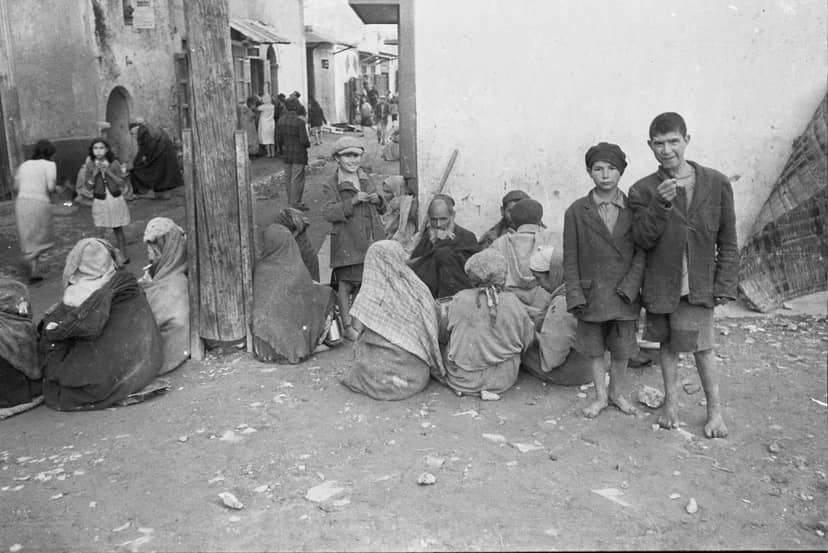
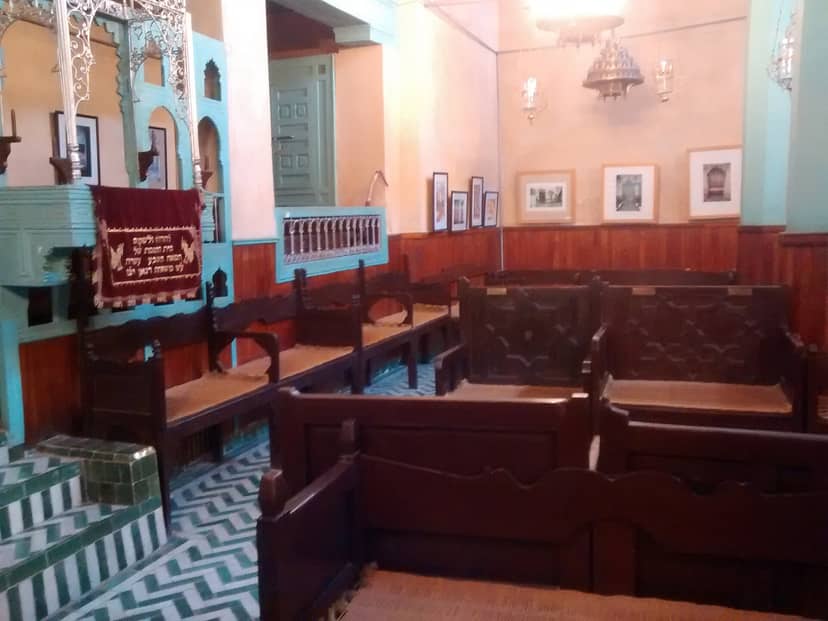
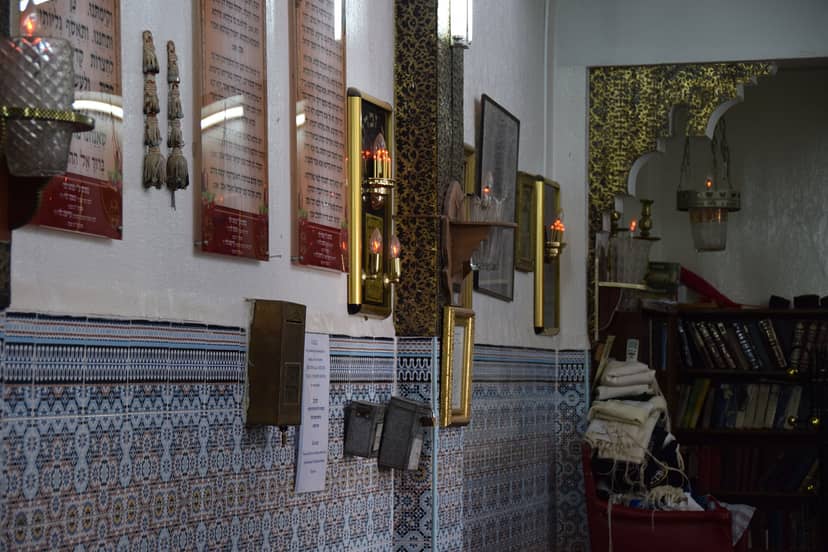
Start in the old medina near the seafront ramparts. The Ettedgui Synagogue and El Mellah Museum is the main Jewish heritage stop here. Built by the Ettedgui family during the protectorate (sources give either the 1920s or 1935), it was wrecked in the Allied bombardment of Casablanca in November 1942 and stood derelict for decades. Reconstruction began in 2011. It is now a heritage site and no longer used for worship, and rooms beside the prayer hall hold the small El Mellah museum of photographs of the old quarter. A January 2026 study reported a 50-dirham ticket covering both. Security staff may ask for identification, so carry your passport.

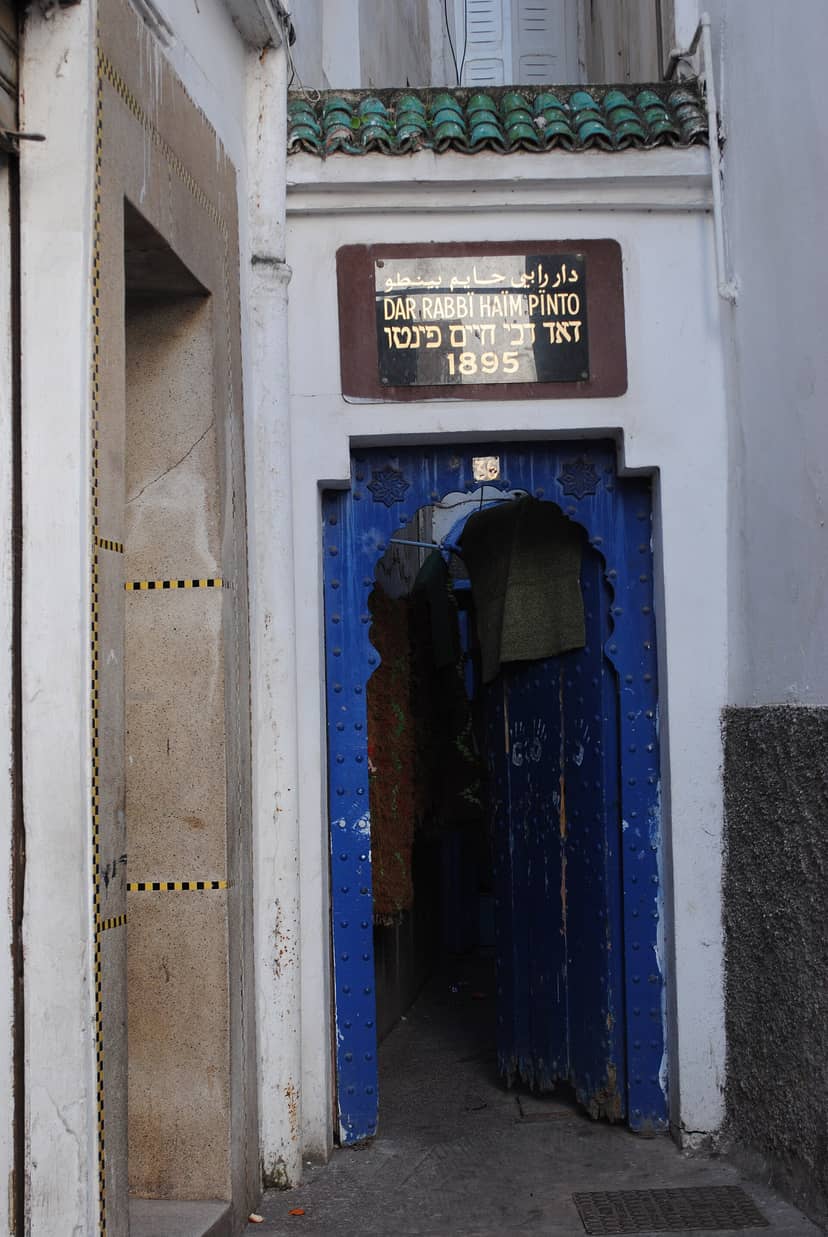
A short walk away, at the end of a cul-de-sac off Rue Mohammed El Hansali, is Dar Rabbi Haim Pinto, the three-storey house of Rabbi Haim Pinto ‘HaKatan’ (1855–1937), grandson of the famous tzaddik (venerated holy man) of Essaouira. He moved to Casablanca in the 1870s and founded a yeshiva in the city; a plaque on the house reads ‘Dar Rabbi Haim Pinto, 1895’. It was restored with donations from diaspora donors in Montreal, New York and Paris and from the Beth-El congregation. The caretaker stresses that it is a pilgrimage house rather than a museum. You ring the bell, and the rabbi’s grandson, who lives upstairs, or an assistant usually opens (occasionally nobody is in). Visitors light candles and sign a guestbook, and a contribution of about 50 dirhams is customary. His yahrzeit (the anniversary of his death), 15 Heshvan, is marked at his grave in Casablanca; in 2026 it falls on 26 October.

The Old Jewish Cemetery lies beside the medina. It covers about 2.8 hectares and was used until 1947, when burials moved to Ben M’Sik. A 2005 study described rubbish dumped over the walls and stolen marble, and we found no recent report on its condition. Visits are arranged by calling the number posted on the door. The Diarna heritage survey reports that a list of the names of those buried has been compiled, though its description may mix this cemetery up with Ben M’Sik, so we ask the community whether a list exists before promising anything.

Little else of the old mellah survives, so it is best walked with a guide who can point out where it stood.
Map

Jewish heritage sites: Casablanca

SynagogueShrineMuseumMellahCemeteryLarger pins have their own page. Click the map to zoom with your mouse wheel.

In the new town: Temple Beth-El and the Museum of Moroccan Judaism

Temple Beth-El, at 67 Rue Jaber Ben Hayane in the city centre, is Casablanca’s best-known working synagogue. Completed in 1949 by Jews of Algerian origin, which is why it is nicknamed ‘the Algerian Temple’, it seats about 500 and is admired for stained-glass windows inspired by Marc Chagall. It was fully refurbished in 1997 and follows the Orthodox Sephardic rite. Weekday visits are normally arranged through a guide or the community, with a security check at the door, and it does not open for sightseeing on Shabbat or holidays. Heritage groups sometimes attend Kabbalat Shabbat (the Friday-evening service) here by prior arrangement. A few doors along, Madame Fhal, a Jewish family bakery on Chabad’s list, is a traditional stop for Moroccan-Jewish pastries, though we found no 2025–26 confirmation that it is still trading.

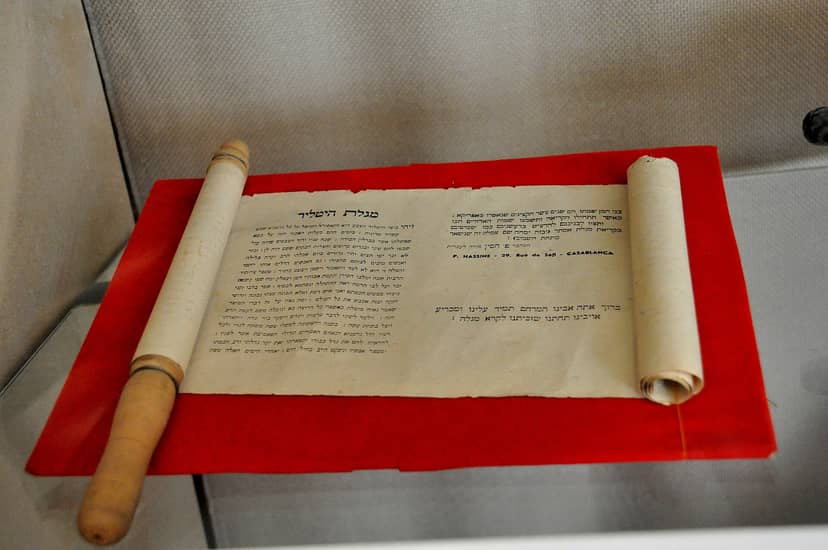
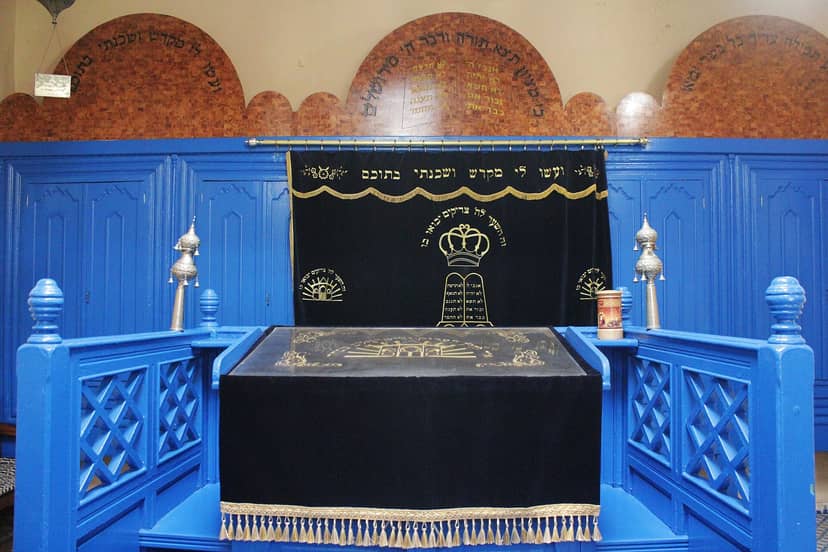
The Museum of Moroccan Judaism, at 81 Rue Chasseur Jules Gros in the Oasis district, was long described as the first museum of Judaism in the Arab world. The building went up in 1948 as the Murdoch Bengio children’s home, became a yeshiva in 1966 and was converted into the museum in the 1990s, opening in 1997 or 1998 (sources differ). After the death of its long-time director, Simon Levy, in 2011 it was renovated and reopened in April 2013. The collections include Torah scrolls, Amazigh (Berber) Jewish costume and jewellery, a reconstructed silversmith’s workshop, photographs and a bimah (the raised reading platform) from about 1944, taken from Casablanca’s Beni-Issakhar Synagogue. Labels are in English and French.

The museum closes on Saturdays and Jewish holidays. The only published hours (Monday to Friday 10:00–17:00, Sunday 11:00–15:00) date from 2022, so we confirm them before each visit. Many taxi drivers do not know the address, so have it written down.

Other community synagogues, among them Benarrosh, David Hamelekh and Em Habanim, serve local congregations and can be seen only by arrangement; they are listed at the end of this guide.

Ben M’Sik: the cemetery for family roots

Most Casablanca Jews who died after the late 1940s are buried at Ben M’Sik Jewish Cemetery, in the east of the city about 6 km from the centre; burial concessions there were granted from 1947. It is actively maintained, and for roots travellers it is usually the most important site in the city.

It also holds the mausoleum of Rabbi Eliyahu HaCohen, Casablanca’s patron tzaddik, known as ‘Qandil El Blad’ (lamp of the land). Little is documented about his life; tradition says he came from the Holy Land and was the brother of Rabbi Yahia Lakhdar of Ben Ahmed. His remains were moved here from El-Bhira in the medina around 1963 to make way for a road, and Jews traditionally visited his tomb at the end of Shabbat to light candles. An annual hilloula (the celebration on a tzaddik’s anniversary) is held, but we have not found a confirmed date.

Access is in daytime, often supervised or by prior arrangement. If you are looking for a grandparent’s grave, send us names (in Hebrew and French if you have them), approximate dates of death and any old photographs well before the trip, and we ask the community to help locate the plot. We cannot promise that a grave or a record will be found. Our roots-trip guide explains how this works.

Day trips along the coast: Azemmour, El Jadida and Safi

South-west of Casablanca, the Doukkala coast had some of Morocco’s oldest Atlantic Jewish communities.

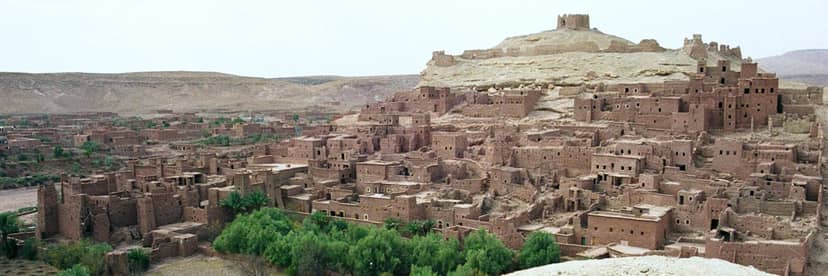
Azemmour, about an hour and a quarter by road, sits on the Oum Er-Rbia river, and its mellah is one of the three quarters of the old medina. In the 15th century Jews numbered about 2,500 of the town’s 20,000 inhabitants, and exiles from Portugal arrived in 1496. Under Portuguese rule (1513–1541) the community and its rabbi, Joseph Adibe, received privileges. The community was re-established in 1780, wealthier families left for Mazagan (today’s El Jadida) around 1820, and no Jews remained by 1968. Inside the mellah is the shrine of Rabbi Abraham Moul Niss, honoured by Muslims as Sidi Brahim and known as ‘the healing rabbi’. Tradition says that animals working a mill built over his resting place fell ill until Jews and Muslims dreamed he wished to be left in peace. A local woman looks after the shrine. It is visited daily by Jews and Muslims except on Saturdays, which are reserved for Jewish visitors. Its hilloula is reported on Lag BaOmer, though one source mentions a gathering in August. The town’s Jewish cemetery has also been rehabilitated.

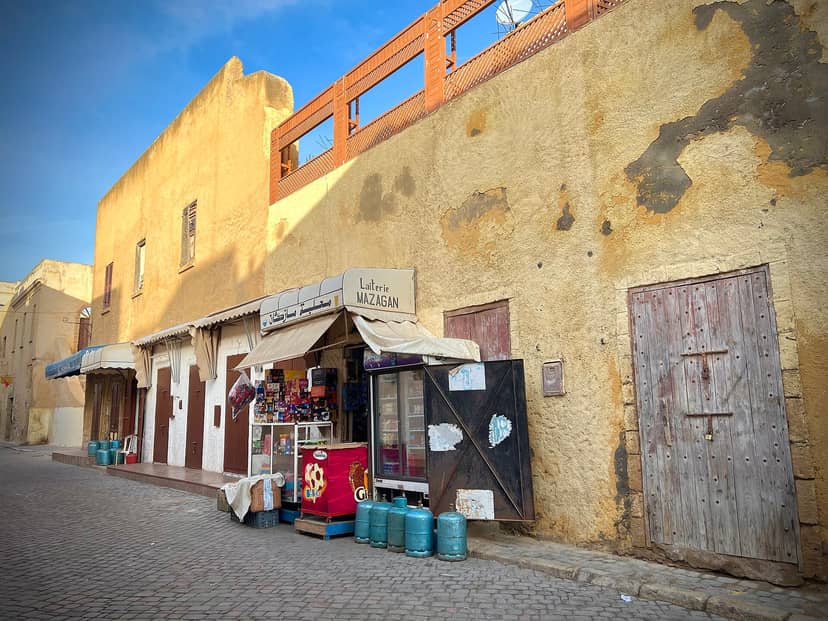
El Jadida, about 20 minutes further on, is the former Portuguese citadel of Mazagan, a UNESCO World Heritage site. After Morocco recovered it in 1769, the walled town was resettled from the 1820s, and Jews, many from Azemmour, made the area inside the walls their quarter, working as merchants, translators and consular agents. From the ramparts you can see the Star of David on a disused synagogue. Sources disagree on its name (Ben Simon or Amiel) and its history, and we know of no interior access. The large Jewish cemetery beside the Portuguese City was fully renovated in 2019. It holds the tomb of the 19th-century kabbalist Rabbi Yahia (Ihya) Haim Assouline, where about 200 people gathered in late summer 2019. Access is through the guardian or the community.

Safi, about three hours south of Casablanca, works better as a stop on the way to Essaouira or Marrakech. Its Jews, about 4,500 in 1951, were not confined to a mellah. The walled Sanctuary of the Ouled Ben Zmirou, about 8,000 m², honours a family of rabbis who came from Iberia at the end of the 15th century; tradition counts seven saints. It has a synagogue and whitewashed stones where candles are lit. Its summer hilloula has been reported both on 13 August and in early July, so we check the date each year.

The Chaouia and Tadla shrines

Inland, the plains of the Chaouia hold two rural pilgrimage sites that fill up once a year. Near Ben Ahmed, roughly 100 km by road from Casablanca, the Shrine of Rabbi Yahia Lakhdar at Sidi Eddahbi is built around sacred stones where, tradition says, the rabbi hid from attackers and was saved by reciting a prayer. A 1986 report describes him as an emissary from Hebron at the end of the 17th century. His week-long hilloula falls around Lag BaOmer (18 Iyar, the 33rd day of the Omer count between Passover and Shavuot, usually in May). Known locally as the ‘stones festival’, it drew more than 1,000 pilgrims in 2013. At the same season pilgrims honour Rabbi Abraham Awriwer at his hilltop shrine on Mount Dad near Settat, where tradition says seven brothers are buried with him. Ben Ahmed’s former mellah also survives, and the town was chosen in the 1950s for a Jewish tuberculosis sanatorium.

Further south-east, in the Tadla plain, Beni Mellal and Boujad keep the cemeteries of communities that have gone, and Beni Mellal has a small shrine of Rabbi David Ben Yamin. Boujad is the birthplace of several well-known Israelis, including Amir Peretz and Yehuda Lancry, which gives it roots-trip interest. These are remote stops with little or no current visitor information, best made with a guide and arranged well ahead. Outside the hilloula, access to the shrines must be arranged with the community committee or guardian. Our hilloula guide covers dates and how we plan around them.

Where the community is today, and kosher food

Casablanca is the easiest place in Morocco to keep kosher. The first point of contact for visitors is Chabad of Casablanca, run by Rabbi Levi and Chana Banon; Chabad has worked in Morocco since 1950. Its Shabbat meals are held at the Hotel Le Palace d’Anfa and must be booked in advance through its online form (its October 2026 page confirms this arrangement), with a Shabbat morning service at 09:45. There is no eruv (the boundary that allows carrying on Shabbat) in Casablanca. Chabad can also arrange use of a mikveh (ritual bath): it lists two for women and one for men, with no public hours.

Restaurants change often, so we name only places with 2025–26 evidence that they are trading. Cercle de l’Union, a community-club restaurant in the Golden Triangle, has diner reviews from October 2024 to April 2026. A kosher directory lists it under the Beth Din of Casablanca, but Chabad marks it ‘parve options only’, so strictly observant travellers should ask to see the current certificate. Chez Michel, at 85 Boulevard Moulay Youssef, has a dated April 2026 review; its supervision is not published, so call ahead.

Other names in kosher directories, including Le Chandelier at the Palace d’Anfa and several community-club restaurants, bakeries and groceries, should be treated as ‘check before you go’. The national ‘Label Cacher Maroc’ is issued by the Commission de la Cacheroute. Glatt meat and chalav Yisrael dairy are largely imported. Our kosher travel guide covers caterers and Shabbat planning across the country.

Getting there and how many days

Casablanca’s Mohammed V airport is Morocco’s main international gateway, so most trips begin and end here. One full day covers the medina sites, Beth-El, the museum and, if you need it, Ben M’Sik. Add a day for Azemmour and El Jadida, or continue down the coast towards Safi and Essaouira. The Chaouia shrines are worth the detour mainly at hilloula time. Rabat is about an hour north by motorway or train.

Plan around Saturday: the museum is closed and synagogues are open only for prayer. Dress modestly, bring a head covering for synagogues and shrines, keep your passport with you for security checks, and do not photograph people at prayer or on Shabbat. We build these stops into a private itinerary with a guide who knows the community; our sample Jewish heritage tour shows how Casablanca fits into a longer route.

A day in Jewish Casablanca

  1. Morning

    Ettedgui Synagogue and Dar Rabbi Haim Pinto

    Begin at the Ettedgui Synagogue and El Mellah Museum in the old medina (allow 45 minutes; bring your passport). Walk through the lanes of the former mellah to Dar Rabbi Haim Pinto, a short walk within the medina, and ring the bell. If arranged in advance, add the Old Jewish Cemetery beside the medina.

  2. Late morning

    Temple Beth-El

    A short taxi ride takes you to the city centre for a pre-arranged visit to Temple Beth-El, with a security check at the door. Madame Fhal’s bakery is on the same street if it is open.

  3. Lunch

    Kosher lunch

    Lunch at a kosher restaurant confirmed the week before, such as Cercle de l’Union or Chez Michel, or a packed meal from a caterer.

  4. Afternoon

    Museum of Moroccan Judaism

    Take a taxi to the Oasis district (have the address written down) and allow about 90 minutes. The museum is closed on Saturdays and Jewish holidays.

  5. Late afternoon

    Ben M’Sik cemetery (optional)

    For family graves or the tomb of Rabbi Eliyahu HaCohen, continue to Ben M’Sik in the east of the city. This visit must be arranged with the community beforehand.

  6. Day 2

    Azemmour and El Jadida

    Drive about an hour and a quarter to Azemmour for the mellah and the shrine of Rabbi Abraham Moul Niss (not on Saturdays for non-Jewish visitors). Continue to El Jadida for the Portuguese City, the ramparts with the synagogue’s Star of David and, by arrangement, the renovated Jewish cemetery. Return to Casablanca or carry on south.

More places for roots travellers

Smaller mellahs, cemeteries and shrines, often in villages. Many need a local contact to visit; we arrange that when we plan your route.

El Jadida Synagogue (Portuguese City)

Synagogue · El Jadida · Seen from outside

Inside the walls of El Jadida’s Portuguese City, the old Mazagan, stands a disused synagogue whose Star of David can be seen from the ramparts. It recalls the Jewish merchant community that made the citadel its quarter in the 19th century. It can be seen from the outside only, and sources disagree on its name and history.

Visiting: Exterior only; visible from the ramparts of the Portuguese City (the ramparts are a ticketed sight). No interior access documented.

Benarrosh Synagogue

Synagogue · Casablanca · By arrangement

A synagogue in central Casablanca founded by the Benarrosh family. It was named in 2015 among the city synagogues due for rehabilitation. It mainly serves the community, so visits need prior arrangement.

David Hamelekh Synagogue

Synagogue · Casablanca · By arrangement

An active synagogue in the Corniche quarter, with a women’s mikveh of the same name. Useful for observant travellers staying near the Corniche. Sources disagree on whether it is a newer building or an older one listed for rehabilitation in 2015. Visits by arrangement.

Em Habanim School and Synagogue

Synagogue · Casablanca · By arrangement

A Jewish school founded in 1942 by the brothers Moise and David Bendayan, which joined the Ozar Hatorah network and had 346 pupils before the mass emigration. Its attached synagogue still serves the community and features on walking tours of Jewish residential areas. Arrange through the community or a specialist guide.

Azemmour Jewish Cemetery

Cemetery · Azemmour · Access to confirm

The burial ground of Azemmour’s vanished community, at the edge of the medina. A video records its rehabilitation, apparently under the national cemetery programme, but we found no written date or visiting information. Ask us to check access when planning an Azemmour day.

Mellah of Ben Ahmed

Mellah · Ben Ahmed · Access to confirm

Ben Ahmed, a market town of the Mzab tribe in the Chaouia, had a Jewish community that left in the 1950s and 1960s, mostly for Israel; its mellah still stands. Tradition holds that Casablanca’s first modern Jewish settlers came from here. There are no visitor reports, so combine it with the Rabbi Yahia Lakhdar pilgrimage.

Former Jewish Sanatorium of Ben Ahmed

Heritage · Ben Ahmed · Access to confirm

A tuberculosis sanatorium for Jewish patients set up in the 1950s by Samuel-Daniel Levy and the Council of Jewish Communities of Morocco, chosen for the healthy plateau climate. Its current use and access are unknown.

Beni Mellal Jewish Cemetery

Cemetery · Beni Mellal · Access to confirm

The burial ground of Beni Mellal’s former Jewish community in the Tadla plain. It appears on heritage maps but its history and condition are undocumented, so it needs checking on the ground before it goes into an itinerary.

Shrine of Rabbi David Ben Yamin, Beni Mellal

Shrine · Beni Mellal · Access to confirm

A modest shrine of a rabbi credited with miracles, set in a family complex with a small synagogue. Muslims also venerated him as Sidi Kherwi’a and traditionally guarded the tomb. His hilloula is on Lag BaOmer. There are no current visitor reports.

Boujad Jewish Cemetery

Cemetery · Boujad · Access to confirm

The cemetery of Boujad’s former Jewish community, documented by the Diarna heritage project. Boujad is the birthplace of Amir Peretz, Yehuda Lancry and Shaul Amor, which makes it a roots destination. No visitor information was found.

Kosher food & Jewish services

Kosher places open and close often. “To confirm” means we found no recent proof it is operating; we check every listing again when we plan your trip.

Casablanca

  • Chabad of Casablanca (Chabad-Lubavitch of Morocco)

    The Chabad-Lubavitch centre for Morocco, run from Casablanca by Rabbi Levi and Chana Banon.

    By arrangement
  • Commission de la Cacheroute de Casablanca (Morocco kashrut authority)

    Set up in December 2021, the commission holds the exclusive right (under a July 2021 inter-ministerial circular) to issue kosher certificates and the 'Label Cacher Maroc' for products and services in Morocco, with religious rulings by a five-judge Beth Din.

    By arrangement
  • Council of Jewish Communities of Morocco (CCIM) / National Council of the Moroccan Jewish Community

    Founded in 1947, the CCIM is the central representative body of Moroccan Jews and maintains synagogues, cemeteries and holy places.

    By arrangement
  • Cercle de l'Union (kosher restaurant & caterer)

    A long-standing Jewish community club restaurant in central Casablanca serving Moroccan-Jewish and Mediterranean meat dishes, also used as a kosher caterer.

    To confirm
  • Chez Michel Kosher

    Kosher meat restaurant in Casablanca, described by kosher directories as located inside the CCJC (a Jewish community complex).

    Open to visitors
  • Le Chandelier (kosher restaurant, Hotel Le Palace d'Anfa)

    Kosher meat restaurant inside the Palace d'Anfa hotel in central Casablanca, advertised with OU (USA) Glatt Lemehadrin meat and chalav Yisrael dairy, plus Beth Din of Casablanca supervision.

    To confirm
  • Madame Fhal Bakery

    Family-run Jewish bakery known for Moroccan-Jewish breads, cakes and pastries, on the same street as Temple Beth-El.

    Open to visitors
  • Women's Mikveh David Hamelekh, Casablanca

    Contemporary women's mikveh (ritual bath) serving the Casablanca Jewish community.

    By arrangement
  • AROMA Kosher Food & Bakery (former Bagel Bar address)

    Kosher bakery-cafe listed by Chabad of Casablanca.

    To confirm
  • Cercle de l'Alliance (kosher restaurant)

    Traditional Moroccan-Mediterranean kosher meat restaurant in a Jewish community club setting in central Casablanca.

    To confirm
  • Elbaz Bakery

    Parve kosher bakery listed by Chabad of Casablanca.

    To confirm
  • Restaurant du SOC (Chez David / MeatSOC)

    Kosher meat restaurant on Route d'El Jadida, south-west of central Casablanca, listed by Chabad and by older kosher guides.

    To confirm
  • Sucre Sale (kosher dairy grocery)

    Kosher dairy grocery listed by Chabad of Casablanca, a few doors from the AROMA/Bagel Bar address.

    To confirm
  • Wasabi Asian Restaurant Casablanca (kosher, unverified)

    Kosher Asian (sushi, meat and vegetarian) restaurant listed in 2022-era kosher guides for Casablanca.

    To confirm

Casablanca: common questions

Is there still a Jewish community in Casablanca?

Yes. Casablanca has Morocco’s largest Jewish community, about 2,500 people according to a 2018 US State Department figure, with working synagogues, schools, a Chabad house and kosher restaurants.

Can I attend Shabbat services in Casablanca?

Yes, with planning. Chabad of Casablanca holds Shabbat meals at the Hotel Le Palace d’Anfa by advance online registration and a Shabbat morning service, and groups attend Kabbalat Shabbat at Temple Beth-El by arrangement. Expect security checks and bring your passport.

Is the Museum of Moroccan Judaism open on Saturday?

No. It closes on Saturdays and Jewish holidays. The last published hours (from 2022) were Monday to Friday 10:00–17:00 and Sunday 11:00–15:00, so check before you go.

Can non-Jewish travellers visit these sites?

Yes. The museum, the Ettedgui Synagogue and Dar Rabbi Haim Pinto welcome all visitors, and Temple Beth-El can be visited on weekdays by arrangement. The Azemmour shrine is reserved for Jewish visitors on Saturdays.

Can you help me find my grandparents’ grave?

We can try. Burials after the late 1940s are mostly at Ben M’Sik and earlier ones at the old cemetery beside the medina. Send names and dates well in advance so we can ask the community; we cannot promise a result.

How far are El Jadida and Azemmour from Casablanca?

Azemmour is about an hour and a quarter by road and El Jadida about 20 minutes beyond it, so both fit comfortably into one day trip.

Where should observant travellers stay in Casablanca?

Chabad’s Shabbat meals are at the Hotel Le Palace d’Anfa, and Chabad notes that the Barceló Casablanca is a five-minute walk from its centre. We choose hotels within walking distance of the services you plan to attend.

Sources. Museum of Moroccan Judaism; MDPI Religions (2026); Times of Israel/JTA (2016); Wikipedia; Yabiladi; Hevrat Pinto; Diarna; EspacesTemps (2005); Chabad of Casablanca; World Jewish Congress; Encyclopaedia Judaica; Bladi; JTA (2019). Researched and fact-checked by Gateway2Morocco, October 2026. Access to religious sites changes; we confirm every visit when we plan your trip.

Photo: Younesmoussaif / Wikimedia Commons, CC0

Brahim Jounh, founder of Gateway2Morocco

Brahim Jounh

Founder · guiding since 1999

Your Morocco specialist

Plan Jewish Casablanca with us

Private trips designed around your family’s story: the synagogues and mellahs, a grandparent’s town, a hilloula date, kosher meals and Shabbat-friendly pacing. Tell us your dates and what matters most.

“He was thorough, always available, and incredibly professional throughout the planning process.”
Victoria P. · June 2026 · TripAdvisor

★ 4.9 on TripAdvisor · 300+ reviews · BC Consumer Protection Licence #80460