The community’s story here
The Jewish north was shaped by the expulsions from Iberia. In Tetouan, exiles from Spain formally organised a community in 1530 under Rabbi Haim Bibas. Chefchaouen, founded in 1471, took in Iberian Muslims and Jews soon afterwards, and Larache’s community grew from Spanish exiles later joined by Portuguese crypto-Jews from the Algarve. These families kept a Spanish-based language of their own, Haketia, into the 20th century.
Tetouan became the capital of this world. Around 1807 Sultan Moulay Slimane moved its Jews from their old quarter near the Great Mosque into a new, regularly planned mellah of straight streets, where the 1913 census counted 4,186 Jews. In 1860, during the Hispano-Moroccan War, troops stormed the Jewish quarter and about 400 Jews were killed; sources differ on whether the old or the new quarter was the one sacked. Two years later Tetouan received the first Alliance Israélite Universelle school in Morocco, the start of a network that brought French-language education to Moroccan Jews. The Jewish population peaked at 8,058 in 1940.
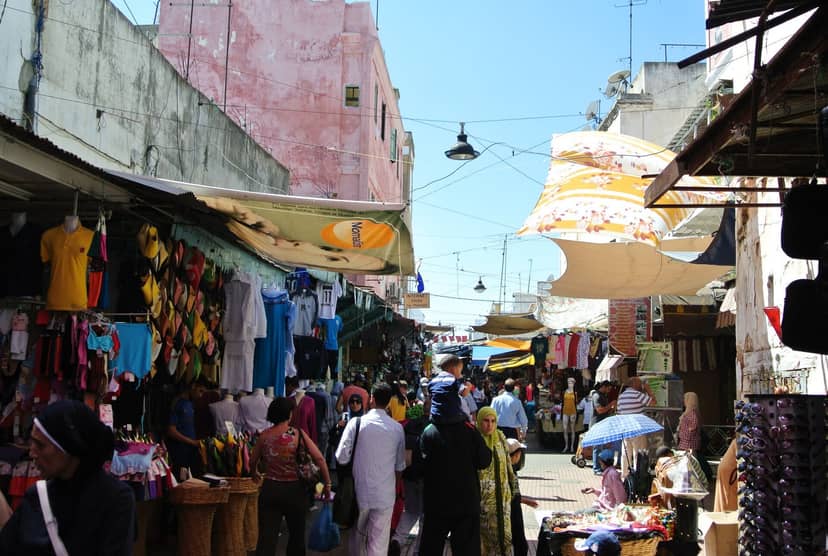
Tangier was different. It never had a walled mellah: Jews lived mainly in the lower medina around Rue des Synagogues and Rue Es-Siaghine, close to the Petit Socco. The American Legation, established in 1821, stands just above the old Jewish cemetery, and in 1864 Sir Moses Montefiore obtained a royal decree ordering equal treatment of Jews by Moroccan officials; a copy hangs in the community centre. The city once had well over a dozen synagogues (counts range from 16 to more than 20), and by one estimate its community peaked at around 22,000.
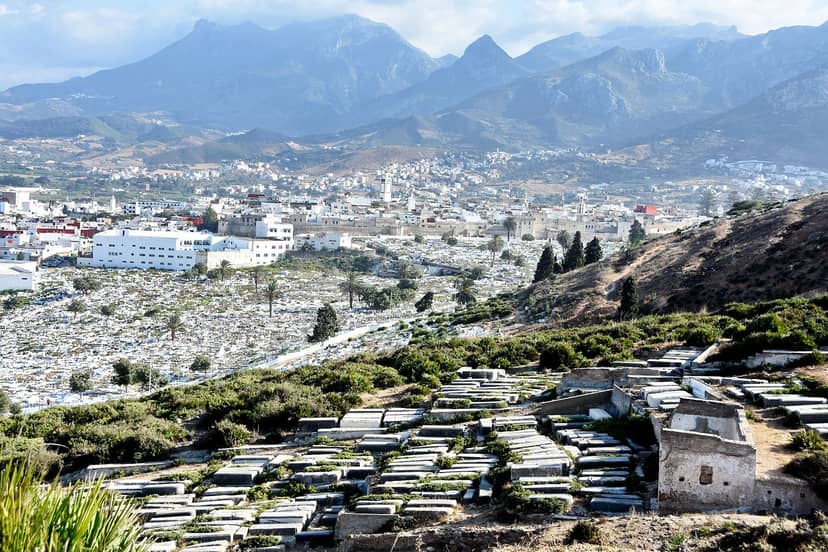
Emigration after the mid-20th century emptied the smaller towns: Asilah, with about 500 Jews in 1940, had no organised community by 1968, and Chefchaouen’s last Jewish family left in 1968. Tangier keeps a small community of a few dozen people, which has led a programme of restoration since 2021.
Haketia: the Judeo-Spanish of the north
The Jews of Tetouan, Tangier, Asilah, Larache, Chefchaouen and Ksar el-Kebir spoke Haketia, the western branch of Judeo-Spanish, also spoken in Ceuta and Melilla and carried by migrants to Casablanca and Oran. Its name comes from the Arabic ḥakā, ‘to tell’. Its vocabulary is mostly Spanish, and one count finds about a third of its words are Arabic and nearly a fifth Hebrew, so that ‘shabbat shalom’ comes out as ‘sabbat salom’ and the community is the ‘kehillá’. It was long written in Hebrew letters and is now mostly written in Latin script.
Haketia stayed a spoken language, used at home while children learned Spanish and French at school, including in the Alliance schools. Its decline began around 1860 with the Spanish occupation of Tetouan; from about 30,000 speakers in 1900 it is now estimated at about 1,000. A slow revival is under way through musicians such as Vanessa Paloma Elbaz, with her KHOYA sound archive, and through the dictionaries of José Benoliel (1977) and Alegría Bendayán de Bendelac (1995).
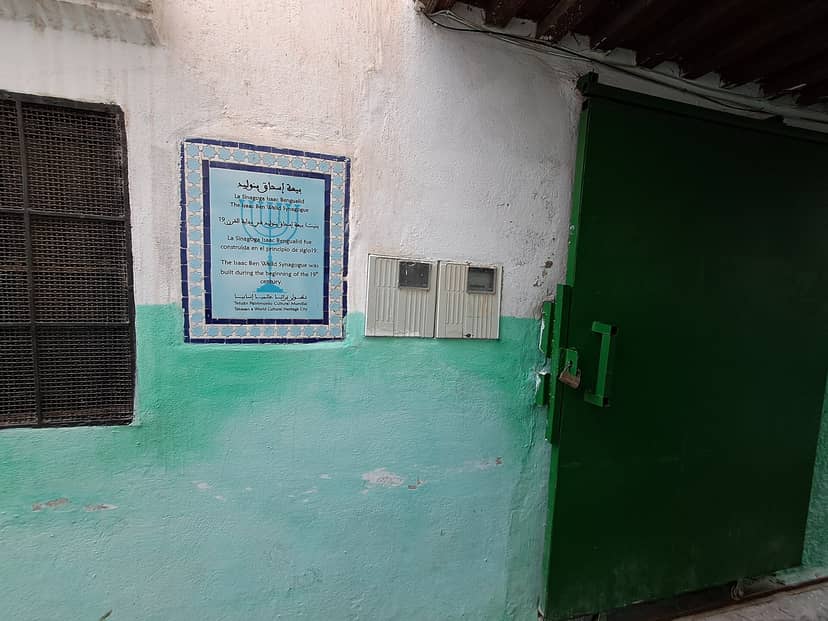
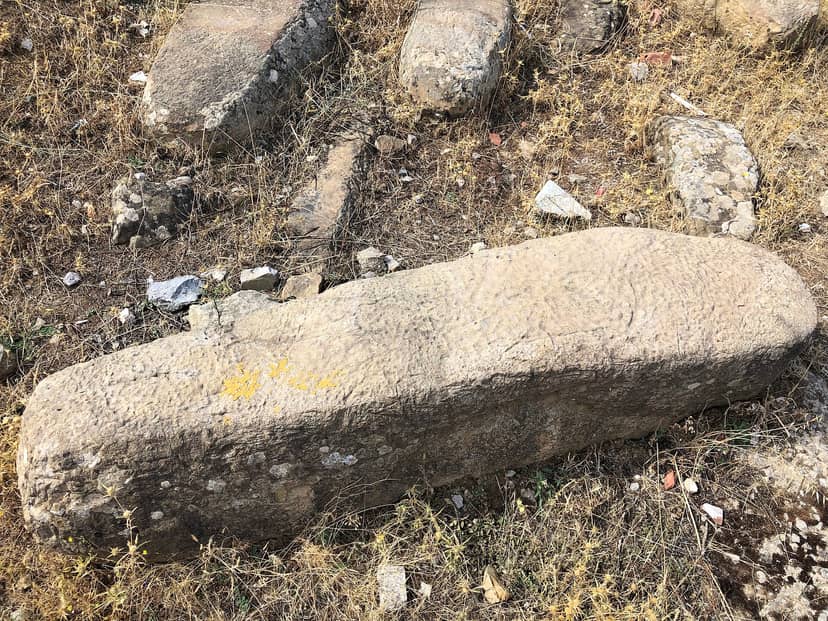
On a northern trip you meet its traces in Spanish epitaphs on the tombstones of Tangier and Asilah and in Tetouan street names such as Sultana Cohen and Isaac Bengualid. If your grandparents spoke Haketia, tell us: a guide who knows the north can make those connections on the ground.