The community’s story in Mogador
Sultan Sidi Mohammed ben Abdallah built Essaouira as his Atlantic trading port in the 1760s; the Jewish Virtual Library dates its rise to 1764. To run the trade, the sultan chose ten or twelve leading Jewish merchant families, among them the Corcos, Afriat, Coriat, Knafo, Pinto and Elmaleh, and named them tujjar al-sultan, the king’s merchants. They handled imports such as sugar, tea, metals and tobacco and exports of grain, hides and wool, dealt with European consuls, and were exempt from the jizya poll tax.
The tujjar were given fine houses in the kasbah, the walled quarter by the port. Most Jews lived in the mellah, the crowded Jewish quarter in the north-east of the medina. Sources date its creation differently: Diarna cites a decree of 1807, Moroccan press reports say building began in 1809 under Sultan Moulay Slimane, and the World Monuments Fund dates the quarter to the city’s founding.
Mogador became one of Morocco’s great Jewish towns. A French visitor around 1867 counted about 12,000 residents, half of them Jewish. The city had well-known rabbis and dayanim (rabbinical judges), including Abraham Coriat, Mas’ud Knafo and Haim Pinto, synagogues, yeshivot and musicians famous across Morocco. British trade was strong here, and English-language schools linked to the Anglo-Jewish Association operated alongside those of the Alliance Israélite Universelle.
The tujjar system faded after the 1890s and was gone by the early 20th century. The Jewish Virtual Library counts 6,150 Jews in 1936 and 6,500 in 1951. Over the 1950s and 1960s families left for Casablanca, Israel, France and the Americas, and by 2017 the town had three Jewish inhabitants. Families with Mogador roots are spread across the world; well-known names linked to the town include the businessman and athlete Victor Elmaleh and the writer Edmond Amran El Maleh, who was born in Safi but chose to be buried in Essaouira. The medina became a UNESCO World Heritage Site in 2001, and the mellah was placed on the 2018 World Monuments Watch.
The essential sites
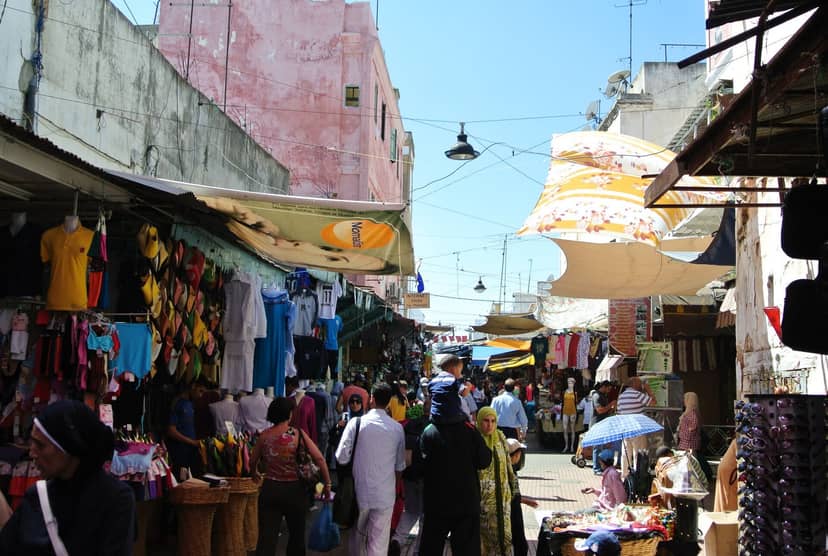
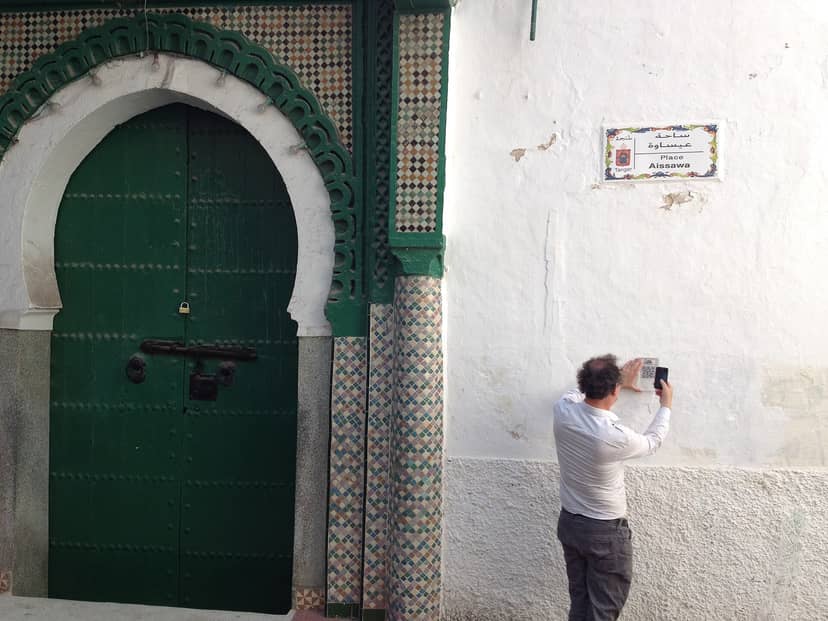
The mellah. The old Jewish quarter lies inside the walls near Bab Doukkala. It held more than a dozen synagogues and a Talmud school, and many of its buildings are crumbling or have been converted; restoration has been piecemeal, and a rehabilitation study was launched in 2020. Look for the plaques that now mark buildings where synagogues stood, and for Stars of David on some doors. The mellah of Essaouira page has more walking detail.
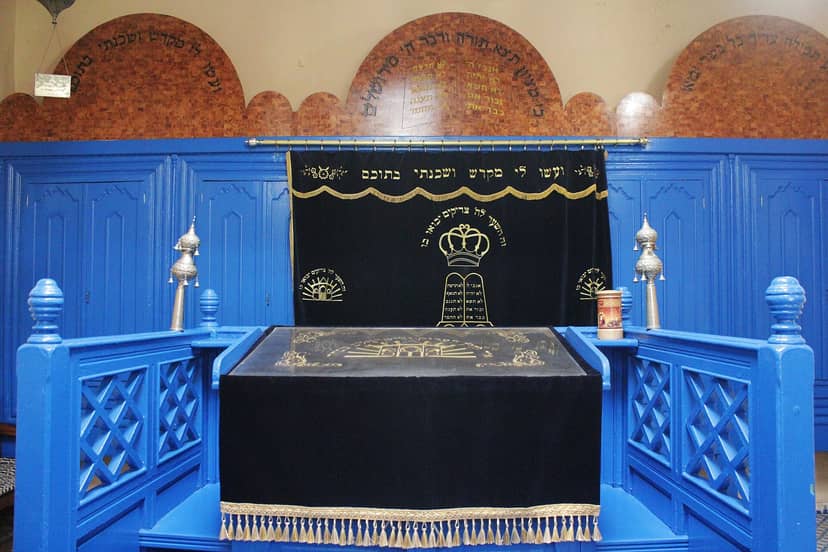
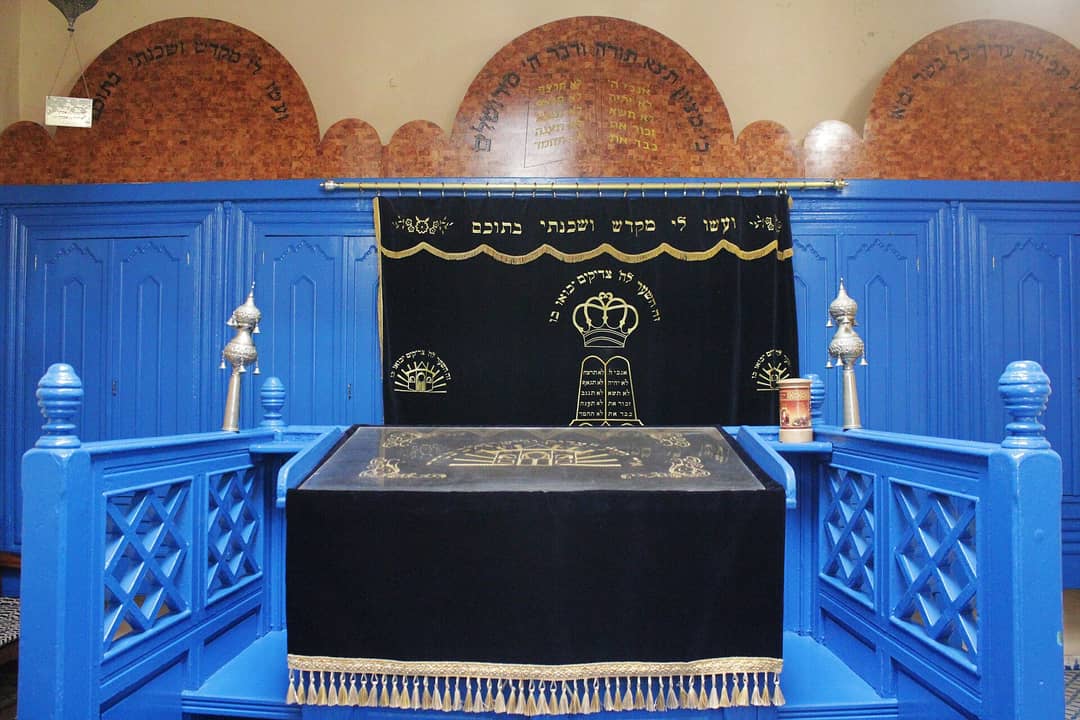
Rabbi Haim Pinto Synagogue. Rabbi Haim Pinto, the rabbi most closely associated with Essaouira, lived and worked in a three-storey courtyard house near Bab Doukkala, dated to 1837 by the Moroccan magazine TelQuel. His prayer hall on the second floor was later modernised, with the ark and bimah (reading platform) painted light blue. The house is kept by a Muslim caretaker family, who open it to visitors daily; a small tip is customary. It is used for prayer when pilgrims or groups visit, and it is a focus of the annual hilloula.
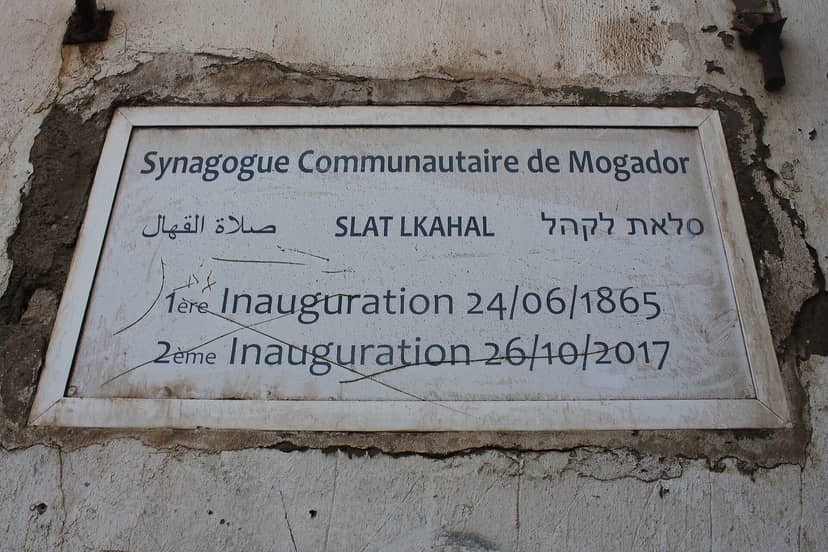
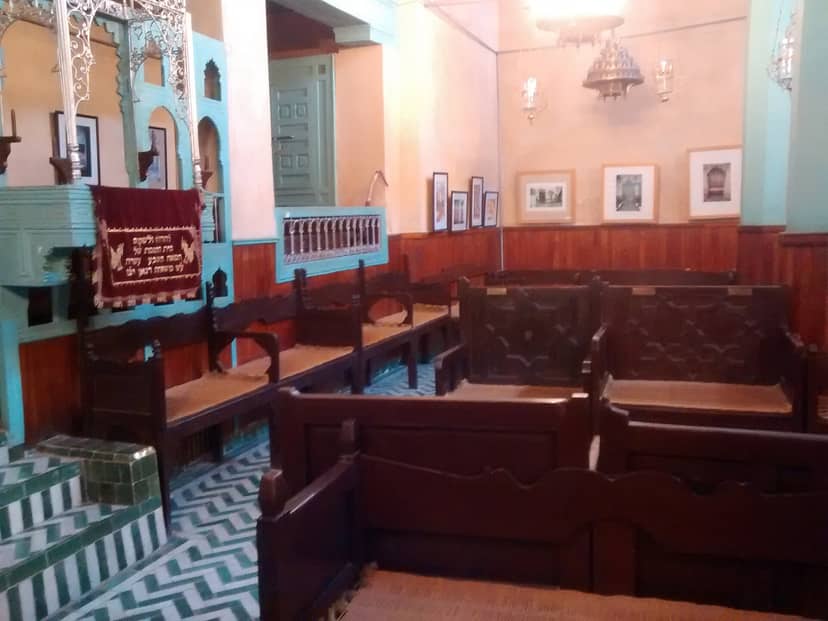
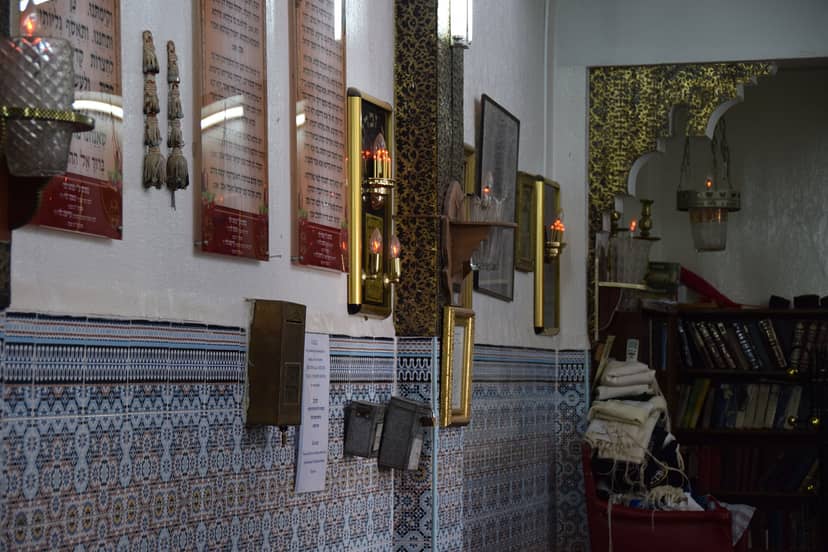
Slat Lkahal. Built in the 1850s on Rue Moise, a short walk from the Pinto house, the “community synagogue” was paid for largely with alms collected at funerals and became known as the Synagogue of the Poor. The American writer Paul Bowles recorded prayers here in 1959. The last minyan (prayer quorum of ten) met in 1972. Restored by the Association Slat Lkahal Mogador, it reopened in stages from 2010 and was re-inaugurated in 2017. Visitors in 2024 and 2026 found it free to enter with a volunteer present, with the main hall viewed from the upstairs gallery; it is often closed, with a phone number on the door.
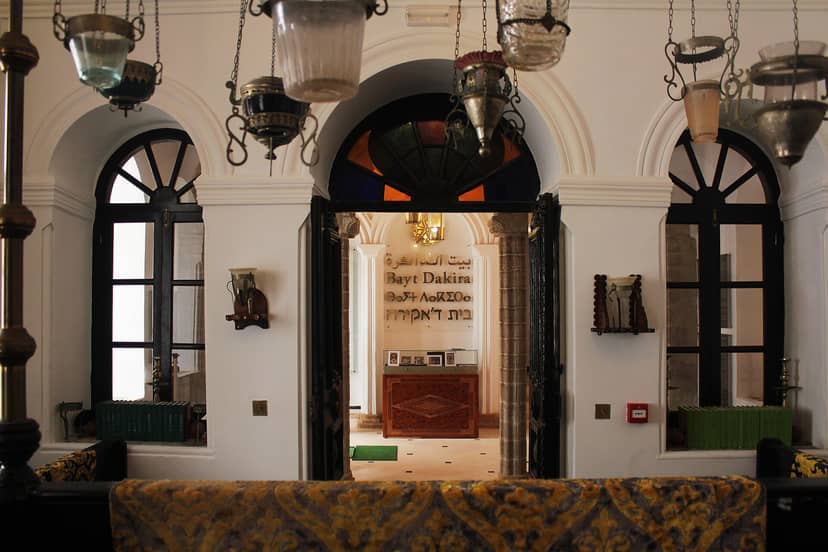
Bayt Dakira. The “House of Memory” opened in January 2020 and was visited by King Mohammed VI on 15 January that year. It tells the story of Essaouira’s Jews and of Jewish-Muslim life in the town through objects, texts and photographs, and it incorporates the Simon Attias synagogue, a family synagogue completed in 1882 and restored as part of the museum, together with the Haim and Célia Zafrani research centre on Judaism and Islam. A 2025 visitor guide, updated in July 2026, gives its hours as 9:30 to 18:30, closed on Saturdays, with free entry.
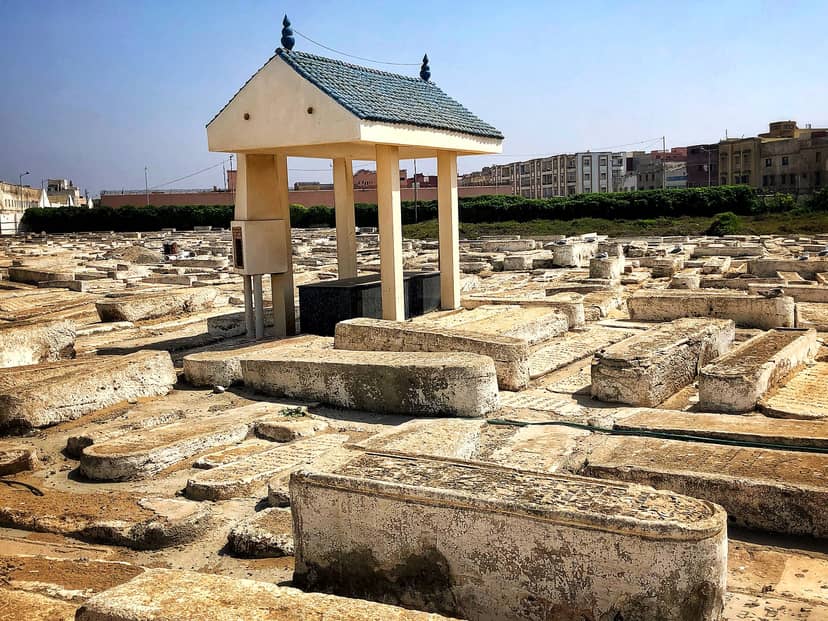
The old Jewish cemetery. Just outside Bab Doukkala on the ocean side, the old cemetery has about 2,400 stone tombs, with tombstones dating from 1775, and was the community’s main burial ground until about 1875. Rabbi Haim Pinto’s mausoleum stands here, and the writer Edmond Amran El Maleh was buried here in 2010. It is described as well kept and restored, and the caretaker family of the Pinto synagogue opens it on request. A newer cemetery, opened in 1892, lies across the road.