Gateway2Morocco Travel

City guide · Fes, Meknes & the north-east

Jewish Fes, Meknes and the North-East: A Traveller’s Guide

Fes is the heart of Jewish heritage in Morocco. Its mellah is generally described as the country’s first walled Jewish quarter, and it still has two restored historic synagogues, a hillside cemetery of whitewashed tombs and, since October 2026, a national museum of Moroccan Jewish culture. Around it lie Meknes and Roman Volubilis, Sefrou’s ‘Little Jerusalem’, the pilgrimage shrine of Rabbi Amram Ben Diwan near Ouezzane, and the remote former Jewish towns of the north-east.

  • Morocco’s first mellah, beside the royal palace
  • Ibn Danan and Slat al-Fassiyin synagogues
  • The Fes Jewish cemetery and the tomb of Lalla Solica
  • New Museum of Moroccan Jewish Culture (opened October 2026)
Ibn Danan Synagogue

The community’s story here

Jews lived in Fes almost from the city’s beginnings. Idris II, who made Fes his capital in the early 9th century, encouraged Jews to settle, and a community grew in the old city, Fes el-Bali, with a concentration near Bab Guissa. The philosopher Moses Maimonides (the Rambam) lived in Fes with his family from about 1160 until around 1165, when they left during the Almohad persecutions.

In 1276 the Marinid dynasty founded a royal new town, Fes el-Jdid, beside the old city, and at some point the Jews were moved into its southern part, an area first called Hims and later the Mellah. Historians do not agree when: some see a gradual move through the Marinid period, many link it to 1437–38, and the Encyclopaedia Judaica gives 1438. The sources agree that it was Morocco’s first mellah; only the date is disputed. Jews were still recorded in Fes el-Bali in the mid-14th century and were well established in the mellah by the end of the 16th.

The quarter’s history has dark chapters. Thousands of Jews were killed in the revolt of 1465. In 1790–92 Sultan Moulay Yazid drove the community out to the Kasbah Cherarda and turned a synagogue into a prison; after his death the mellah was restored to them. In April 1912 riots in the mellah left more than 100 victims, and many Jews took shelter in the neighbouring royal palace. The Slat al-Fassiyin was the synagogue of the toshavim, the long-established Judeo-Arabic-speaking Jews of Fes, who kept their own rite there into the 20th century, distinct from that of the Sephardic exiles who arrived after 1492.

By the end of the 19th century the mellah had about fifteen synagogues. Families moved out to the French-built Ville Nouvelle during the 20th century, and emigration did the rest: by 1997 only about 150 Jews remained in the whole city, and none in the mellah. The restorations of the last three decades, and the museum opened in October 2026, have made the quarter a place of memory more than of residence.

Walking the mellah: synagogues and the cemetery

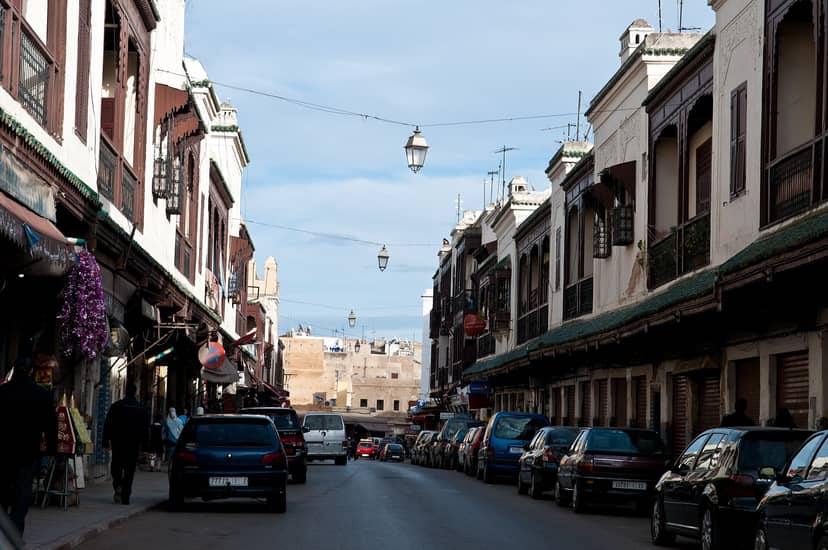
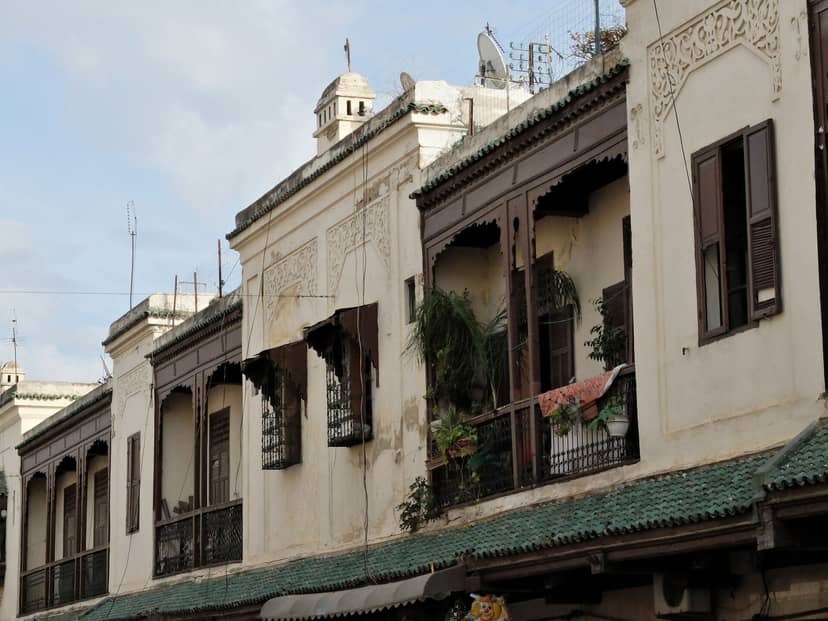
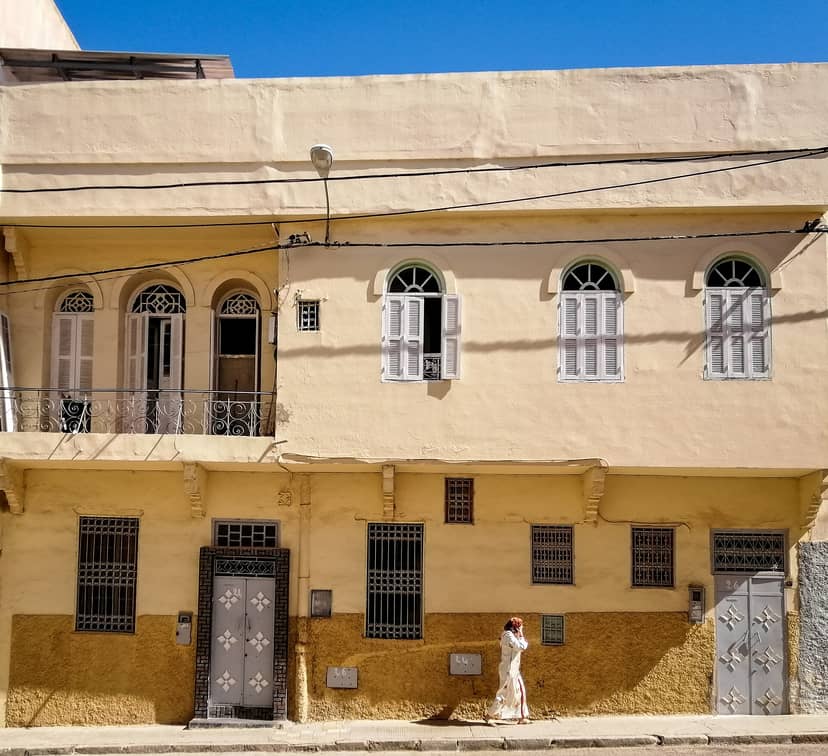
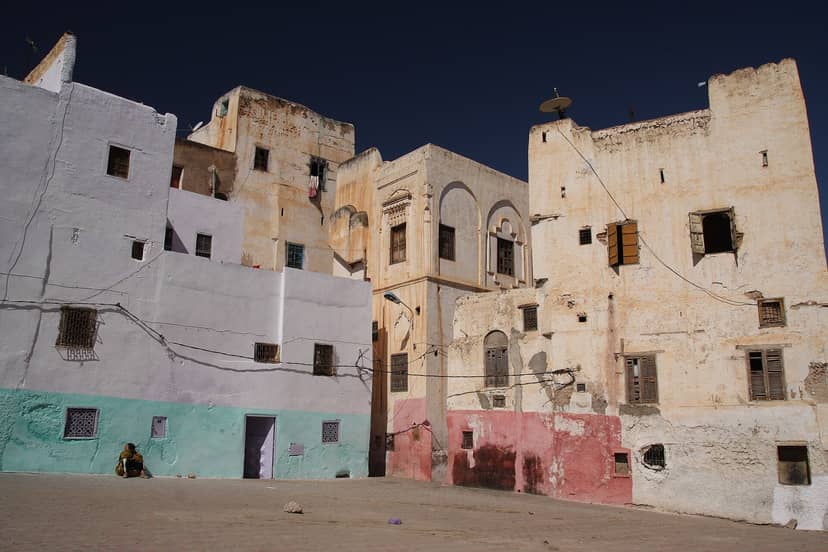
The Fes Mellah lies beside the royal palace, Dar el-Makhzen, and is entered by Bab Semmarine. Its main street, Rue des Mérinides, was laid out by the French in 1924 and is lined with tall houses whose open wooden and wrought-iron balconies face the street, a hallmark of mellah architecture. The houses are private, so admire them from outside.

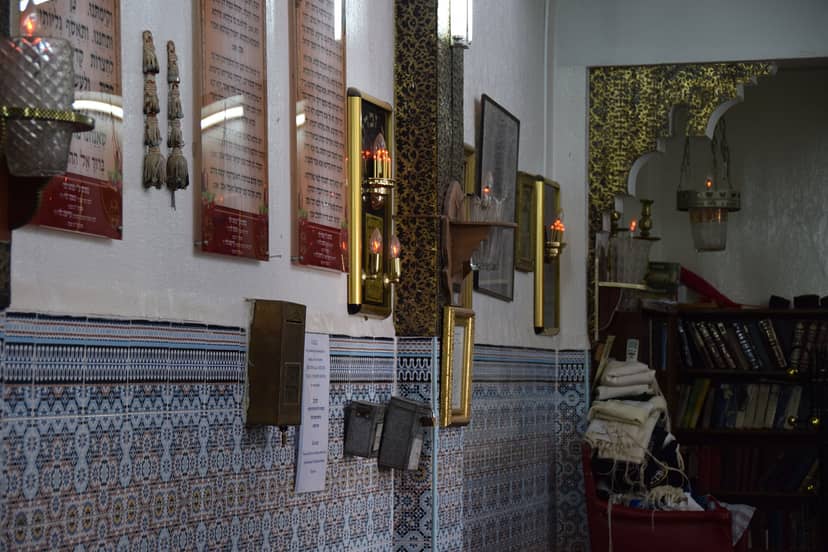
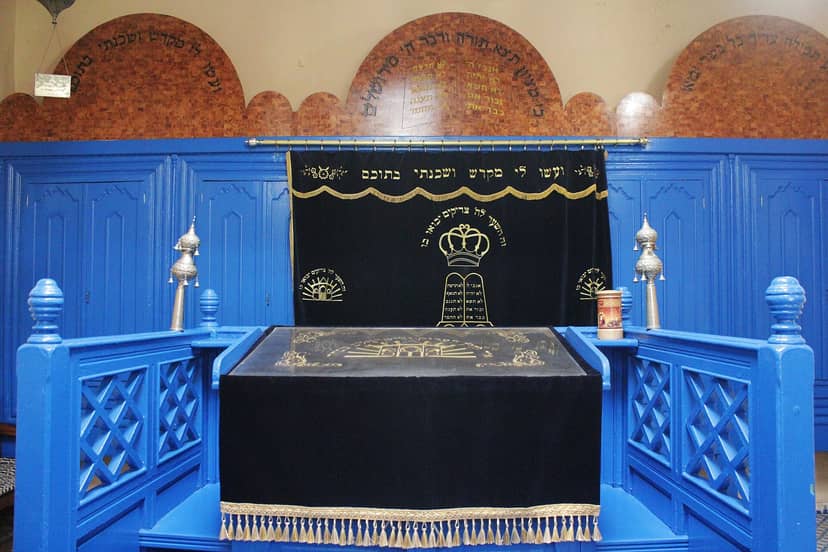
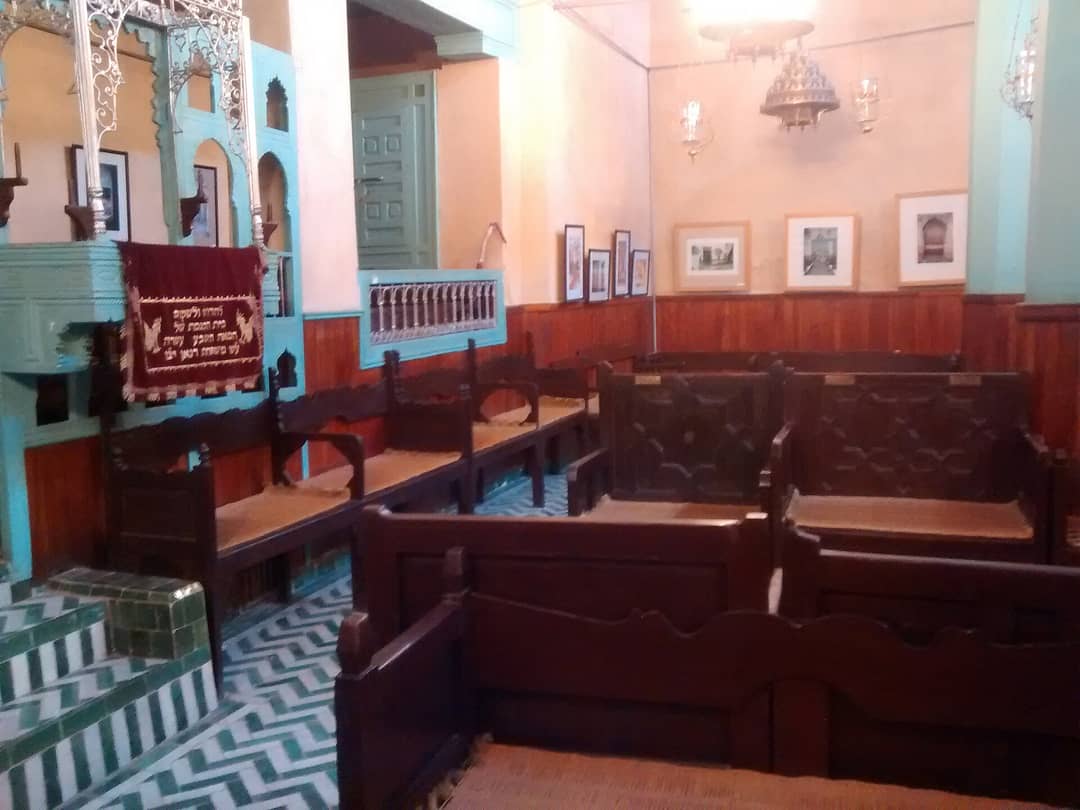
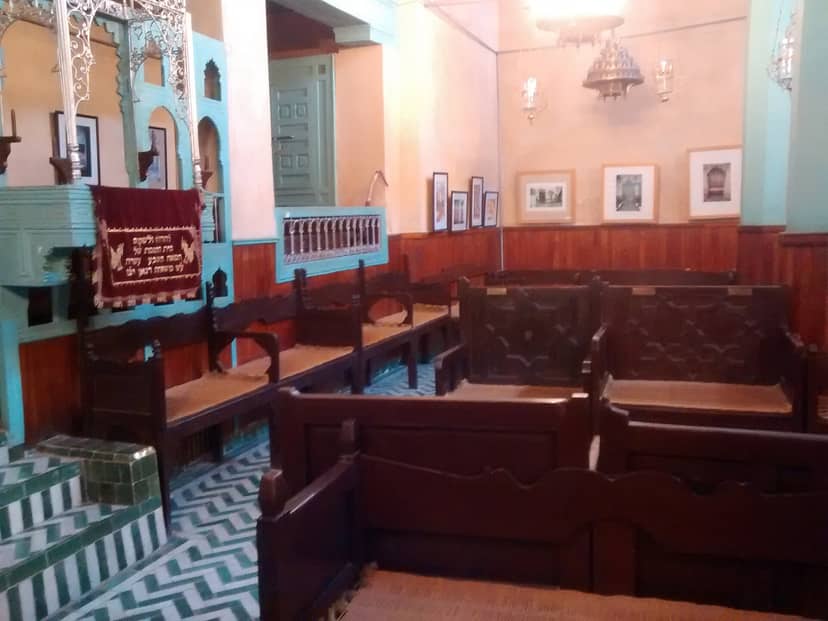
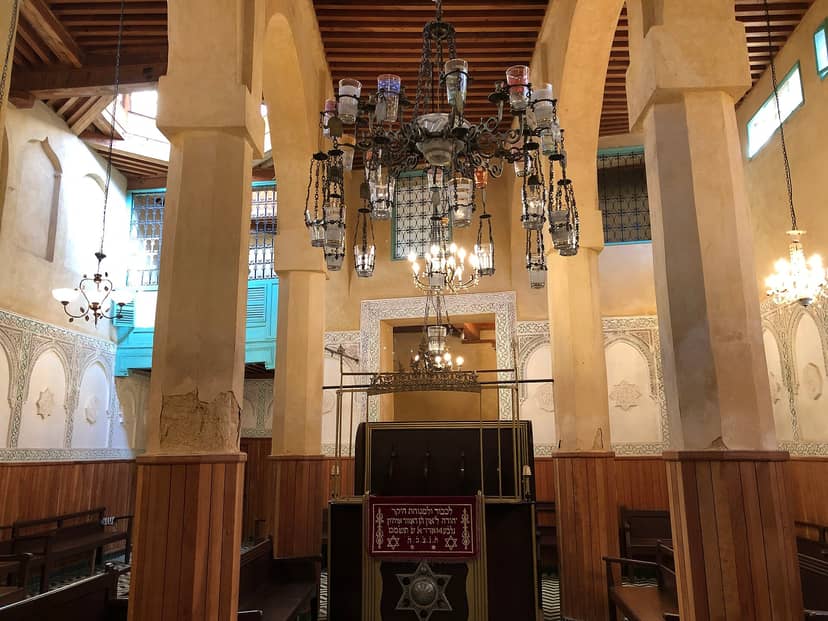
Off Rue des Mérinides, down Derb Djaj, is the Ibn Danan Synagogue, a family synagogue of the 17th century (sources give dates between the early 1600s and 1701) that tradition credits to a wealthy merchant, Mimon Boussidan. It keeps its historic Torah ark, benches and women’s gallery. Placed on the 1996 World Monuments Watch, it was restored with funding from American Express, Morocco’s Ministry of Culture and the Judeo-Moroccan Cultural Heritage Foundation and reopened in 1999; a mikveh (ritual bath) was discovered beneath it during the work. A guardian shows visitors around, usually for a small fee or tip.

Nearby, on one of the oldest lanes of the mellah, the Slat al-Fassiyin is dated by some historians to before 1492 and by others to the 17th century. It closed around 1970 and served as a carpet workshop and then a boxing gym before a two-year restoration, funded by Germany, the Fes Jewish community, the Foundation for Moroccan Jewish Cultural Heritage and the Moroccan state, led to its reopening in February 2013. It is used as a prayer hall with an on-site supervisor, and visits are best arranged through a guide. Wikipedia lists the names of more than a dozen other mellah synagogues, but most are now private or reused buildings with nothing to enter.

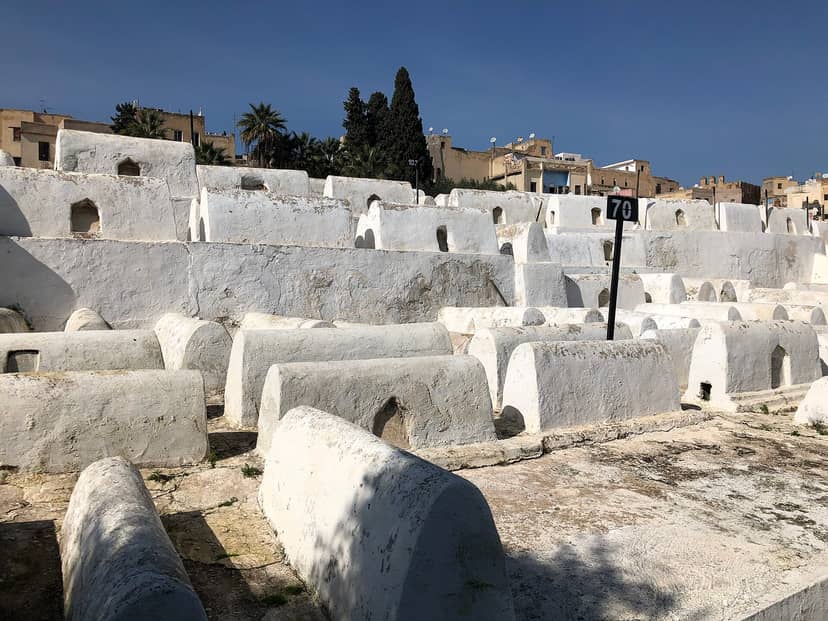
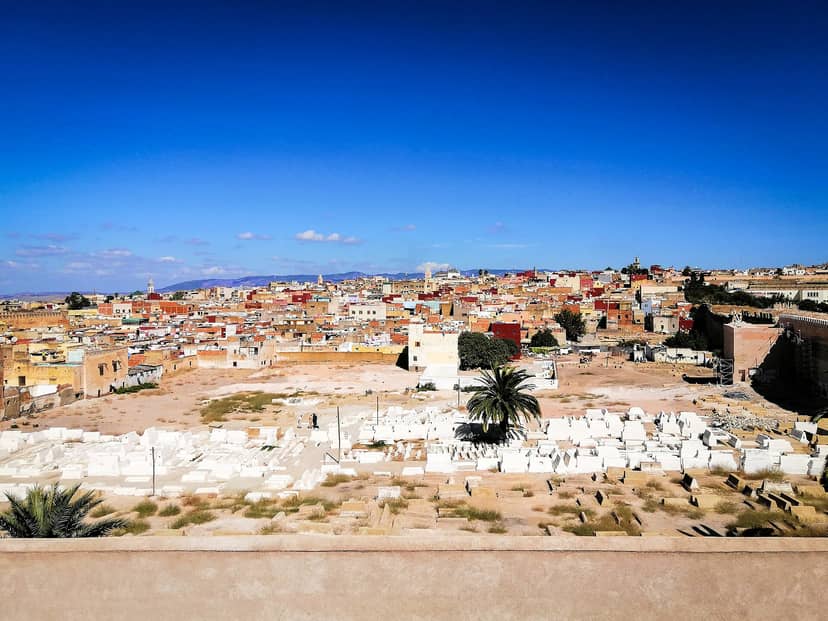
At the edge of the quarter, the Jewish Cemetery of Fes is a slope of tightly packed, whitewashed tombs, repainted in 2019. The present cemetery dates from the 19th century, after a relocation, and some older remains were moved here; estimates of the number of graves range from about 13,000 to 22,000. Look for the tomb of Lalla Solica (Sol Hachuel), a 17-year-old from Tangier executed in Fes in 1834 after refusing to convert to Islam, whom Jews and Muslims both venerate; accounts of her trial differ. A tomb covered in mint-green and black tiles is shown as that of Rabbi Yehuda Ben Attar (1655–1733), chief judge of the Fes rabbinical court, though one 2020 report says he is buried elsewhere, so we confirm on site; tradition says he survived a night in a lions’ den. One building holds only the tombs of chief rabbis, and at least one grave recalls a victim of the 1912 riots. Since 2015 a donor-funded project has excavated and restored older graves. A small former synagogue at the north-east corner, known as the Habarim synagogue, served for years as the caretaker family’s museum, though some of its objects may have gone to the new museum.

The cemetery has been listed as open daily from 7:00 to 19:00, but that information is undated and Saturday opening is not confirmed. Dress modestly, do not step on graves, and leave a pebble or light a candle if you wish.
Map

Jewish heritage sites: Fes & Meknes

SynagogueMellahCemeteryOther siteShrineLarger pins have their own page. Click the map to zoom with your mouse wheel.

The new museum, the Ville Nouvelle and Fes el-Bali

The Museum of Moroccan Jewish Culture was inaugurated on 12 October 2026 in the mellah. Launched by royal initiative in 2019 on land given by the Fes Jewish community and built with public money by ADER-Fès and the Fondation Nationale des Musées, it has about 1,200 m² of galleries showing Torah scrolls, marriage contracts (ketubot), festive clothing, musical instruments, goldsmith work and a timeline of Jewish life in Morocco. As of mid-October 2026 no opening hours or prices had been published, and press reports disagree on its exact address, so we confirm both before building it into a day.

In the Ville Nouvelle, the Bensadoun Synagogue (1920s) is unusually large by Moroccan standards, with carved plasterwork in the style of mosques and madrasas. It stands near the Maimonide community centre, set up in the early 1980s in a former Talmud Torah school, which has a modern synagogue and is the hub of today’s small community. Both are visited by arrangement.

In Fes el-Bali, a popular tradition places the House of Maimonides on the Tala’a Kebira, opposite the Bou Inania madrasa, beside the façade of the medieval water clock (Dar al-Magana). That Maimonides lived in Fes is accepted by historians; which house he lived in is not documented, and the clock dates from 1357, some 150 years after his death. A small plaque on Derb Margana marks the traditional site. It is a street stop on a medina walk, seen from outside.

Meknes and Volubilis

Meknes, about an hour west of Fes, had one of Morocco’s largest and most learned Jewish communities, home to rabbinic families such as the Toledanos, Berdugos and Messas. In 1682 Sultan Moulay Ismail, who made Meknes his capital, settled the Jews in a district south-west of his royal citadel, entered by Bab el-Khemis, although a synagogue traditionally dated to 1540 suggests Jews lived in the area earlier. Under the French protectorate an unwalled New Mellah was built alongside, a move unique to Meknes. The Meknes Mellah counted 15,482 Jews in the 1947 census; around 120 remained by the late 1990s.

The Meier Toledano Di Tanja Synagogue, known as Slat Rabbi Baroukh (built in 1930 or 1935), reopened in May 2023 with a prayer floor and a museum floor of early 20th-century documents, including lists of Meknes Jewish families and papers on building the New Mellah, which makes it valuable for roots travellers. The older Rabbi Meir Toledano (Mahrit) synagogue is traditionally dated to the 13th century and was rebuilt by the Toledano family in 1646 after an earthquake; its current condition is unconfirmed. The walled Jewish cemetery, on land granted by Moulay Ismail in 1682, was fully restored in 2022 and holds the tombs of revered sages including Rabbi Raphael Berdugo and Rabbi Haim Messas. Since 2022 it has hosted a collective Hilloula des Tsadikim on Lag BaOmer; the fifth was held on the night of 4 May 2026. At other times, visits are arranged through the community or the guardian.

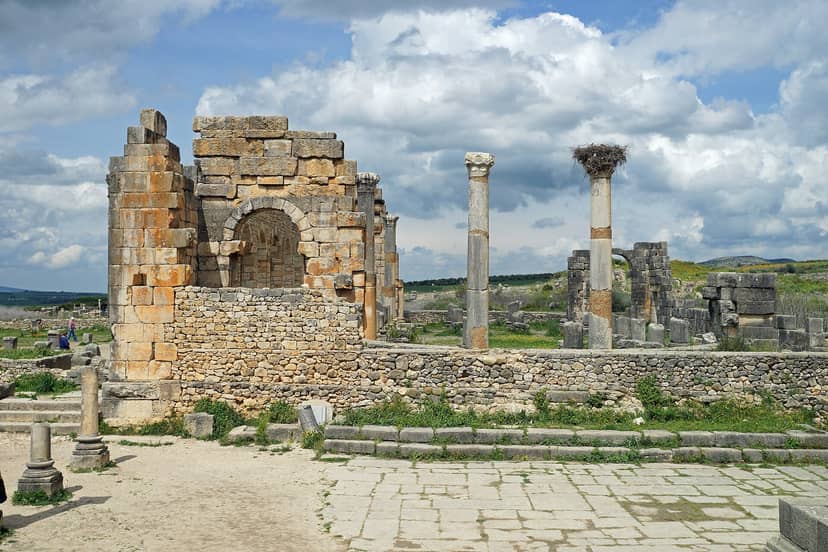
About 30 km north of Meknes, Roman Volubilis holds some of the earliest evidence of Jews in Morocco: a Hebrew gravestone of ‘Matrona, daughter of Rabbi Yehuda’, a Greek epitaph of a ‘head of the synagogue of the Jews’ and a bronze lamp decorated with a menorah (now in Rabat), dated by a 2019 study mainly to the 3rd century CE (older references say the 2nd). Ask at the site whether the inscriptions are on display in its lapidarium.

Sefrou and the Middle Atlas

Sefrou, 27 km south of Fes, was nicknamed ‘Little Jerusalem’: in the late 19th century Jews made up nearly half its population, and the mellah filled about half of the walled old town. A 1950 count recorded about 6,100 Jews. Floods in 1890 and 1950 hit the community hard, nearly all families emigrated between 1948 and 1968, and only four elderly Jews remained in the early 1980s. Tall houses with wooden balconies survive, though the quarter is poorly maintained and best walked with a local guide.

The walled Jewish cemetery, about four hectares, is looked after by a Muslim caretaker who has guarded it for some 35 years, reads Hebrew and guides the more than 1,000 visitors a year, most of them descendants. Former residents restored it, setting old headstones inside protective cement monuments. It holds the tomb of Rabbi Raphael Moshe Elbaz (1823–1896), whose hilloula falls on Lag BaOmer, and memorials to 21 victims of the 1950 flood. There is no electricity, so visits end at dusk; a tip is expected. On the hills above town, two caves, Kaf Lihoudi and Kaf el-Moumen, were once places of Jewish pilgrimage.

Ouezzane and the shrine of Rabbi Amram Ben Diwan

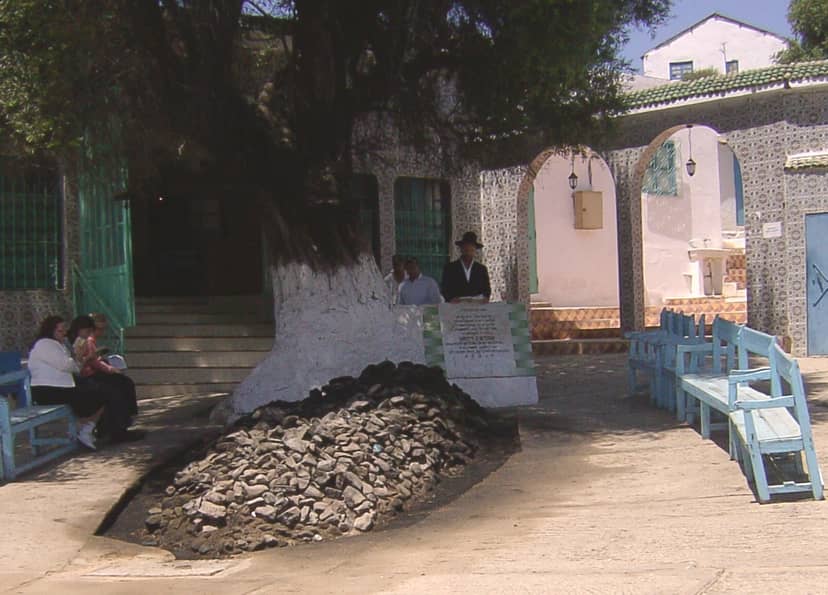
At Asjen, a village about 9 km north-east of Ouezzane, is the shrine of Rabbi Amram Ben Diwan, one of Morocco’s best-known Jewish pilgrimage sites. Born in Jerusalem, he went to Hebron in 1743 and was sent to Morocco to raise funds, taught in Ouezzane and died there in 1782. His grave is a mound of stones under an old olive tree; tradition holds that attempts to build a monument over it failed. A walled compound around it has a synagogue, a hall, pilgrims’ houses and a small restored cemetery.

His hilloula on Lag BaOmer (18 Iyar, which falls on 25 May in 2027) is organised by the Council of Jewish Communities of Morocco; reports from 2016–17 speak of hundreds to a few thousand pilgrims, with a bonfire lit on the cairn. Press reports from 2017 say that only Jews may enter the site. Outside the hilloula, visits must be arranged in advance, and we check beforehand whether a non-Jewish driver or guide can come in. Ouezzane lies on the road between Fes and Chefchaouen, so the shrine fits a northbound route. His son, Rabbi Haim Ben Diwan, is venerated at Ouirgane in the High Atlas.

The north-east: Taza, Debdou and Oujda

For roots travellers from the eastern communities, the road from Fes towards Oujda passes three places worth a dedicated detour. Taza had a Jewish quarter in its upper town that was already partly in ruins by the First World War.

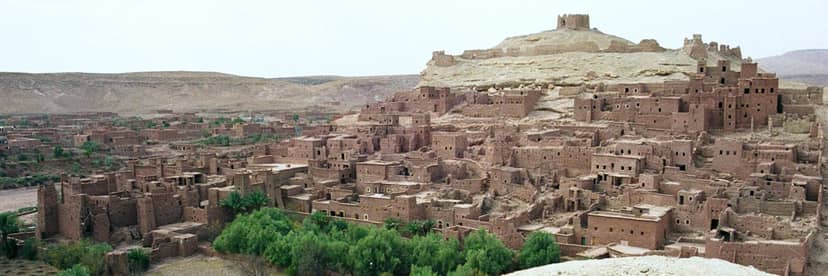
Debdou, a mountain town south of Taourirt, was one of Morocco’s most unusual Jewish towns: in the late 19th century most of its inhabitants were Jews, many of them Cohanim (priestly families) of the Cohen-Scali clan, who traced their arrival to refugees from the 1391 massacres in Seville. Tradition says their leader, Rabbi David Hacohen, struck a rock and a spring burst out, the Aïn Sbilia, or ‘Spring of Seville’, beside which the Debdou mellah grew. The community left in the 1950s, a few families staying into the 1970s. The restored spring survives, but the synagogues are in ruins; the newer of its two cemeteries has tombs of local tzaddikim with small hearth-like niches for candles.

Oujda, near the Algerian border, has a Jewish cemetery restored under the national programme, with memorials to the victims of the June 1948 riots in Oujda and nearby Jerada, in which more than forty Jews were killed (sources give totals between 42 and 47). Its mellah was rebuilt afterwards and looks modern today. On the high plateaux south of Oujda, traces remain of Vichy-era labour camps that held mainly European Jews. These stops need a local guide and careful planning. Oujda lies about 15 km from the Algerian border, which would place it inside the Government of Canada’s 20 km avoid-all-travel zone (advice checked 18 October 2026), so we talk through the advisory and its travel-insurance implications before including it on any route.

Where the community is today, and kosher food

The Fes community is small, and its life centres on the Maimonide community centre in the Ville Nouvelle; Meknes has a similarly small community around its restored synagogue. The communities, and the Council of Jewish Communities, are the contacts for access to synagogues and cemeteries.

Kosher food needs planning. Dragon, a restaurant in the Hotel Palais Medina & Spa in the Ville Nouvelle, opened in 2022 advertising OU, Lubavitch and Moroccan Beth Din supervision, and it is the only kosher restaurant in Fes in current directories, but its latest dated review is from July 2023, so we confirm with the hotel before relying on it. The Maimonide centre has served kosher meals in the past; we found no evidence since 2020 and arrange any meal there through the community. A medina restaurant called Chez Maimonide is a different, non-kosher business. Meknes, Sefrou and the smaller towns have no kosher options, so we arrange certified catering, packed meals and Shabbat food in advance. Our kosher travel guide explains how.

Getting there and how many days

Fes has its own airport and is roughly two and a half hours by train from Rabat and about four from Casablanca. Allow two full days for Fes itself: one for the mellah, cemetery and museum, and one for Fes el-Bali and Sefrou. Add a day for Meknes and Volubilis, and a long day (or an overnight on the way to Chefchaouen) for Ouezzane. The north-east is a two- to three-day specialist detour.

Saturday visits to synagogues are not guaranteed, so we keep Shabbat for rest or for non-Jewish sights. If you want to attend a hilloula, the Hebrew calendar comes first: Lag BaOmer brings Ouezzane, Meknes and Sefrou together in a single week, and Rabbi Yehuda Ben Attar’s hilloula usually falls in June. Our hilloula guide has the dates.

A day in Jewish Fes

  1. Day 1 · Morning

    Bab Semmarine, Rue des Mérinides and the synagogues

    Enter the mellah by Bab Semmarine and walk Rue des Mérinides. Ibn Danan is a few minutes away down Derb Djaj; the Slat al-Fassiyin is close by, visited by arrangement. Allow two to three hours with a guide.

  2. Day 1 · Late morning

    Jewish cemetery

    The cemetery is at the edge of the quarter. Visit the tombs of Lalla Solica and Rabbi Yehuda Ben Attar and, if the caretaker is there, the small Habarim synagogue museum. Allow about an hour.

  3. Day 1 · Afternoon

    Museum of Moroccan Jewish Culture and the Ville Nouvelle

    Visit the new museum in the mellah if its hours are confirmed. Then take a short taxi ride to the Ville Nouvelle for the Bensadoun synagogue and the Maimonide centre, both by appointment.

  4. Day 2 · Morning

    Fes el-Bali and the Maimonides tradition

    Take a taxi to the old city (the mellah and Fes el-Bali are a few kilometres apart). Walk the Tala’a Kebira to the Bou Inania madrasa and the water-clock façade linked to Maimonides, with a guide who can explain the early Jewish quarter near Bab Guissa.

  5. Day 2 · Afternoon

    Sefrou

    Drive about 40 minutes to Sefrou. Walk the old mellah with a local guide, then visit the cemetery with its caretaker before dusk.

  6. Day 3 (optional)

    Meknes and Volubilis

    Meknes is about an hour away: the mellah and Bab el-Khemis, Slat Rabbi Baroukh and its museum floor, and the restored cemetery, all arranged in advance. Continue to Volubilis, about 30 km north, in the afternoon.

More places for roots travellers

Smaller mellahs, cemeteries and shrines, often in villages. Many need a local contact to visit; we arrange that when we plan your route.

Bensadoun Synagogue

Synagogue · Fes · By arrangement

The Bensadoun Synagogue is a 1920s synagogue in Fes, built near the community centre that serves the city’s small remaining Jewish community. It is described as large by Moroccan standards, with carved plasterwork that recalls the decoration of traditional mosques and madrasas. Visits are by arrangement.

Visiting: By arrangement through the Fes Jewish community or a specialist guide. No public opening hours have been published, and current use for services is unconfirmed.

Rabbi Meir Toledano Synagogue (Mahrit)

Synagogue · Meknes · Access to confirm

The Rabbi Meir Toledano Synagogue, also called the Mahrit, is the historic synagogue of the Toledano rabbinic family in the old city of Meknes. Tradition dates the first synagogue on the site to the 13th century; the building was rebuilt by the Toledanos in 1646 after an earthquake. Its current condition and opening are not confirmed, so a visit needs to be checked in advance.

Visiting: Unconfirmed. Listed as active, but no recent visitor evidence was found; check access with the Meknes Jewish community before including it.

Jewish Cemetery of Oujda

Cemetery · Oujda · Access to confirm

The Jewish cemetery of Oujda lies just outside the city centre, about a ten-minute walk from the railway station. It holds memorials to the Jewish victims of the June 1948 riots in Oujda and Jerada and the tombs of two local saints, and it was restored under Morocco’s national programme for Jewish cemeteries. For families with roots in Oujda, it is the city’s main surviving Jewish site.

Visiting: Not documented. Caretaker arrangements were not found; we ask the Jewish community to arrange access when we plan your trip. Oujda lies about 15 km from the Algerian border, inside the Government of Canada’s 20 km avoid-all-travel zone as we read it (advice checked 18 October 2026); we discuss the advisory and insurance before routing here.

Habarim Synagogue Museum

Museum · Fes · Visit with the caretaker

At the north-eastern edge of the Jewish cemetery of Fes, a small former synagogue has for years served as a modest museum looked after by the cemetery’s caretaker. Travel guides call it the Habarim Synagogue. It is a short stop within a cemetery visit, and its display may have changed since the new Museum of Moroccan Jewish Culture opened in 2026.

Visiting: Opened by the cemetery caretaker during a cemetery visit, when available. Status for 2025–26 is not confirmed.

Historic synagogues of the Fes mellah

Synagogue · Fes · Access to confirm

Besides Ibn Danan and al-Fassiyin, the mellah had about fifteen synagogues by the late 19th century, many of them family prayer rooms: Mansano, Gozlan, Saba and Rabbi Yehuda ben Attar in the Upper Mellah, Bar Yochai, Obayd and Dbaba in the Lower Mellah, and others in the En-Nowawel quarter. Their present state is undocumented, and none was confirmed open in 2024–26. A specialist guide may be able to point out the buildings.

Early Jewish quarter of Fes el-Bali (Bab Guissa)

Heritage · Fes · Access to confirm

Before the mellah, Jews lived in the old city, with a concentration near Bab Guissa from the time of Idris II, and are recorded there until at least the mid-14th century. During the 1790–92 persecution the Jewish cemetery was briefly moved to this area. No marked sites survive, so it is a stop for context on a medina walk.

Maimonide Jewish Community Centre

Heritage · Fes · By arrangement

The hub of today’s Fes community in the Ville Nouvelle, set up in the early 1980s in a building that once housed a Talmud Torah synagogue and school, with a modern synagogue. Access is controlled, so contact the community ahead of a visit. It is the natural meeting point for roots travellers who want to meet local community members.

Em Habanim School, Fes

Heritage · Fes · Access to confirm

A building of the Em Habanim network of Jewish schools, listed by heritage projects as a school and possibly a small museum space. Its current use and location need checking on the ground.

El Krief Synagogue, Meknes

Synagogue · Meknes · Access to confirm

A synagogue in the New Mellah near the cemetery that served the last generations of the Meknes community. In May 2026 the community announced plans to renovate it, so it may be closed or under works.

Talmud Torah School, Meknes

Heritage · Meknes · Closed for now

The former Talmud Torah school of the Meknes community, which the Council of Jewish Communities plans to turn into a cultural centre (announced May 2026). It is not open yet.

Em Habanim Orphanage and School, Sefrou

Synagogue · Sefrou · Seen from outside

A large former home and school for Jewish orphans just outside Sefrou’s mellah, run by the Em Habanim organisation and funded by the London Jewish community, with a simple synagogue inside. It stands empty, and interior access is not confirmed.

Kaf Lihoudi (‘Cave of the Jew’), Sefrou

Shrine · Sefrou · Access to confirm

A cave on the southern flank of Jbel Binna above Sefrou, the goal of an annual pilgrimage by Jews from Sefrou and Fes timed to the Lag BaOmer hilloula at Ouezzane. Sefrou is recorded as a substitute shrine for Jews who could not reach Asjen. There is no recent visitor evidence; it is a hike with a local guide.

Kaf el-Moumen Cave, Sefrou

Shrine · Sefrou · Access to confirm

A cave above Sefrou venerated by Jews and Muslims: Muslims link it to the Seven Sleepers, and a Jewish tradition calls it the tomb of the prophet Daniel, though the scholar Simon Lévy said it holds no grave. Between 1920 and 1956 a procession went there during the cherry festival. Sources disagree on its exact location, so go with a local guide.

Jewish Cemetery of Midelt

Cemetery · Midelt · Access to confirm

Midelt, a Middle Atlas market town on the Fes–Errachidia road, had a Jewish community, and a community-history blog documents a Jewish cemetery there. Its location, condition and access are unverified, so we check it before including it on a desert route.

Ouezzane Mellah

Mellah · Ouezzane · Access to confirm

Ouezzane was the seat of an influential Sufi brotherhood that encouraged Jewish traders and farmers to settle under its protection, and Rabbi Amram Ben Diwan taught here. The former Jewish quarter has no recent visitor reports, but it combines naturally with the Asjen shrine.

Taza Mellah

Mellah · Taza · Access to confirm

Taza’s Jewish quarter stood in the upper town; postcards from after 1914 already show ‘ruins of the former mellah’. The Encyclopaedia Judaica says local Jews supported the rise of the first Alaouite ruler and records an 1898 pillage of a Jewish quarter it identifies, probably, as Taza’s. No current visitor information was found.

Synagogues of Debdou

Synagogue · Debdou · Ruins

Debdou had more than a dozen synagogues and prayer rooms, over half of them used mainly by Cohanim, and its scribes wrote Torah scrolls for communities across northern Morocco and Algeria. A 1721 document names the Sabban synagogue in the Seville quarter. Today only stone archways and thresholds survive, often unmarked.

Old Jewish Cemetery of Debdou

Cemetery · Debdou · Ruins

A very old burial ground above Debdou, described locally as about 900 years old, an age that is unverified. Its graves are simple, uninscribed coffin-sized stones; the mud enclosure wall has largely gone, though a metal gate survives.

Oujda Mellah

Mellah · Oujda · Open to visitors

The Jewish quarter of Oujda, rebuilt after the June 1948 riots, now looks modern; a former synagogue building still stands. No interior visits are documented. Oujda lies about 15 km from the Algerian border, which would place it inside the Government of Canada’s 20 km avoid-all-travel zone (advice checked 18 October 2026), so we talk through the advisory and its travel-insurance implications before including it on any route.

Vichy-era labour camps of eastern Morocco

Heritage · Aïn Beni Mathar / Bouarfa / Tendrara · Access to confirm

During the Second World War the Vichy French authorities ran internment and forced-labour camps on the plateaux south of Oujda, including Berguent, Bou Arfa, Tendrara and Foum Defla. They held mainly European Jews, with few Moroccan Jews. Traces survive but there is no marked memorial; for specialist itineraries only.

Kosher food & Jewish services

Kosher places open and close often. “To confirm” means we found no recent proof it is operating; we check every listing again when we plan your trip.

Fes

  • Dragon kosher restaurant (Palais Medina & Spa)

    Opened in 2022 as the first full-service kosher restaurant in Fes, inside a Ville Nouvelle hotel, advertised with OU, Lubavitch and Moroccan Beth Din certification, glatt meat and chalav Yisrael dairy.

    To confirm
  • Centre Maimonide (Ibn Mimoun) kosher restaurant

    Kosher restaurant in the Fes Jewish community's Maimonide centre in the Ville Nouvelle, close to the Sadoun synagogue, historically serving the small local community and visitors, mainly around Shabbat.

    To confirm

Fes & Meknes: common questions

Is the Fes mellah worth visiting if no Jews live there now?

Yes. It has two restored historic synagogues, a large historic Jewish cemetery and, since October 2026, a national museum of Jewish culture. A guide brings the empty streets to life.

Which synagogues can I go inside in Fes?

Ibn Danan is shown by a guardian, usually for a tip, and the Slat al-Fassiyin can be visited by arrangement. The Bensadoun synagogue in the Ville Nouvelle serves the community and is visited by appointment.

Is the new Museum of Moroccan Jewish Culture open?

It was inaugurated on 12 October 2026, but as of mid-October no public hours or prices had been published. We confirm before including it in your day.

Did Maimonides really live in Fes?

Yes, his family lived in Fes from about 1160 to 1165. The ‘House of Maimonides’ on the Tala’a Kebira is a popular tradition, not a documented address.

Can non-Jews visit the shrine of Rabbi Amram Ben Diwan?

Press reports from 2017 say only Jews may enter. We arrange visits through the community and check in advance whether non-Jewish companions, drivers or guides can come in.

Is there kosher food in Fes?

Very little. One hotel restaurant, Dragon at the Palais Medina & Spa, appears in current directories but needs confirming, so we usually arrange certified catering and packed meals.

How many days do I need for Jewish Fes?

Two days for Fes and Sefrou, plus a day for Meknes and Volubilis. Ouezzane and the north-east add one to three more days.

Sources. Wikipedia (Mellah of Fez; Ibn Danan; Al Fassiyine); Encyclopaedia Judaica via Jewish Virtual Library; Hespress (2021, 2026); Medias24 (2023, 2026); Le360 (2026); Morocco World News (2020); Bladi (2022); Aish; Yabiladi; Stanford Encyclopedia of Philosophy; MDPI Arts (2019); High Atlas Foundation (2023); Diarna; Telquel; JewishGen CDP. Researched and fact-checked by Gateway2Morocco, October 2026. Access to religious sites changes; we confirm every visit when we plan your trip.

Photo: Mx. Granger / Wikimedia Commons, CC0

Brahim Jounh, founder of Gateway2Morocco

Brahim Jounh

Founder · guiding since 1999

Your Morocco specialist

Plan Jewish Fes & Meknes with us

Private trips designed around your family’s story: the synagogues and mellahs, a grandparent’s town, a hilloula date, kosher meals and Shabbat-friendly pacing. Tell us your dates and what matters most.

“Everything was seamless from start to finish”
Lisa S. · May 2026 · TripAdvisor

★ 4.9 on TripAdvisor · 300+ reviews · BC Consumer Protection Licence #80460