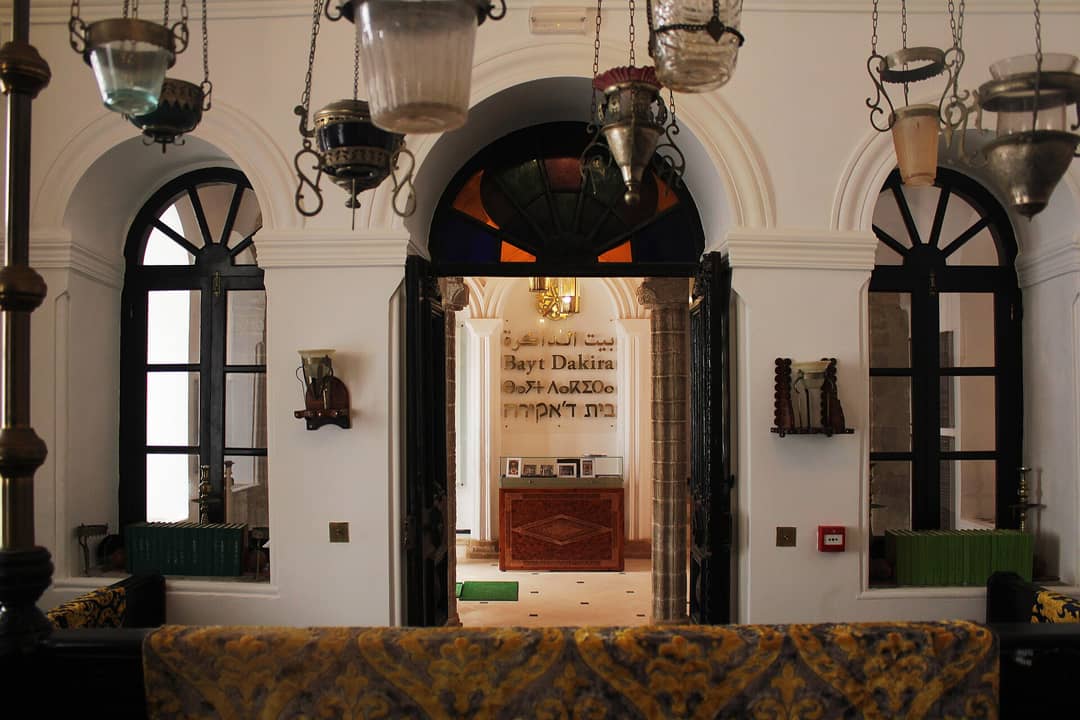
Museum and synagogue · Essaouira medina
Bayt Dakira and the Simon Attias Synagogue, Essaouira
Bayt Dakira, the House of Memory, is a heritage house dedicated to Essaouira’s Jewish community and to the life Jews and Muslims shared in the city. Opened in 2020, it is built around the restored Simon Attias synagogue of 1882 and also houses a research centre. Entry is free, the house is compact, and it makes a good first stop on a Jewish heritage day in Essaouira.
The story
Bayt Dakira opened in January 2020, and King Mohammed VI visited on 15 January that year. Its aim is to preserve and share the memory of Essaouira’s Jews, who were central to the port’s life from the city’s founding in the 1760s, and to serve as a spiritual space for the community and its descendants.
The house brings together three things: exhibition rooms of rare objects, texts and photographs; the former Simon Attias synagogue; and the Haim and Célia Zafrani Research Centre, which studies the history of relations between Judaism and Islam. Renovation work continued after the opening, and government ministers toured it in January 2022.
Inside the Simon Attias synagogue
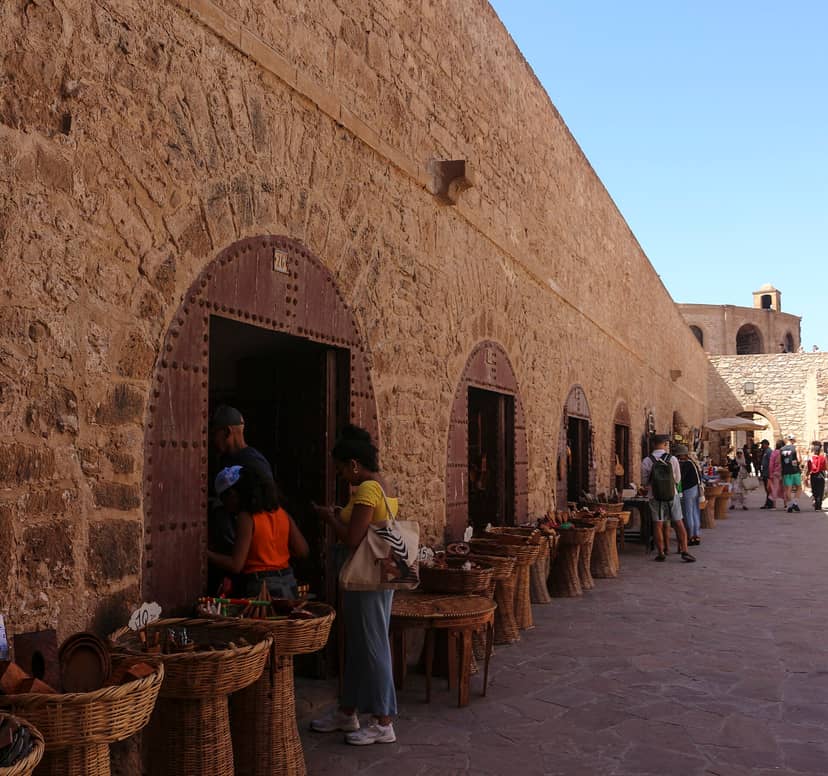
The synagogue was completed in 1882 as one wing of a masonry courtyard building that was also the home of Simon Attias. You enter the complex through a single large door set in a horseshoe arch. Originally the ground floor held shops and the top floor held offices of the Jewish courts, which heard commercial and personal cases.
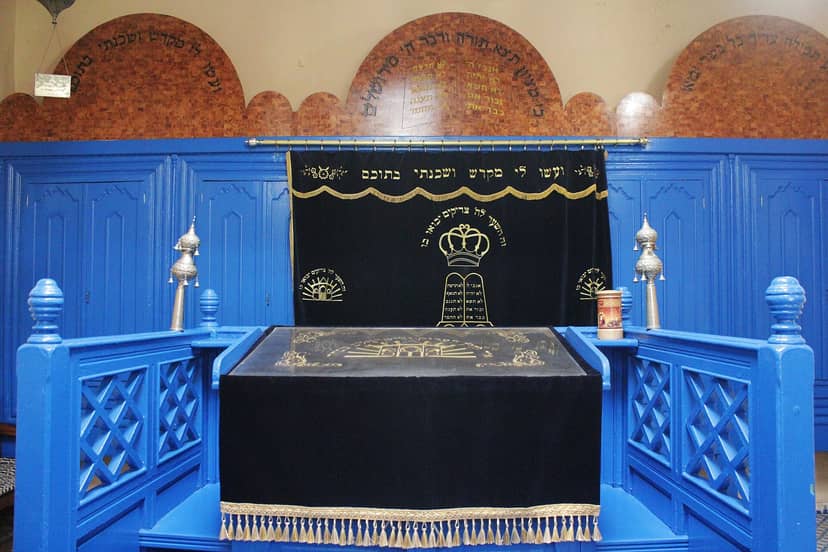
The prayer hall is on the second floor and rises two storeys, lit by large round-arched windows, with a women’s gallery. Its woodwork was carved in London. The large wooden heikhal (the ark that holds the Torah scrolls) has columns, a rounded pediment and floral carving, and many memorial lamps survive, including one for Simon Attias himself, who died in 1892.
The building was still in sound condition in 1993. By 2009 it had closed as a synagogue and was being restored and converted into a museum. It is now part of Bayt Dakira and no longer holds regular services.
The House of Memory exhibits
Visitors are welcomed with the words “Shalom Aleykoum, Salam Lekoulam”, a blend of Hebrew and Arabic greetings that sets the tone for the house. The exhibits use objects, documents and photographs to show how Jews and Muslims lived together in Mogador.
Labels are in Darija and French, with some Hebrew, and English is not provided. The displays say a good deal on their own, but a guide who can translate and add context will make the visit far richer for English speakers.
Visiting today
A travel writer’s guide updated in July 2026 gives the hours as 9:30 to 18:30, closed on Saturdays, with free entry. Hours can change around Jewish and Moroccan holidays, so we confirm them when we plan your Essaouira day.
The house is in the old medina, within walking distance of the mellah’s other synagogues. Allow about an hour, and give yourself time to sit in the synagogue. If you are in Essaouira over a Saturday, plan Bayt Dakira for Friday or Sunday instead.
Etiquette
The Attias prayer hall no longer holds regular services, but many visitors still treat it as a sacred space. Dress modestly, and men may wish to cover their heads in the synagogue. Ask staff before taking photographs.
Nearby
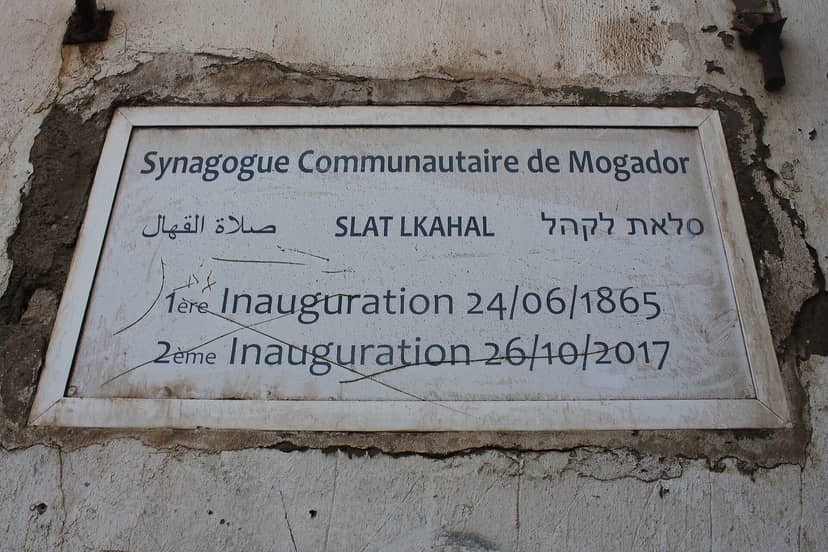
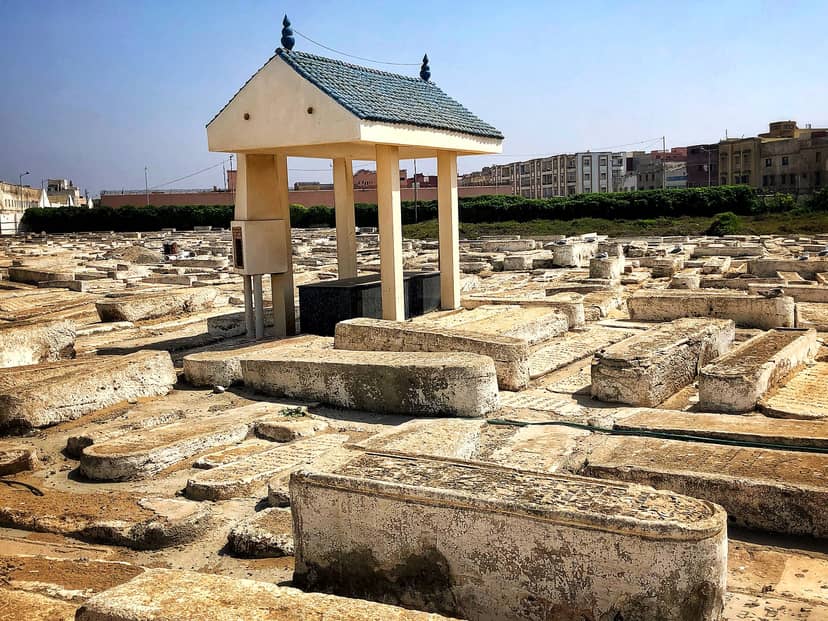
Bayt Dakira pairs naturally with a walk through the mellah, the Rabbi Haim Pinto Synagogue, Slat Lkahal and the old Jewish cemetery by Bab Doukkala. Together they fill a day; our Essaouira guide has the full picture.
Bayt Dakira: questions travellers ask
Is Bayt Dakira open on Saturday?
No. It is closed on Saturdays and, as reported in July 2026, open 9:30–18:30 on other days.
Is there an entry fee?
Entry was free as of July 2026.
Is the Simon Attias synagogue still used for prayer?
It closed as a synagogue by 2009 and is now part of the museum. Visitors still treat the prayer hall with the respect due a synagogue.
Are the exhibits in English?
Mostly not. Labels are in Darija, French and some Hebrew, so English speakers benefit from a guide.
Can non-Jews visit?
Yes. The house is open to everyone, and its theme is the shared history of Jews and Muslims in Essaouira.
Sources. Wikipedia (Bayt Dakira; Simon Attias Synagogue; History of the Jews in Essaouira); Malika in Morocco (2025, updated 2026); Morocco World News (2022). Researched and fact-checked by Gateway2Morocco, October 2026. Access to religious sites changes; we confirm every visit when we plan your trip.