Synagogue · Essaouira mellah
Rabbi Haim Pinto Synagogue, Essaouira
In the mellah of Essaouira, near Bab Doukkala, stands the three-storey house where Rabbi Haim Pinto lived, worked and prayed. His synagogue on the upper floor is kept by a Muslim caretaking family and opened to visitors, and each September it fills again for his hilloula. For many families with roots in Mogador, as Essaouira was long known, it is the heart of the visit.
Rabbi Haim Pinto
According to TelQuel’s 2014 account, Rabbi Haim Pinto was born in Agadir in 1749 into a family of Sephardic rabbis (other sources give his birth year as 1743 or 1748). Orphaned at 12, in the year an earthquake struck Agadir, he came to Essaouira, lived with his relative Rabbi Meir Pinto and studied Torah with Rabbi Yaacov Bibas, the dayan (judge of the rabbinical court) of Mogador. After Rabbi Bibas died, Haim Pinto was appointed a dayan of the community alongside his friend Rabbi David Ben Hazan, at a young age.
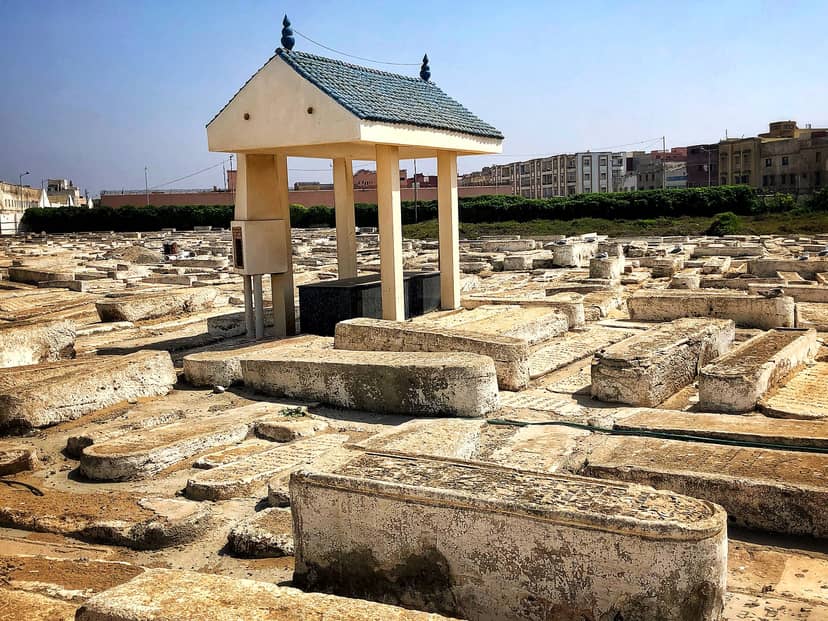
His reputation spread far beyond the city, and Jews and Muslims alike regarded him as a tzaddik, a righteous holy man. Stories of miracles attributed to him are told across Morocco. He had four sons, Yossef, Yochiahou, Yehouda and Yaacov, and the Pinto rabbinic line continues today. He died in 1845 (TelQuel gives his age as 96) and is buried in the old Jewish cemetery of Essaouira by the sea wall.
The house
The building was his home, his office and his synagogue. TelQuel dates the house to 1837. It is a three-storey courtyard house of whitewashed plaster over masonry. A 2014 report noted that it was still standing while many houses around it had collapsed.
Today there is no resident Jewish community in Essaouira. The synagogue is kept for visitors and comes back into use for prayer when pilgrims or Jewish groups are in town.
Inside the synagogue
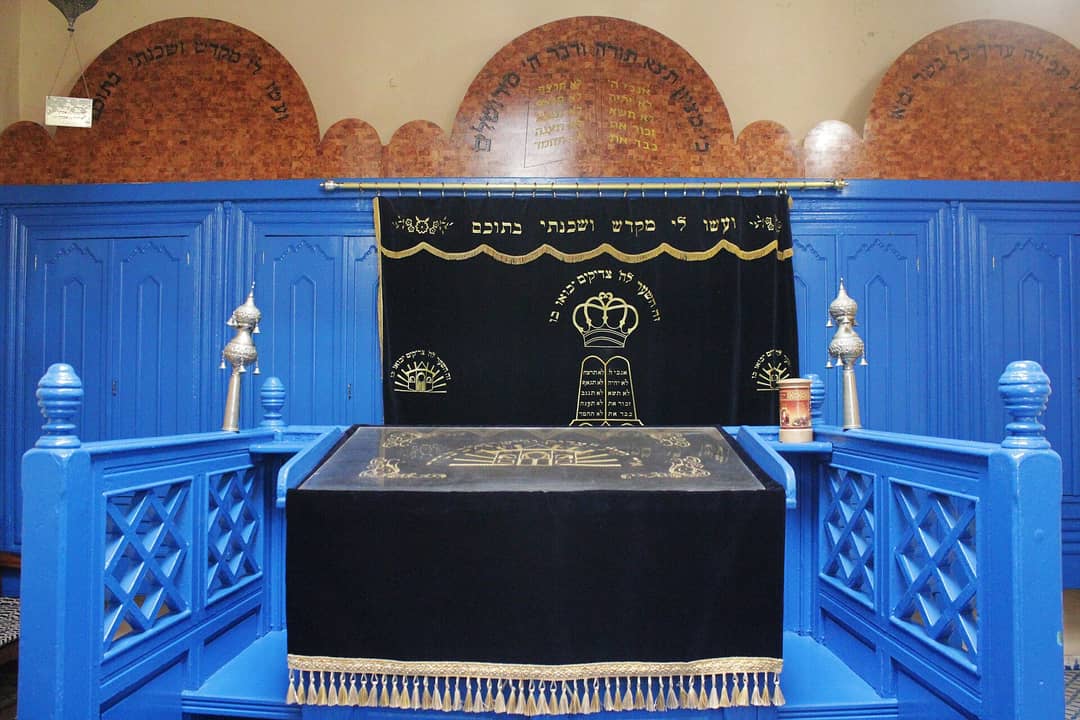
The prayer hall is on the second floor. Its focal points are the heikhal, the Torah ark, and the tevah, the raised reading platform also called the bimah. Both are of wood and were painted light blue in a modern renovation, which also concealed the original ceiling and the tops of the columns.
There are two women’s sections: one across the courtyard and one on the third floor. Each has windows looking into the prayer hall, so women could follow the service, a layout recorded in Joel Zack’s 1992 survey of Moroccan synagogues.
The caretakers
The house is looked after by a Muslim family. In 2014 the caretaker was Malika Id Darouz, originally from Agadir, who had succeeded her father and had kept the synagogue and the Jewish cemetery for eight years, welcoming pilgrims and tourists. Visitor reports through 2024 describe the caretaker family opening the synagogue daily. A tip for their care of the house is customary.
The hilloula
Rabbi Haim Pinto’s hilloula, the annual celebration on the anniversary of a tzaddik’s death, is held on 26 Elul, usually in September, a few days before Rosh Hashanah. Pilgrims pray at his tomb in the old cemetery and gather at the house and synagogue. Malika Id Darouz told TelQuel in 2014 that more than 2,000 pilgrims took part, and she helps organise it each year. The hilloula was held again in September 2025.
If you would like to attend, plan well ahead. If you prefer a quieter visit, we plan around it. Our hilloula guide explains the season.
Visiting and nearby
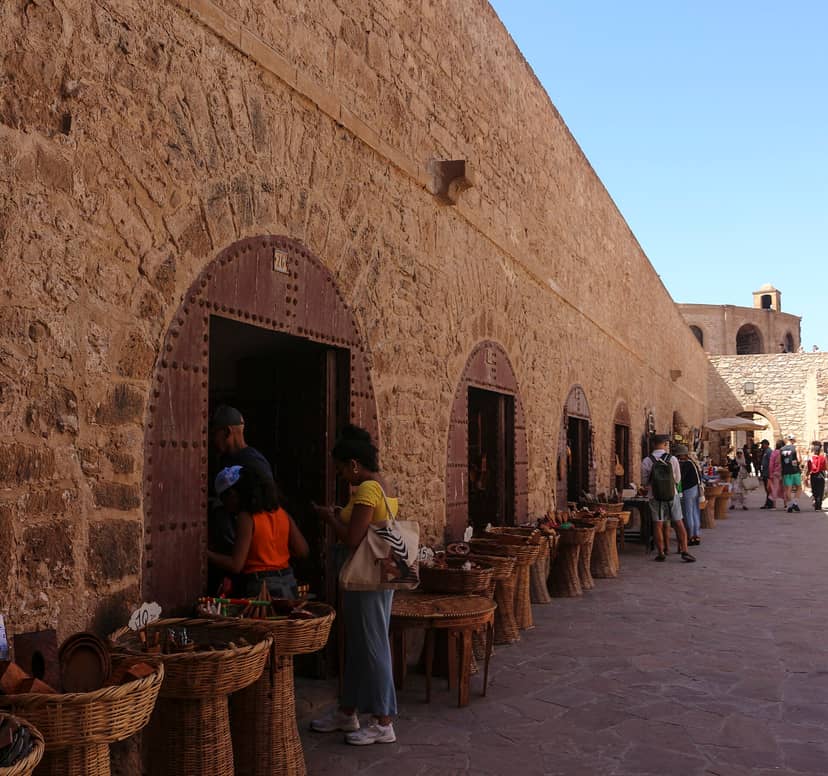
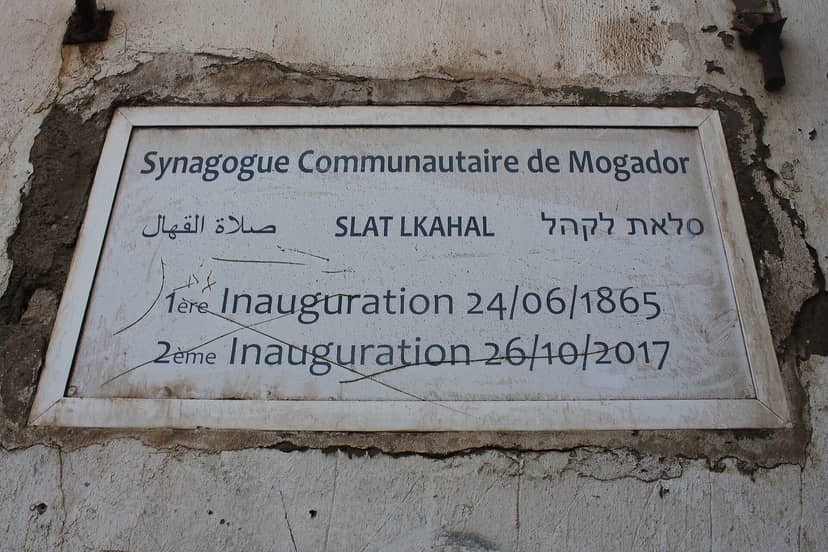
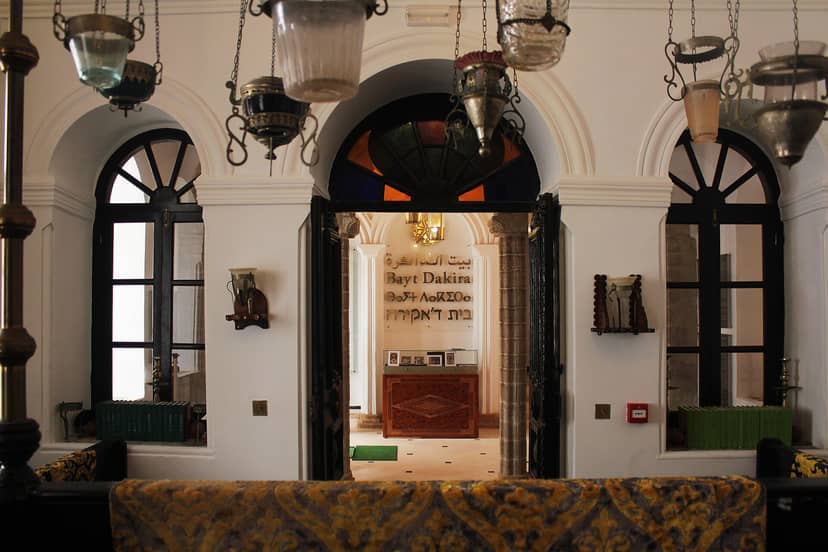
Most travellers combine the synagogue with the rabbi’s tomb in the old Jewish cemetery, Bayt Dakira and the Slat Lkahal synagogue, all within a short walk in or near the mellah. A guide who knows the Jewish history of Mogador makes the narrow streets far easier to read. Our Essaouira Jewish heritage guide covers the rest of the city.
Rabbi Haim Pinto Synagogue: questions travellers ask
Is the Haim Pinto Synagogue open to visitors?
Yes, the Muslim caretaker family has opened it to visitors daily according to reports through 2024. There are no formal hours, so we confirm before your trip.
Are services held there?
Essaouira no longer has a resident Jewish community, so the synagogue is used for prayer when pilgrims or Jewish groups visit, and above all during the September hilloula.
Where is Rabbi Haim Pinto buried?
In the old Jewish cemetery of Essaouira, just outside the medina walls by the sea, a short walk from the house.
When is the Haim Pinto hilloula?
A: On 26 Elul, usually in September, a few days before Rosh Hashanah. Plan well ahead if you want to attend.
Can non-Jews visit?
Yes. Respectful visitors of any faith are welcome; dress modestly and men cover their heads inside.
Sources. TelQuel (2014); Wikipedia, Chaim Pinto Synagogue (citing Joel Zack, The Synagogues of Morocco, 1992); TripAdvisor visitor reports (2017–2024); Morocco World News and Hespress (2025). Researched and fact-checked by Gateway2Morocco, October 2026. Access to religious sites changes; we confirm every visit when we plan your trip.