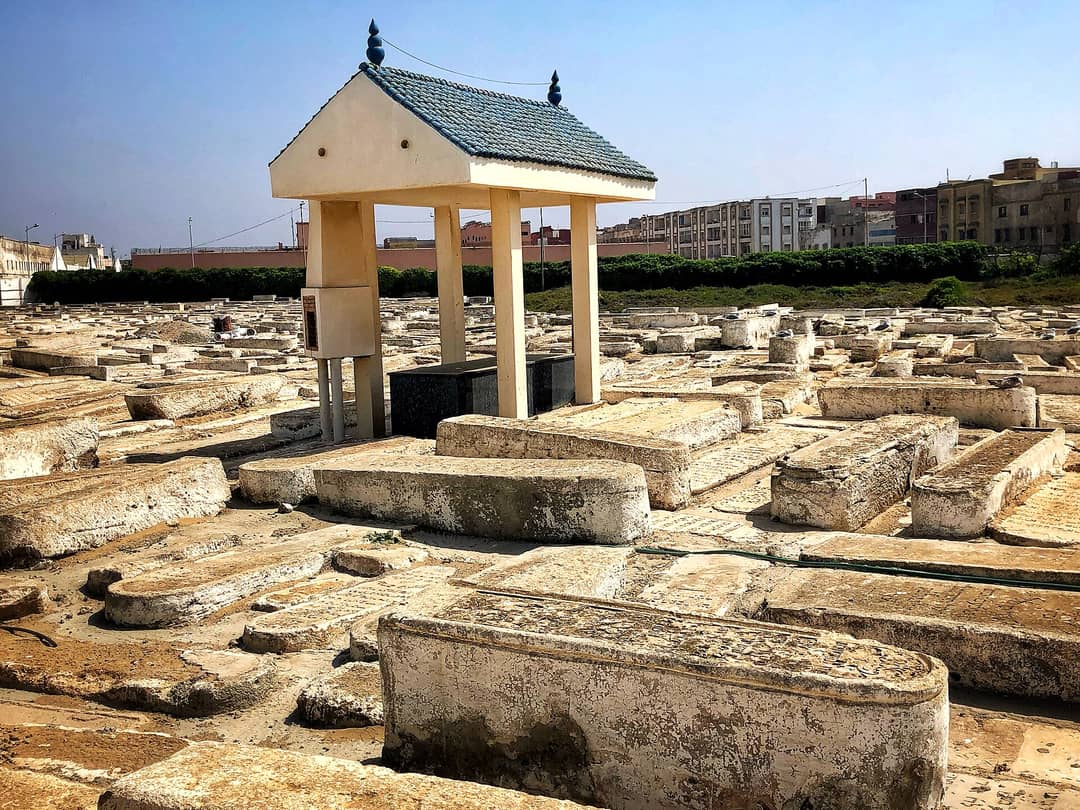
Cemetery · Essaouira, outside Bab Doukkala
Old Jewish Cemetery of Essaouira and Tomb of Rabbi Haim Pinto
Essaouira’s old Jewish cemetery lies just outside the city walls by Bab Doukkala, with a single wall between its graves and the Atlantic. Its roughly 2,400 stone tombstones date from 1775 onward, and it holds the mausoleum of Rabbi Haim Pinto, focus of a pilgrimage that brings more than 2,000 people to the city each year. Visitors describe it as restored and well kept, and you visit with the caretaker.
History
The old cemetery, sometimes called the marine cemetery, sits on the ocean side of the walls. Its oldest tombstones date from 1775, about a decade after Sultan Sidi Mohammed ben Abdallah founded the port and brought Jewish merchant families to settle it. It remained the community’s main burial ground until around 1875, when Mogador’s Jewish population was large.
In 1892 a new Jewish cemetery opened directly opposite. If you are looking for relatives who died in the late 19th or 20th century, they are more likely to be there.
The Moroccan Jewish writer Edmond Amran El Maleh was buried in the old cemetery in 2010, at his own request.
Rabbi Haim Pinto
Rabbi Haim Pinto was the leading rabbi of Mogador in the first half of the 19th century. He died on 26 Elul 5605, in 1845. His year of birth is given variously as 1743, 1748 or 1749, and one Moroccan source says he was born in Agadir.
Tradition holds that his prayers brought about miracles, and his reputation grew after his death. His mausoleum here and his house in the mellah, now the Rabbi Haim Pinto Synagogue, both became places of pilgrimage. Visitors still come throughout the year to pray at his grave.
What you’ll see
Expect a dense field of stone tombs, about 2,400 of them, with the sea wall along one side and the ramparts behind. The grave of Rabbi Haim Pinto is enclosed in a mausoleum, and that is where most visitors stop to pray. Elsewhere, walk slowly along the paths and read what remains of the inscriptions.
Finding a family grave
Families with Mogador roots often hope to find an ancestor’s grave here. Start with what you know: full Hebrew and civil names, an approximate year of death and, if you have one, a photograph of the stone. Use the dates as a first filter, since burials before about 1875 are likely to be in the old cemetery and later ones in the new cemetery opposite.
Diarna reports that Asher Knafo, a descendant of an Essaouira rabbinic family, has been documenting the town’s Jewish tombstones. We can help with the search and the caretaker contact, though we cannot promise that a particular grave can be found or read. Our Jewish roots trip guide explains how to prepare.
The hilloula
The hilloula of Rabbi Haim Pinto, the yearly gathering on the anniversary of a tzaddik’s (holy man’s) death, begins on 26 Elul, usually in September, and lasts four days. More than 2,000 pilgrims come from around the world. They pray at his grave here and at his family synagogue in the mellah, and the days also bring social gatherings. Plan well ahead if you want to be in Essaouira then.
Visiting respectfully
The cemetery is kept by the caretaker family of the Haim Pinto synagogue. Ask at the gate or arrange the visit in advance, and a tip is expected. Dress modestly, and men usually cover their heads, especially at the rabbi’s tomb.
Keep to the paths and never step on graves. Do not photograph people praying. Kohanim (men of priestly descent) who follow the tradition of not entering cemeteries may prefer to view from the gate.
Old Jewish Cemetery of Essaouira: questions travellers ask
Can non-Jews visit the cemetery?
Yes. Visitors of any background are welcome with the caretaker, provided they dress modestly and behave as they would in any active cemetery.
Is it open on Saturday?
Jewish cemeteries are not visited on Shabbat, so plan your visit for another day.
Can you find my family’s grave?
We can help you search, with names and approximate dates. Burials before about 1875 are usually in the old cemetery and later ones in the new cemetery opposite, but we cannot promise a particular stone survives or is legible.
When is the Haim Pinto hilloula?
It begins on 26 Elul in the Hebrew calendar, usually in September, and lasts four days.
Where is the new cemetery?
Directly opposite the old one. It opened in 1892.
Sources. Wikipedia (Jewish cemeteries of Essaouira; Chaim Pinto; Hiloula of Rabbi Haim Pinto); Diarna; Visiting Jewish Morocco (moroccanjews.org); Telquel. Researched and fact-checked by Gateway2Morocco, October 2026. Access to religious sites changes; we confirm every visit when we plan your trip.