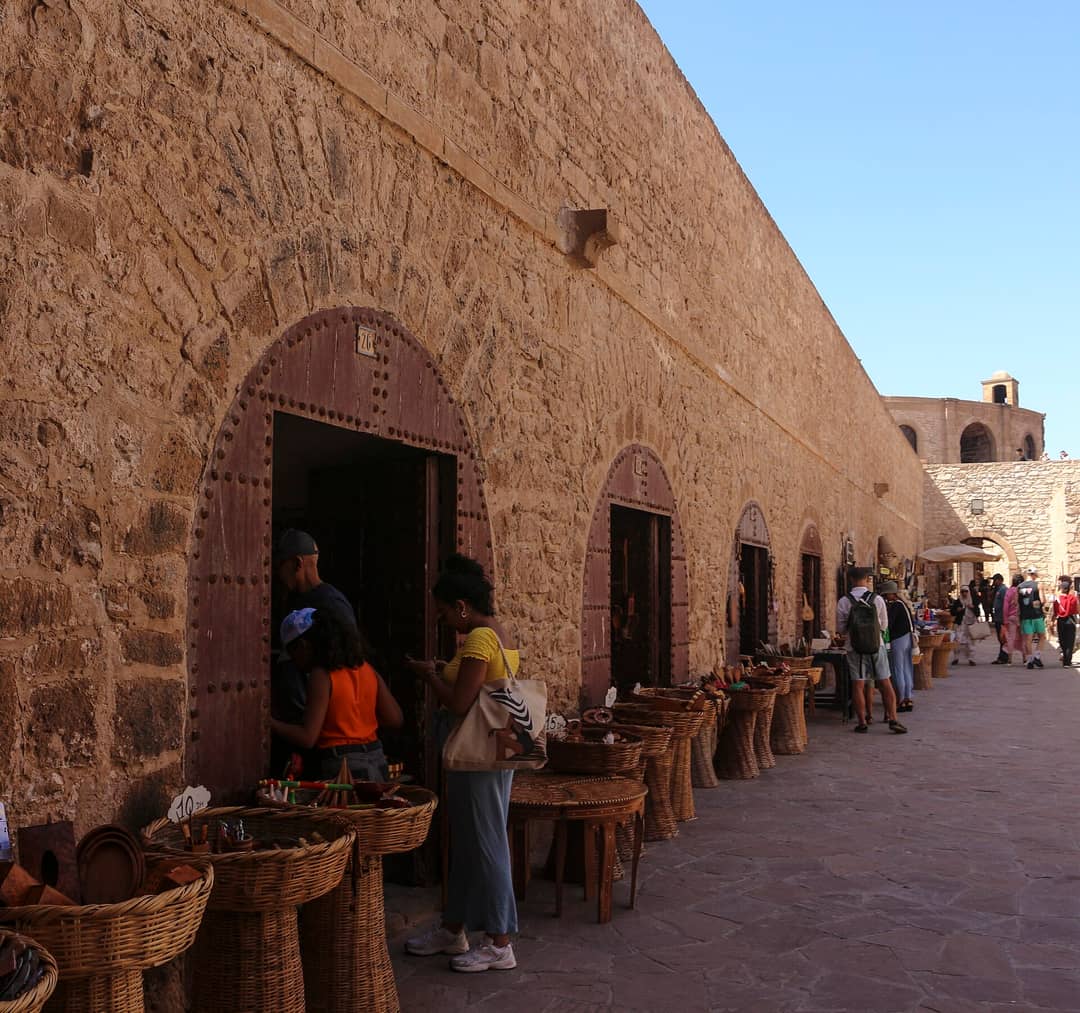
Jewish quarter · Essaouira medina
The Mellah of Essaouira (Mogador): Jewish Quarter Guide
The mellah of Essaouira was the Jewish quarter of Mogador, a port where Jews made up around 40 per cent of the population at their peak, and by one 19th-century count half. Its lanes hold more than a dozen former synagogues, Stars of David carved into façades and plaques marking where prayer houses once stood. You can walk it freely, and the restored synagogues and Bayt Dakira give the visit its depth.
How the quarter began
Essaouira was built from the 1760s (sources give 1760 or 1764) by Sultan Sidi Mohammed ben Abdallah as his main port for trade with Europe. To make it work he brought in Jewish merchant families from Tangier, Agadir, Marrakech and the north, among them the Corcos, Afriat, Coriat, Knafo, Pinto and Elmaleh families. These tujjar al-sultan, the king’s merchants, lived in fine houses in the kasbah, acted as go-betweens with European consuls and led the community.
The mellah itself is dated differently by different sources. Diarna links it to a royal decree of 1807 that created separate Jewish quarters in several cities. Moroccan press coverage of the 2020 rehabilitation study says it was built from 1809 under Sultan Moulay Slimane. The World Monuments Fund places its origins with the founding of the city in the mid-1700s. Before the decree, Jews and Muslims lived side by side across the town.
The sources agree on the social split. Poorer Jewish families lived in the crowded mellah, while the elite merchant families stayed in the kasbah, and Diarna describes the divide in Essaouira as mainly one of class. As the community grew, the mellah was enlarged.
A French botanist who visited in 1867 counted about 12,000 residents in the whole town, half of them Jewish. The Jewish Virtual Library gives about 6,500 Jews in 1951. Trade had already shifted to Casablanca and Agadir under the French Protectorate, and the emigration waves of the 1950s and 1960s emptied the quarter. Wikipedia records three Jewish residents in 2017.
Walking the mellah today
The mellah lies in the north-east of the medina, near Bab Doukkala, and covers more than a tenth of the old town. It is an ordinary lived-in neighbourhood, open to anyone, with no ticket and no set route.
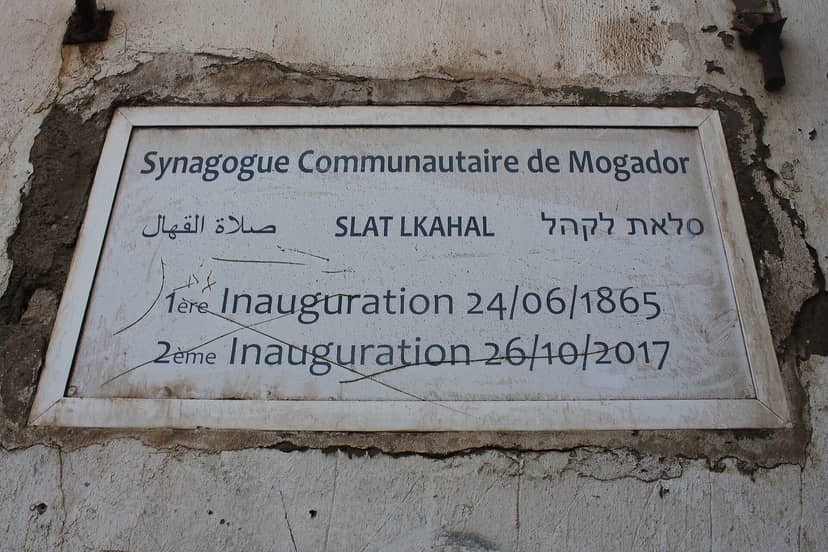
Look up as you walk. Many buildings mix Moorish and Art Deco detail, and a number carry a Star of David carved into the façade or set over the door. Commemorative plaques mark buildings that once housed synagogues.
Expect contrast. The World Monuments Fund put the quarter on its 2018 Watch because so much of it was crumbling: some houses are abandoned or have been demolished for safety, others have become shops and guesthouses, and repairs happen building by building. A rehabilitation study for the quarter was launched in January 2020. The Fund’s online exhibition, The Untold Stories of the Jewish Quarter of Essaouira, is good preparation before you go.
Synagogues and sites inside
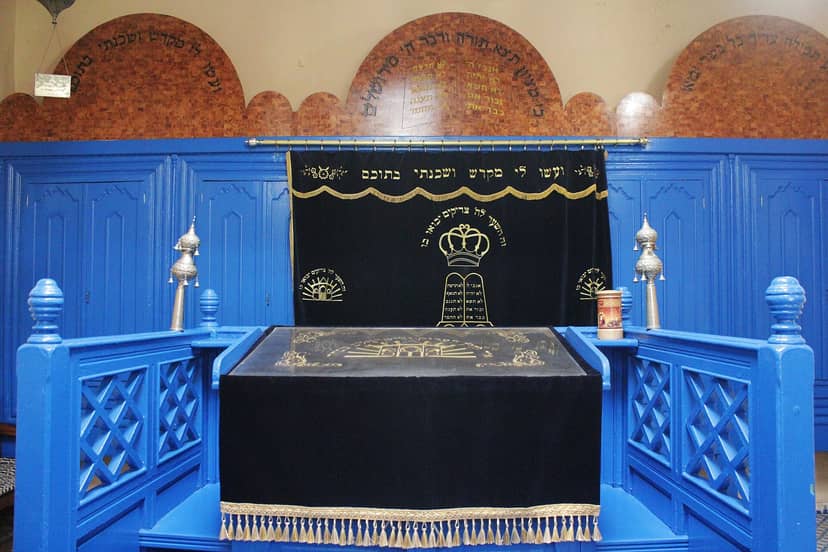
The World Monuments Fund counts more than a dozen former synagogues and a Talmud school in the quarter. Three places are the usual focus of a visit.
Rabbi Haim Pinto Synagogue was the house, office and synagogue of the city’s revered 19th-century rabbi. A caretaker family keeps it, and it is a centre of his annual hilloula, the yearly pilgrimage on the anniversary of a tzaddik’s (holy man’s) death.
Slat Lkahal, the community synagogue of the 1850s, has been restored by a local association and holds a small photo exhibition.
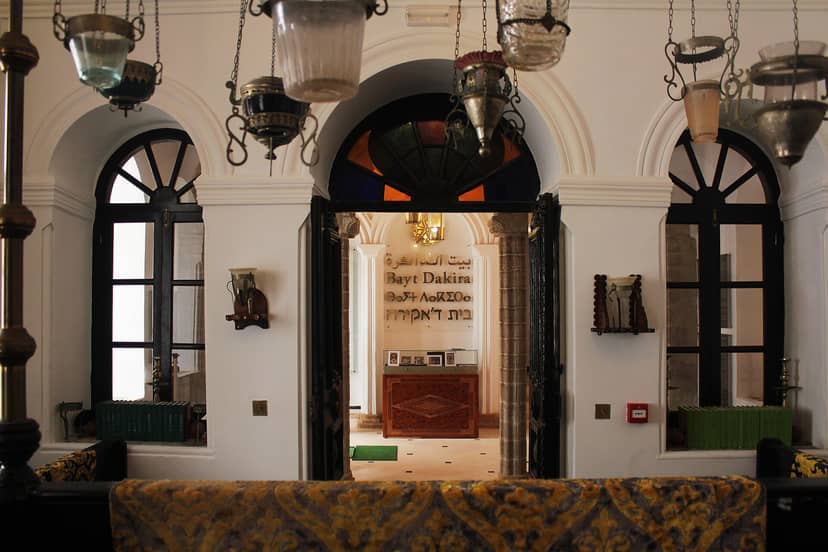
Bayt Dakira, the House of Memory, opened in 2020 around the restored Simon Attias synagogue.
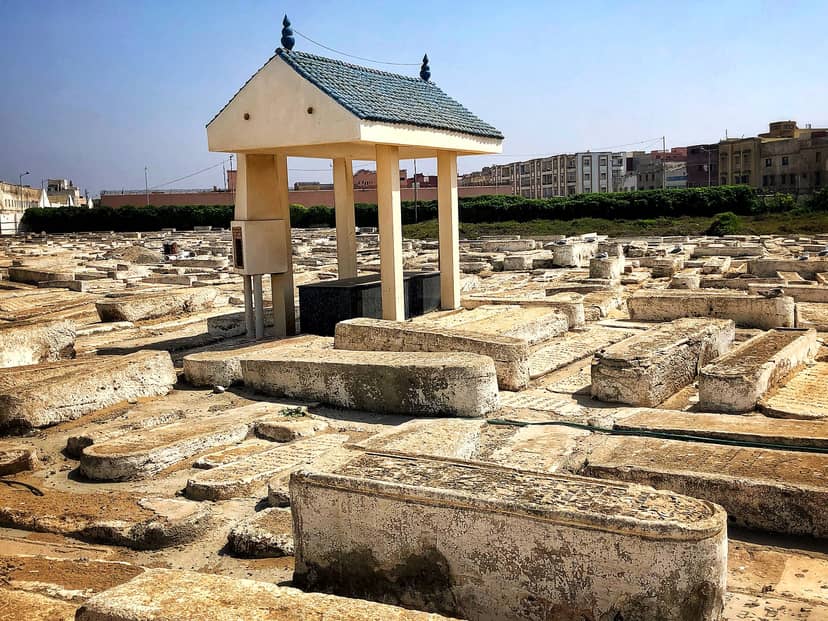
Just outside the walls by Bab Doukkala, the old Jewish cemetery holds the tomb of Rabbi Haim Pinto.
Visiting tips
Give yourself time to wander. This is a residential quarter, so ask before photographing people or looking into homes.
A guide who knows the quarter makes a real difference. Many former synagogues are now private houses or workshops marked only by a plaque, and the restored synagogues open when a caretaker or volunteer is there. Bayt Dakira is closed on Saturdays, and synagogue visits may not be possible on Shabbat.
If your family came from Mogador, bring any names, addresses or photographs you have. We plan the walk around them where we can, though records of individual houses do not always survive.
Beyond the mellah
Pair the mellah with the cemetery and Rabbi Haim Pinto’s tomb, and with a walk through the kasbah where the merchant families lived. Our Essaouira Jewish heritage guide covers the whole city and how to fit it into a wider trip.
Mellah of Essaouira: questions travellers ask
Can anyone walk through the mellah?
Yes. It is a public, lived-in neighbourhood of the medina with no entry fee. Be considerate of residents, especially with your camera.
Do Jews still live in Essaouira?
Very few. Wikipedia records three Jewish residents in 2017, though former residents and their descendants still come back, especially for the Haim Pinto hilloula.
Do I need a guide?
Not to walk the streets. Many former synagogues are unmarked private buildings, though, so a guide who knows the quarter will show you far more and can help with caretaker access.
Can you help me find my family’s house?
We can try. Bring names, addresses and old photographs; a knowledgeable guide can sometimes match them to streets, but house records do not always survive.
When is the Haim Pinto hilloula?
It begins on 26 Elul in the Hebrew calendar, usually in September, and lasts about four days. Essaouira is busy then, so book early.
Sources. World Monuments Fund; Diarna; Jewish Virtual Library; Hespress (2020); Wikipedia; Visiting Jewish Morocco (moroccanjews.org). Researched and fact-checked by Gateway2Morocco, October 2026. Access to religious sites changes; we confirm every visit when we plan your trip.