Pilgrimage house · Casablanca old medina
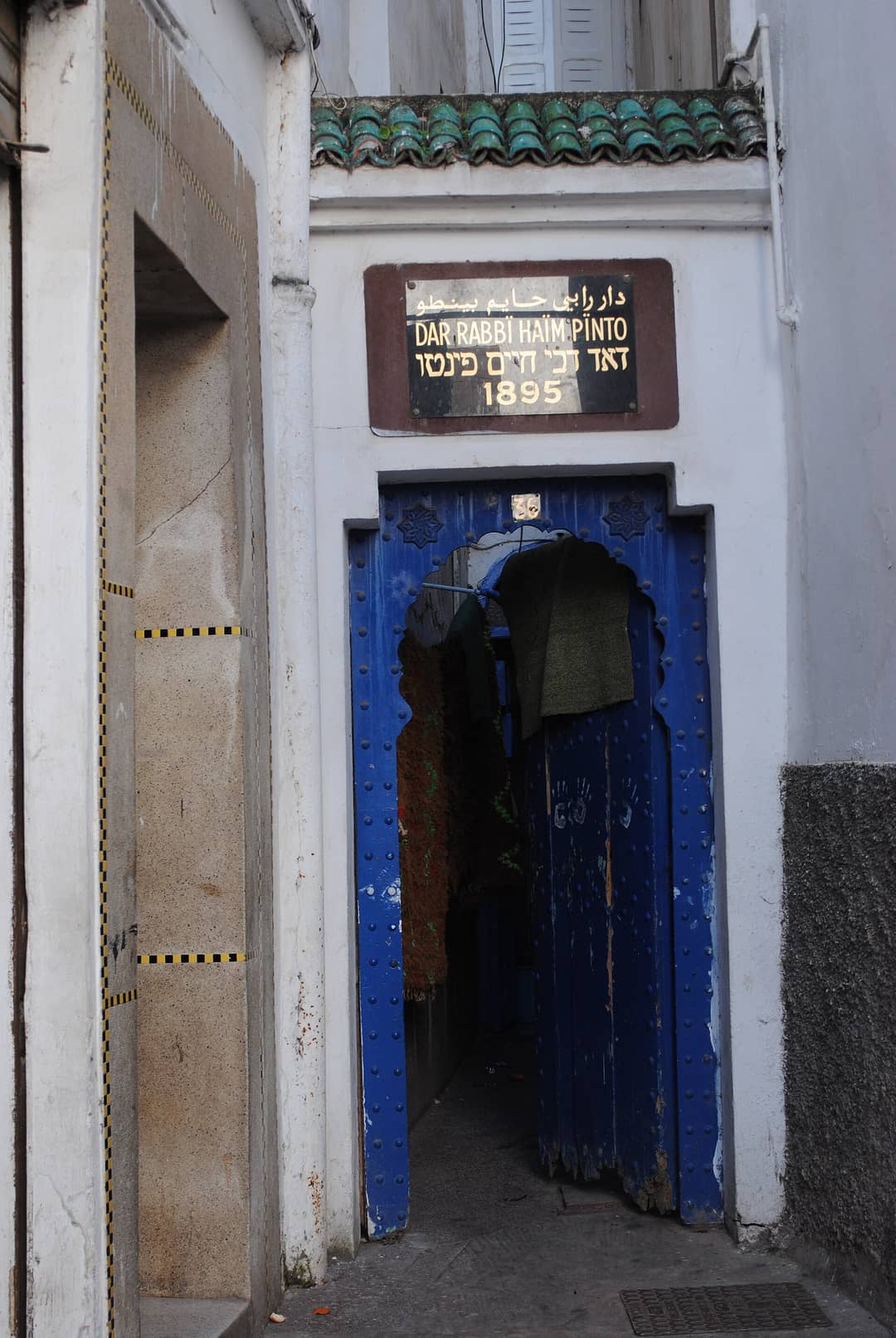
House of Rabbi Haim Pinto (Dar Rabbi Haim Pinto), Casablanca
Dar Rabbi Haim Pinto is the house in Casablanca’s old medina where Rabbi Haim Pinto HaKatan, grandson of the great Essaouira tzaddik, lived. Restored with money from Moroccan Jewish families abroad and in Casablanca, it remains a place of devotion where people light candles and pray. Visitors ring the bell and, if someone is home, are welcomed into a single ground-floor room filled with the rabbi’s belongings.
Who he was
Rabbi Haim Pinto was born in Essaouira (Mogador) in 1855, the son of Rabbi Yehuda Pinto and grandson of Rabbi Haim Pinto HaGadol, “the Great”, the tzaddik (holy man) buried in Essaouira. To tell the two apart he is called HaKatan, literally “the small”. He moved to Casablanca in the mid-1870s and founded a yeshiva, a school of Torah study.
The Pinto family’s own biography remembers him for his modesty. According to that account he collected money for the poor, preferred to eat at poor families’ tables, and taught that the fear of God is learned in hardship rather than in prosperity. On Saturday nights he hosted the Melaveh Malkah, the meal that closes Shabbat, playing the violin and singing poems by his grandfather and by Rabbi Israel Najara. Stories of his foresight still circulate among devotees and are told as tradition.
He died on 15 Heshvan 5698 (20 October 1937) and was buried in Casablanca’s Jewish cemetery. Some online listings attribute the house to his grandfather, but the documented resident was HaKatan.
The house and its restoration
The three-storey building stands at the end of a cul-de-sac off Rue Mohammed El Hansali, the former Rue du Commandant Provost (No. 36 in the old address). A plaque in Arabic, Hebrew and Latin letters reads “Dar Rabbi Haim Pinto, 1895”.
Members of the family guarded the house until 1980, when the present grandson’s uncles died. It then declined, and by the time restoration began it had been in ruins for about ten years. Funds came from Moroccan Jewish families in North America, Europe and Morocco, and donations were collected at Casablanca’s Beth-El synagogue. Donors gave chandeliers, blue tiles, tables and cabinets.
The rabbi’s grandson, also named Haim, was born on the day of the hilloula. He left Morocco in 1967, built a life in Montreal, and returned around 2011 to restore the upper floors, where he now lives. A sign lists the benefactors, though he says it is not complete.
Inside
Only the ground floor is open. Its walls carry framed photographs and large prints of the rabbi, alongside cupboards of religious books, prayer books and a donation box. A display cabinet holds his jellaba (robe), which devotees touch as they ask for protection, and a glass case keeps one of his original letters. Oil lamps burn where his bed once stood.
Visitors light candles, pray and leave offerings. A guestbook, mostly in Hebrew, carries messages from Jewish and Muslim visitors from Morocco, France, the United States, Tunisia and Israel.
The hilloula
A hilloula is the anniversary of a tzaddik’s death, marked with prayer, candles and a festive meal. Rabbi Haim Pinto HaKatan’s falls on 15 Heshvan (26 October in 2026). Devotees visit his grave in Casablanca and gather at the house, where food is shared; families also bring food here when they feel a prayer has been answered. If your dates are flexible, we can plan your Casablanca day around it. Our hilloula guide covers the main pilgrimages.
Visiting respectfully
This is a family home and a place of devotion, and the family is clear that it is not a museum. A notice on the door sets out the house rules. Ring the bell: the grandson, who watches the entrance on camera, or an assistant usually answers, though sometimes nobody is in, so we build in time to return. Visitors contribute about 50 dirhams each towards upkeep and expenses; devotees sometimes bring candles or food instead.
Dress modestly, cover your head if you wish to pray, keep your voice low and ask before taking photographs. The house is a few minutes’ walk from the Ettedgui Synagogue and El Mellah Museum, and the two make a natural half-day in the medina. Our Casablanca Jewish heritage guide covers the rest of the city.
House of Rabbi Haim Pinto: questions travellers ask
Is this the house of Rabbi Haim Pinto of Essaouira?
It was the home of his grandson, Rabbi Haim Pinto HaKatan (1855–1937). The elder Rabbi Haim Pinto is buried in the old Jewish cemetery of Essaouira.
Can non-Jews visit?
Yes. Visitors of every background are received when someone is home, with a contribution of about 50 dirhams towards upkeep.
Do I need an appointment?
There is no booking system: you ring the bell and someone usually answers. A guide helps you find the cul-de-sac and can try again later if nobody is in.
Where is Rabbi Haim Pinto HaKatan buried?
In Casablanca’s Jewish cemetery. Our sources do not say which of the city’s two Jewish cemeteries, so we confirm with the community before a grave visit.
Sources. Religions journal (Chiara Lutteri, January 2026); K. La Revue (September 2026); Hevrat Pinto. Researched and fact-checked by Gateway2Morocco, October 2026. Access to religious sites changes; we confirm every visit when we plan your trip.