Jewish quarter · Casablanca old medina
The Mellah of Casablanca: The Old Medina’s Jewish Quarter
Casablanca’s mellah, the Jewish quarter of the old medina, has largely disappeared. It was pillaged in 1907, and redevelopment around today’s United Nations Square had swallowed almost all of it by 1968. It is still worth walking with a guide who can show you where it stood and connect the few Jewish sites that remain close by.
How the quarter began
Tradition holds that Casablanca’s first modern Jewish community came from Ben Ahmed, near Settat in the Chaouia plain, where the shrine of Rabbi Yahia Lakhdar still draws pilgrims. When the port reopened to trade in 1831, European imports undercut traditional crafts inland, and Jewish families moved towards the coast; merchants from other Moroccan cities followed. The town counted about 1,800 Jews in 1866.
The quarter grew in the southern part of the medina, between Bab es-Souq and Bab Marrakech. Unusually for a Moroccan mellah, it had no wall or gate. Jews and Muslims shared a border area, and the Rue des Synagogues also had mosques and zawiyas (Sufi lodges). When the colonial period began, parts were still loosely built, with huts beside solid houses. The poorest corner was the bhira, a garden with a water reservoir. El-Bhira is also named as the first burial place of Rabbi Eliyahu HaCohen, revered as Casablanca’s “master of the city”, whose tomb was moved in the 1960s.
1907, growth and clearance
In 1907 the French bombardment and landing at Casablanca, which opened the conquest of Morocco from the west, was followed by looting by soldiers and tribesmen. The mellah suffered most, and most of the victims were Jews.
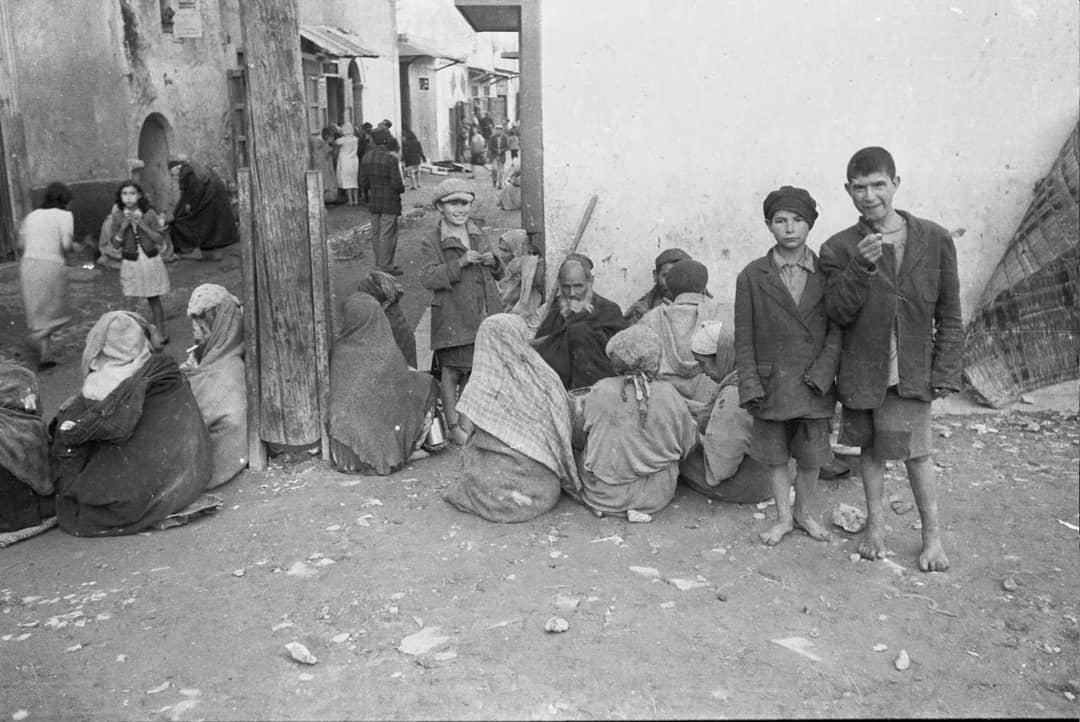
Under the protectorate (1912–1956) Jews from all over Morocco moved to Casablanca. Newcomers often settled first in the mellah, while families who could afford it moved to apartments and villas in the new city, leaving the quarter to the poorest. The city’s Jewish population reached about 40,000 in 1936 and 74,783 in 1952, out of roughly 680,000 residents. By 1960 Casablanca was home to 45% of Morocco’s Jews.
Colonial plans to enlarge Place de France, now United Nations Square, threatened the quarter more than once. Residents wrote to the Resident-General, Hubert Lyautey, that “the order has been issued to pull down our houses, synagogues, and mausoleums.” From 1949 onwards much of the community emigrated, many through Casablanca itself, and by 1968 the old mellah had practically disappeared under the square and an adjoining car park.
What you can see today
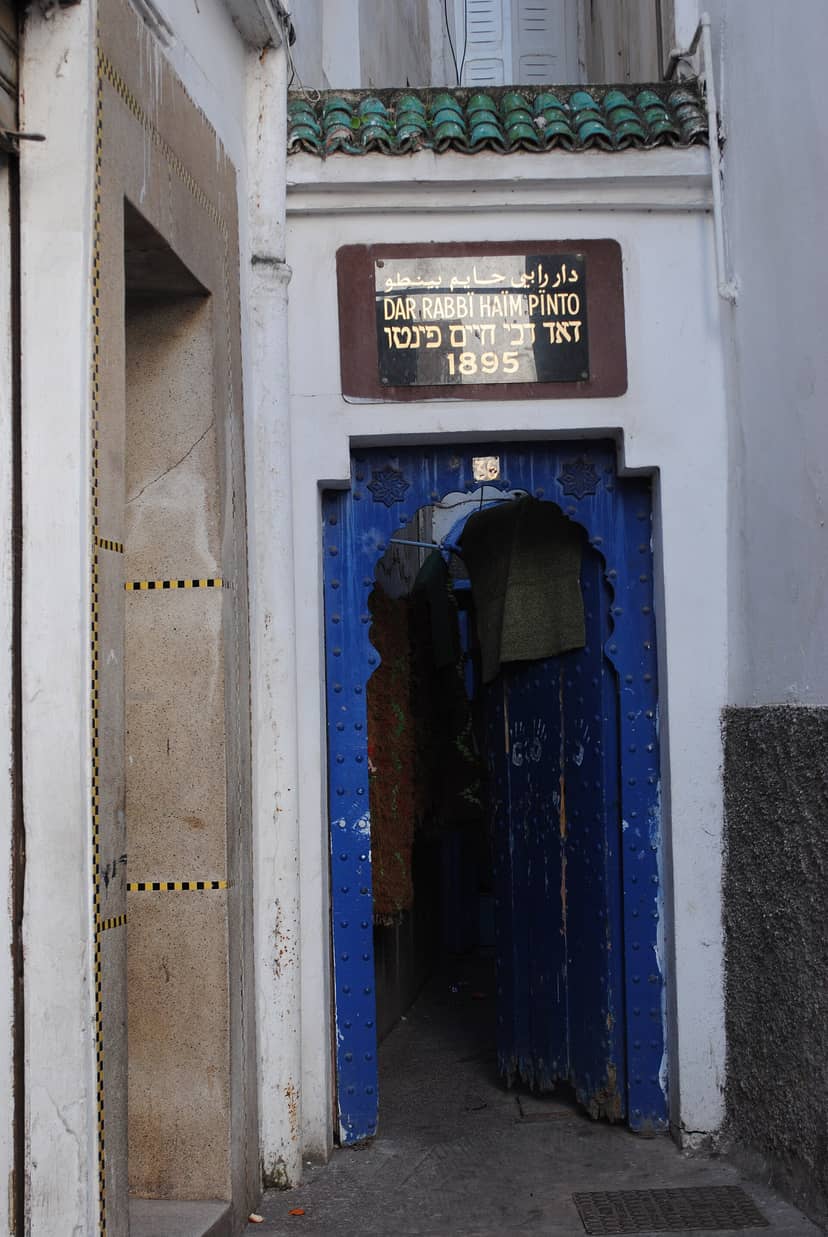
There is no signed heritage trail, and little of the old fabric survives. A guide can trace the quarter’s former edges between Bab Marrakech and Bab es-Souq and link the sites that remain: the rebuilt Ettedgui Synagogue and the El Mellah Museum, whose photographs show the quarter as it was, and the House of Rabbi Haim Pinto, where candles are still lit. The Old Jewish Cemetery adjoins the medina.
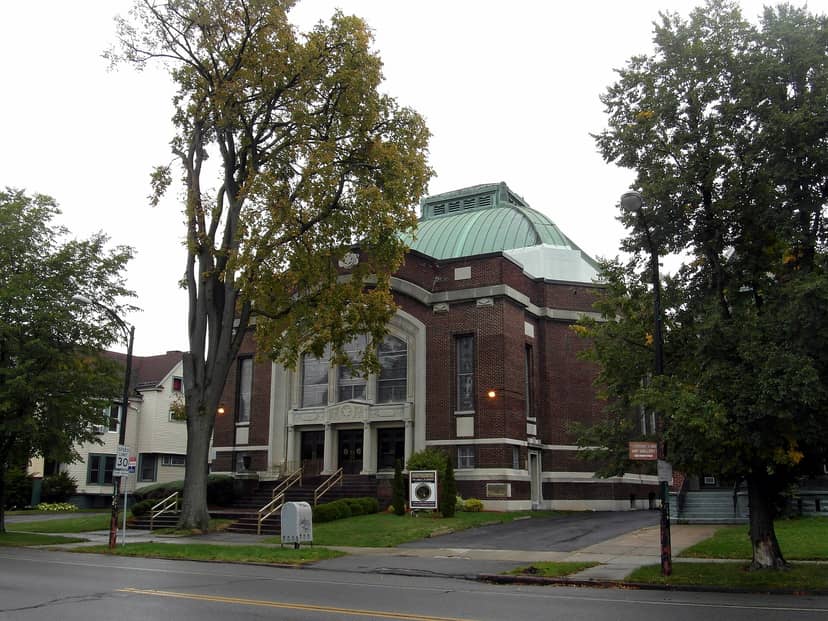
Casablanca still has an organised Jewish community, estimated at about 2,500 people in 2018 and described as the largest in the Arab world. Its synagogues, schools and institutions are now in the modern city, Temple Beth-El among them.
Visiting tips
The streets are public and open at all hours, but go in daylight and with a guide; most travellers combine the mellah area, Ettedgui and the Pinto house in a half-day. Wear comfortable shoes, dress modestly and keep valuables secure in the busy lanes near the gates. Start or finish at the Museum of Moroccan Judaism for the wider picture. If your family lived in the Casablanca mellah, our Jewish roots trip guide explains how we prepare a personal itinerary.
Mellah of Casablanca: questions travellers ask
Is anything left of the Casablanca mellah?
Very little of the original quarter survives; most of it was cleared by 1968. The Ettedgui Synagogue, the El Mellah Museum and the House of Rabbi Haim Pinto keep its memory alive in the old medina.
Do I need a guide?
It helps a great deal, since nothing is signposted and the quarter’s outline has been built over. We arrange guides who know Casablanca’s Jewish history.
My family lived in the Casablanca mellah. Can you help us trace them?
We can build a roots day around the medina, the city’s Jewish cemeteries and community contacts. Records vary, so we cannot promise to find a particular house or grave, but we start the search before you travel.
Sources. Wikipedia (Mellah of Casablanca; Jewish community in Casablanca); K. La Revue (September 2026). Researched and fact-checked by Gateway2Morocco, October 2026. Access to religious sites changes; we confirm every visit when we plan your trip.