
The rabbi
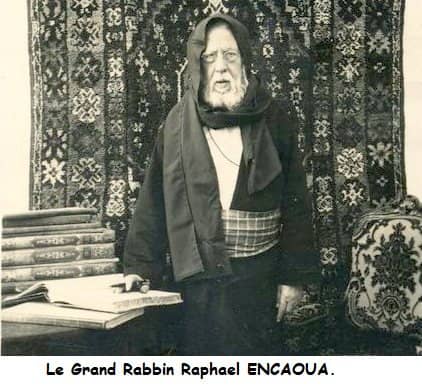
Rabbi Shalom Zaoui was a respected and much-loved figure in Rabat’s Jewish community, though his life is hard to trace. According to his great-great-grandson, he was born around 1839 and died around 1918. He lived through the decades when Rabat’s Jewish population grew from about 5,000 (together with Salé) in 1881 towards the 15,000 recorded across the city in 1947.
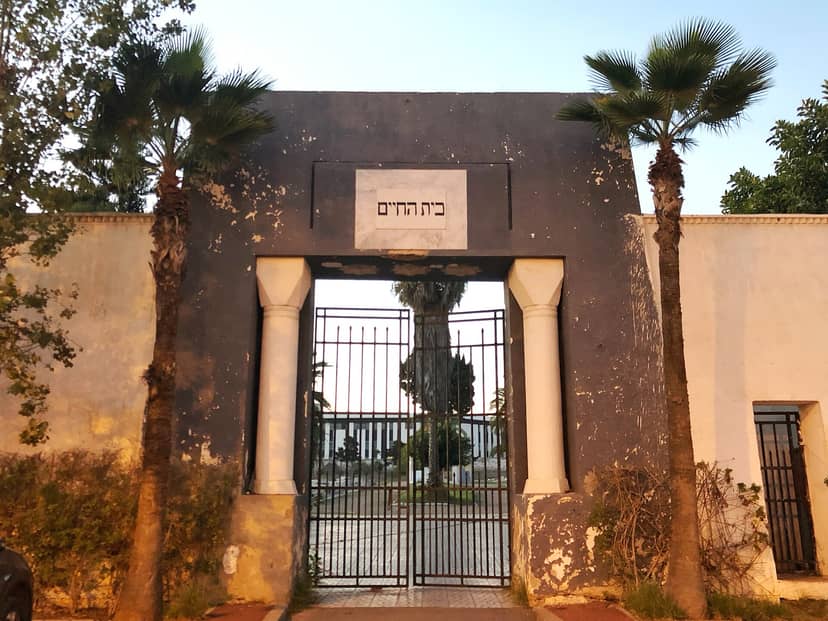
Tradition holds that he worked miracles and that the sick who pray at his synagogue or his grave are healed. He is buried in the old Jewish cemetery in Rabat’s Océan district, where his hilloula, the annual celebration at a tzaddik’s grave, is held on 29 Kislev (9 December in 2026). One of the mellah’s main streets, Rue Rabbin Shalom-Zaoui, carries his name.
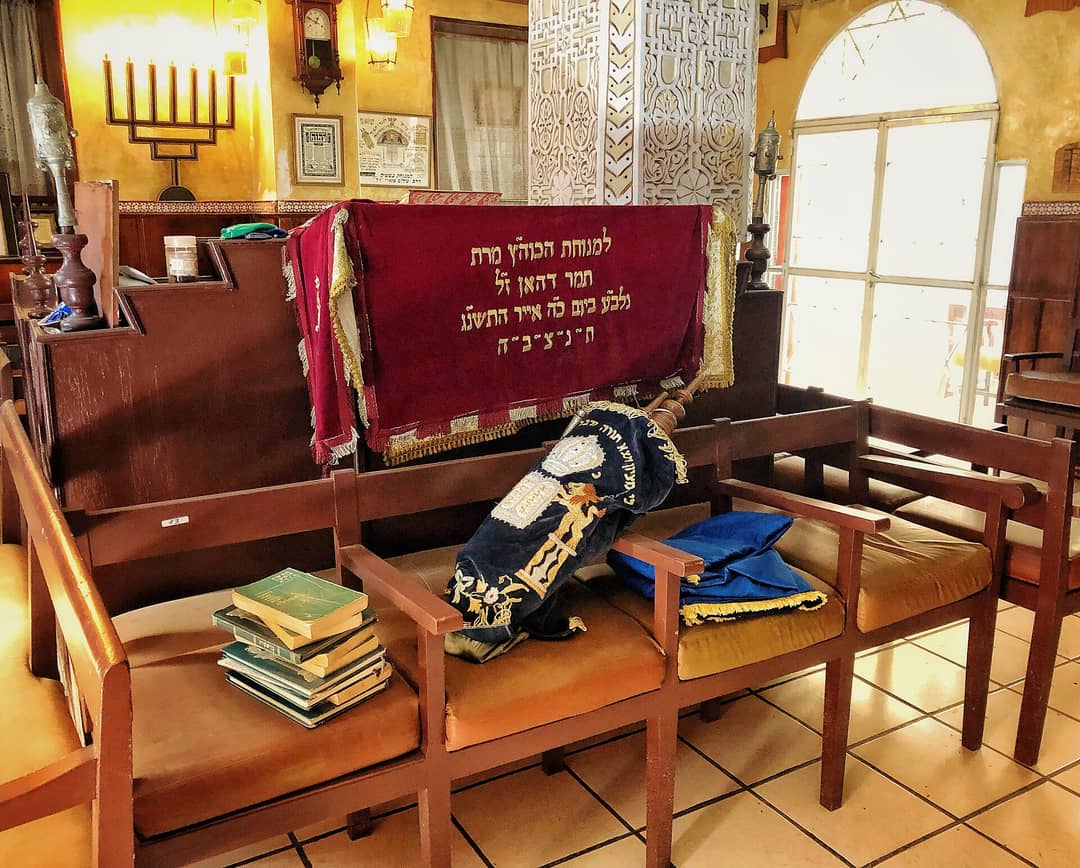
Inside the synagogue
The synagogue stands near Bab Diouana, built against the Andalusian wall. Its style is Moorish: three-lobed window shapes, lamps like those in mosques and geometric zellige tilework. The red-painted courtyard is the first thing most visitors remember.
Diarna, which documented the building, describes a restoration that turned the former house into an arcaded courtyard with a small shrine, a kitchen and storage rooms. There is a bath at the entrance, and a room with an oven leads up to the women’s gallery. At the door is a mezuzah, the small case holding a parchment of Torah verses, which passers-by touch and kiss. Yabiladi records that newlyweds traditionally celebrate near it, and that in the 1950s and 1960s community notables gathered here on Saturday evenings to sing piyyutim, Hebrew liturgical poems.
Visiting today
This is a working synagogue. A visitor in October 2016 was let in by a Jewish resident, who mentioned that services were held mainly at weekends. In March 2019 another visitor was told at the gate that it was open only to Jews. We have found no access report since then.
The reliable way in is to arrange the visit in advance through the Rabat Jewish community or a guide who knows it, and we do this when we plan your trip. Plan for a weekday rather than Shabbat.
Etiquette
Dress modestly, with shoulders and knees covered. Men cover their heads. Do not take photographs during prayer or on Shabbat, and ask before photographing inside at other times. A donation to the synagogue is a welcome thank-you.
Nearby in the mellah
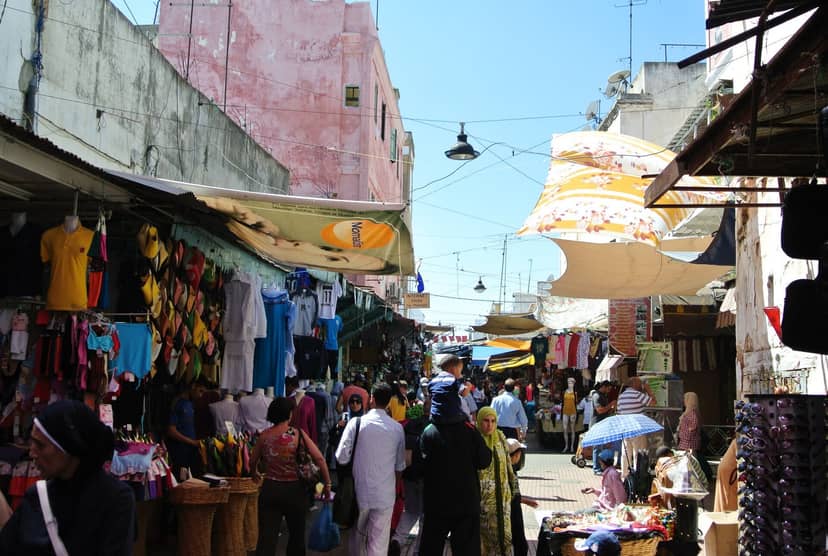
The synagogue is a short walk inside Bab Mellah, so it fits easily into a walk through the Mellah of Rabat. To visit the rabbi’s grave, continue to the old Jewish cemetery in the Océan district; our guide to Jewish Rabat and Salé puts the sites together.