Shrine · Salé Jewish cemetery
Tomb of Rabbi Raphael Encaoua, Salé Jewish Cemetery
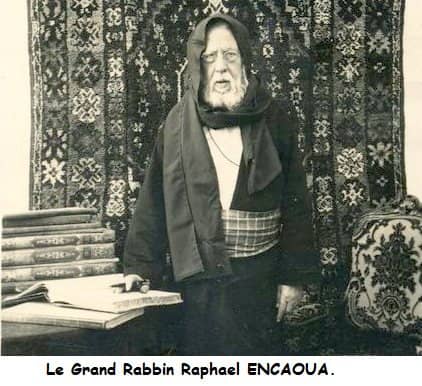
Rabbi Raphael Encaoua (1848–1935) was born in Salé, led its rabbinical court from 1880 and became the first president of Morocco’s High Rabbinical Court. Revered as “Malach Raphael”, the Angel Raphael, he is buried in Salé’s Jewish cemetery beneath an octagonal shrine decorated with arabesques. His hilloula on 4 Av is a major pilgrimage, and at other times a visit is arranged through the guardian or the community.
Who he was
Raphael Encaoua was born in Salé to Rabbi Mordechai Encaoua and his wife Beida. Most sources give 1848; one community biography gives 2 Tevet 5608, which corresponds to December 1847. Yabiladi notes that his father was an Algerian-born Jew who became a French citizen in 1865. In 1880 Raphael succeeded his father-in-law and teacher, Rabbi Issachar Asseraf, who had left for Jerusalem, as Av Beit Din, head of Salé’s rabbinical court.
Accounts agree that he refused a salary and lived from his own business affairs. He founded a yeshiva, a school of Torah and Talmud study, in Salé, paid for it himself, and supported vocational training and a scholarship fund for young apprentices. The historian Michael Laskier calls him perhaps the most famous rabbi in Morocco of his time.
Chief rabbi under the protectorate
Sources differ on the date and title of his national role. Yabiladi says that in 1912, under the French Resident-General Hubert Lyautey, he was given the post of Grand Rabbi of Morocco, which he had refused many times. Wikipedia dates his appointment as the first president of the High Rabbinical Court in Rabat to 1918. A story told by the Hevrat Pinto foundation has him protesting the appointment, and Lyautey insisting that no one else would do. France made him a Chevalier of the Légion d’honneur.
His legal writings include Karne Re’em (Jerusalem, 1910) and Paamone Zahav (1912), with further volumes published later, among them Paamon VeRimon and Hadad VeTema. Some are still cited as authorities in works of halakha, Jewish law. His only son, Rabbi Michael Issachar Encaoua, succeeded him.
The shrine
Rabbi Encaoua died on 4 Av 5695, 3 August 1935; some sources give 1934. Accounts describe a very large funeral, but the attendance figures often repeated online are not documented.
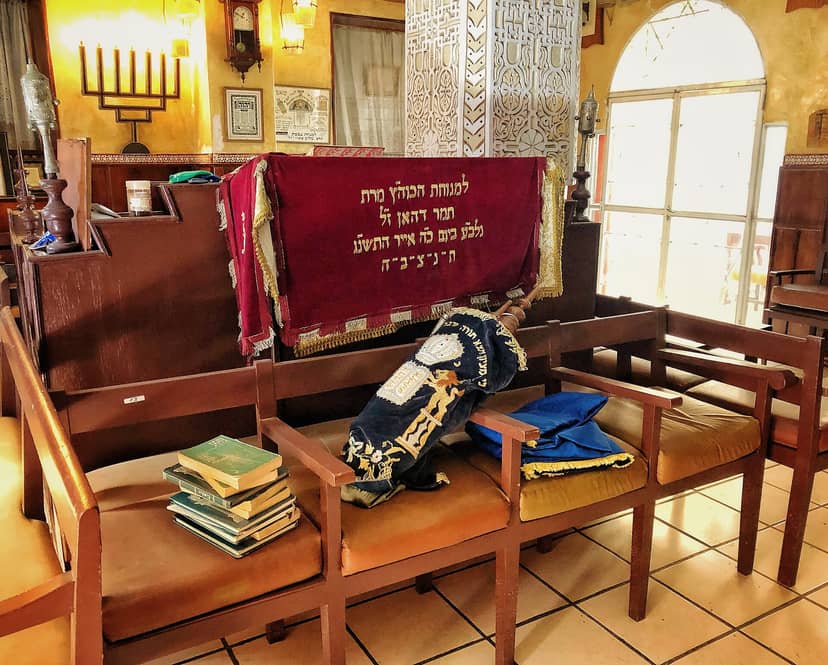
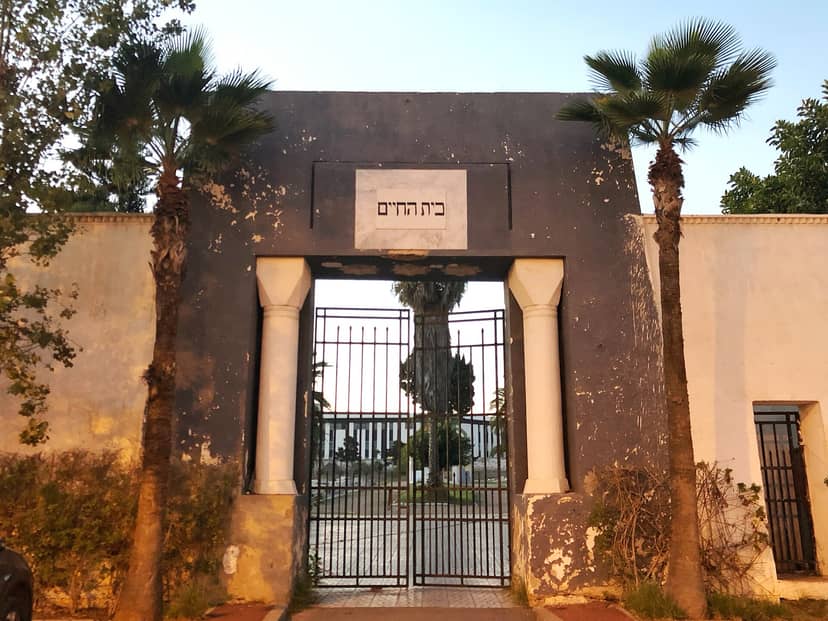
He is buried in Salé’s Jewish cemetery on the road to Meknes, near the Lycée Plateau. Alan Tigay described the tomb in 1994 as an octagonal shrine decorated with arabesques, hung with coloured lights, with candelabra and postcards of the rabbi around it. Moroccan Jews visit the graves of righteous figures, tzaddikim, to pray and ask for blessing.
The hilloula
A hilloula is the annual celebration at a tzaddik’s grave, held on the anniversary of his death. Rabbi Encaoua’s falls on 4 Av (18 July in 2026). In 2027, 4 Av falls on Shabbat (7 August), so check how the gathering will be scheduled that year. Jews from Morocco and around the world come to Salé for it. The date falls during the Nine Days, the period of mourning before Tisha B’Av, which observant families take into account. Our hilloula guide explains how to plan a trip around the pilgrimage, including kosher meals.
Visiting outside the hilloula
There are no published visiting hours. Access is through the cemetery guardian or the Rabat-Salé Jewish community, and we arrange it when we plan your trip. Dress modestly, men cover their heads, and walk on the paths rather than over graves. Travellers who are kohanim, of priestly descent, traditionally do not enter cemeteries; we can plan around that. A tip for the guardian is customary.
Getting there
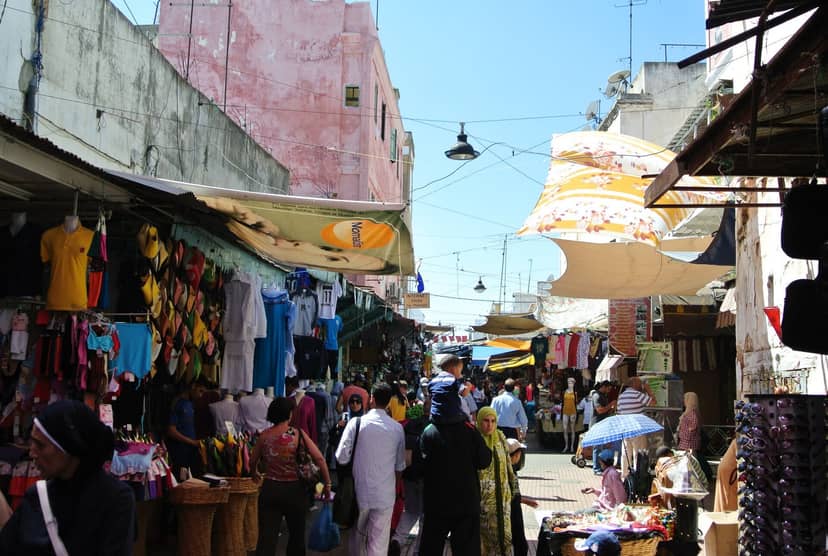
Salé faces Rabat across the Bou Regreg river, and the cemetery is a short drive from central Rabat. The visit fits naturally with a walk through the Mellah of Salé, in the city where Rabbi Encaoua was born and taught, and with Rabat’s mellah and old Jewish cemetery on the same day.
Tomb of Rabbi Raphael Encaoua: questions travellers ask
When is Rabbi Raphael Encaoua’s hilloula?
On 4 Av, the anniversary of his death. It fell on 18 July in 2026; in 2027, 4 Av is on Shabbat (7 August), so confirm how the gathering is scheduled.
Can I visit outside the hilloula?
Yes, by arrangement with the cemetery guardian or the community. We organise this in advance.
Can non-Jews visit the tomb?
Yes, when the visit is arranged and visitors follow the usual etiquette of a Jewish cemetery.
Why is he called Malach Raphael?
It means “the Angel Raphael”, the name by which North African Jews came to know him.
How far is it from Rabat?
Salé is just across the Bou Regreg from Rabat, so the cemetery is a short drive from the city centre.
Sources. Wikipedia; Yabiladi (2019, citing Alan M. Tigay and Michael M. Laskier); Tsidkat Eliaou; Visiting Jewish Morocco (moroccanjews.org); JewishGen Cemetery Project. Researched and fact-checked by Gateway2Morocco, October 2026. Access to religious sites changes; we confirm every visit when we plan your trip.