Mellah · Rabat old medina
The Mellah of Rabat, the Old Jewish Quarter
Rabat’s mellah, the city’s historic Jewish quarter, fills the corner of the old medina between the Andalusian wall and the cliffs above the Bou Regreg river. It was laid out in 1806–1807 and once had more than a dozen synagogues; today it is a busy market neighbourhood where the Rabbi Shalom Zaoui synagogue still stands. You enter through Bab Mellah on Avenue Hassan II, and a guide helps you read the quarter’s Jewish past.
How the quarter began
Jews lived in Rabat long before the mellah existed. Diarna, the digital map of Jewish heritage sites, notes a Jewish presence from before the arrival of Islam, and Sephardic exiles from Spain settled in the northern cities, Rabat among them, in the 15th century. In the 17th and 18th centuries Rabat’s Jews were prominent in trade, and some served as envoys to European powers.
In 1806–1807 Sultan Moulay Slimane ordered a separate quarter built for the Jews, who until then had lived throughout the medina. It went up on former fruit orchards inside the medina walls. Diarna describes the mellah’s double role: it set the community apart and also protected it. The move was a painful one, and Diarna records that it set off a wave of emigration, much of it to South America. Rabat’s mellah is younger than those of Fes, Marrakech and neighbouring Salé.
From crowded quarter to market streets
Like other Moroccan mellahs, Rabat’s was walled, with gates, and space inside was always short. From the late 19th century, families who could afford it began moving to newer European-style districts, and in 1912, under the French protectorate, Rabat became Morocco’s capital.
The figures show how the community grew and then dispersed. There were about 5,000 Jews in Rabat and Salé together in 1881. By 1947 Rabat’s Jewish population had passed 15,000, counted across the whole city; by then many lived outside the mellah. Large-scale emigration followed from the late 1940s onwards. By 1998 three Jewish families remained in the mellah. Diarna notes that many Jewish families moved to the Nouveau Mellah in the new city, home to the community centre and a newer synagogue.
Walking the mellah today
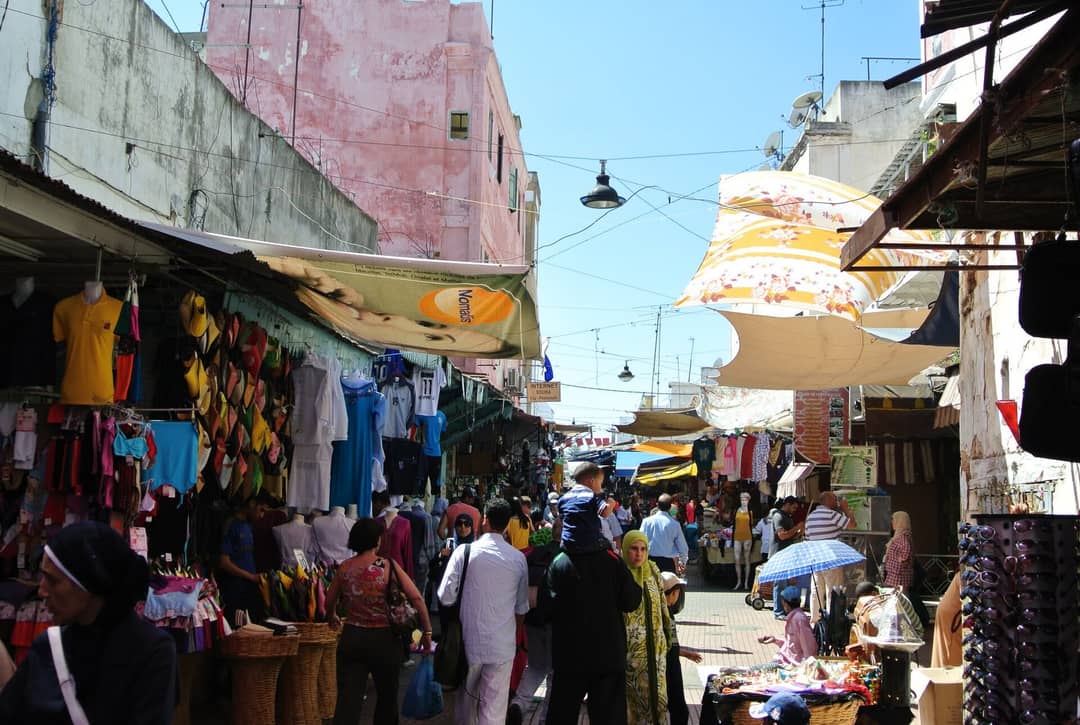
Through Bab Mellah you reach the quarter’s three main streets: Rue du Mellah, Rue Rabbin Shalom-Zaoui and Rue David-Cohen. The lanes are narrow and lined with stalls and small shops selling everyday goods, and the residents today are mostly Muslim. Traditional houses still line some streets, and redevelopment in recent years has aimed to make the quarter more attractive to visitors.
Visitors in 2024 and April 2026 described it as a safe, lively market area. One traveller in 2026 wrote of returning after 59 years and finding his family’s old home, which is the kind of visit we plan carefully with a guide; our Jewish roots trip guide explains how to prepare.
Synagogues and sites
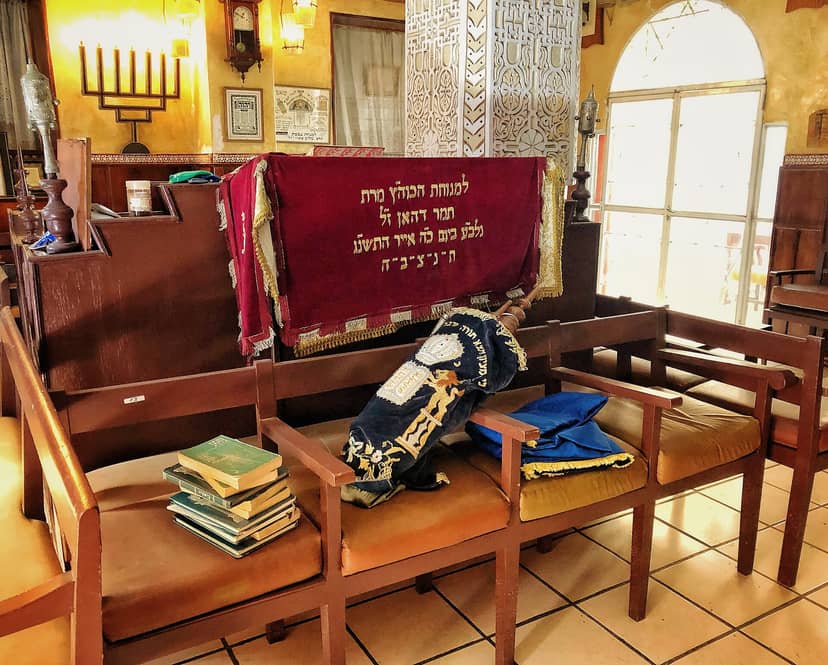
The mellah once had more than a dozen synagogues. The best known, and still in use, is the Rabbi Shalom Zaoui synagogue, near Bab Diouana against the Andalusian wall. It was the home of Rabbi Shalom Zaoui (c.1839–c.1918), a revered figure believed to heal the sick, and it has a Moorish interior with three-lobed windows and mosque-style lamps behind a bright red courtyard. Large Stars of David mark the door. It is still in use, so visits are by arrangement.
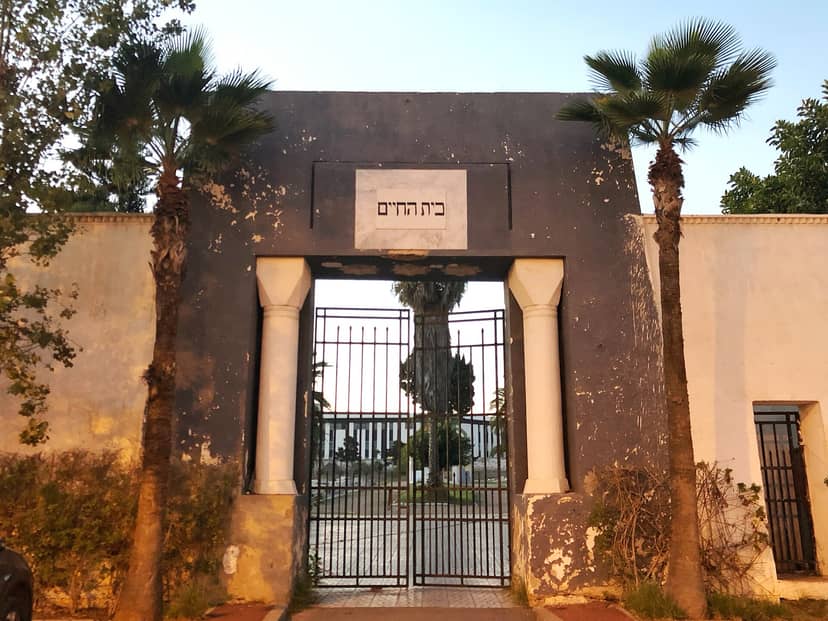
Heritage surveys also photograph a former synagogue building in the quarter, and a guide who knows the area can point out where others stood. Rabbi Shalom Zaoui and Rabbi Eliezer Davila, the city’s two venerated saints, are buried in the old Jewish cemetery in the Océan district, west of the medina.
Visiting tips
A morning or an afternoon is enough for the mellah, and longer if you add the synagogue and cemetery. You can walk it on your own, but there is little signage about its Jewish past, and a guide makes sense of what you see. Dress modestly, as anywhere in the medina, and ask before photographing people or shops. Synagogue visits need to be arranged ahead, and are best planned for a weekday.
Beyond the mellah
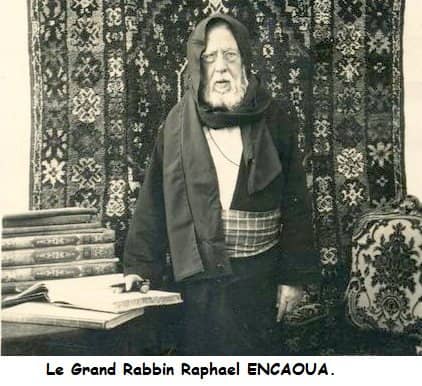
Across the Bou Regreg, Salé has its own, older mellah and the shrine of Rabbi Raphael Encaoua, the focus of a major hilloula. Our guide to Jewish Rabat and Salé puts the two cities together in one day.
Mellah of Rabat: questions travellers ask
Is Rabat’s mellah safe to visit?
Visitors in 2024 and April 2026 described it as a busy, safe market quarter. Normal city care with bags and phones is enough.
Do Jews still live in the mellah?
Very few. Three Jewish families lived there in 1998; many Jewish families moved long ago to the newer districts of the city.
Can I go inside the Rabbi Shalom Zaoui synagogue?
Usually only by arrangement. It is an active synagogue, and one visitor was turned away in 2019, so we arrange visits through the community or a guide in advance.
Can you help me find my family’s old house?
We can try. Bring addresses, street names and old photographs; a guide who knows the quarter helps, though many houses have changed and we cannot promise to find a particular one.
How long should I allow?
A morning or an afternoon covers the mellah. Add time for the synagogue, the old Jewish cemetery or a crossing to Salé.
Sources. Diarna; Barceló travel guide; Visiting Jewish Morocco (moroccanjews.org); Yabiladi; Tripadvisor visitor reviews (2016–2026). Researched and fact-checked by Gateway2Morocco, October 2026. Access to religious sites changes; we confirm every visit when we plan your trip.