History
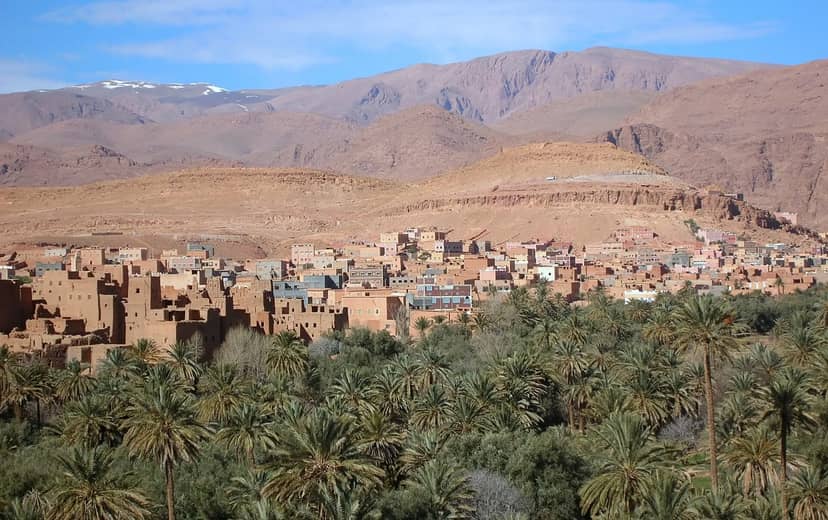
After the nearby city of Sijilmassa was destroyed in the fourteenth century, Rissani became a main centre of the trans-Saharan trade. Visiting Jewish Morocco notes that Jews were important to both the economy and the spiritual life of the town.
The Abuhatzeira family led that spiritual life. Rabbi Masoud Abuhatzeira, son of the Abir Yaakov, headed the rabbinical court in Rissani, and his son Rabbi Yisrael, the Baba Sali, was born here in 1889. Our page on Rissani as the Baba Sali’s birthplace tells that story in more detail.
Rabbi David Abuhatzeira
Visiting Jewish Morocco names the rabbi buried here as Rabbi David Abuhatzeira and calls him one of the most important Jewish figures of Rissani. Wikipedia describes him as a brother of the Baba Sali, though its other details about him do not match the family history, so the identification should be treated with some caution.
Published accounts of the family record that when Rabbi Masoud died in 1908, his eldest son David succeeded him as rabbi of the community, and that he was killed in December 1919 during the unrest in the Tafilalet at that time. After his death the Baba Sali became head of the community, and the family moved to Boudenib. Those accounts do not say where Rabbi David was buried, so it is likely, but not documented, that this is his grave.
What you’ll see
The cemetery lies just outside the walls of Rissani. It was renovated as part of King Mohammed VI’s programme to restore Jewish cemeteries across Morocco, which Visiting Jewish Morocco puts at 160 cemeteries. The work in Rissani was led by Michel Sebag and included a shrine built over the grave of Rabbi David Abuhatzeira. Beyond the shrine, our sources do not describe the other graves in detail.
Visiting respectfully
Dress modestly, cover your head near the shrine, and do not step on graves. Candles and quiet prayer at a tzaddik’s grave (the tomb of a righteous person) are welcome; loud conversation and photographs of people praying are not. A tip for the caretaker is customary.
Getting there
Rissani is at the southern end of the Tafilalet, close to the dunes of Merzouga, so the cemetery fits naturally into a desert itinerary. Pair it with the shrine of Rabbi Shmuel Abuhatzeira in Erfoud. See our guide to Jewish heritage in southern Morocco.
Rissani Jewish Cemetery and Rabbi David Abuhatzeira Shrine: questions travellers ask
Is the Baba Sali buried in Rissani?
No. The Baba Sali was born in Rissani but is buried in Netivot, Israel. The rabbi buried here, Rabbi David Abuhatzeira, is described in some sources as his brother.
Who restored the cemetery?
It was renovated under King Mohammed VI’s national programme for Jewish cemeteries, with the Rissani work led by Michel Sebag.
How far is it from Merzouga?
Rissani is the last town before the Merzouga dunes, so it is easy to visit on the way to or from the desert.
Can non-Jews visit?
Yes, with modest dress and respect for anyone praying at the shrine.
Sources. Visiting Jewish Morocco; Wikipedia; The Jewish Press (2024); Chabad.org. Researched and fact-checked by Gateway2Morocco, October 2026. Access to religious sites changes; we confirm every visit when we plan your trip.