How the quarter began
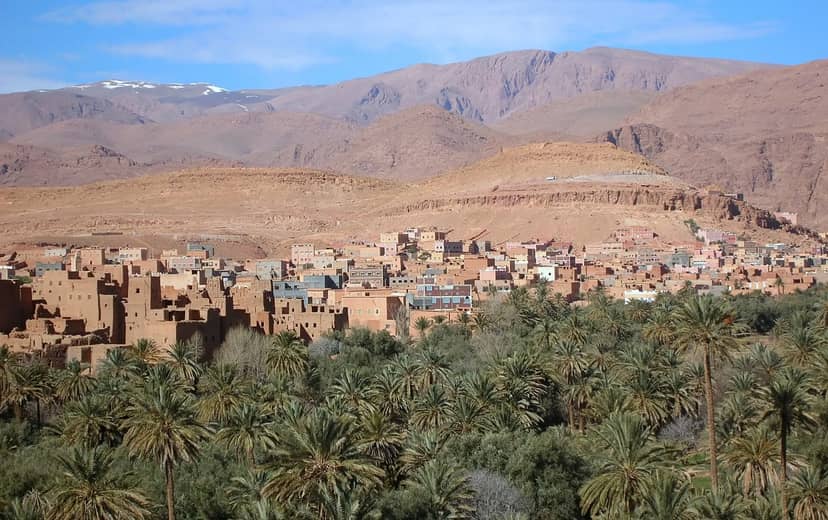
A Jewish community is believed to have settled in Taroudant in the 11th century. Jews made up about a tenth of the town’s population and were mainly engaged in the trans-Saharan caravan trade that passed through the Souss. The Saadi dynasty fortified the town in the 16th century, and its walls, around 6 to 8 km long with nine gates, still define the old city.
The mellah lay inside the walls. It was enlarged under Sultan Moulay Slimane in the early 19th century, and during that century Jews also acquired land outside the walls.
A centre of Kabbalah
Taroudant developed its own tradition of Jewish mysticism around the kabbalist Rabbi Moses ben Maimon Elbaz (also written Albas) and his disciple Jacob Ifergan. Elbaz began his best-known work, Hekhal ha-Kodesh, a kabbalistic commentary on the prayer book, in Taroudant in 1575; it was published in Amsterdam in 1653. Rabbi Isaac ha-Cohen, in the 17th century, probably paved the way for the Cohen Azugh family of kabbalists, venerated as saints across the Souss.
The Haifa survey lists Moses ben Maimon Elbaz, Shalom Zafrani and Pinhas Al-Cohen among the saints buried in Taroudant.
Community life and departure
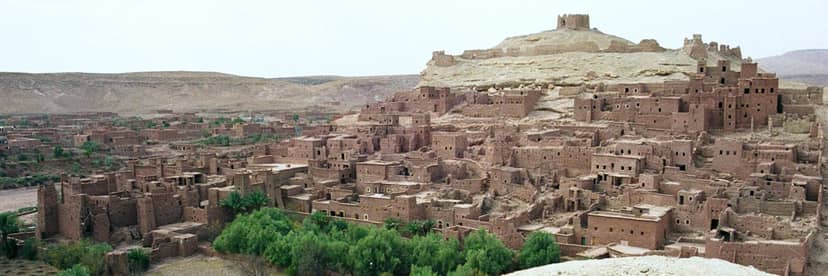
Between the 17th and 19th centuries the community held at about 1,000 people, supported in hard times by smaller Jewish settlements nearby. Jews also lived in the mellahs of Freij and of Tiout, a hill village near Taroudant, where the Jewish quarter stood next to the kasbah.
The Alliance Israélite Universelle opened a school in 1929. By the mid-20th century, according to Visiting Jewish Morocco, more than 40 per cent of the town’s Jews depended on community support. Most emigrated in 1962 and 1963, chiefly to Israel; others had already moved to Agadir, Marrakech, Casablanca, Salé, Rabat or Paris. The school closed in 1963.
Walking the mellah today
The former quarter is a residential part of the old town, and we know of no synagogue there that opens as a heritage site. A building that once served as a synagogue, formerly the home of Sisso Zafrani, is now an artisan shop. A guide who knows the town can point out the streets of the old mellah; expect to see it from the outside.
At Tiout, near Taroudant, there is a Jewish cemetery and the tomb of Rabbi Shalom Benzaquin near the old Jewish quarter.
Beyond the mellah
Taroudant is the natural base for the shrine of Rabbi David Ben Baroukh, the Souss’s winter pilgrimage, and for the restored synagogue of Ighil n’Oghou near Taliouine. Our southern Morocco guide puts them on one route.
Mellah of Taroudant: questions travellers ask
Is there a synagogue to visit in Taroudant?
We know of none that opens as a heritage site. A former synagogue, once the home of Sisso Zafrani, is now an artisan shop.
Do I need a guide?
Yes, if you want to see Jewish Taroudant. Little is marked, and a guide who knows the town can show you where the mellah stood.
When did the Jews of Taroudant leave?
Most emigrated in 1962 and 1963, chiefly to Israel, after earlier moves to other Moroccan cities and to Paris.
How does Taroudant fit into a trip?
It lies east of Agadir on the road to Ouarzazate and is the natural base for the Rabbi David Ben Baroukh shrine.
Sources. University of Haifa, Jewish Communities of Morocco (J. Chetrit); Wikipedia (Taroudant; Moses ben Maimon Albas); Times of Israel blog (2023); Visiting Jewish Morocco. Researched and fact-checked by Gateway2Morocco, October 2026. Access to religious sites changes; we confirm every visit when we plan your trip.