The Jews of Tazenakht
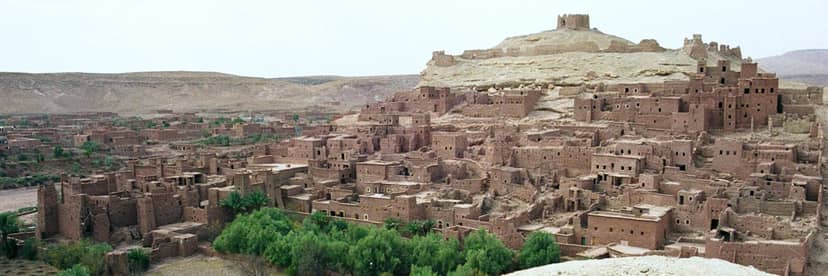
Jews probably settled in Tazenakht in the sixteenth century, under the Saadian dynasty, as trans-Saharan trade grew, according to the University of Haifa project. Their mellah lay in Tazenakht al-Qadim, the old town. In the twentieth century the community numbered roughly 200 to 300 people, most of them traders in dates, olive oil, almonds and cereals. There were two synagogues, one with rare drawings of ritual objects on its walls. The Alliance Israélite Universelle opened a school in 1954, and the community dispersed in 1963, mainly to Israel.
The community’s best-known possession was the Sefer Tislit, a small, greatly venerated Torah scroll that probably came from the neighbouring community of Tislit. It is now kept in a synagogue in Ashkelon, Israel, where a hilloula for it is held each year at the end of the month of Tishri.
History of the cemetery
The cemetery is said to be more than 600 years old. It lies on a gently sloping hill several hundred yards east of the mellah. By the early 2000s it had been badly damaged by vandalism.
Charly Bouskila, a Casablanca businessman whose family came from Tazenakht, found it in ruins on a visit in 2005 and began restoring it. His father, Yaakov, had left Tazenakht for Casablanca, where he worked as a religious scholar. The work was completed in 2008 and the cemetery was rededicated on 2 June 2008, in the presence of Rabbi David Bouskila, the rabbi of Marrakech and the governor of Ouarzazate province.
What you’ll see
The restored complex includes a synagogue hall and a guesthouse with a full bathroom and a basic kitchen, which visitors are encouraged to use for longer stays. A small concrete canopy covers the tomb of Rabbi Shimon Bouskila, Charly’s grandfather, who served the region as butcher and mohel (the person who performs circumcisions).
Diarna lists several graves venerated by tradition as those of saints, including Aharon Hacohen, Isso Ibgui, Lalla Simha Ruben and Moshe Wizeman. Opinions on the restoration differ: some visitors feel it looks too modern, while others value the care and the facilities.
Finding a family grave
At the time of Diarna’s report the Bouskila family was gathering information from relatives of those buried here. We cannot promise that records exist for a given grave, but if you send us names and approximate dates we ask the guardian and local contacts before you arrive. Our Jewish roots trip guide explains how we prepare these searches.
Visiting respectfully
Dress modestly, keep to the paths and do not step on graves. A tip for the guardian is customary. See our guide to Jewish heritage in southern Morocco for nearby sites.
Tazenakht Jewish Cemetery: questions travellers ask
Is the Tazenakht cemetery open to visitors?
Diarna reports a guardian on site around the clock who welcomes visitors. We confirm before your trip.
Is there a hilloula at Tazenakht?
The community’s best-known hilloula, for the Sefer Tislit Torah scroll, is now held in Ashkelon, Israel, at the end of Tishri, not at the cemetery.
Can we stay overnight?
The complex has a basic guesthouse that visitors have been encouraged to use. Any stay must be arranged in advance.
Where is Tazenakht?
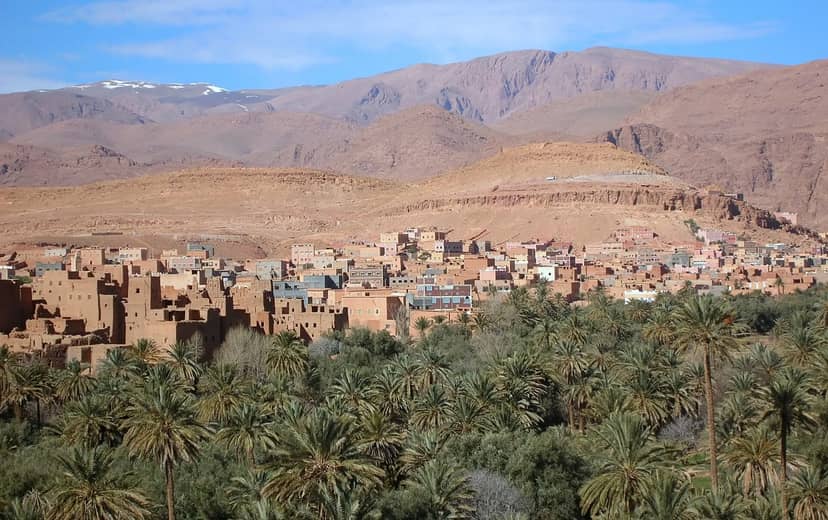
It lies south-west of Ouarzazate, an easy addition to a southern itinerary.
Sources. Diarna; University of Haifa, Moroccan Jewish Communities project (Tazenakht). Researched and fact-checked by Gateway2Morocco, October 2026. Access to religious sites changes; we confirm every visit when we plan your trip.