How the community began
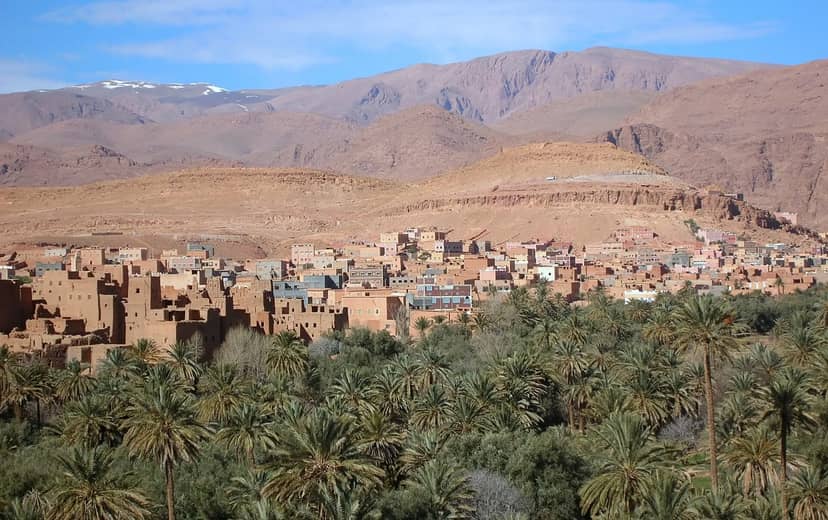
Ifrane takes its name from the Tamazight word ifri, cave. Jews knew it as Oufrane. It lies on an old caravan route at the edge of the Sahara, inland from Tiznit and Guelmim.
Its beginnings are told through tradition. One legend says Jews fleeing the destruction of the Temple in Jerusalem settled here, founded their own small realm and built a miniature temple; another links the community to the tribe of Ephraim after the First Temple fell. A date of 361 BCE is sometimes quoted, and Wikipedia calls it speculative. None of these dates is documented. The earliest written records of Jewish communities in the Souss date from the 10th century.
After the Muslim conquest, the Jews of Oufrane lived under the protection of the local Tazeroualt rulers. The community numbered in the hundreds.
The martyrs of Oufrane
Oufrane is remembered above all for its martyrs. Sources agree that in the late 18th century Jews of Oufrane were burned alive for refusing to convert to Islam, and differ on the details. Diarna gives 1790, during the reign of Sultan Mulay Yazid, and tells how a rebel seized 50 Jewish merchants; tradition holds that the community head, Yehuda Ben-Nathan Effiat, walked into the fire first and the others followed. The University of Haifa survey dates the massacre to 1792 and attributes it to the pretender Bu Ihlas, citing a Judeo-Arabic elegy and an Arabic chronicle.
The victims are remembered in the cemetery of the burned, about a kilometre from the mellah, and their ashes are said to rest in a cave there. It became a pilgrimage site for Jews of the whole region. According to tradition reported by the Haifa survey, Jews do not enter the martyrs’ cemetery itself, and Diarna notes that an inner area was closed to Jews for centuries.
Walking the mellah today
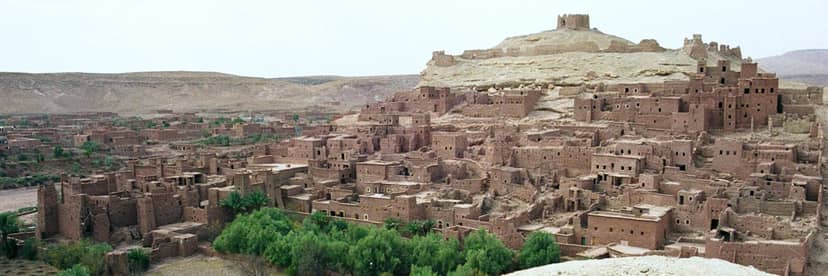
Almost the whole community left in 1958, most for Israel and some for cities further north, and over the 20th century Tiznit absorbed many families from the area. Parts of the old Jewish quarter are now in ruins, and walking through it today means picking your way between empty houses around the restored synagogue.
The synagogue, restored in 1999, is the anchor of the visit, and a guardian who lives next door opens it. From the mellah, a narrow path climbs about a kilometre to the cemetery and the cave of the martyrs, where Hebrew-inscribed stones survive among graves now reduced to heaps of rock.
Visiting tips
Ruined walls can be unstable, so stay on paths and do not climb on them. Wear good shoes for the cemetery path. Observant visitors, and kohanim in particular, may wish to view the martyrs’ cemetery from outside in keeping with tradition; we can plan the route accordingly.
Access to the synagogue should be confirmed before you travel, as the most recent report is undated. Ifrane works best as part of a southern route that includes Tiznit or Agadir, with a guide who knows the history.
Mellah of Ifrane of the Anti-Atlas: questions travellers ask
Is Oufrane really Morocco’s oldest Jewish community?
It is commonly regarded as such, but the early dates come from legend and are not documented. The earliest written records of Souss Jewish communities date from the 10th century.
When did the martyrdom happen?
Sources differ: Diarna gives 1790 under Sultan Mulay Yazid, while the University of Haifa survey gives 1792, attributing it to the pretender Bu Ihlas.
Can Jews enter the martyrs’ cemetery?
Tradition holds that Jews do not enter the martyrs’ cemetery itself, and many observant visitors view it from outside. We can plan the visit around this.
When did the Jews leave Oufrane?
Almost the whole community left as a group in 1958.
Sources. Diarna; University of Haifa, Jewish Communities of Morocco (J. Chetrit); Wikipedia (Ifrane Atlas-Saghir). Researched and fact-checked by Gateway2Morocco, October 2026. Access to religious sites changes; we confirm every visit when we plan your trip.