Who he was
Nobody knows his true story. Accounts quoted by Yabiladi say he settled in Azemmour about five centuries ago; other, unverified stories give quite different dates. What is clear is that he became the town’s tzaddik, a righteous person whose grave is visited for prayer and blessing, and that Azemmour’s Jews honoured him together with a second local saint, Rabbi Abraham Ben Natane.
A well-known tradition explains how the shrine came to be. Townspeople set up a horse-driven wheat mill in front of his resting place, and the animals harnessed to it fell ill or died. Jews and Muslims then dreamed of a holy man asking not to be disturbed by the mill. A Muslim saint is buried close by, probably Sidi Daoui according to the shrine’s guardian, and it is hard to say which tomb came first.
The shrine
For a long time the grave was little more than a cave, its walls seeping water. According to a 2020 report in Le Matin, it stayed that way until the early 1940s, when Jews built the present mausoleum. Families once held a child’s first haircut in a small room near the tomb, and visitors still light candles there. The shrine is among the saints’ tombs restored under Morocco’s “Houses of Life” cemetery and shrine restoration project.
Azemmour’s Jewish story
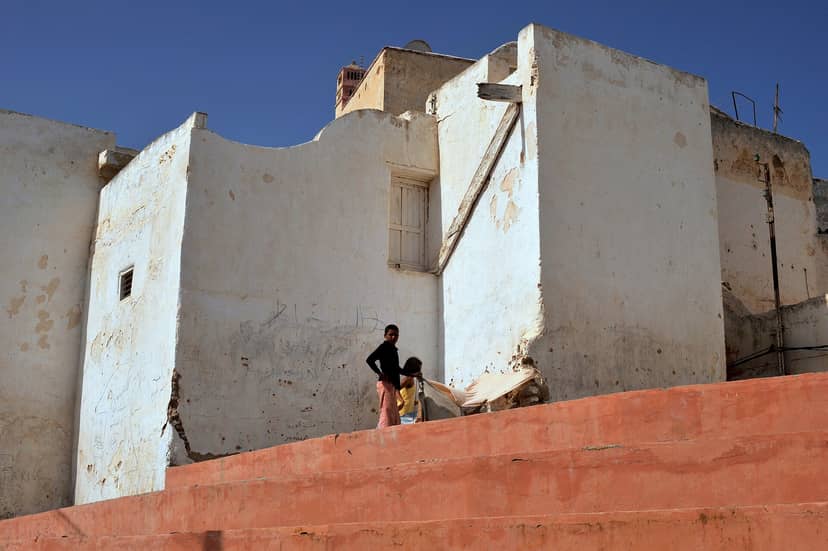
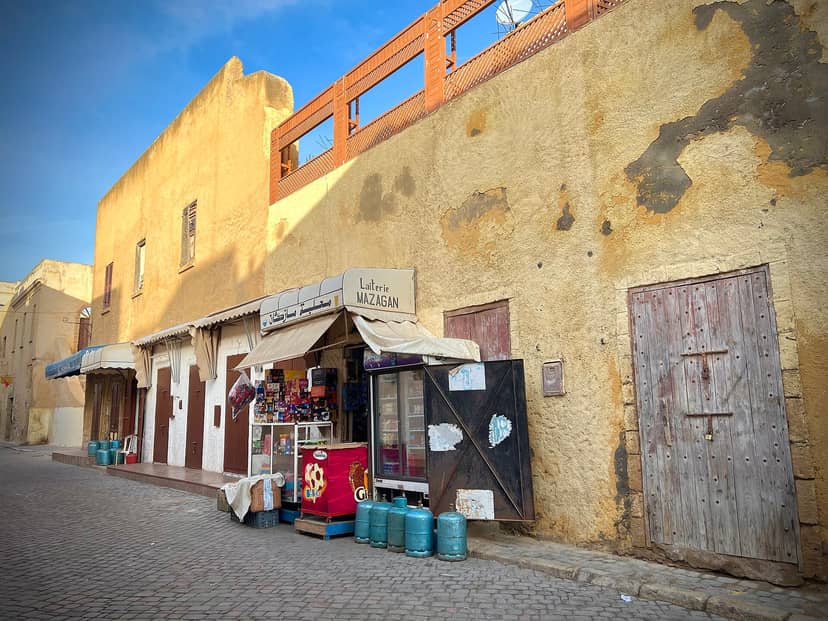
Azemmour, on the Oum Er-Rbia river, had a Jewish community from at least the 15th century, joined by exiles from Portugal in 1496. Most of its wealthier families moved to nearby Mazagan, today’s El Jadida, around 1820, and by 1968 no Jews remained. Our page on the Mellah of Azemmour tells the fuller story.
The hilloula
A hilloula is the yearly celebration at a tzaddik’s grave. Yabiladi places Rabbi Abraham’s at Lag BaOmer, the festive 33rd day of the counting between Passover and Shavuot, on 18 Iyar (25 May in 2027). Le Matin reported in 2020 that thousands of Jews and Muslims visit the shrine each year, and that many Jewish families return to walk the mellah and celebrate. Some travel writers mention an August moussem as well, but we have not been able to confirm it. Our hilloula guide covers how to plan around these dates.
Visiting outside the pilgrimage
You can visit at any time of year. In 2019 Yabiladi reported that a local woman, Fatima, looked after the shrine; Jews and Muslims came every day, and Saturdays were reserved for Jewish visitors. Ask the guardian before entering, cover your head, and leave a tip as thanks. Azemmour is a short drive from El Jadida and easy to reach from Casablanca, so we usually combine the shrine with the mellah of each town.
Shrine of Rabbi Abraham Moul Niss, Azemmour: questions travellers ask
Can non-Jews visit?
Yes. Muslims venerate him as Sidi Brahim and visit daily, though Saturdays are reserved for Jewish visitors.
When is the hilloula?
At Lag BaOmer, 18 Iyar (25 May in 2027). Some accounts also mention an August gathering, which we have not been able to confirm.
Is the shrine open on Saturday?
Saturdays are reserved for Jews, according to the guardian’s practice reported in 2019. Non-Jewish travellers should plan another day.
How long does a visit take?
The shrine itself takes 20–30 minutes. Most travellers combine it with a walk through Azemmour’s mellah and a visit to El Jadida the same day.
Sources. Yabiladi (2019); Le Matin (2020); Visiting Jewish Morocco (moroccanjews.org); Encyclopaedia Judaica (via Encyclopedia.com); MarocMama (2017). Researched and fact-checked by Gateway2Morocco, October 2026. Access to religious sites changes; we confirm every visit when we plan your trip.