Who they were
Rabbi Jacob Ben Malca was a scholar and dayan (judge of a rabbinic court) who moved from Fes to Tetouan in 1734 to head the city’s religious court.
Rabbi Hasday Almosnino was born in Tetouan in 1640 and is usually dated 1640–1727. He lived for a time in Gibraltar and was an authority on Jewish law who left published works. A Tetouan tradition tells that during a drought he came to pray in this cemetery, and rain began to fall as he started to read a psalm.
Rabbi Jacob Marrache, also reported as born in 1640, was a kabbalist who studied the teachings of the Ari (Rabbi Isaac Luria) and the Zohar. A London branch of the Marrache family traces its descent from him.
How the graves were found again
Rabbi Joseph Israel, a Tetouan native now living in Casablanca, remembered the community custom of praying at these three tombs on the eves of Rosh Hashanah and Yom Kippur. At Purim 2023 he went to the cemetery and showed the community the graves.
The tombs had been visited before. There are 19th-century written records; in 1955 the historian Haim Ze’ev Hirschberg was shown them by Moses Hassan; and in 1993 Rabbi Shlomo Dayan recorded being shown the tombs of Almosnino and Marrache. A search in the early 2000s failed. Press reports called the 2023 find a rediscovery “after 60 years”, though the 1993 visit suggests the memory never fully lapsed.
No one knows which tomb belongs to which rabbi. Jewish law forbids exhuming remains for testing, so the three are honoured together.
The Cementerio de Castilla
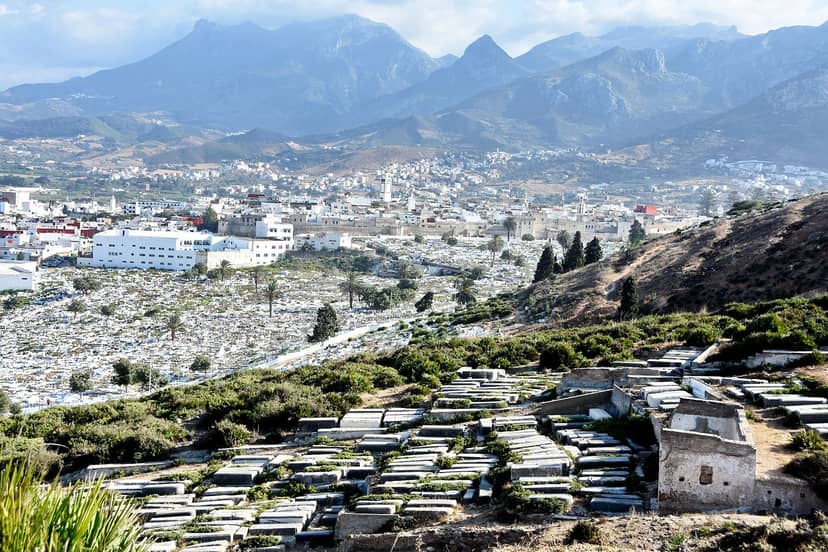
The graves are in the Cementerio de Castilla, the oldest section of the Jewish cemetery of Tetouan, named for the first exiles from Castile buried there after 1492. It lies uphill on the left as the path forks past the entrance, on the slopes of Mount Dersa. Many tombs here are anthropomorphic, roughly shaped to the outline of a human body; many carry emblems such as Stars of David or Trees of Life, and many have no inscription at all.
In 2023 the section was very overgrown and difficult to reach. The community, headed by Alberto Hayon, planned to clear vegetation, pave paths around the 16th-century tombs and document them.
Visiting respectfully
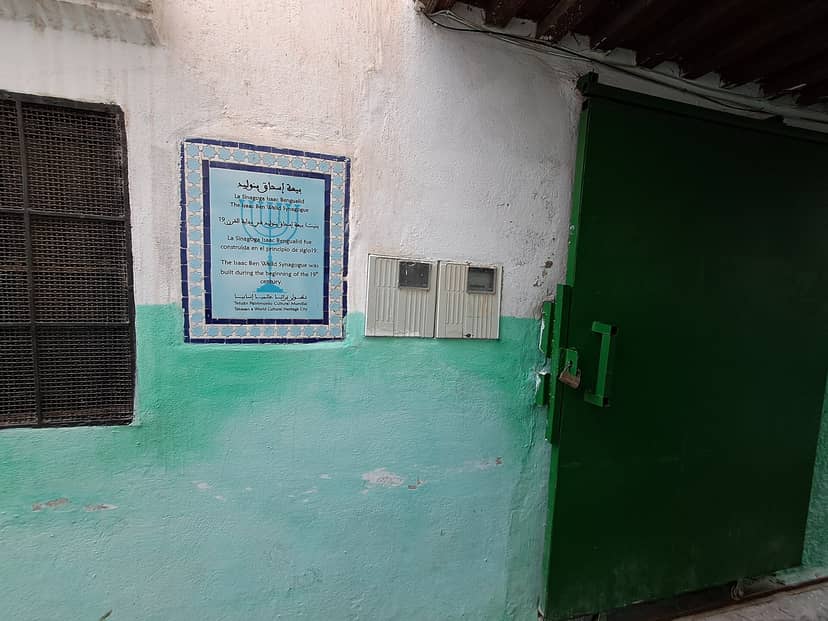
Visits go through the cemetery caretaker and are best arranged in advance with the community. Wear sturdy shoes for the steep, uneven ground, dress modestly and cover your head, and never step on graves. No public hilloula date is documented; the community’s custom is to pray here before Rosh Hashanah and Yom Kippur. Pair the visit with the tomb of Rabbi Isaac Ben Walid in the same cemetery. Our Tangier and Tetouan guide has the wider route.
Tombs of the Tetouan Sages: questions travellers ask
Which tomb belongs to which rabbi?
That is not known. Jewish law forbids exhuming remains for testing, so the three graves are honoured together.
Is it easy to reach?
No. In 2023 the old section was steep and overgrown. Wear sturdy shoes and go with the caretaker.
Is there a hilloula?
No public hilloula date is documented. The community’s custom is to pray at the three tombs on the eves of Rosh Hashanah and Yom Kippur.
Sources. eSefarad / JNS (2023); Hespress (2023); Maguén-Escudo; Wikipedia. Researched and fact-checked by Gateway2Morocco, October 2026. Access to religious sites changes; we confirm every visit when we plan your trip.