How the quarter began
Community tradition holds that about ten families, most of them kohanim, reached the site under Rabbi David Hacohen. Finding no water, he struck a rock with his staff and a spring flowed. It became known as Aïn Sbilia, the “Spring of Seville”, and the Jewish quarter grew up beside it.
The spring story is a legend, but the Seville link is documented. A letter from Rabbi Yossef Cohen-Scali to the rabbis of Fes says the kohanim had left Seville about a century earlier, and a document of 1721 mentions a synagogue of the Seville community. In communal records the town came to be called the “new Seville”. The Encyclopaedia Judaica notes a further arrival of Spanish Jews, apparently after 1492.
Two clans led communal life, the Cohen-Scali and the Marciano (also written Murciano), and sources count about fifteen to seventeen synagogues and prayer rooms. Unusually for Morocco, the mellah sits in the heart of the town.
A largely Jewish town
For long periods Jews made up a large share of Debdou’s population, though the figures vary by source and year. Charles de Foucauld, who stayed in 1883–84, counted about 1,500 Jews among 2,000 inhabitants. Around 1912 there were roughly 2,000 Jews in a town of about 4,000, at least half of them kohanim. A 1936 count gave 917 Jews out of 3,000.
Debdou’s Jews were known in Morocco and Algeria for their piety, and its yeshiva trained rabbis, judges and ritual slaughterers who served there and in Algeria. Most of the community emigrated in the mid-1950s, chiefly to Israel and France. A few families stayed on: sources put the last departures around 1970, and one records seven Jewish families still in the town in 1973.
Walking the mellah today
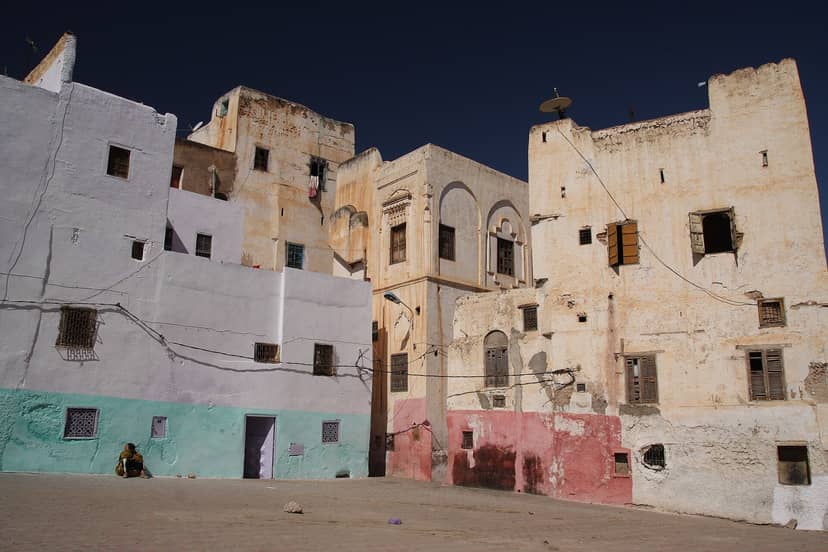
Expect ruins more than restored monuments. A 2014 report found that, apart from the recently restored Aïn Sbilia, the town’s historic monuments were in ruins. A 2026 travel account describes narrow lanes, crumbling stone archways and threshold stones that mark former houses of worship, with traces that are often unmarked. Accounts of the spring itself differ: some say it dried up after the community left, while others describe it as restored and still visited.
A short climb above the town leads to Debdou’s two Jewish cemeteries: an old one said to date back some 900 years, and a newer one with graves from the early 20th century to the 1950s and the tombs of local saints. A cultural centre on the town’s Jewish heritage has been proposed; we have found no report that it has opened.
Visiting tips
Debdou is remote and pairs naturally with Oujda and its Jewish cemetery on a northeast route. Spring and autumn bring the best walking weather. A local guide who knows the mellah and cemetery paths makes the visit far more rewarding, and we arrange one when we plan the trip.
Dress modestly, ask before photographing people or graves, and remember that the saints’ tombs above the town are still visited by pilgrims. We know of no set opening hours or visitor centre for the Jewish sites.
Debdou Mellah: questions travellers ask
Is there anything left of the Jewish quarter?
Yes: the lanes, some archways and doorways, the restored Aïn Sbilia spring and the two cemeteries above town. Most buildings are ruined or altered, so a guide is very helpful.
Do any synagogues survive?
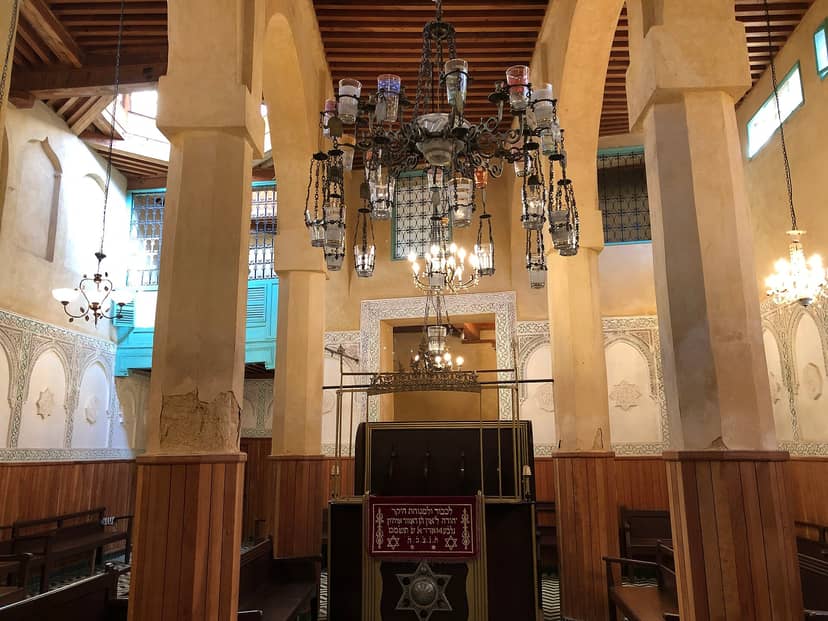
None is known to be restored or open. Traces of former synagogues survive among the houses of the mellah, often unmarked.
Were Debdou’s Jews really from Seville?
Community tradition and rabbinic documents both link the founding families to Seville after the 1391 persecutions. One family tradition also speaks of an earlier arrival from Sicily, and the spring story is a legend.
How do I get to Debdou?
Debdou lies in the hills of Taourirt province, south of the town of Taourirt. It is best reached by private car with a driver, usually on a route that includes Oujda.
Sources. Encyclopaedia Judaica (Jewish Virtual Library); Torah-Box; Telquel (2014); Eurasia Review (2023); moroccanjews.org; JewishGen Cemetery Project; New York Jewish Travel Guide (2026). Researched and fact-checked by Gateway2Morocco, October 2026. Access to religious sites changes; we confirm every visit when we plan your trip.