Mellah · Sefrou, Middle Atlas
Sefrou Mellah: Morocco’s ‘Little Jerusalem’
In the late 19th century Jews made up nearly half the population of Sefrou, a small walled town 27 km south of Fes, and the mellah filled about half of the old city. Its dense, devout community earned it the nickname “Little Jerusalem”. Almost every family emigrated between 1948 and 1968, but the three-storey balconied houses, the restored cemetery and memories kept by returning families make it a moving half-day from Fes.
How the quarter began
Local tradition, repeated on Wikipedia, holds that the first Jews of Sefrou were a Berber group, the Ahel Sefrou, who adopted Judaism some 2,000 years ago, and that a second wave came from the Tafilalt and southern Algeria in the 9th century. These are traditions rather than documented history.
The historian Mohamed Chtatou dates the mellah to the reign of the Marinid sultan Yacoub ben Abdelhaq, in the 13th century. Unusually, it was placed right in the middle of the medina, surrounded by Muslim neighbourhoods. Families arrived over the centuries from the Tafilalt, Debdou and Fes, and Spanish exiles came after 1492.
“Little Jerusalem”
By the late 19th century Jews were almost half of Sefrou’s population. The crowding was intense: about 5,000 Jews lived in the mellah in 1948, and a municipal count in 1950 recorded 6,100 Jews, 12,100 Muslims and 650 Europeans in the town. The nickname reflected both that density and the town’s religious life, its many rabbis among them Rabbi Raphael Moshe Elbaz (1823–1896). By 1935 the Em ha-Banim Talmud Torah network had important branches here, and after independence a rabbi from Sefrou was elected to Morocco’s parliament.
Sefrou also became one of the best-studied Jewish communities in Morocco. Between 1965 and 1971 a team led by the anthropologists Clifford Geertz, Hildred Geertz and Lawrence Rosen worked in the town, and their 1979 book Meaning and Order in Moroccan Society described its Jews as “Moroccan to the core and Jewish to the same core”.
Floods and departure
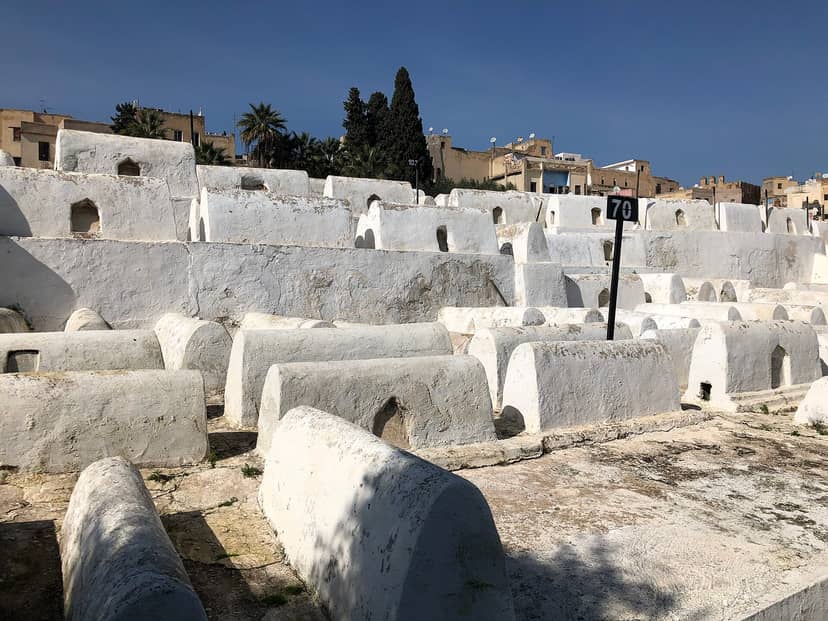
Floods on the river in 1890 and again in 1950 killed many townspeople, Jews among them; the restored Jewish cemetery has memorials to 21 victims of the 1950 flood. Between 1948 and 1968 almost all Jewish families left, mostly for Israel. By 1960 about 3,000 Jews remained, and in the early 1980s the scholar Norman Stillman found only four elderly people of Jewish descent in the mellah.
Walking the mellah today
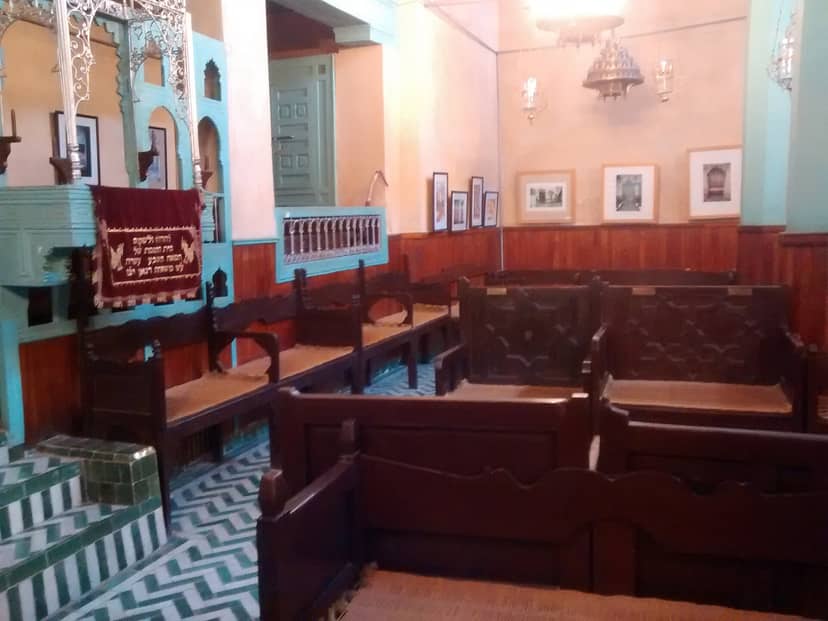
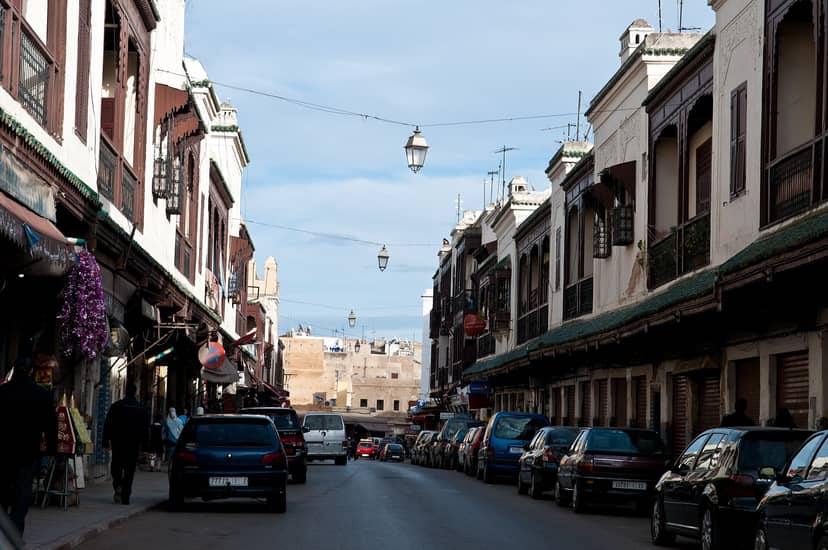
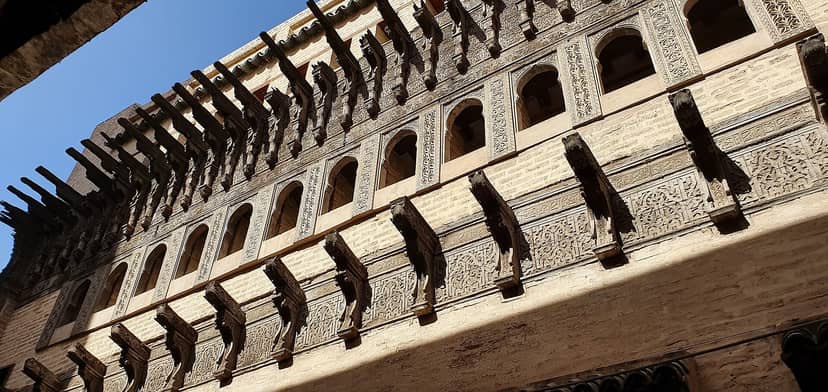
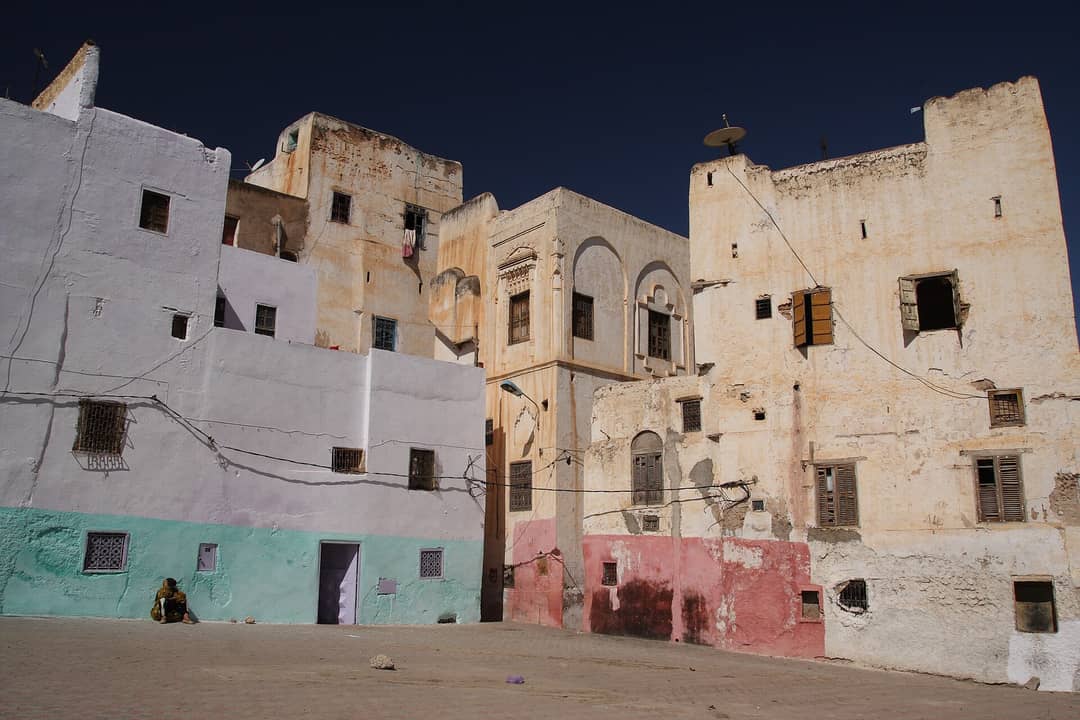
Most mellah houses have three storeys with balconies facing the street, a response to the lack of space. Chtatou describes the quarter as poorly maintained, so expect a working, lived-in neighbourhood with little restoration. Just outside the mellah stands the large, now empty home and school for Jewish orphans once run by the Em Habanim organisation and funded by the London Jewish community, with a simple synagogue inside.
On the flank of Jbel Binna above town is the cave known as Kaf al-Moumen, “the Cave of the Believer”, venerated by both Jews and Muslims. Jews linked it to the tomb of a rabbi, Muslims to a saint of their own, and each community kept its own calendar of visits. Diarna records that Jews who could not travel to the shrine of Rabbi Amram Ben Diwan near Ouezzane prayed to him at a sacred cave in Sefrou.
The Jewish cemetery of Sefrou, restored with funds from former residents, is the other essential stop.
Visiting tips
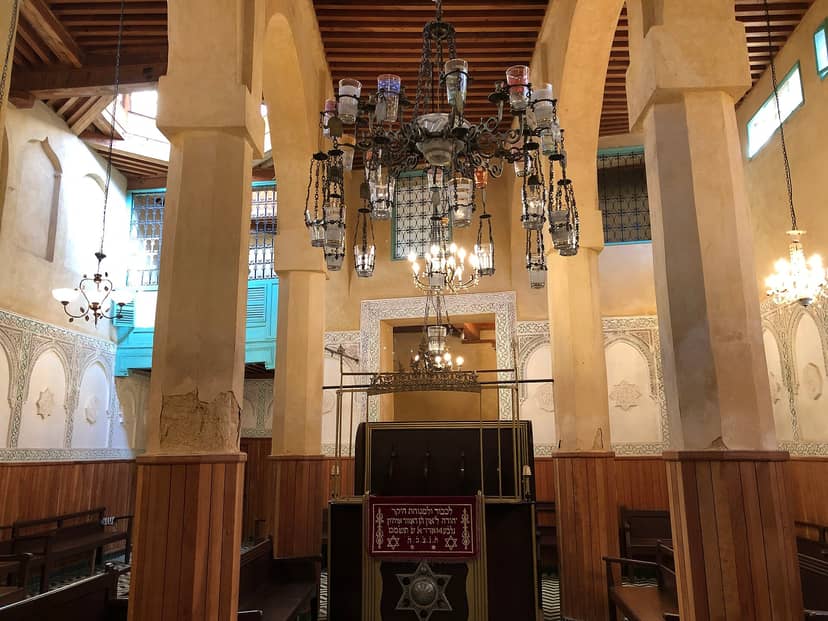
Go with a local guide, who can find the old synagogues and houses and arrange the cemetery visit. A morning in Sefrou fits easily into a stay in Fes. For travellers tracing Sefroui roots, our Jewish roots trip guide explains how we prepare a family search before you arrive.
Sefrou Mellah: questions travellers ask
Why is Sefrou called ‘Little Jerusalem’?
Jews made up almost half the town in the late 19th century and lived crowded into a mellah filling half the old city. The nickname also reflected its many rabbis and strong religious life.
Do any Jews still live in Sefrou?
Almost none. Only four elderly people of Jewish descent were recorded in the mellah in the early 1980s, and one source suggests perhaps one or two families remain in the town.
How far is Sefrou from Fes?
About 27 km south of Fes, an easy half-day or morning trip.
Can you help me find where my family lived in Sefrou?
We can try with a local guide if you bring family names, addresses or photographs, but records of individual houses are not guaranteed.
Sources. moroccanjews.org; Mohamed Chtatou, Eurasia Review (2020); Wikipedia; Jewish Virtual Library; Diarna. Researched and fact-checked by Gateway2Morocco, October 2026. Access to religious sites changes; we confirm every visit when we plan your trip.