History
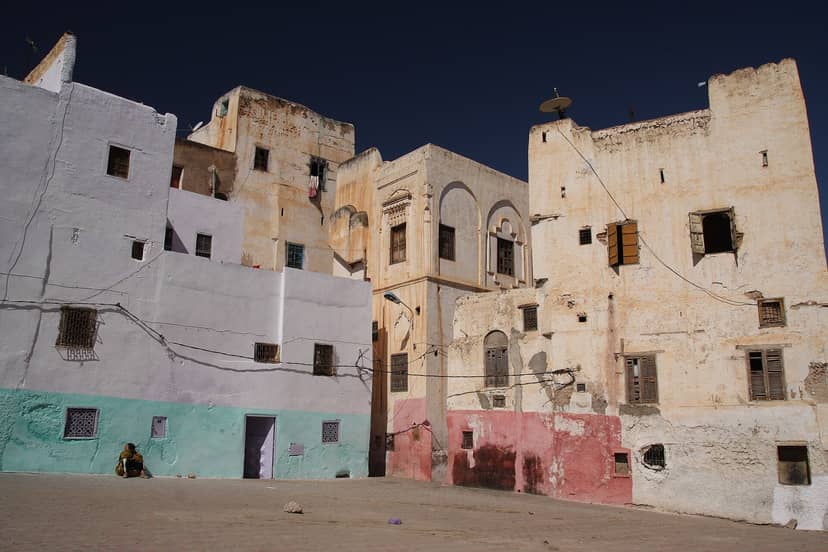
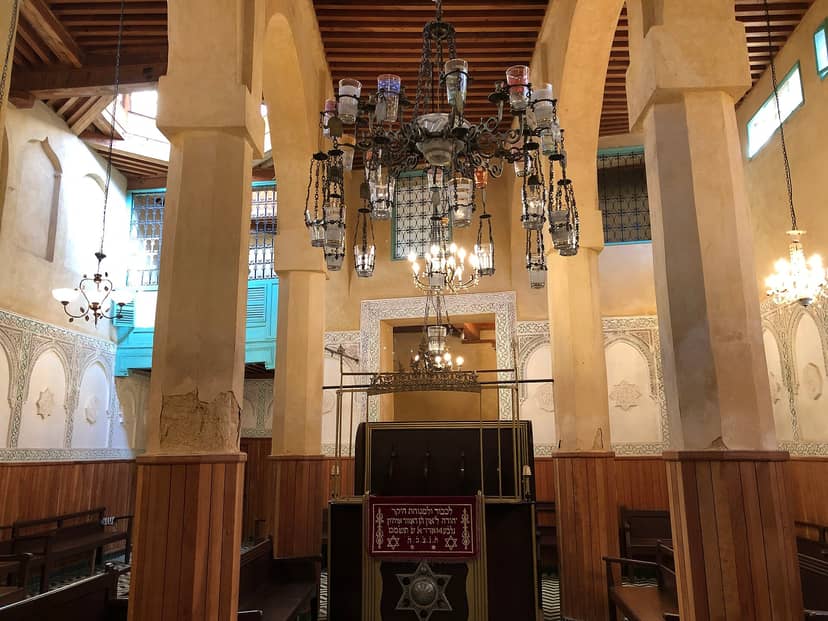
Sefrou was once one of the most Jewish towns in Morocco, and Jewish visitors still call it “Little Jerusalem”. In the late 19th century Jews made up almost half its population. In 1948 about 5,000 Jews lived in the mellah, and almost every family emigrated between 1948 and 1968, mainly to Israel.
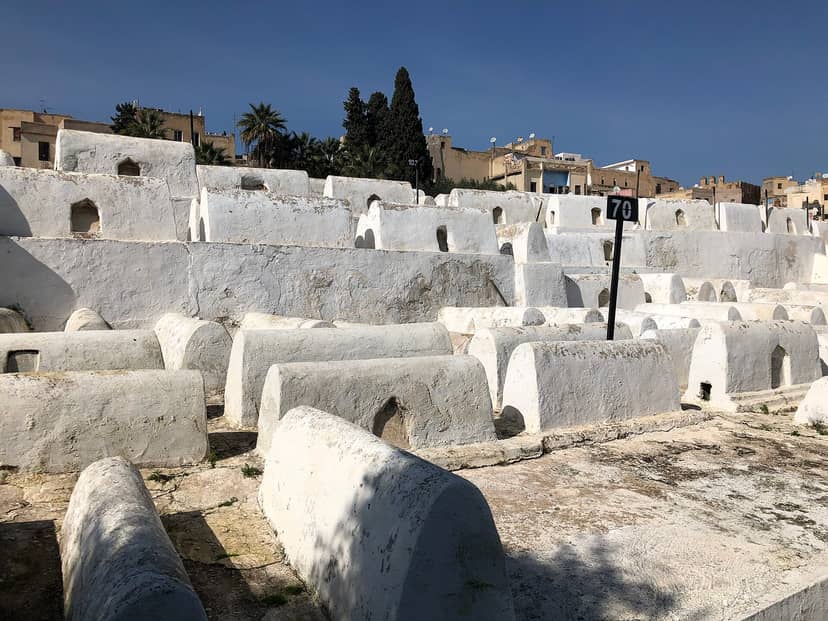
The cemetery’s age has not been documented. Its caretaker estimates it is at least 500 years old, and possibly older; the last burial he recalls took place in 1980.
After the community left, families who had emigrated from Sefrou paid for its restoration. Historic headstones were set inside protective cement monuments, which gives the cemetery its rows of white, raised tombs. A Jewish committee in Fes funds upkeep each year, and in 2023 diaspora families were raising money to build rooms inside the walls for prayer, especially during hilloula gatherings.
What you’ll see
Several venerated rabbis are buried here. The best documented is Rabbi Raphael Moshe Elbaz (1823–1896), born and buried in Sefrou. He was appointed a rabbinical judge at 28 and wrote legal rulings, liturgical poems and songs, and works on mathematics, astronomy and the Moroccan Jewish community. He is counted among the Jewish poets who adopted the Arabic qassida form. His tomb still draws pilgrims.
Other saints honoured here include Eliahou Harroch (also spelled Harraoch), David Arazil and the figures known as the Masters of the Cave. Sources disagree on whether a separate Rabbi Moshe Elbaz is buried here or whether the name refers to Raphael Moshe Elbaz, so ask the caretaker to show you the tombs he knows.
Two groups of monuments record local tragedies: one honours 21 victims of the 1950 flood, and another remembers Jewish merchants killed in a truck accident on the road south to the Tafilalt.
Finding a family grave
Most visitors are descendants. The caretaker, Hmed, learned Hebrew so he could read the names and dates on the stones and lead families to specific graves. In 2023 he had guarded the cemetery for 35 years and estimated more than 1,000 visitors a year.
If you are looking for a relative, bring the full Hebrew and French names, an approximate year of death and any family photograph of the stone. We can contact the caretaker and the Fes committee before you travel, though no one can promise that every grave will be identified. Our Jewish roots trip guide explains how to prepare.
Visiting respectfully
This is an active Jewish cemetery. Dress modestly, walk on the paths between tombs and never on them, and ask before photographing other families’ graves. Placing a small stone on a grave is a common Jewish custom.
The cemetery has no electricity, so visits are limited to daylight hours, and a tip for the caretaker is customary. Lag BaOmer, the date of Rabbi Elbaz’s hilloula, brings pilgrims to his tomb. Pair it with a walk through the Sefrou mellah, or see our Fes Jewish heritage guide for a full day in the region.
Jewish Cemetery of Sefrou: questions travellers ask
How far is Sefrou from Fes?
Sefrou is 27 km south of Fes, so the cemetery fits easily into a half-day trip combined with the Sefrou mellah.
Can you help me find my family’s grave?
We can contact the caretaker and the Fes Jewish committee before you travel. Bring Hebrew and French names and approximate dates; we cannot guarantee that every grave can be identified.
Is the cemetery open every day?
Access is through the caretaker, and visits are limited to daylight because there is no electricity. We confirm the arrangement when we plan your trip.
When is the hilloula?
Rabbi Raphael Moshe Elbaz is celebrated on Lag BaOmer (18 Iyar), when pilgrims gather at his tomb.
Sources. High Atlas Foundation (2023); Moroccan Jewish heritage site moroccanjews.org; Eurasia Review (2020); New York Jewish Travel Guide (2026). Researched and fact-checked by Gateway2Morocco, October 2026. Access to religious sites changes; we confirm every visit when we plan your trip.