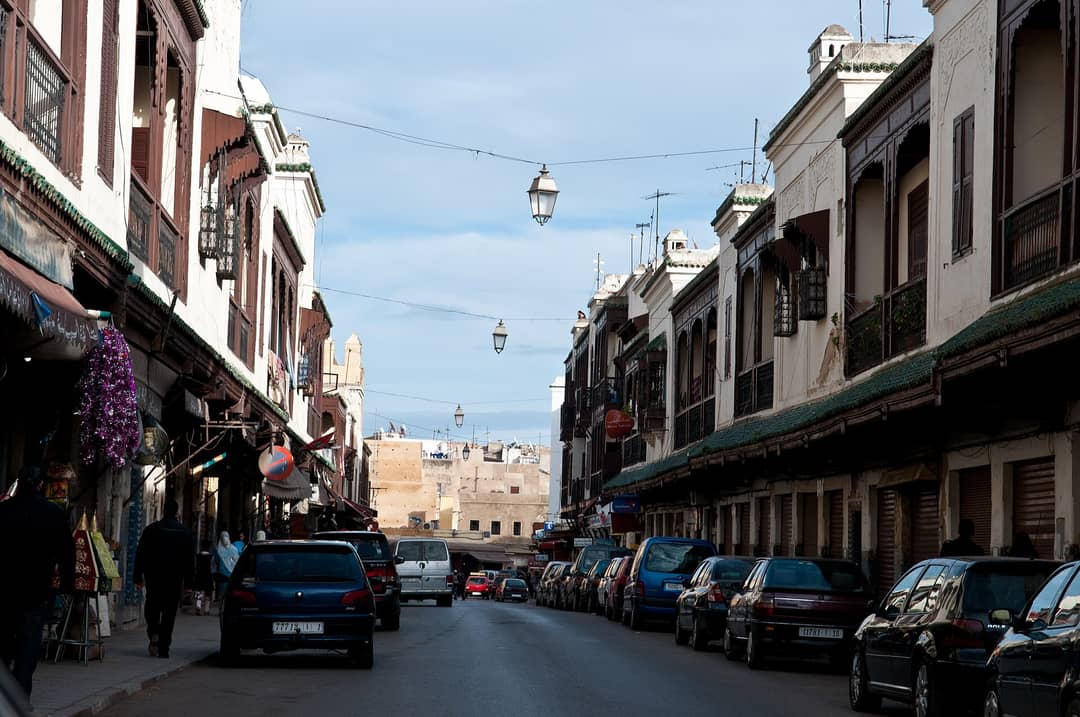
Jewish quarter · Fes el-Jdid
Fes Mellah, the Jewish Quarter of Fes el-Jdid
The Fes Mellah was Morocco’s first mellah, the walled Jewish quarter beside the royal palace in Fes el-Jdid, and the first of the walled Jewish quarters that later appeared across the country. Almost no Jews live here now, but its restored synagogues, its cemetery and a new museum of Moroccan Jewish culture make it the heart of any Jewish heritage visit to Fes. Expect a working neighbourhood of markets and balconied houses, best explored on foot with a guide.
How the quarter began
Jews lived in Fes from its founding, mostly in the old city, Fes el-Bali, around Bab Guissa. In 1276 the Marinid dynasty founded a royal new town, Fes el-Jdid, and at some point the community was moved to a district at its southern edge, first called Hims and later the Mellah.
When that happened is disputed, and the sources give two main datings:
1438. Encyclopaedia Judaica dates the enclosure of the Jews of Fes in a special quarter to 1438, and this is the date given by Moroccan press at the opening of the new museum in October 2026. Many authors link the move to the reported rediscovery of the body of Idris II in 1437, after which the area around his shrine was closed to non-Muslims.
A gradual move from the late 13th century. Historians including Hicham Rguig and Susan Gilson Miller see no single date: some Jews may have settled by the new royal town soon after 1276, with others following in stages. Mohamed Chtatou calls the date controversial, 13th or 15th century.
What is clear is that Jews were still living in Fes el-Bali in the mid-14th century and were well established in the mellah by the end of the 16th. The word mellah comes from the Arabic for salt or a salty place; why the name stuck is itself debated.
Five centuries in the quarter
In the revolt of 1465 the mellah was attacked and thousands were killed. After 1492 and 1497, exiles from Spain and Portugal, the megorashim, arrived and settled alongside the long-established toshavim. In 1790 Sultan Moulay Yazid forced the community out to the Kasbah Cherarda; after his death in 1792 the qadi (judge) ordered the mellah returned to the Jews. In the riots of April 1912 the quarter was pillaged, with more than 100 Jewish victims, and many Jews sheltered in the royal palace next door.
By the late 1940s about 15,150 Jews lived in the mellah, out of some 22,000 in the whole city. Over the following decades families moved to the Ville Nouvelle, Casablanca, France, Canada and Israel. By 1997 about 150 Jews remained in Fes, none of them in the mellah.
Walking the mellah today
The official entrance is Bab el-Mellah, and the streets around it are the oldest part of the quarter. Derb al-Souq, the main market street, divides the Upper Mellah, where wealthier families lived, from the denser Lower Mellah, home to the oldest synagogues, a mikveh (ritual bath), schools and the community’s abattoir. The Upper Mellah had workshops making sqalli (gold thread) and an oven run by Muslim bakers so that bread could be baked on Shabbat.
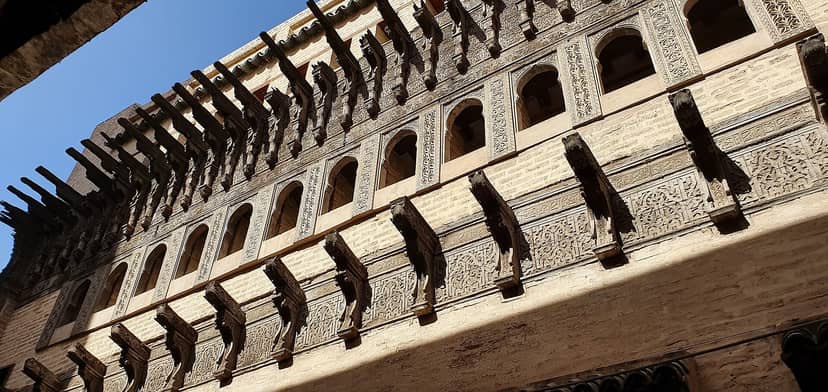
The street most visitors see first is Rue des Mérinides, cut by the French in 1924 between the mellah and the palace wall and now lined with jewellers’ and craft shops. Look up at the open wooden and iron balconies: unlike the closed façades of the Muslim medina, many mellah houses face the street, though this is a relatively recent feature. The houses are private homes today.
Synagogues and sites inside
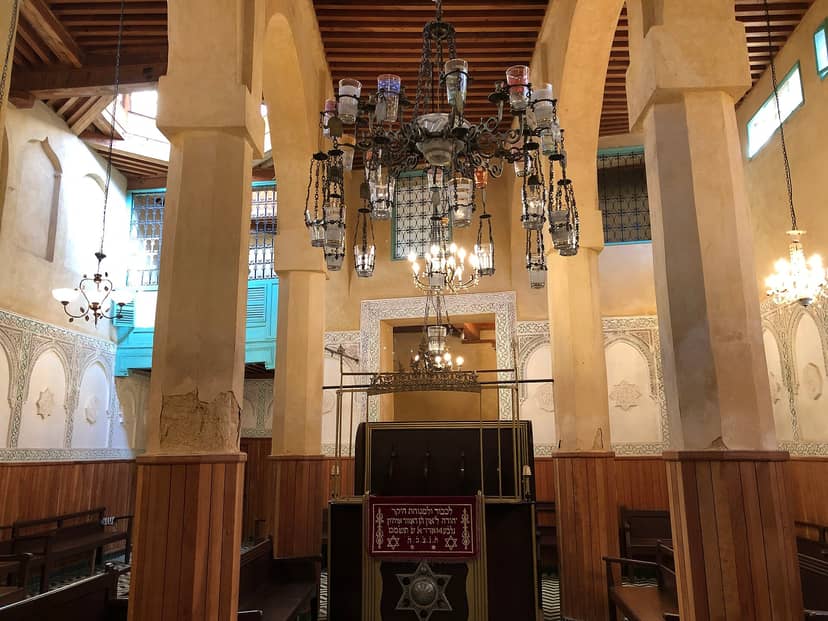
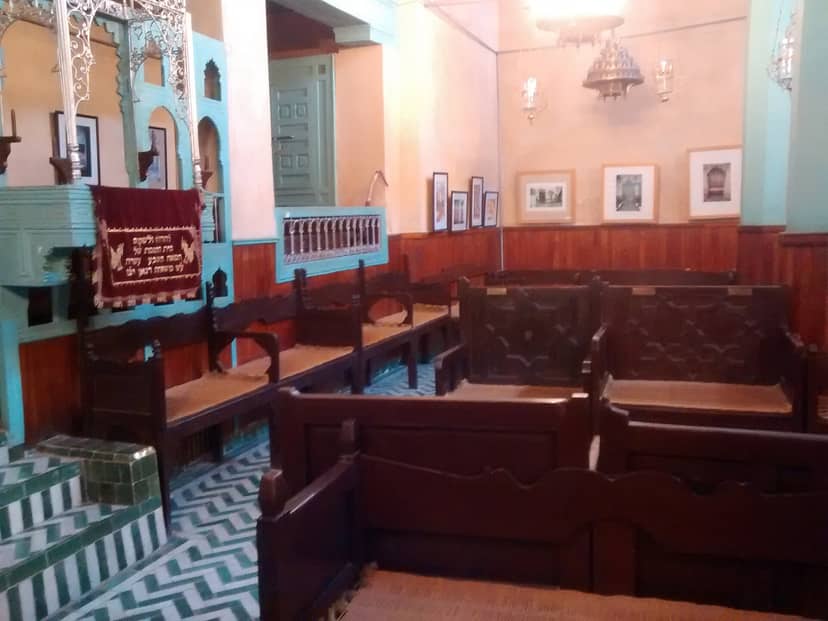
By the end of the 19th century the mellah had about fifteen synagogues, most of them rooms in private houses. Two have been restored and can be visited by arrangement: the Ibn Danan Synagogue, with its carved ark and a mikveh beneath it, and Slat al-Fassiyin, the synagogue of the pre-1492 toshavim, reopened in 2013.
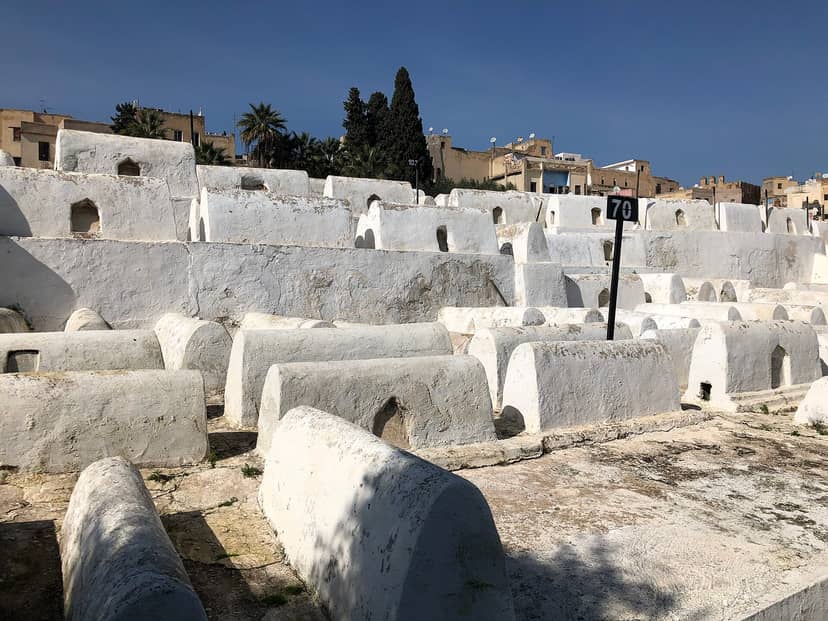
The Jewish Cemetery of Fes, a hillside of whitewashed tombs on the quarter’s edge, holds the shrines of Lalla Solica and Rabbi Yehuda Ben Attar, with a small museum in a former synagogue at one corner. The new Museum of Moroccan Jewish Culture, inaugurated on 12 October 2026, is reported to be in the heart of the mellah.
Visiting tips
The streets are public, but the synagogues are opened by guardians, so a guide who knows the Jewish history is what gets you inside. Allow half a day, more with time at the cemetery. Plan synagogue and cemetery visits for a weekday rather than Shabbat or a Jewish holiday. If your family came from Fes, see our guide to planning a Jewish roots trip in Morocco.
Beyond the mellah
In the old city, tradition places the house of Maimonides opposite the Bou Inania Madrasa. Our Fes Jewish heritage guide adds the Ville Nouvelle synagogues and the community centre.
Fes Mellah: questions travellers ask
When was the Fes mellah founded?
The date is disputed. Encyclopaedia Judaica and Moroccan press give 1438, while historians such as Hicham Rguig and Susan Gilson Miller see a gradual move beginning after Fes el-Jdid was founded in 1276.
Do Jews still live in the Fes mellah?
Very few, if any. By 1997 about 150 Jews remained in Fes and none lived in the mellah, whose residents today are predominantly Muslim.
Is the Fes mellah safe to visit?
It is a busy working neighbourhood that visitors walk every day; take the usual care with valuables, as anywhere in a medina.
Do I need a guide?
Not to walk the streets, but a guide who knows the Jewish history can arrange access to the synagogues and point out what survives.
Sources. Wikipedia (Mellah of Fez; Mellah); Jewish Virtual Library / Encyclopaedia Judaica; Eurasia Review (Mohamed Chtatou, 2025); Medias24 and Hespress (2026); Visiting Jewish Morocco. Researched and fact-checked by Gateway2Morocco, October 2026. Access to religious sites changes; we confirm every visit when we plan your trip.