Synagogue · Marrakech mellah
Lazama Synagogue (Slat al-Azama), Marrakech
Lazama, properly Slat al-Azama, is a working synagogue in the Marrakech mellah, built into a courtyard house in the old Jewish quarter. Community tradition links it to the Jews expelled from Spain in 1492, and the rooms around its courtyard now hold a small museum of Moroccan Jewish life. For most travellers it is the first stop in Jewish Marrakech, and the easiest one to visit.
The story
The synagogue’s name is tied to the Megorashim, the Jews expelled from Spain in 1492 who settled across Morocco. A popular explanation reads Al Azama as “those who ran away from Spain”. That reading is folk etymology, repeated by guides and blogs, and not a documented derivation.
Tradition also holds that the synagogue was founded in 1492. That year has not been verified, and it sits awkwardly with the city’s history: the Marrakech mellah was only created from 1557–58, when the Saadian sultan Abdallah al-Ghalib moved the city’s Jews into a walled quarter just outside the walls of the El Badi Palace. The congregation may carry older Spanish memories, but the building you see today is the result of later rebuilding and restoration.
Notes made by the architect Yaacov Finkerfeld in the 1950s describe a prayer hall divided into two naves by four columns, with no space for women. The east side was renovated after that, and a women’s gallery (ezrat nashim) was added. This is an unusual arrangement in Morocco, where women traditionally sat in a separate room at the entrance.
Inside the synagogue
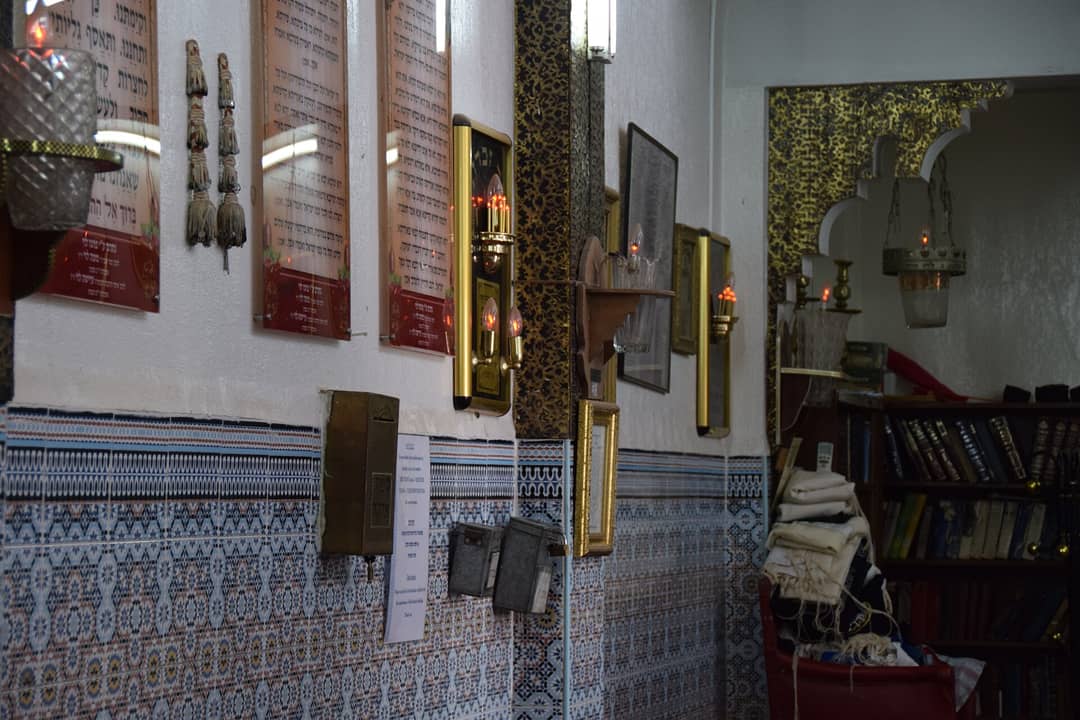
Like many synagogues in the mellahs of Marrakech and Fes, Lazama is part of a larger private house arranged around a central courtyard, the plan Moroccans call a riad. The courtyard has a fruit tree, and the blue-and-white walls carry zellige (glazed mosaic tilework) with Star of David patterns.
In the prayer hall, the heikhal (the ark that holds the Torah scrolls) stands against the eastern wall. The original wooden ark was replaced by the marble one you see now. Wooden chairs, framed ketubot (marriage contracts), tzedakah (charity) boxes and old photographs fill the room. A yeshiva (study hall) occupies the upper floor, which is closed to the public.
The rooms around the courtyard form the museum. Visitors in 2023 and 2025 described photographs of mellah life, documents, a room on Moroccan Jewish music, a recreated schoolroom with handwritten books, and historic scrolls, jewellery, books and portraits with short films. One 2025 visitor noted that the exhibition tells the community’s past well and says little about its present. A small shop sells Judaica, including shofars.
After the 2023 earthquake
The Al Haouz earthquake of 8 September 2023 damaged Lazama and the surrounding Jewish quarter. The building stayed standing and daily prayers continued in the days that followed, while the community launched a fundraising campaign to repair synagogues, cemeteries and the quarter. In June 2025 Lazama was operating as both synagogue and museum, with its upper floor closed.
Visiting today
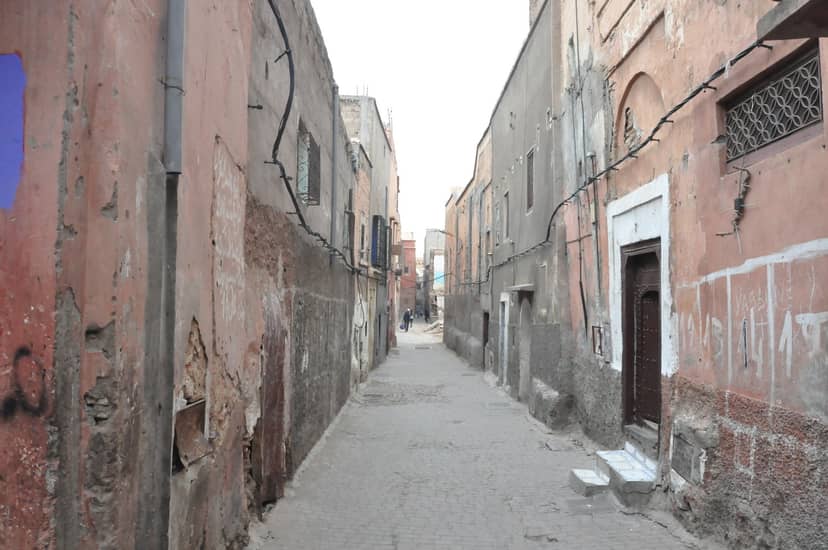
Lazama is on Derb Talmud Torah (signed Talmoud Thora on some maps), facing the jewellers’ market at the mellah entrance. You reach it on foot through narrow residential lanes; cars and taxis stop at the edge of the quarter. Admission was 50 dirhams in June 2025. Opening hours are not reliably published, so we confirm them when we plan your day.
Marrakech has a small Jewish community today, around 200 people across the whole city, and a 2023 report describes Lazama as one of just two synagogues remaining in the mellah, the other being Slat al-Fassiyine. Because Lazama is a house of prayer first, plan sightseeing for weekdays and treat Shabbat and Jewish holidays as times for worship.
Nearby in the mellah
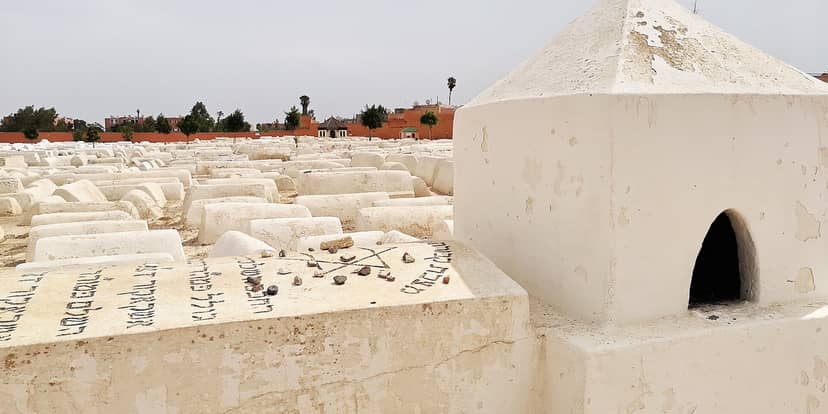
Lazama is the natural start of a walk through the Mellah of Marrakech. Place des Ferblantiers, the jewellers’ market and Slat al-Fassiyine are a few minutes away, and the Miâara Jewish Cemetery lies on the quarter’s eastern edge. The Bahia and El Badi palaces border the mellah, so the visit fits easily into a day in the medina. Our Jewish Marrakech guide covers the rest of the city.
Lazama Synagogue: questions travellers ask
Can non-Jewish visitors go inside Lazama?
Yes. Lazama works as a museum as well as a synagogue and receives visitors of every background; modest dress is expected.
Does Lazama really date from 1492?
1492 is the community’s tradition, linking the synagogue to the Spanish expulsion. The mellah itself was created from 1557–58 and the present building reflects later restorations, so the construction date is not documented.
Was Lazama damaged in the 2023 earthquake?
It was damaged but stayed standing, and prayers continued. A June 2025 report describes it working as a synagogue and museum.
Can I attend a service?
Lazama is an active synagogue with regular prayers. We can ask the community about service times, including Shabbat, when we plan your trip.
Do I need a guide?
You can visit on your own, but the mellah lanes are confusing and a guide who knows the Jewish history adds a great deal. We arrange one as part of a private trip.
Sources. Wikipedia (Slat al-Azama Synagogue); Jewish News (2025); The Times of Israel blog (2023); Ynet (2023); Visiting Jewish Morocco; Wikipédia (Mellah de Marrakech). Researched and fact-checked by Gateway2Morocco, October 2026. Access to religious sites changes; we confirm every visit when we plan your trip.