Jewish quarter · Marrakech medina
The Mellah of Marrakech: Jewish Quarter Guide
The mellah is the old Jewish quarter of the Marrakech medina, created by the Saadian sultans in the 16th century beside their palace district. Until 1920 it was the largest Jewish quarter in Morocco. Only a handful of Jews live there now, but its synagogues, cemetery and market streets remain, and in 2017 it officially took back the name El Mellah.
How the quarter began
From 1557 the Saadian sultan Abdallah al-Ghalib moved the city’s Jews into a walled quarter just outside the walls of the El Badi Palace. Sources give the start as 1557 or 1558, and one historian dates its construction to 1567. According to the historian Michel Abitbol, the quarter was called the Mellah only from 1639, after the name already used in Fes, and it was completed and walled by 1662. Its gates were closed at night. Because Fes had the first mellah, Marrakech’s is often described as Morocco’s second.
In the 16th and 17th centuries the mellah was one of the city’s main commercial districts. In 1852–53, building work on its southern side pushed the quarter eastward and produced the street plan you walk today.
The community was large and learned. The city had flourishing yeshivot (Torah academies) in the 18th century, and families such as the Corcos and Pinto produced well-known rabbis and community leaders. The Jewish Virtual Library records about 15,700 Jews in Marrakech in 1912, 25,646 in 1936 and 18,500 in 1951; these are figures for the whole city. It also notes that until 1920 the Marrakech quarter was the largest in Morocco, before Casablanca overtook it.
From the late 1940s most families left, for Israel, France and Canada, while others moved to Casablanca. Around 200 Jews live in Marrakech today, and only a handful of them in the old quarter.
Walking the mellah today
The mellah lies on the southeast side of the medina, between the Bahia and El Badi palaces. Its heart was Place des Ferblantiers (Tinsmiths’ Square), once ringed by jewellers, goldsmiths and weavers. The square has been fully restored and is now busy with visitors. The covered jewellery market at the mellah entrance still includes Jewish-owned shops.
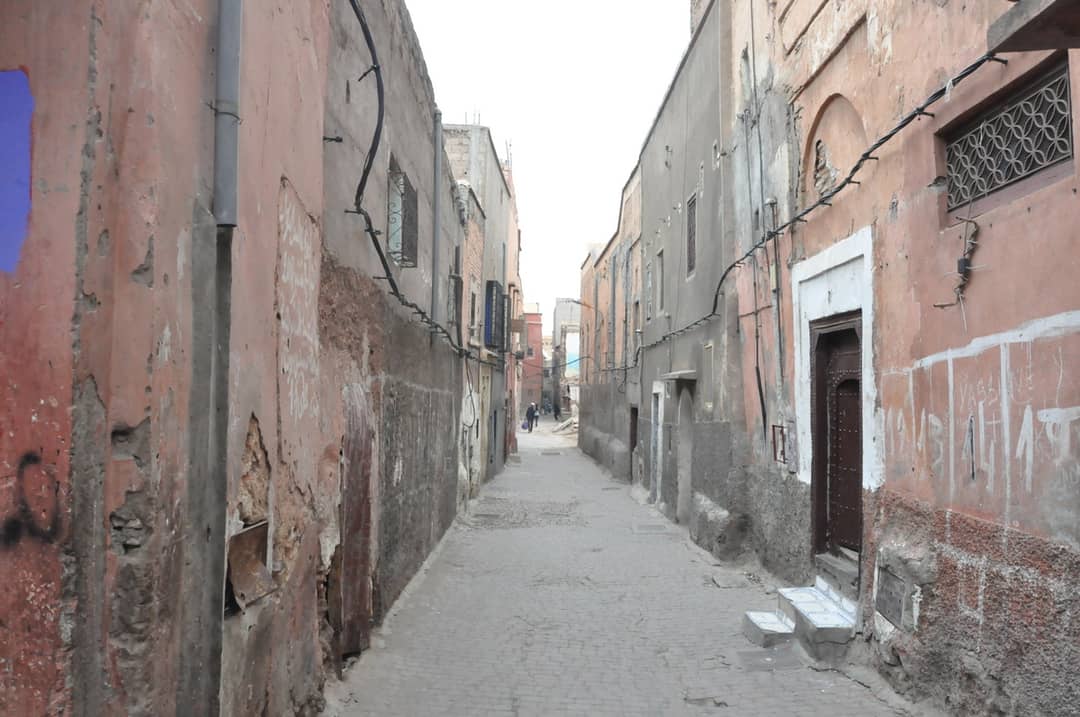
Past the square the lanes narrow into residential derbs (alleys). Under a programme announced by King Mohammed VI in 2016, Jewish street names were restored and more than US$20 million was allocated to repairing houses, streets and synagogues. In early 2017 the quarter officially regained the name El Mellah, replacing Hay Essalam, a name given in the 1990s. Look out for the restored street signs as you walk.
The Al Haouz earthquake of 8 September 2023 damaged houses and synagogues in the quarter, and the community launched a fundraising campaign for repairs. The mellah remains open, and in June 2025 a visitor found Lazama working and restoration under way around the cemetery.
Synagogues and sites inside
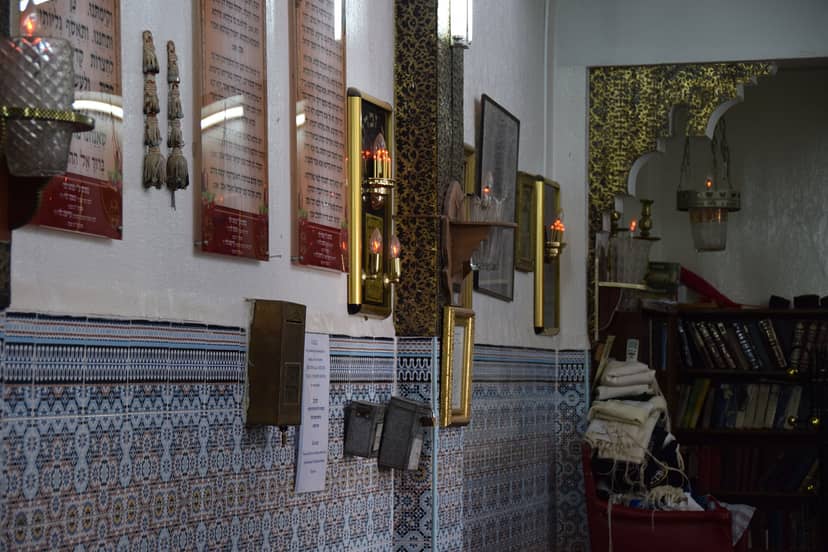
Lazama Synagogue (Slat al-Azama) is an active synagogue and small museum built around a courtyard, facing the jewellers’ market. Tradition links it to the exiles from Spain.
Slat al-Fassiyine is the second synagogue still standing in the mellah. Built in 1840, it was severely damaged in the 2023 earthquake and its Torah scrolls were moved out, so ask us about access before you plan around it.
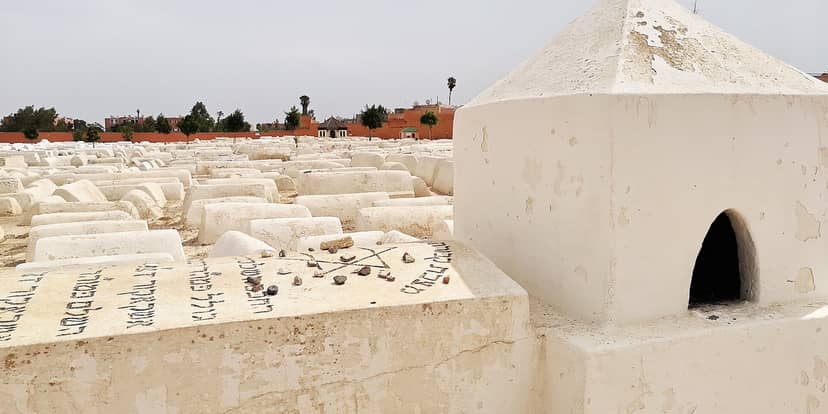
The Miâara Jewish Cemetery, on the quarter’s eastern edge, holds more than 20,000 graves and the mausolea of revered rabbis, among them Rabbi Hanania HaCohen and Rabbi Pinhas HaCohen.
Visiting tips
Go in the morning, before the heat and the tour groups. A guide is worth having here: many former Jewish homes look like any other house, and the quarter is easy to get lost in. Lazama, the jewellers’ market and the cemetery make a comfortable walk of two to three hours.
Dress modestly for the synagogue and cemetery, and bring a head covering. Synagogues are for prayer on Shabbat and Jewish holidays, so plan interiors for weekdays. For kosher meals in the city, see our kosher travel guide, and for general questions our guide on whether Morocco is safe for Jewish travellers.
Beyond the mellah
Today’s community life centres on Beth El Synagogue in the Gueliz district of the new town. Within easy reach of Marrakech are the shrines of Rabbi Shlomo Bel Hench in the Ourika Valley and Rabbi Habib Mizrahi at Ait Ourir, both places of pilgrimage. Our Jewish Marrakech guide brings them together.
Mellah of Marrakech: questions travellers ask
Do Jews still live in the Marrakech mellah?
Only a handful. Around 200 Jews live in Marrakech as a whole, and much of community life now centres on Beth El in Gueliz.
When was the mellah founded?
Jews were moved into the walled quarter from 1557, under the Saadian sultan Abdallah al-Ghalib. Some sources give 1558 or 1567, and the name Mellah is recorded from 1639.
How long do I need?
Two to three hours covers Lazama, the jewellers’ market and the Miâara cemetery at an easy pace. Allow longer if you are looking for a family grave.
Was the mellah damaged in the 2023 earthquake?
Yes, houses and synagogues were damaged and Slat al-Fassiyine was hit hard. The quarter remains open, and Lazama was working in June 2025.
Can I walk it without a guide?
Yes, it is a public neighbourhood. A guide who knows the Jewish history helps you find what is easy to miss, and we arrange one on our private trips.
Sources. Jewish Virtual Library; Wikipédia (Mellah de Marrakech, citing Abitbol); Wikipedia (Mellah of Marrakesh); The Times of Israel blog (2023); Ynet (2023); Jewish News (2025); Visiting Jewish Morocco. Researched and fact-checked by Gateway2Morocco, October 2026. Access to religious sites changes; we confirm every visit when we plan your trip.