Cemetery · Marrakech mellah
Miâara Jewish Cemetery, Marrakech
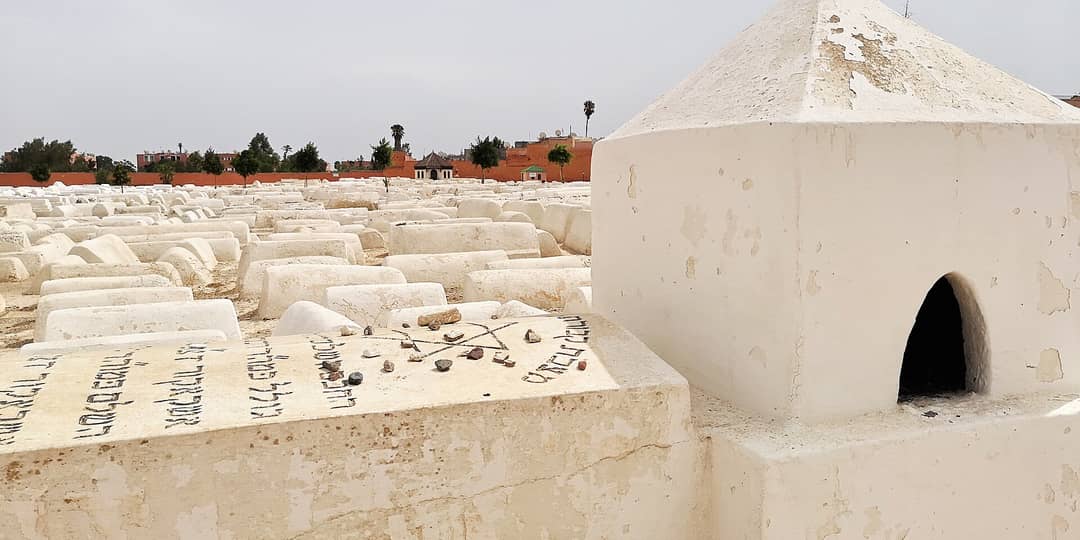
The Miâara is the historic Jewish cemetery of Marrakech, on the edge of the mellah and one of the largest Jewish cemeteries in Morocco. More than 20,000 whitewashed graves fill it, with the mausolea of revered rabbis along its walls. It is still in use and cared for by the community, and for families with Marrakech roots it is often the most moving stop of the trip.
History
The cemetery has occupied the same ground since the Saadian period, when the mellah was laid out from 1557. How much older it is remains unclear: sources date its first burials anywhere from the 12th to the 16th century, and the community counts more than 20,000 tombs from the 14th century to the present. Published figures for its area disagree so widely that we do not quote one.
The name Miâara (also written Mi’ara or Mihara) is said to come from the street where the entrance stands. In Hebrew it is called Bet Mo’ed leKol Hai, “the house appointed for all the living”.
In recent years the cemetery has been restored. It is maintained by the Jewish community of Marrakech together with the Kanami family, third-generation caretakers (brothers Khalid and Otman in 2023), and a small exhibition at the site explains local Jewish history and the restoration. In June 2025 a visitor found extensive restoration work in the area.
What you’ll see
Most graves are low, whitewashed cement tombs set close together, many of them from the last 50 or 60 years. The cemetery is divided into separate sections for men, women and children, following Jewish custom. A 2023 visitor also describes burials laid in three layers.
Two details are widely repeated but not firmly documented: that the blue-painted graves near the entrance belong to Kohanim, descendants of the priestly families, and that one corner holds about 6,000 children who died in a 19th-century typhus epidemic. Treat both as reported tradition.
Eleven mausolea of prominent rabbis stand on the perimeter. Among the rabbis buried here are Rabbi Hanania HaCohen; Rabbi Pinhas HaCohen, who according to tradition saved the life of Pasha Thami El Glaoui; Rabbi Isaac Delouya; Rabbi Abraham Azulai; Rabbi David Hazan; and Rabbi Shlomo Tammuzat. Several of these tombs hold an annual hilloula, the celebration at a tzaddik’s (righteous sage’s) grave on the anniversary of his death. See our page on the tomb of Rabbi Pinhas HaCohen.
Finding a family grave
Many families come looking for a grandparent or great-grandparent. Older stones can be worn or hard to read, and we cannot promise that a record exists for every grave. What helps most is to send us, before you travel, everything you have: full names, Hebrew names and fathers’ names, approximate years of death, and any old photograph of the stone or the funeral. We pass this to the community and caretakers ahead of your visit, and allow unhurried time on the day. Our Jewish roots trip guide explains how we prepare.
Visiting respectfully
The Miâara is an active cemetery where families still mourn. Dress modestly, and men should cover their heads. Keep to the paths between graves and never step or sit on a tomb. Do not photograph mourners or people at prayer. Travellers who are Kohanim traditionally avoid entering cemeteries, so plan around this if it applies to you.
Atlas Obscura reported a 10-dirham entry fee in 2018, with a donation for upkeep expected; check current practice when you arrive. Opening hours are not published, and we plan visits for weekdays, away from Shabbat and Jewish holidays.
Miâara Jewish Cemetery: questions travellers ask
Can non-Jews visit the Miâara cemetery?
Yes. It receives visitors of all backgrounds, Jewish and non-Jewish, who dress modestly and behave as they would at any cemetery.
Can you find my family’s grave?
We cannot promise that a record exists, but with names, Hebrew names and approximate dates we ask the community and caretakers in advance and give you time to search on the day.
Is it open on Saturday?
Opening hours are not published. We plan cemetery visits for weekdays, away from Shabbat and Jewish holidays.
Which rabbis are buried here?
Among them are Rabbi Hanania HaCohen, Rabbi Pinhas HaCohen, Rabbi Isaac Delouya, Rabbi Abraham Azulai, Rabbi David Hazan and Rabbi Shlomo Tammuzat, several in mausolea along the walls.
Sources. Wikipedia (Jewish cemetery, Marrakesh); The Times of Israel blog (2023); Wikipédia (Mellah de Marrakech); Jewish News (2025); Atlas Obscura; Visiting Jewish Morocco. Researched and fact-checked by Gateway2Morocco, October 2026. Access to religious sites changes; we confirm every visit when we plan your trip.