
How the street came about
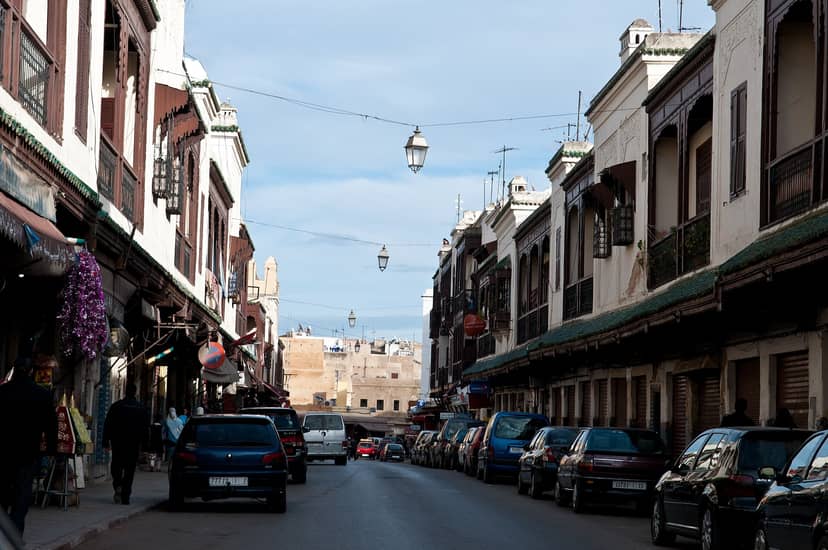
In 1924 the French authorities demolished a row of modest shops and stables on the northern edge of the mellah to build a road for vehicles between the Jewish quarter and the southern wall of the Royal Palace. First called Rue Boukhessissat (also written Bou Khsisat), it was later renamed Rue des Mérinides, after the Marinid dynasty that founded Fes el-Jdid in 1276.
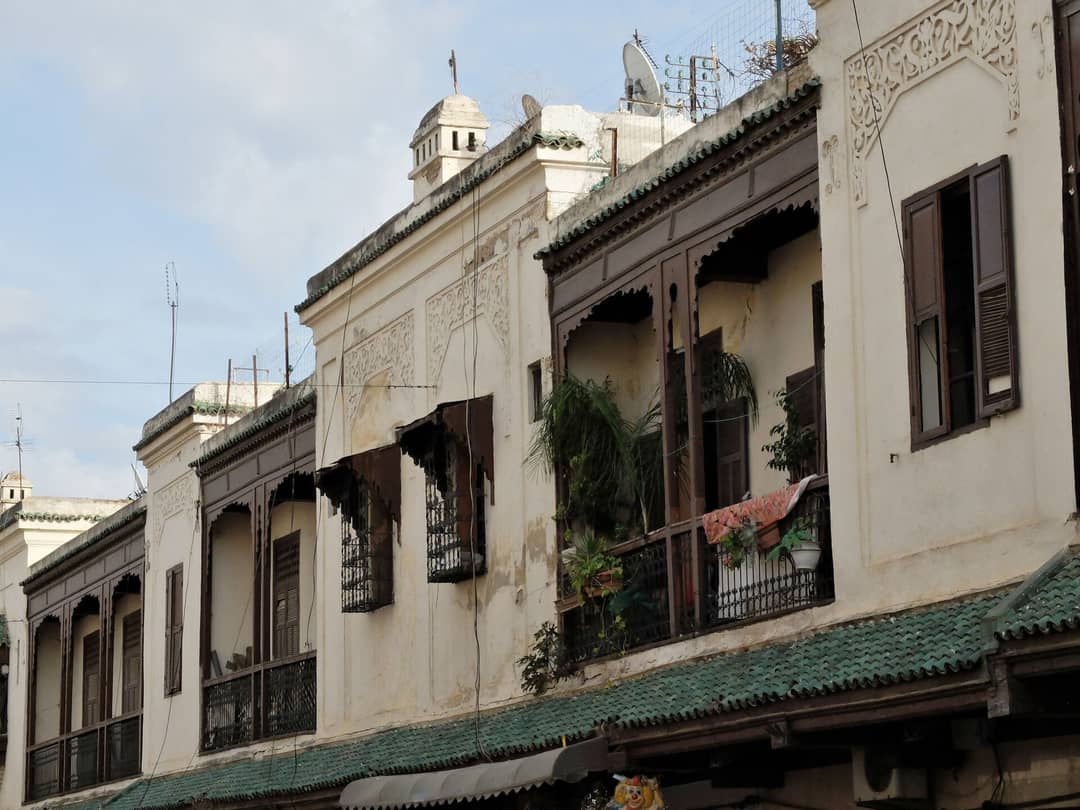
The old shops were replaced with more showy boutiques built in the style of the mellah’s Jewish houses, with open balconies and decorated fronts. Some of the balconies are quite ornate, with sculpted motifs, and the street still keeps this character today.
What to look for
The balconies are the point. Houses in the mellah are known for their open, street-facing balconies and many windows, while traditional houses elsewhere in Fes show almost nothing to the street. The open style is relatively recent: older mellah houses follow the same inward-looking plan as their Muslim neighbours. Both kinds are built around an interior courtyard with a gallery, and wealthier homes could have carved wood and stucco inside.
The houses are private homes, many with shops on the ground floor. Admire them from the street and ask before photographing residents.
Behind the street
Rue des Mérinides is the front of a much larger quarter, best explored with a guide. Just behind it runs Derb al-Souq, the mellah’s historic main street and market, which divides the Upper Mellah from the Lower Mellah. The Upper Mellah grew around Derb al-Fouqi, the “High Street”, home to wealthier families, many of Iberian origin. Its best-known residence was the Ben Simhon House. The quarter even had a Muslim-run oven so that bread could be baked on Shabbat.
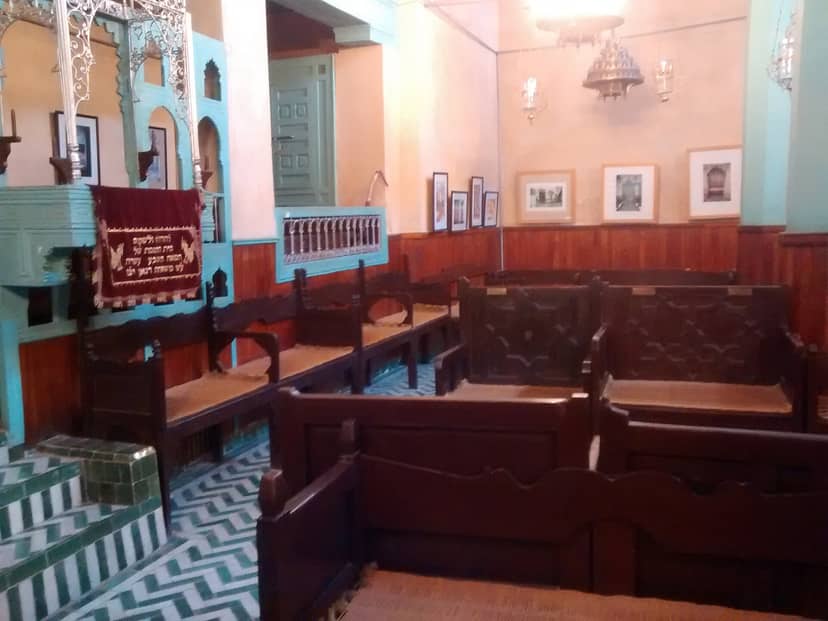
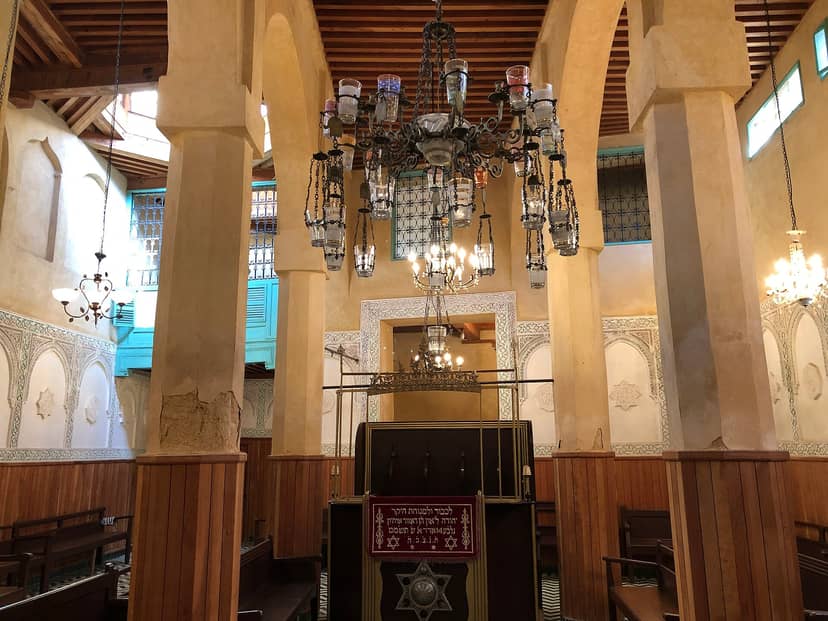
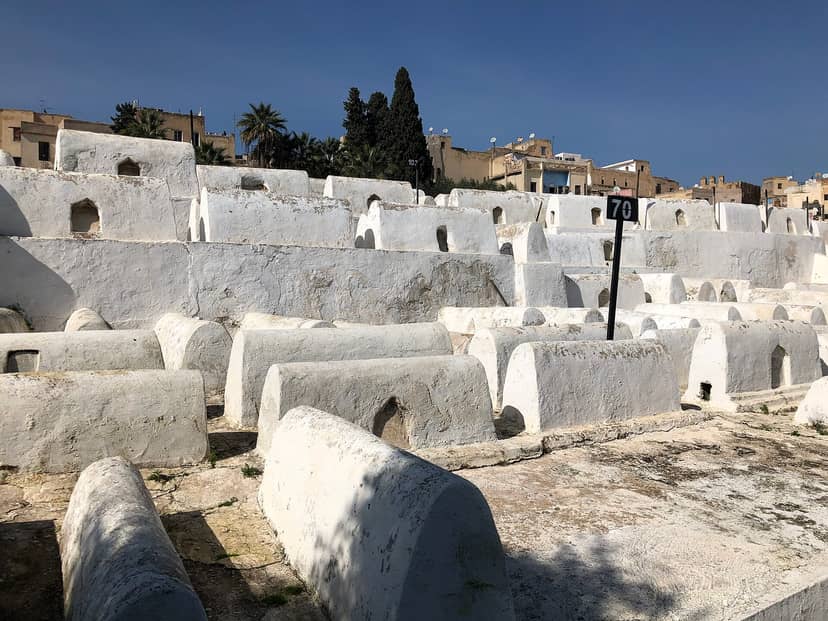
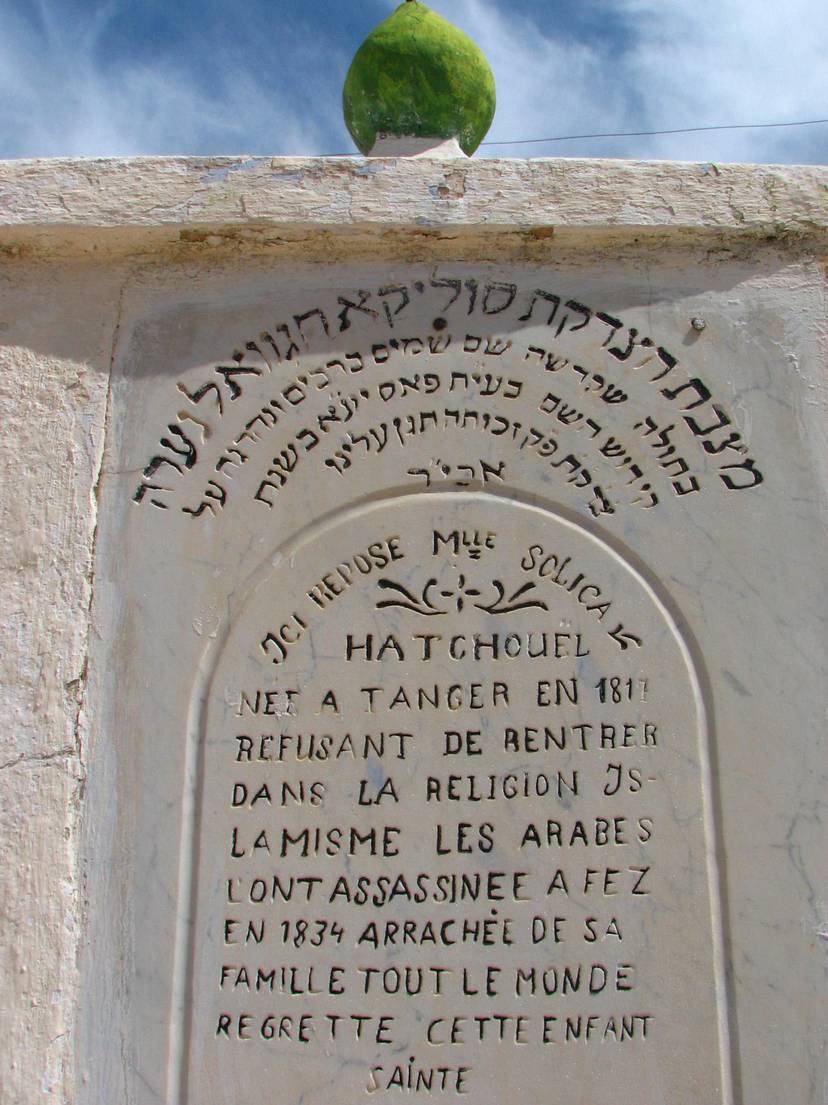
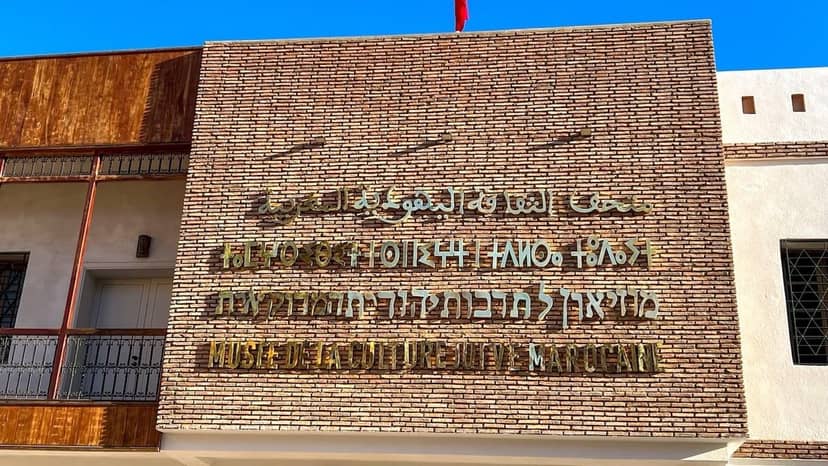
In the Lower Mellah are the Ibn Danan Synagogue, believed to date from the late 17th century, and the Slat al-Fassiyin, reputed to be the oldest synagogue in the mellah. The Jewish cemetery fills one corner of the quarter, and the new Museum of Moroccan Jewish Culture opened in the mellah in October 2026.
Visiting tips
The street runs along the palace wall between Place des Alaouites, by the gates of the Royal Palace, and Bab Semmarine, the gate of Fes el-Jdid at its eastern end. Morning light is good for the façades. Walk it at the start of a mellah visit for orientation, then head into the lanes behind with a guide who can open the synagogues. Our page on the Fes mellah covers the quarter as a whole.