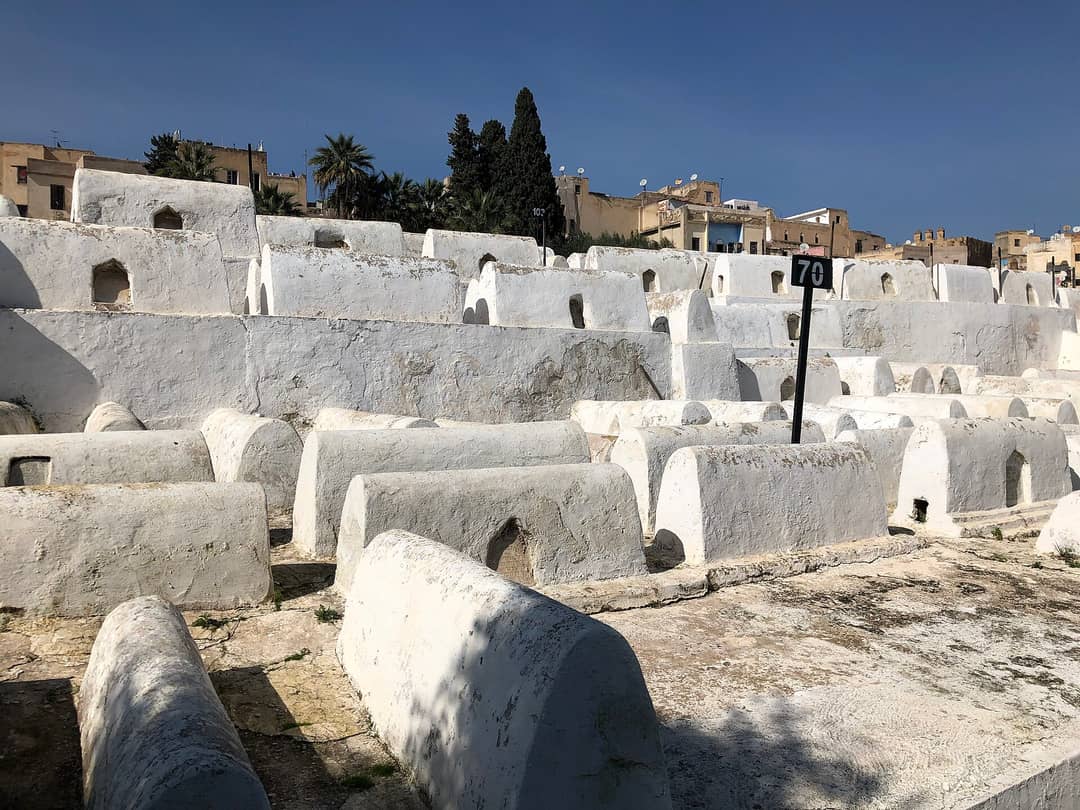
Cemetery · Fes mellah
Jewish Cemetery of Fes
The Jewish Cemetery of Fes is a slope of tightly packed, whitewashed tombs on the edge of the mellah, holding generations of the city’s rabbis, judges and families. It is the setting of two of Morocco’s best-known Jewish shrines, those of the martyr Lalla Solica and the sage Rabbi Yehuda Ben Attar. Under restoration since 2015 and repainted in 2019, it is a central stop on any Jewish heritage visit to Fes.
History
The cemetery you see today dates from the 19th century. The community’s first burial ground was outside Bab Guissa in the old city; a later one, on land given by the Marinid princess Lalla Mina in the 15th century, lay at the edge of the mellah near the palace. During Moulay Yazid’s persecution of 1790–1792 the cemetery and its contents were moved to the Bab Guissa area for a time. The old cemetery beside the palace wall was then cleared, on the sultan’s orders in 1894 according to some historians, or during French works around 1912 according to others, and its site became today’s Place du Commerce. Some older tombs and remains were moved to the present cemetery.
The present ground existed from the early 19th century but stayed largely empty in its eastern parts until the 20th century, when it filled to its current extent. It was run by the Hevra Kadisha, the burial society, whose members also served as the community’s firefighters. Estimates of its size differ: one guide gives nearly 13,000 burials, a 2022 report about 22,000 tombs.
What you’ll see
Rows of above-ground tombs, inscribed in Hebrew, step down the hillside among tiled fountains, palms and orange trees, with apartment buildings closing in at the edges. Before 2019 many were grey and cracked; that year they were repainted a brilliant white.
Look for:
Lalla Solica. The tomb of Sol Hachuel, a girl from Tangier executed in Fes in 1834 at 17 for refusing to convert to Islam, is easy to spot by its coloured roof and three small turrets. Jews and Muslims both visit it.
Rabbi Yehuda Ben Attar (1655–1733), chief judge of the Fes rabbinical court, whose tomb is covered in mint-green and black tiles. Tradition says a sultan had him thrown to lions, who sat quietly around him like students.
The chief rabbis’ tomb house, a building that holds only the graves of chief rabbis, and the grave of a victim of the 1912 pillage of the mellah.
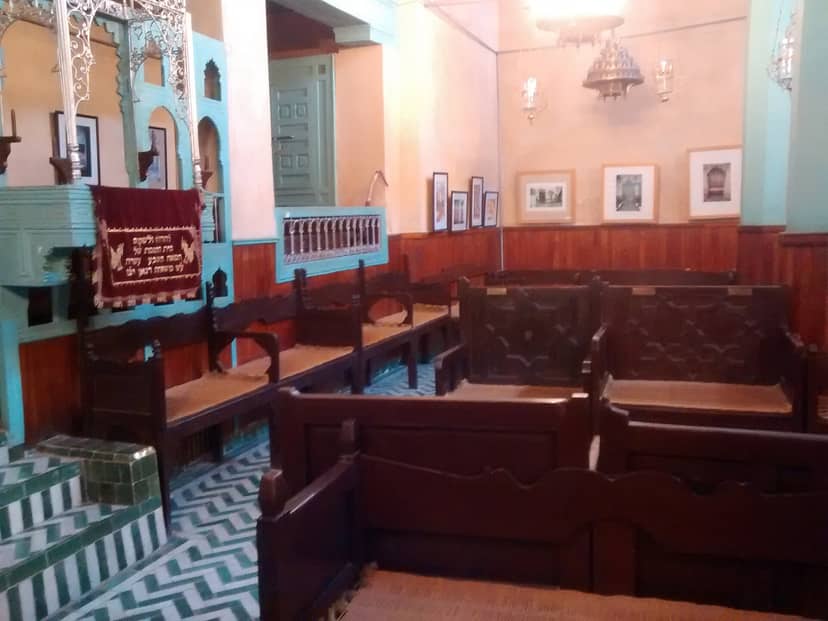
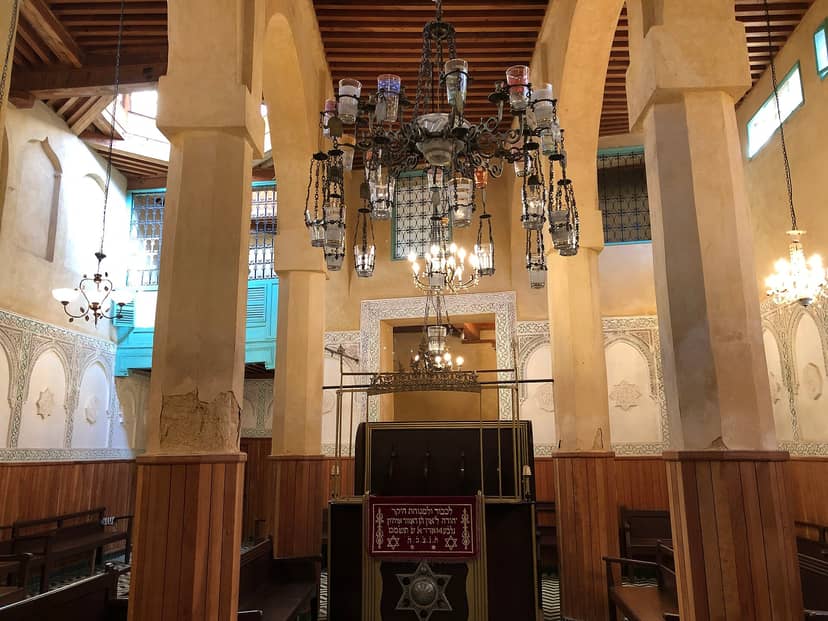
A small former synagogue at the north-eastern corner has served as a modest museum, alongside a woodworking shop run by the caretaker, Edmond Gabay, in 2020. A 2022 report names three restored synagogues within the cemetery grounds: Vidal Ha-Serfaty, open for prayer and visits; Raphaël Abensour, which also houses a museum; and Haim Cohen, restored after years of closure.
Restoration
A restoration and excavation project began in 2015 on the initiative of Sylviane and Elie Devico, supervised as a volunteer by the Moroccan architect Henri Cohen. By January 2022 about US$300,000 had been raised from donors, and the access road had been rebuilt. Excavation uncovered a tomb about 149 years old with a Hebrew marble plaque naming Eliyahu Monsonico.
Finding a family grave
Bring every detail you have: Hebrew and civil names, a father’s name, approximate dates and photographs of any stone. The caretaker can sometimes help locate a section or a tomb, and we contact the Fes community in advance, but we cannot promise that records survive for every burial. Our guide to a Jewish roots trip in Morocco explains how we prepare.
Visiting respectfully
Entry is free; one guide warns that unofficial guides may ask for a token payment. A travel guide lists daily hours of 7am to 7pm, but this is undated, so we confirm hours, including Saturday and holiday closures, before your visit. Dress modestly, keep to the paths and never step on a grave. Visitors often leave a pebble or light a candle on a tomb. A tip for the caretaker is appreciated.
Jewish Cemetery of Fes: questions travellers ask
Can non-Jews visit the Jewish cemetery in Fes?
Yes. It welcomes visitors of all backgrounds who dress modestly and behave respectfully.
Is there an entrance fee?
No. Entry is free, though a tip for the caretaker is appreciated.
Can you find my family’s grave?
We can ask the caretaker and the Fes community to help, but we cannot promise that records exist for every burial. The more names and dates you bring, the better the chances.
How old is the cemetery?
The present cemetery dates from the 19th century. Earlier Jewish cemeteries in Fes were cleared or moved, and some older remains were transferred here.
Is it open on Saturday?
Saturday opening is not confirmed, so we plan cemetery visits for a weekday.
Sources. Morocco World News (2020); Bladi (2022); Wikipedia (Mellah of Fez); GPSmyCity; Aish; Visiting Jewish Morocco; Yabiladi; Mosaic (2025). Researched and fact-checked by Gateway2Morocco, October 2026. Access to religious sites changes; we confirm every visit when we plan your trip.