Who he was
Little factual evidence survives about the man buried here, and even his identity rests on tradition. He is believed to be Rabbi David Laskar, described in the accounts as an emissary from the Land of Israel who came to Morocco to raise funds for religious academies there. The historian Emily Gottreich calls him one of the envoys sent to collect alms, and the French ethnographer Françoise Légey identified the Muslim saint Moulay Ighi with Rabbi David Lachgar. A plaque inside the shrine gives his death as 22 August 1717.
According to tradition, he was collecting funds in the village of Zekarten (Zerkten) when he sensed that his death was near. He asked members of the local burial society to follow him to the hill, bathed in the river at its foot, and asked the earth to close over him.
The Master of the Green Tree
He is also called Mul Shejra El-Khedra, “Master of the Green Tree”, after a myrtle bush beside his grave that, it is said, never caught fire despite the many candles lit around it. Légey recorded the tradition that he turned the bare mountain green.
Women hoping for children have long come to pray here; the historian Emily Gottreich describes Jewish women passing a nearby waterfall on their way to ask the saint’s help. One story recorded by Diarna says that a Muslim caretaker who had no sheep for Eid al-Adha asked the rabbi for help and was soon handed one by a stranger on the road. For pilgrims who cannot make the journey, a memorial stone for Rabbi David stands in the old Jewish cemetery of Casablanca.
The shrine today
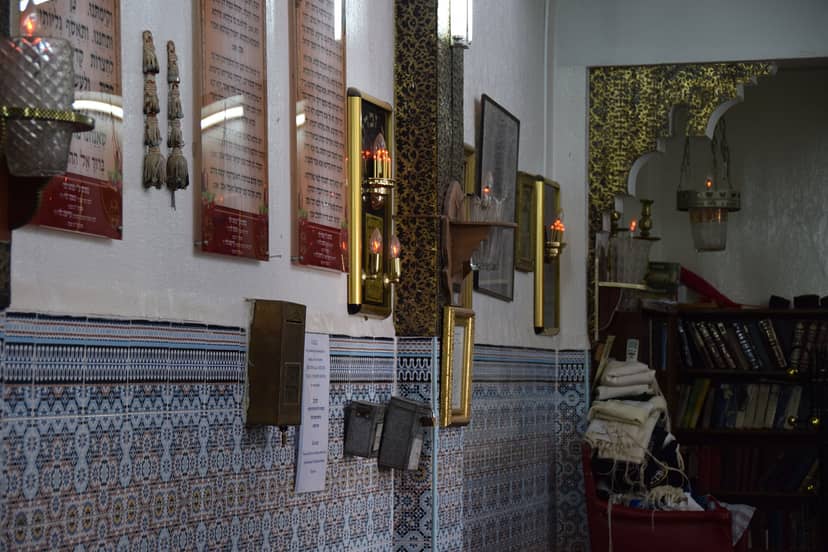
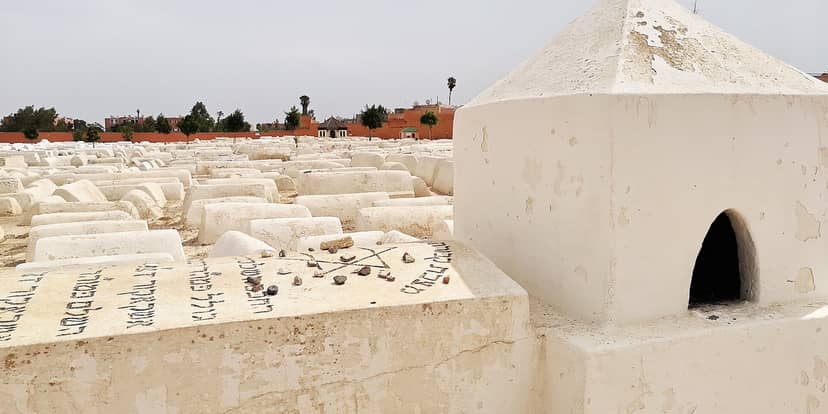
The grave was once open to the sky. In 1990 Albert Soussan built the covered mausoleum in memory of his father. In the 20th century the site was run by Shlomo Bouskila, who is buried in the small cemetery outside the shrine, and members of the Bouskila family still administer it. A modern synagogue built in memory of Shlomo and his wife Esther, and guesthouses for pilgrims, complete the complex. A Muslim caretaker watches over the site daily.
The hilloula
Sources disagree on the date. Diarna and Yabiladi place the hilloula (the annual celebration at a tzaddik’s grave) on Lag BaOmer, 18 Iyar, usually in May; the Daily Zohar’s list of tzaddikim gives 15 Elul, in late summer; and Légey wrote that Jews came on pilgrimage in autumn. Pilgrims also come during Sukkot, the autumn harvest festival, and some camp for several days. Historically Jews and Muslims came on foot and by mule, and some accounts put the crowds in the thousands. Our hilloula guide explains how we plan around pilgrimage dates.
Getting there
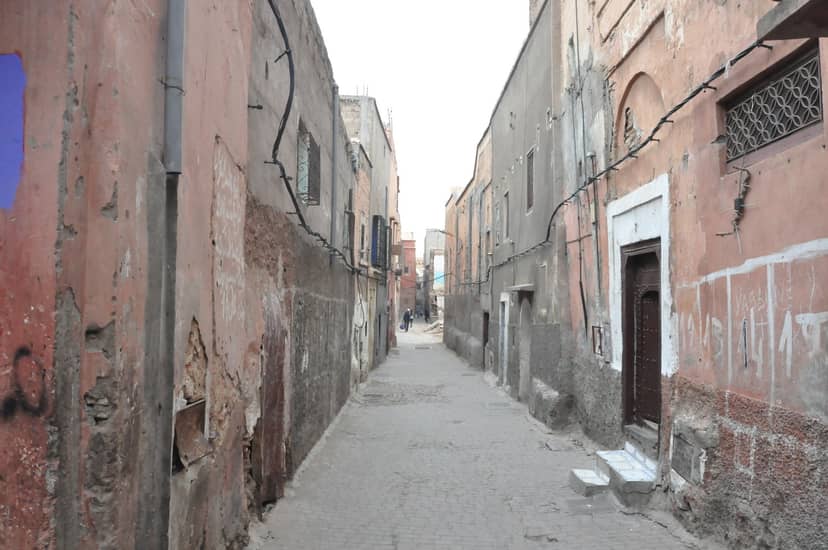
From the mountain road between Marrakech and Ouarzazate, a sharp turn leads toward Zerkten. The road drops into a quiet valley and follows a river for about 10 km; a second turn by a small waterfall climbs to an archway at the shrine entrance. Visiting Jewish Morocco instead places the tomb at Telouet, at the high point of the road to Ouarzazate, so confirm the route with your driver. Go with a guide who knows the caretaker.
Shrine of Moulay Ighi (Rabbi David Laskar): questions travellers ask
Where exactly is the Moulay Ighi shrine?
On a hilltop about 10 km up a side valley from the Marrakech–Ouarzazate road, near the village of Zerkten. One guide places it at Telouet instead, so confirm the route with a local driver.
When is the hilloula of Rabbi David Laskar?
Sources differ: most give Lag BaOmer, one gives 15 Elul, and pilgrims also come at Sukkot. We check the year’s plans before you travel.
Can non-Jews visit?
Yes. Muslims also venerate him as Moulay Ighi, and respectful visitors are welcome with the caretaker’s agreement.
Can I stay overnight?
The complex has guesthouses used by pilgrims. Whether they can be booked outside the pilgrimage depends on the administrators, and we ask on your behalf.
Sources. Diarna; Yabiladi (citing Emily Gottreich and Françoise Légey); Daily Zohar tzaddikim list; Visiting Jewish Morocco (moroccanjews.org). Researched and fact-checked by Gateway2Morocco, October 2026. Access to religious sites changes; we confirm every visit when we plan your trip.