Who he was
Very little about Rabbi Habib is documented. His name, Habib El-Mizrahi, means “Habib the Easterner”. According to tradition he came from the Land of Israel centuries ago, either as an emissary to the local Jews or to raise funds for schools; the shrine’s keeper has put it at “800 years ago”. Muslims call him Moulay Tadot, “Master of the Acacia”, after a tree that grew beside his grave.
He is venerated as a tzaddik (a righteous holy man whose grave is a place of prayer). The same mausoleum also holds Rabbi Shlomo Hazzan, from the Jewish community of southern Morocco.
The Jews of Ait Ourir
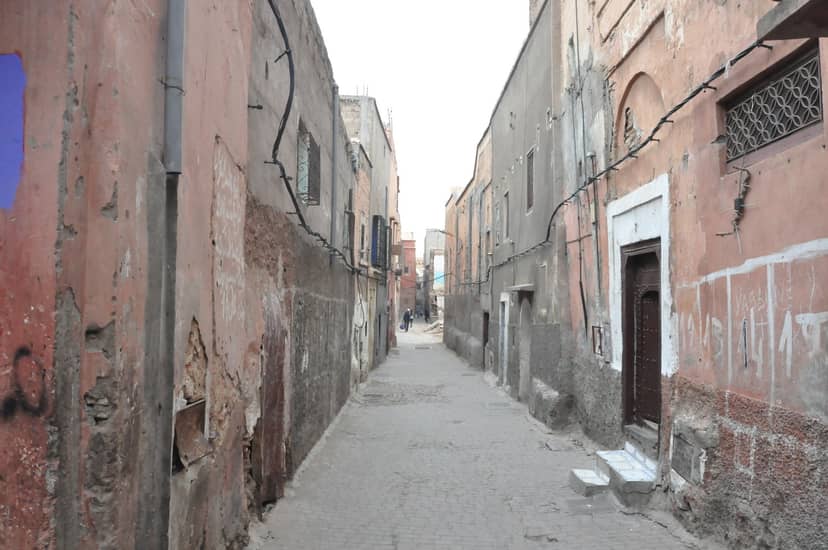
Ait Ourir is a village of the Mesfioua tribe on the road toward Ouarzazate. Its mellah belonged to a chain of small Jewish communities in the Glaoua country around Telouet, which may date back to the 16th century. A few dozen families lived here, farming in partnership with their Amazigh (Berber) neighbours and working as craftsmen. The community left for Israel in 1963, and no Jews live in the village today.
The cemetery lies well away from the old mellah.
The shrine and cemetery
For centuries the shrine was a small hut, with the tomb set into the slope and no marble stone. Few visitors made the climb. A Muslim man who lived nearby tended the grave and brought water to Jewish pilgrims who came up after the Tuesday market in the village.
In the late 20th century a member of the Ohayon family of Marrakech rebuilt the site. Sources disagree: one says Isaac Ohayon repaired the grave and built pilgrim rooms in 1970; others say David Ohayon built the sanctuary after a dream in which the rabbi asked Jews to visit him.
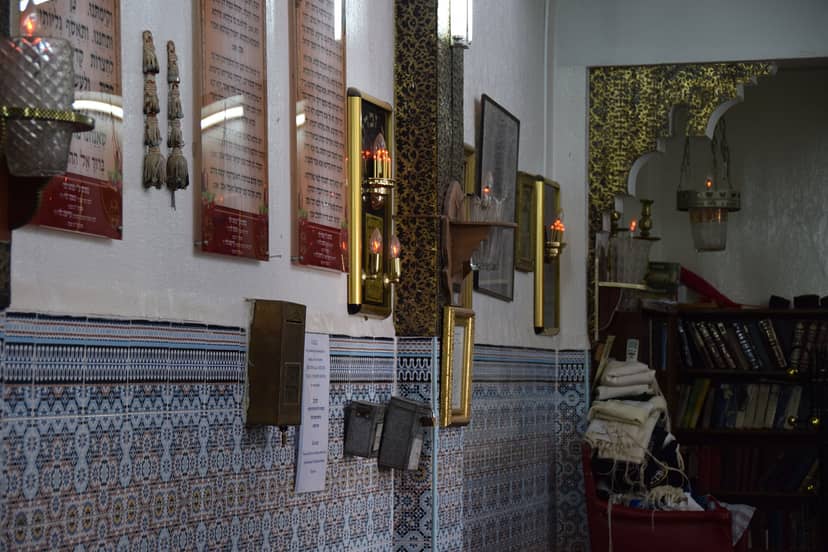
Today the tomb lies in a narrow room under a raised marble slab, with an iron stove at its head where pilgrims place lit candles. Around it are a courtyard with meeting and prayer rooms and about two dozen rooms for pilgrims, with shared spaces, showers, a plaza and a roof terrace looking over the hills.
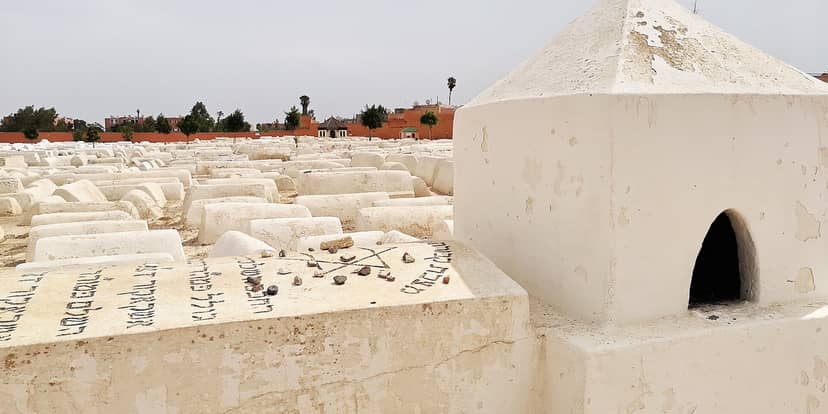
After a heavy rainy season, mudslides on the hill uncovered dozens of forgotten Jewish graves. Many were restored, each with a slot for memorial candles, and more are thought to lie under the earth.
The hilloula
The hilloula (the annual celebration at a tzaddik’s grave) is usually held around Lag BaOmer, 18 Iyar, the 33rd day of the Omer count between Passover and Shavuot, which falls in late April or May. An eyewitness account of the 1992 hilloula describes the Marrakech community gathering here, local officials welcomed with milk and dates, and men chanting piyyutim (liturgical poems). See our hilloula guide for how pilgrimage seasons affect travel planning.
Visiting and getting there
The shrine is off the N9 Marrakech–Ouarzazate road near Ait Ourir. A whitewashed wall by the road, marked “Rabbi Habib”, signals the turn onto a dirt track that climbs to the complex. Sources describe the drive from Marrakech as about 20 minutes, though one gives the distance as around 50 km.
Outside the hilloula, the complex is usually quiet and is opened by its guardian. Go with a driver or guide who knows him, and leave a tip for his care of the site.
Shrine of Rabbi Habib Mizrahi (Moulay Tadot): questions travellers ask
How far is the shrine from Marrakech?
Sources describe it as about 20 minutes’ drive, though one puts it around 50 km; allow extra time for the dirt track up the hill.
Can non-Jews visit?
Yes. Muslims also venerate the rabbi as Moulay Tadot, and respectful visitors of any faith are welcome with the guardian’s agreement.
Can I visit outside the hilloula?
Yes, the site is visited year-round, but there are no fixed hours. We arrange the visit through a driver or guide who knows the guardian.
Who else is buried there?
The mausoleum also holds Rabbi Shlomo Hazzan, and the surrounding cemetery contains dozens of older graves of Ait Ourir’s Jewish community.
Sources. Diarna; Haifa University Encyclopedia of Jewish Communities in Morocco (J.-Y. Chetrit, citing Ben-Ami); Visiting Jewish Morocco (moroccanjews.org); Yabiladi. Researched and fact-checked by Gateway2Morocco, October 2026. Access to religious sites changes; we confirm every visit when we plan your trip.