Who he was
Yehuda Ben Attar was born in Fes in 1655 and died there in 1733. According to Yabiladi, he studied under Rabbi Vidal Sarfatti and Rabbi Menahem Seriro, and after his father’s death began working as a jeweller at 23, serving Jewish and Muslim clients alike. He taught at a yeshiva in Fes, and in 1698 the city’s rabbis chose him as Av Beit Din, head of the rabbinical court.
He kept working as a goldsmith and refused payment for his community work. Over some forty years he issued taqanot, community regulations meant to correct harmful habits; one limited excessive spending on weddings and other family celebrations. Mosaic magazine describes him as a talmudist who did much to codify and organise local Jewish custom and law, and the author of a Torah commentary. His cousin Moshe Ben Attar was sent to England by Sultan Moulay Ismail. The 18th-century scholar Chaim Yosef David Azulay wrote about him in his biographical work Shem HaGedolim.
The lions’ den tradition
The story most often told about him is a legend. According to tradition, a governor imprisoned him and demanded a ransom the poor community could not pay, then had him thrown into a lions’ den. The lions did not touch him, even after a day and a night. Azulay records that he was cast among hungry lions and left unharmed. Yabiladi notes that his tomb is recognised by a carved lion.
The tomb
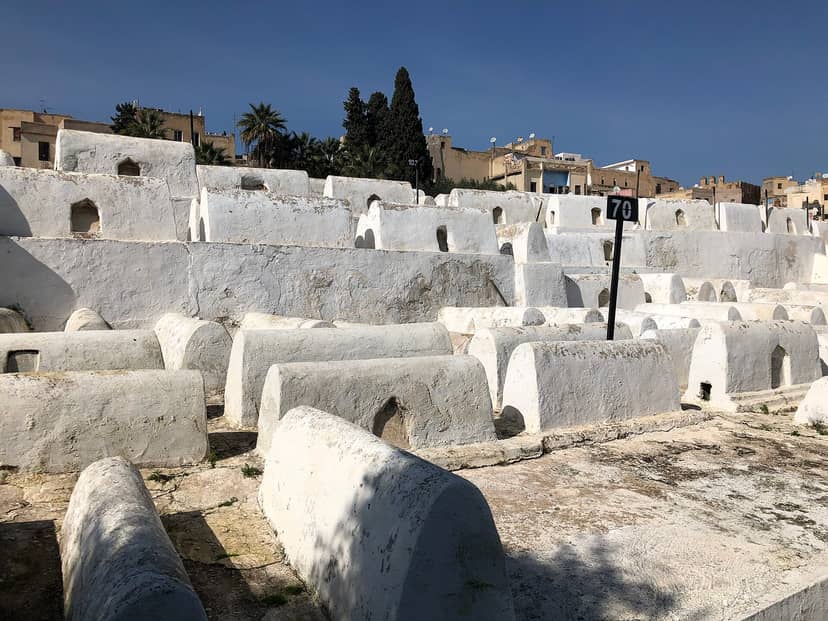
Visitor guides describe his tomb in the Jewish cemetery of Fes as covered in mint-green and black mosaic tiles, and Morocco World News (2020) also places it in the cemetery. One 2020 article in Yabiladi says the opposite: that he is not buried in the Jewish cemetery, while still placing his tomb in Fes. The present cemetery dates from the 19th century, and the older burial ground beside the royal palace wall was later cleared, with some remains moved, which may explain why accounts differ. We confirm the exact spot with the caretaker when we plan the visit.
The hilloula
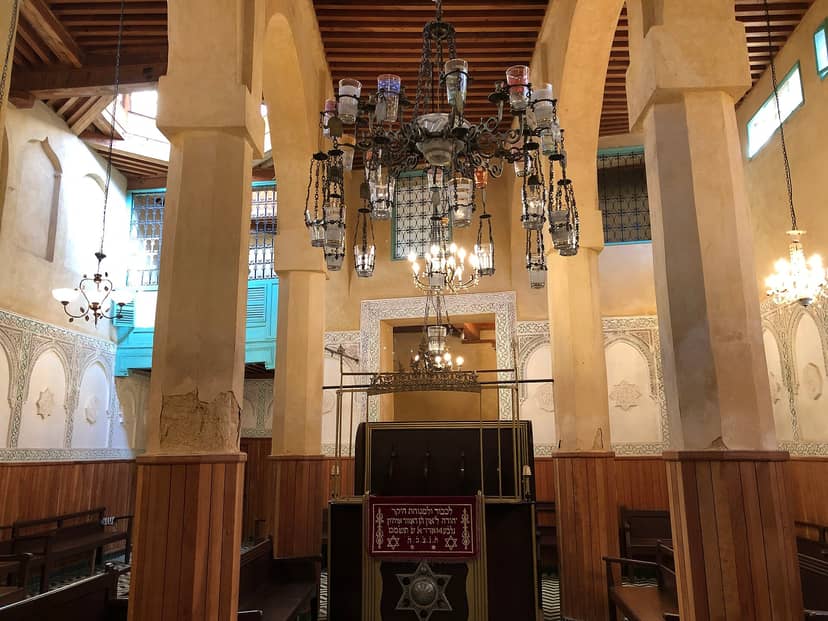
His hilloula, the annual celebration at a tzaddik’s grave, is held in June on the Hebrew anniversary of his death. In 2020 Yabiladi reported that it begins with a ceremony at the Talmud Torah synagogue in Fes. The Mimouna Association reported that hundreds of Moroccan Jews attended in 2023, and Mosaic reported that the June 2025 hilloula drew about 150 Jews from abroad, most of them from France. Our guide to hilloula pilgrimages explains how to plan around these dates.
Tomb of Rabbi Yehuda Ben Attar: questions travellers ask
When is Rabbi Yehuda Ben Attar’s hilloula?
In June, on the Hebrew anniversary of his death. The exact Gregorian date changes each year.
Is he buried in the Fes Jewish cemetery?
Most visitor sources place his tiled tomb there, though one 2020 article disagrees. The caretaker can show you the tomb venerated as his.
Can non-Jews visit his tomb?
Yes. The cemetery welcomes visitors; dress modestly and be discreet if people are praying.
Do I need a guide?
Not strictly, but a guide who knows the cemetery will take you straight to his tomb and to the other sages buried there.
Sources. Yabiladi (2020); Mosaic (2025); Mimouna Association (2023); Morocco World News (2020); GPSmyCity; Wikipedia. Researched and fact-checked by Gateway2Morocco, October 2026. Access to religious sites changes; we confirm every visit when we plan your trip.