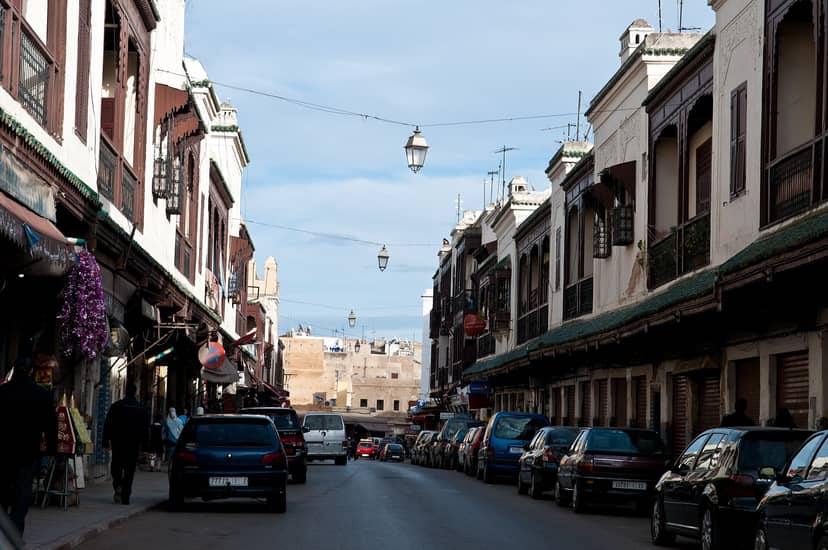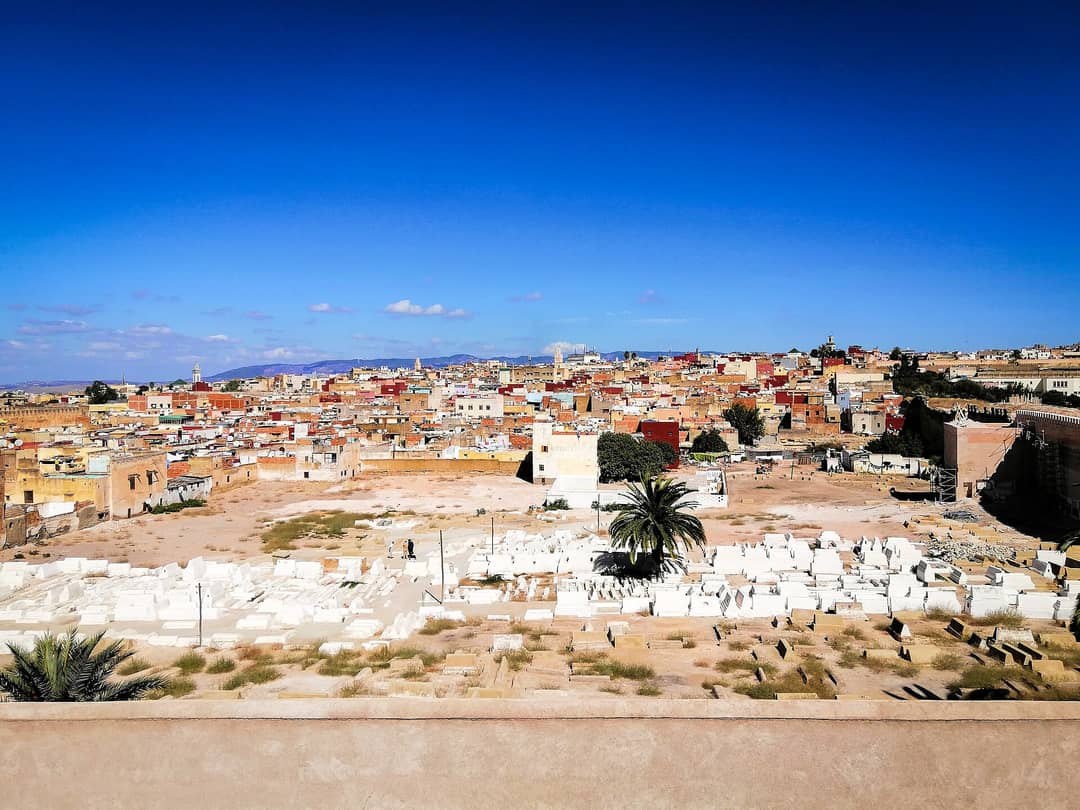
Cemetery · Meknes mellah
Jewish Cemetery of Meknes
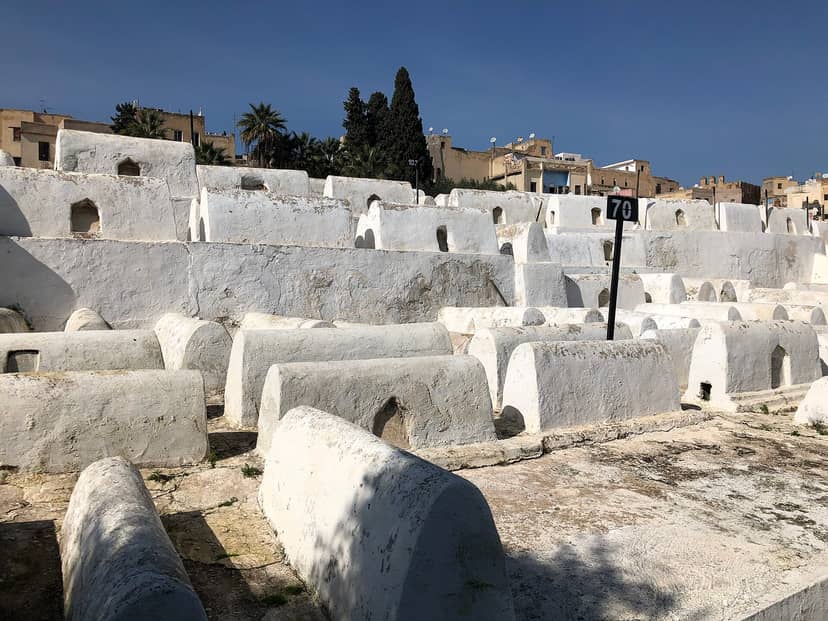
The Jewish cemetery of Meknes lies within the ramparts of the old medina, on land Sultan Moulay Ismail granted the community in 1682. It holds thousands of graves and the tombs of the city’s revered rabbis, among them Rabbi Raphael Berdugo, known as “the Angel”. Restored in 2022, it now hosts a Lag BaOmer hilloula that brings Meknassi families back from France, Israel and North America.
History
In 1682 Moulay Ismail, who made Meknes his capital, granted the Jewish community land for a cemetery to serve the mellah. For close to three centuries it received the community’s rabbis, judges, poets and ordinary families. The site covers about 10 acres and is estimated to hold thousands of burials, many of them built on top of older graves as space ran out.
Meknes had one of Morocco’s most learned Jewish communities. Encyclopaedia Judaica notes that many of the city’s rabbinic scholars and judges from the 18th to the 20th century came from the Berdugo and Toledano families. The Jewish population of Meknes was 15,482 in the 1947 census. Most families emigrated in the decades that followed, and the cemetery fell into neglect; according to the Moroccan news site Le360, no hilloula was held there for more than half a century.
In 2010 King Mohammed VI launched a national programme to restore Jewish cemeteries and heritage sites. The restoration of the Meknes cemetery was completed in May 2022.
What you’ll see
Most visitors come for the tombs of the tzaddikim, the righteous sages whose graves the community venerates. Those honoured at the annual hilloula include Rabbi Raphael Berdugo, called Ha-Malakh, “the Angel”; Rabbi Yosef Bahtit, known as Moul El Kerma, “master of the fig tree”; and Rabbi David Boussidan, Rabbi Haim Messas, Rabbi David Hassine and Rabbi Shemouel Toledano.
A memorial wall, the Mur des Anciens (Wall of the Elders), was put up around 2024. It carries the names of these sages so that later generations can find and recognise them.
The cemetery also keeps an older devotional custom. Diarna, the Jewish heritage mapping project, records that Jews who could not travel to the shrine of Rabbi Amram Ben Diwan at Asjen used to pray to him at a cairn of stones in the Meknes cemetery instead.
The Hilloula des Tsadikim
A hilloula is the annual celebration held at a tzaddik’s grave. At Meknes it returned in 2022, after the restoration, as the Hilloula des Tsadikim, which honours all the sages buried here together. It is held on Lag BaOmer, 18 Iyar on the Hebrew calendar, the 33rd day of the Omer count between Passover and Shavuot.
The fifth edition took place on the night of 4 May 2026. Le360 reported hundreds of people from France, Israel, the United States and Canada, and from Casablanca, Marrakech and Fes. Prayers were led by rabbis including Rabbi Jacob Torjman, a rabbinical judge from Tangier, and a Paris rabbi of Meknes origin. A candle auction under a large tent raised money for the cemetery’s upkeep until the next year, and the night ended with chaâbi and chgouri music. Families lit candles at the graves of their own relatives.
We can plan a trip around the date; the guide to hilloula pilgrimages explains how these gatherings work.
Finding a family grave
Many visitors come looking for a grandparent or great-grandparent. A 1995 visitor report on one of the Meknes Jewish cemeteries noted that no burial register was available on site, so we cannot promise that records exist for any particular grave. It helps to bring everything the family holds: Hebrew names, the father’s name, an approximate year of death and any photographs of the stone. A guide who reads Hebrew inscriptions makes a search far easier.
One point to confirm before you travel: JewishGen’s cemetery project and the heritage site moroccanjews.org describe two Jewish cemeteries in Meknes, an old one beside the old mellah and another near the New Mellah, and list the same famous rabbis for the two together. Other sources describe a single historic cemetery. If you are searching for a specific grave, check which cemetery holds it as part of planning.
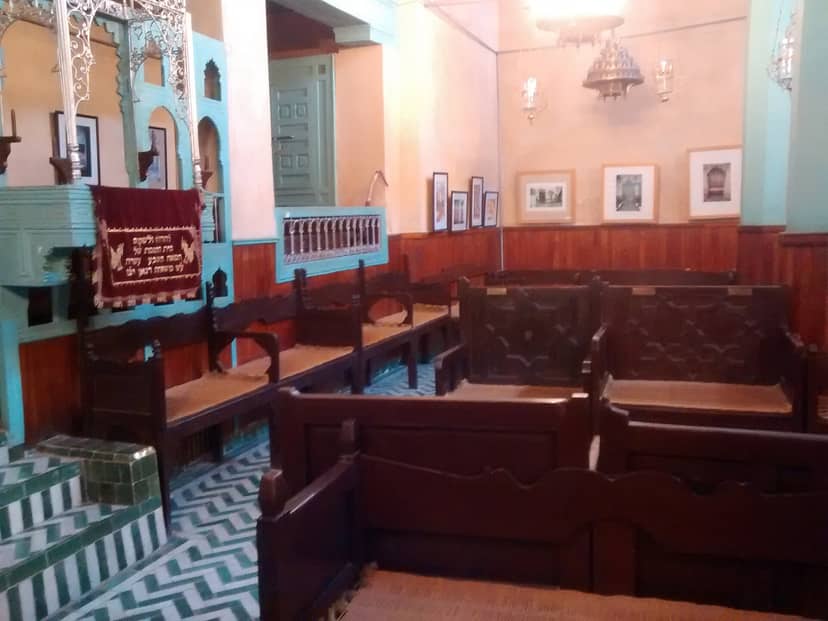
The restored Toledano synagogue in the New Mellah, known as Slat Rabbi Baroukh, has a museum floor with early 20th-century documents, including a list of Meknes Jewish families. It is worth visiting on the same day.
Visiting respectfully
This is an active burial ground and a place of prayer for living families. Dress modestly, with shoulders and knees covered; men usually cover their heads near the tombs of the sages. Keep to the paths and never step on graves. Leaving a small stone on a grave is a common Jewish custom. Ask before photographing people, and put the camera away while anyone is praying. A tip for the guardian is customary.
Jewish Cemetery of Meknes: questions travellers ask
Can non-Jews visit the Jewish cemetery of Meknes?
Yes, by arrangement. Muslim as well as Jewish visitors attended the 2026 hilloula, and outside the pilgrimage access goes through the community or a guide.
When is the Meknes hilloula?
On Lag BaOmer, 18 Iyar on the Hebrew calendar. In 2026 the celebration was held on the evening of 4 May.
Can you find my family’s grave?
A search is possible but not guaranteed: a 1995 report found no register on site, and there may be two cemeteries to check. Bring Hebrew names, dates and any photographs you have.
Is it open on Saturday?
Plan for a weekday. Visits are arranged with the guardian, and that is unlikely on Shabbat or Jewish holidays.
Do I need a guide?
In practice, yes. Access has to be arranged outside the hilloula, and a guide can arrange entry and help read Hebrew inscriptions.
Sources. Le360 (May 2026); Wikipedia; JewishGen Cemetery Project; Haaretz (2022); Encyclopaedia Judaica; Diarna; moroccanjews.org; Medias24 (2023). Researched and fact-checked by Gateway2Morocco, October 2026. Access to religious sites changes; we confirm every visit when we plan your trip.