Tzaddik shrine · Asjen, near Ouezzane
Shrine of Rabbi Amram Ben Diwan, Asjen (Ouezzane)
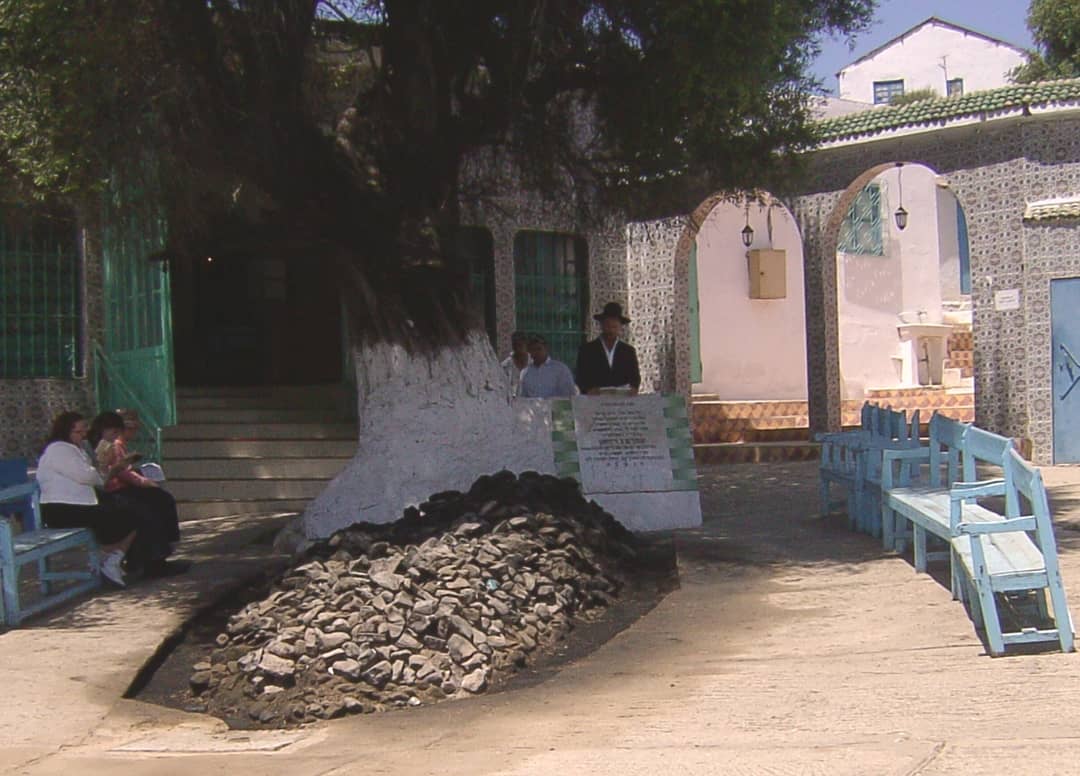
In an olive grove at Asjen, a few kilometres from Ouezzane, a mound of stones under an old olive tree marks the grave of Rabbi Amram Ben Diwan, an 18th-century emissary from Hebron who died in 1782. It is one of Morocco’s best-known Jewish pilgrimage sites. Every Lag BaOmer pilgrims light candles and a bonfire on the cairn; outside the hilloula, access must be arranged in advance and, according to the latest reports, is limited to Jewish visitors.
Who he was
Rabbi Amram Ben Diwan was born in Jerusalem and later lived in Hebron. The rabbis of Hebron sent him to Morocco as an emissary to raise funds for the yeshivot (Torah academies) of the Holy Land. Sources attach the year 1743 to different events: some say he moved to Hebron that year, others that he left for Morocco. One heritage source places his arrival as late as the 1770s.
He settled in Ouezzane, where, according to the Moroccan news site Yabiladi, he founded a Talmud Torah (a school for religious study) and a yeshiva that drew many students. Jews from across Morocco came to him with their troubles and called him a tzaddik, a righteous man whose merit is believed to help those who pray at his grave. Most sources give his death as 1782; the National Library of Israel’s authority record gives 1781.
Traditions told about him
Community tradition, recorded by the scholar Issachar Ben-Ami and others, keeps several stories alive. One says that in Hebron he disguised himself to pray at the Cave of Machpelah, the Tomb of the Patriarchs, was recognised, and returned to Morocco with his son Haim, staying first in Fes with Rabbi Menasheh Ibn Denan. Another says that when Haim fell gravely ill, his father prayed to give his own life in exchange, and Haim recovered.
Tradition also holds that he asked to be buried beside a tree, or that the tree grew after his burial, and that every attempt to build a monument over his grave has failed. That is why the grave remains an open cairn of stones. Diarna, the Jewish heritage mapping project, records that Jews who could not reach Asjen prayed to him at substitute sites, a sacred cave in Sefrou and a cairn in the Jewish cemetery of Meknes, and that some Muslims in the region also ask for his help with illness or infertility.
His son, Rabbi Haim Ben Diwan, is venerated at his own shrine at Anraz, near Ouirgane in the High Atlas.
The site
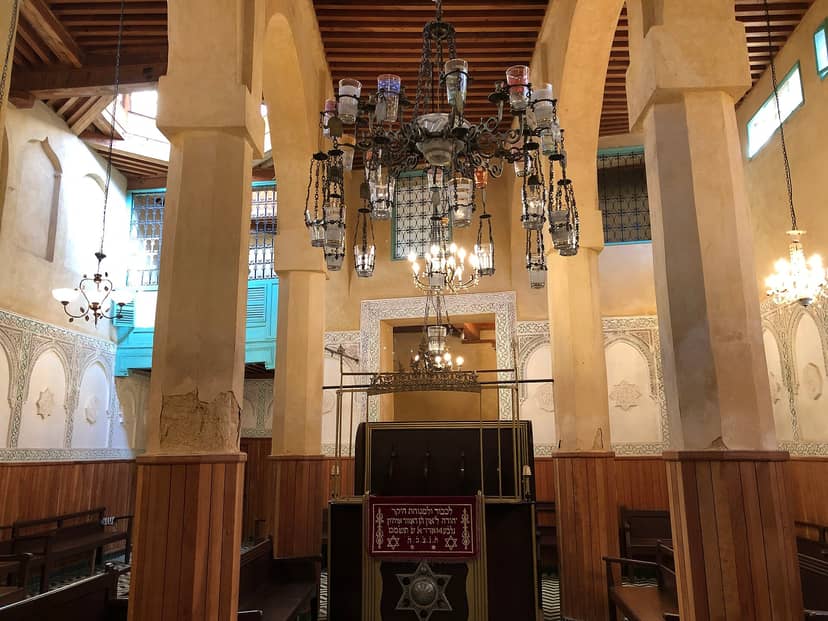
Press reports from 2016 and 2017 describe the grave in the open air on a mound of stones, shaded by an old olive tree, in an olive grove of several hectares. A small Jewish cemetery surrounds it; La Vie Éco reported in 2017 that the cemetery had been restored under the national programme for Jewish cemeteries. Opposite the grave stands a synagogue where the evening prayer is held, with a hall beside it for the hilloula dinner and auction. A number of houses serve as pilgrim lodgings.
Pilgrims leave small stones on the cairn, each one a petition.
The hilloula
The hilloula, a word usually explained as “wedding”, the tzaddik’s union with the Divine, takes place on Lag BaOmer: 18 Iyar on the Hebrew calendar, the 33rd day of the Omer count between Passover and Shavuot. The main gathering is on the eve and through the night. In 2026 Lag BaOmer fell on 5 May.
In 2016 and 2017 the event was organised by the Council of Jewish Communities of Morocco, with the provincial governor attending. Reports describe minibuses and coaches arriving at nightfall, the evening service in the synagogue, a dinner in the rabbi’s honour, music through the night and an auction of objects associated with the saint to pay for the site’s upkeep. Candles are lit on the cairn by the thousand, and a bonfire burns on the stones.
Attendance estimates range from hundreds to a few thousand pilgrims, from Morocco and from France, Israel, Canada and elsewhere; all of these figures date from 2016–17. Some accounts present Lag BaOmer as the anniversary of his death, which the biographical sources do not confirm. See hilloula pilgrimages in Morocco for planning around the date.
Visiting outside the pilgrimage
This part needs careful planning. In 2017 the Moroccan press (Telquel and Dafina) reported that only Jews may enter the site. We have found no later report that confirms or changes this, so the information is old. Visits outside the hilloula have to be arranged in advance with the community or the site’s guardians, and we check the current rules when we plan the trip, including whether a non-Jewish driver or guide may come in with you.
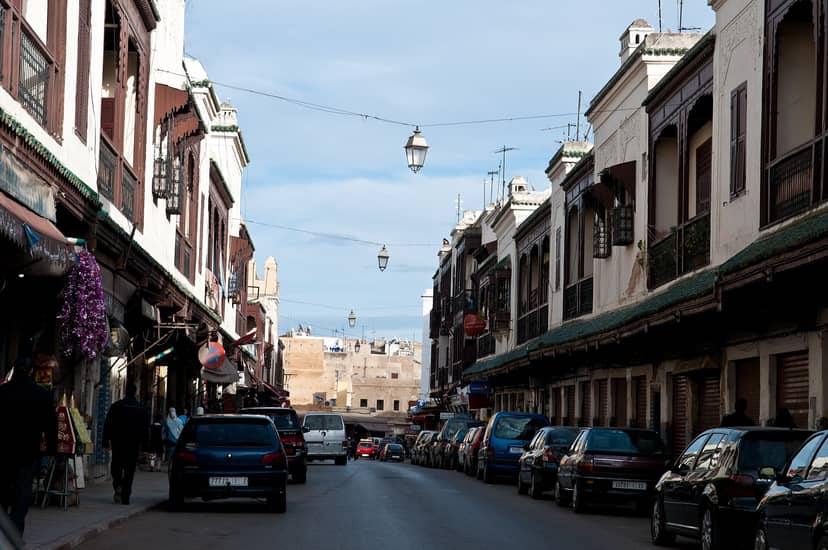
Asjen is a rural commune a few kilometres from Ouezzane, in the foothills of the Rif. Ouezzane fits naturally into a northern itinerary with Fes, Meknes or Chefchaouen.
Rabbi Amram Ben Diwan Shrine: questions travellers ask
Can non-Jews visit the shrine of Rabbi Amram Ben Diwan?
The most recent reports, from 2017, say only Jews may enter the site. That information is old, so the current rule has to be confirmed with the community before any visit.
When is the hilloula?
On Lag BaOmer, 18 Iyar on the Hebrew calendar, with the main gathering on the eve. In 2026 it fell on 5 May.
Can I visit outside Lag BaOmer?
Possibly, by arrangement with the community or the site’s guardians, made well in advance. Access should not be assumed until it is confirmed.
Is Rabbi Haim Ben Diwan buried here too?
No. His son Rabbi Haim Ben Diwan is venerated at a separate shrine at Anraz, near Ouirgane in the High Atlas.
Sources. Diarna; Yabiladi (2019); Telquel (2017); Dafina; Le360 (2016); La Vie Éco (2017); Wikipedia; National Library of Israel; JewishGen. Researched and fact-checked by Gateway2Morocco, October 2026. Access to religious sites changes; we confirm every visit when we plan your trip.