On Monday 12 October 2026, Morocco opened the Museum of Moroccan Jewish Culture (Musée de la Culture Juive Marocaine) in the mellah of Fes, the walled Jewish quarter generally described as the oldest in the country. It is a national museum, built with public money and given over entirely to the life of Morocco’s Jews: their faith, their homes, their trades, their music and their clothes.
Many of the travellers we plan for come to Morocco looking for exactly this story, often their own family’s. Until now, Fes asked them to piece it together from restored synagogues, a hillside cemetery and the balconies of the mellah. The museum gives that walk a beginning. Here is what it is, what you will see, what is still unconfirmed about visiting, and how we are building it into our Fes days.
Why it mattersWhy this museum is a first
Jews have lived in what is now Morocco for well over two thousand years; the museum itself frames the story as 2,500 years. By the middle of the 20th century the community numbered roughly a quarter of a million, the largest in the Arab world. Most left in the decades that followed, for Israel, France, Canada and the United States, and only a few thousand live in Morocco today, most of them in Casablanca. Morocco’s 2011 constitution names the Hebrew heritage as one of the components of national identity, and the restoration of synagogues and cemeteries across the country over the past fifteen years grew out of that.
The Fes museum takes that a step further. Morocco’s National Foundation of Museums and the Moroccan press describe it as the first museum in an Arab-Muslim country to be paid for with public funds and devoted entirely to Jewish culture. Morocco already had a Jewish museum, the Museum of Moroccan Judaism in Casablanca, opened in 1997 and run by a foundation of the Jewish community. The Fes museum is the state’s own, and it is much larger.
The storyHow it came about
King Mohammed VI launched the project in April 2019, during a visit to Fes, as part of the long programme to rehabilitate the old medina. The same visit started the restoration of the Batha palace, which reopened in 2025 as the Museum of Islamic Arts; the two museums were conceived together. The Jewish community of Fes donated the site in the mellah. The medina rehabilitation agency, ADER-Fès, built it in consultation with the National Foundation of Museums, and the community took part in shaping it, notably through Serge Berdugo, founding president of the Foundation for Judeo-Moroccan Cultural Heritage. The building works were finished in March 2023; the collections and galleries took until this autumn.
The opening was attended by Ahmed Toufiq, Minister of Habous and Islamic Affairs, Serge Berdugo, Mehdi Qotbi, president of the National Foundation of Museums, Khalid Aït Taleb, wali of the Fès-Meknès region, and several ambassadors. Mehdi Qotbi called it a hymn to peace and coexistence and said that “in these difficult times, Fes sends a strong message to the world.” Berdugo described it as a place of knowledge, of passing on memory, and of dialogue.
Inside the museumWhat you will see inside
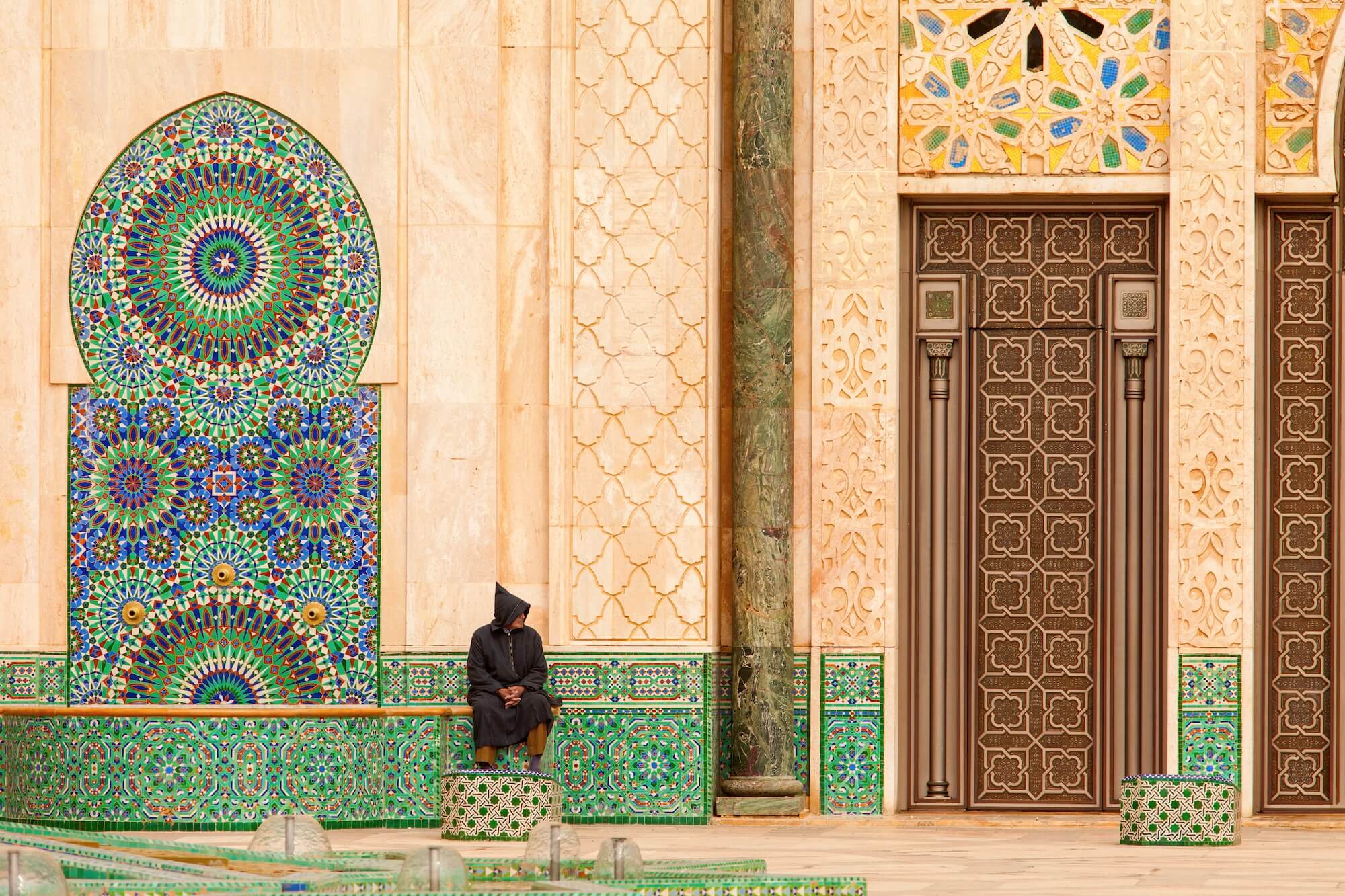
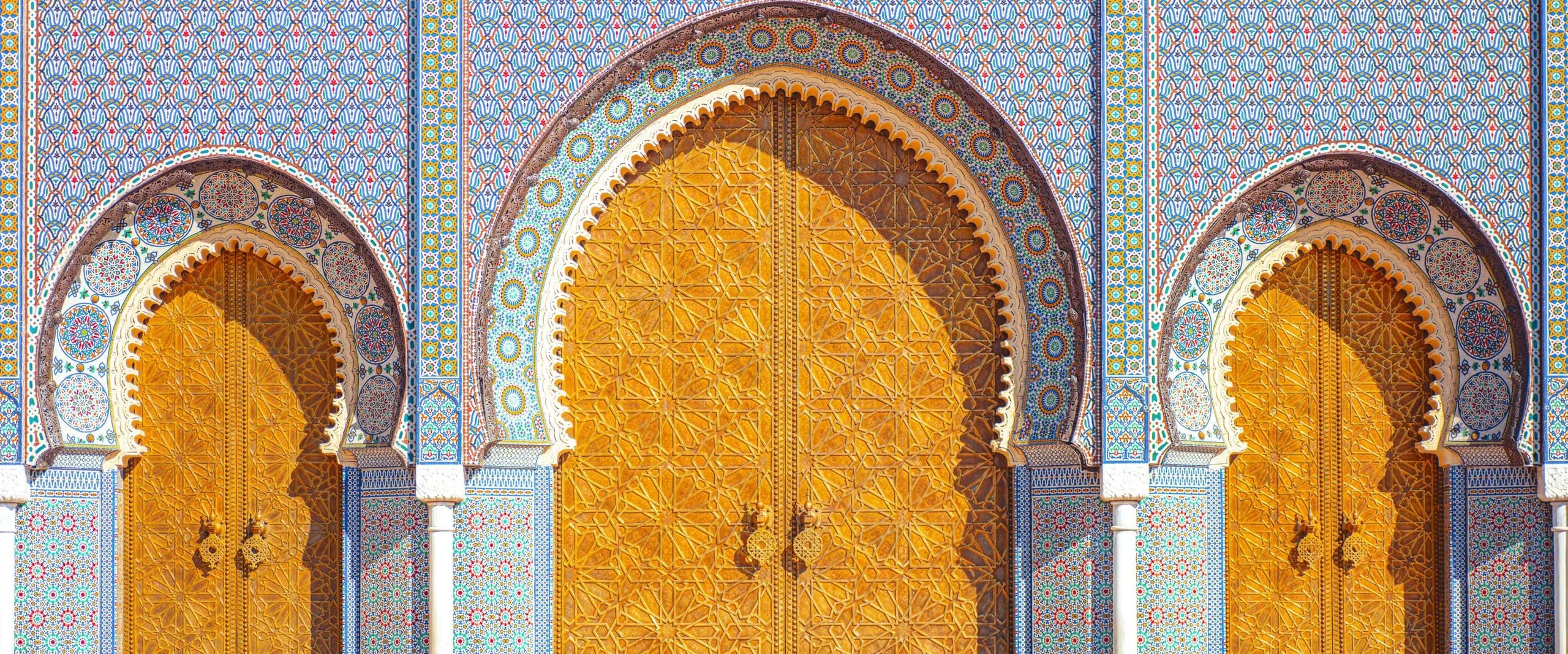
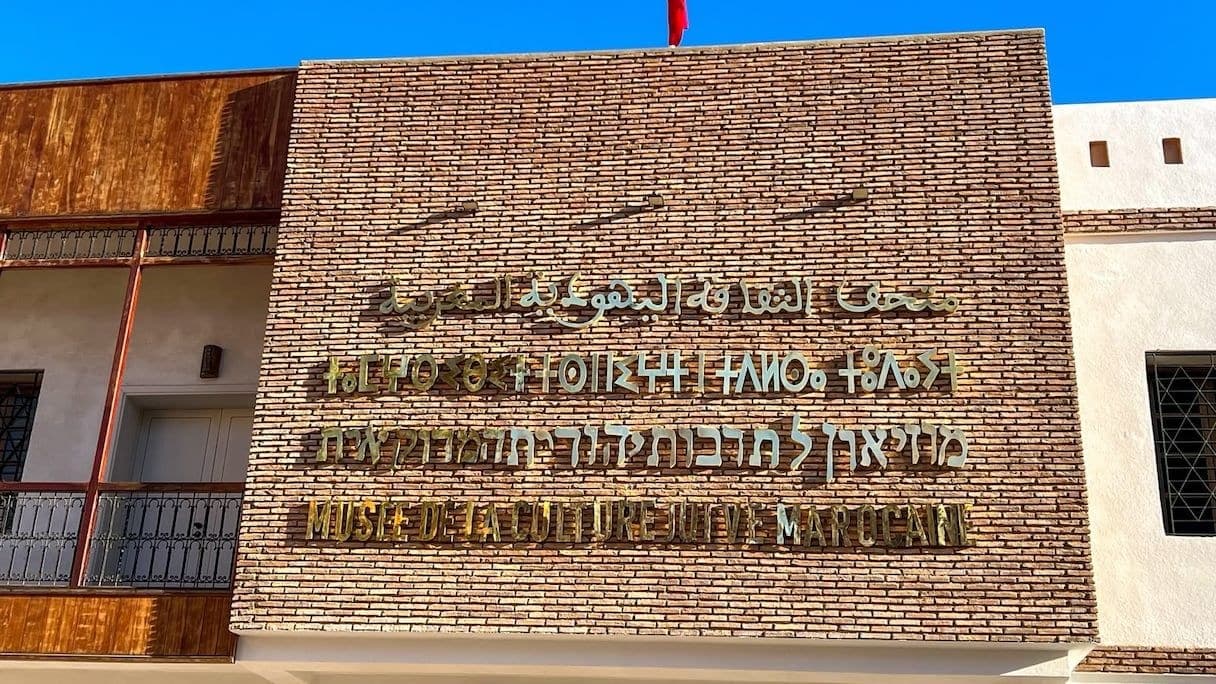
The museum covers about 1,700 square metres, some 1,200 of them galleries, over two levels. You enter through a courtyard in the Fassi tradition, with zellij tilework, carved plaster, painted wood and a marble fountain. Above the door, the museum’s name is set in brass in four languages: Arabic, Amazigh (in Tifinagh script), Hebrew and French. Inside, the permanent exhibition is organised around five themes.
- A timeline of Jewish Morocco. On the ground floor a long chronological frieze runs from the earliest traces of a Jewish presence to the present, through moments such as the founding of the Fes mellah in 1438 and the arrival of Jews expelled from Spain in 1492.
- Community life. Galleries on the institutions that held a community together: synagogues, Hebrew schools and rabbinical courts. Torah scrolls and prayer shawls are on display.
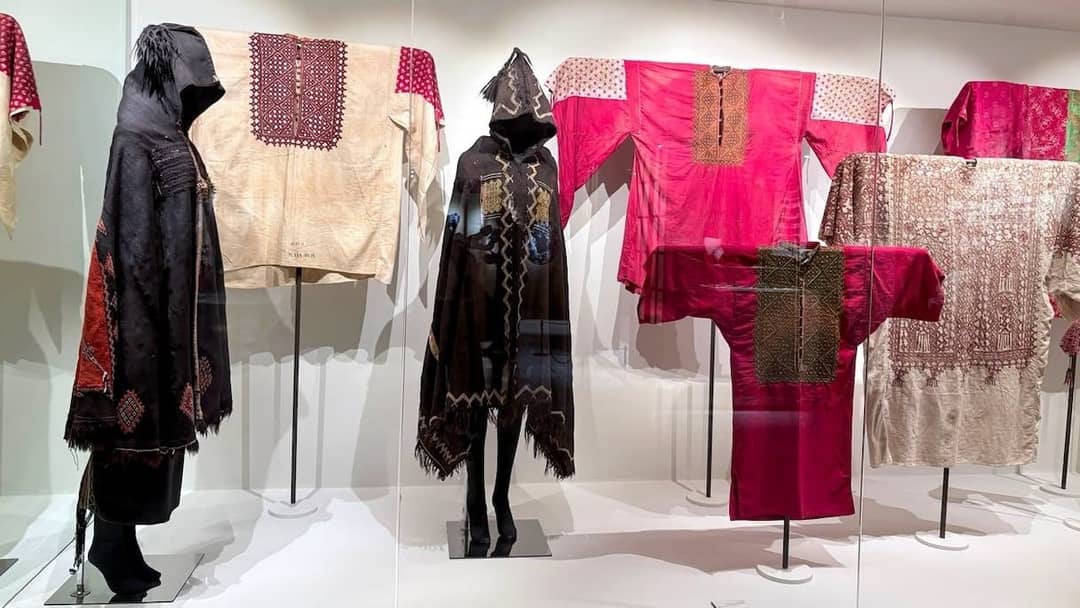
- The cycle of a life. Birth and circumcision (with the decorated chairs used for the ceremony), bar mitzvah, marriage, mourning and the festivals of the Jewish year. Look for the ketubbot (marriage contracts) and the bridal costume, including the keswa el-kbira, the ‘grand dress’ worn by Jewish brides in Fes and other northern cities.
- Crafts and dress. Jewish artisans were famous in Morocco for silver and gold work, and a jeweller’s workshop has been reconstructed with its tools. Around it are silver ornaments, embroidered textiles, regional clothing from across the country and musical instruments.
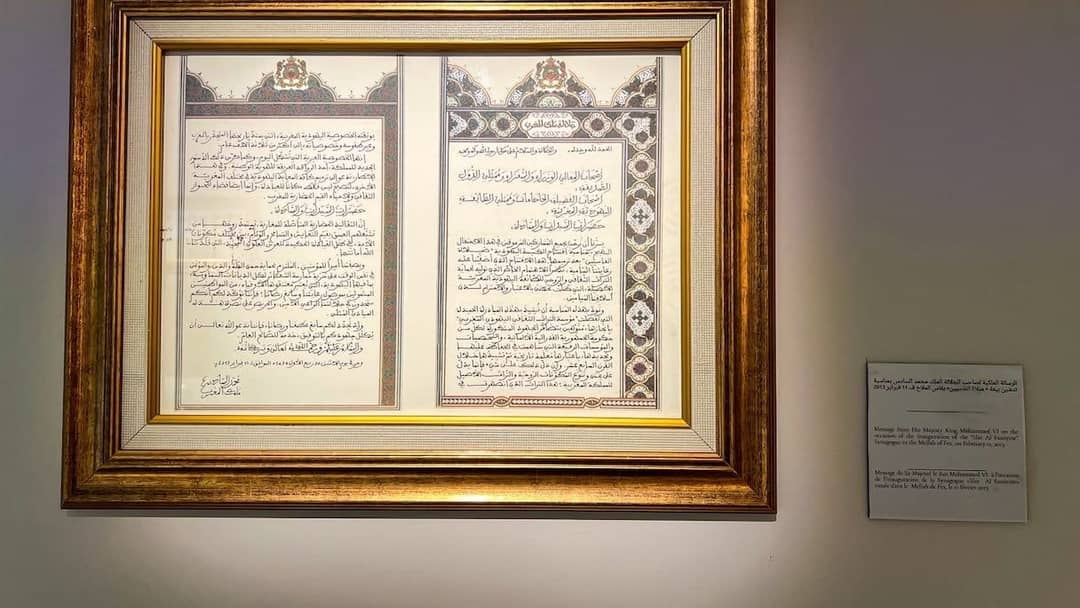
- Documents. Archives, rare books and manuscripts, among them the framed message King Mohammed VI sent for the reinauguration of the Slat al-Fassiyin synagogue in the mellah in February 2013.
Audiovisual and digital installations run alongside the objects, and there are dedicated spaces for children and school groups. A thread through the whole visit is the relationship between Jews and Muslims in Morocco: the shared crafts, music, food and neighbourhoods, as well as the languages Moroccan Jews spoke, from Judeo-Arabic and Judeo-Berber to Haketia in the north.
PracticalVisiting: what we know, and what we don’t yet
The museum is in the mellah of Fes el-Jdid, the quarter beside the royal palace that you enter by Bab Semmarine. Serge Berdugo has said it will be open every day except Tuesday. As of 21 October 2026, official opening hours, ticket prices and a street address had not been published, and press reports place the building differently: one visitor at the opening wrote that the Jewish cemetery lies right beside it, with the white tombs visible from its windows. We will confirm the exact entrance, hours and fee before we put it into anyone’s day, and we will update this article as soon as they are public.
- Time needed: allow an hour to an hour and a half; longer if you read every panel or are researching family history.
- Go first: visit the museum at the start of your mellah walk. It explains what you will then see in the street, the synagogues and the cemetery.
- Shabbat: a Saturday opening does not help an observant traveller who will not buy a ticket or travel on Shabbat. We schedule the museum on a weekday and keep Saturday for rest or a walk without purchases.
- Family research: the museum holds archives, but no research service has been announced. If you are tracing a family from Fes, tell us the names and we will ask what can be seen.
- Combine it with the Batha Museum of Islamic Arts in Fes el-Bali, launched by the same royal programme; seeing both on the same trip is the point the two museums were built to make.
How we plan itA Jewish heritage day in Fes, with the museum first
- 1
Morning: the Museum of Moroccan Jewish Culture, with your licensed Fes guide.
- 2
Late morning: the Fes mellah and the balconied houses of Rue des Mérinides, then the 17th-century Ibn Danan synagogue with its Torah ark and mikveh, and the Slat al-Fassiyin, whose 2013 reopening is commemorated in the museum.
- 3
Lunch: kosher meals are arranged in advance in Fes; our kosher travel guide explains how.
- 4
Afternoon: the Jewish cemetery of Fes, with the tombs of Lalla Solica and Rabbi Yehuda Ben Attar.
- 5
Next day: Fes el-Bali, where tradition places the house of Maimonides, or a half day in Sefrou, once called Morocco’s Little Jerusalem.
Our Fes Jewish heritage guide has the full picture, including Meknes, Volubilis and the shrine of Rabbi Amram Ben Diwan near Ouezzane, and our Jewish heritage of Morocco section maps more than a hundred and eighty places across the country.
For years the Fes mellah asked visitors to imagine a great deal: you saw the synagogues and the tombs, but the life that filled the quarter had left with the people. This museum brings the objects home to the street they came from, a few minutes’ walk from the synagogues where they were used. If Fes is on your trip, give the mellah a full day and start it here. And if your family came from Fes, Meknes or Sefrou, this is the year to come.
Across MoroccoOther Jewish museums and collections in Morocco
- Museum of Moroccan Judaism, Casablanca: the long-established community museum, with synagogue furnishings, costume and a fine collection of photographs.
- Bayt Dakira, Essaouira: a restored family house and synagogue in the Essaouira mellah, a ‘house of memory’ opened in 2020.
- Beit Yehuda, Tangier: a small museum of Tangier’s Jewish life.
- The Toledano synagogue museum, Meknes: a prayer floor and a museum floor of family and community documents, valuable for roots travellers.
Tell us where your family came from and what you would love to see. We will send a written, day-by-day proposal with the Fes museum, the synagogues and kosher meals arranged. 100% private, BC licence #80460.
Plan my Jewish heritage trip“We took our adult kids and it was a perfect way to reconnect.”